|
#1
●
02-11-2013, 01:06 AM
| ||||||||
 So Fucking Banned Poster Rank:342 Male Join Date: May 2010 Posts: 3,762
Contributions: 26
Mentioned: 1 Post(s) Quoted: 32 Post(s)
| ||||||||
|
5 Failed Currencies And Why They Crashed
Failed Currencies And Why They Crashed Some of the countries that adopted the euro now find themselves in the position of being unable to independently manage their monetary policy. What is being done to establish financial stability? Essentially, new money is being pumped into Greece and Ireland via the European Central Bank and International Monetary Fund. This raises the question of what these actions portend for the long-term health of the euro. History may provide some answers. 1. Papiermark (Germany) 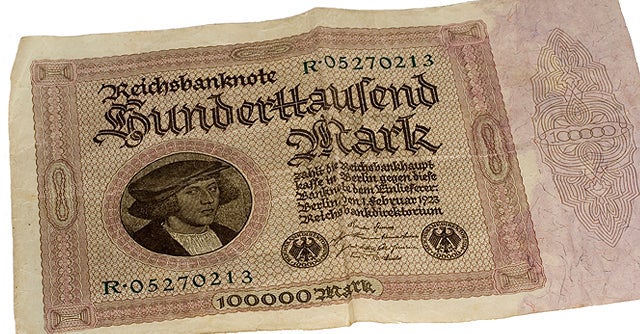 The Weimar Republic after World War I was the original poster child for failed currencies. A condition of the Treaty of Versailles required Germany to pay war reparations to the allied nations. When Germany failed to honor the repayments, France and Belgium occupied parts of the German industrialized areas. This pressured the German government to print money to pay salaries and the war debt, and hyperinflation set in. When the Rentenmark was introduced to replace the existing currency, the exchange rate was 1 for 1 trillion. Read more: http://www.investopedia.com/slide-sh...#ixzz2KZ4vYDDq 2. Peso (Argentina)  Argentina's economy enjoyed record growth until the OPEC oil embargo in the mid-70s. Civil and political unrest followed, and budget and trade deficits threatened the onset of a severe recession. Rather than reduce spending or institute temporary borrowing to cover the shortfall, the government resorted to printing money. A military coup in 1976 brought further economic decline and more inflation as the money supply continued to expand. By 1982, GDP was in freefall and dropped 12% year over year, the worst since the Great Depression. Inflation was rampant as the money denominations kept adding zeros until the new peso was established to stabilize the currency. In the end, one new peso was equal to 100 billion of the original pesos (pre-1983). 3. Dollar (Zimbabwe)  Upon gaining its independence in 1980, the Zimbabwe dollar was valued about 25% higher than the U.S. dollar. However, many problems led to economic decline over the next several years. The problems were compounded by a military coup attempt that created more instability and lack of confidence in the financial system. As government spending escalated, wage and price controls were implemented that produced massive budget deficits. The printing presses started rolling and rampant inflation took hold. It reached 624% in 2004 and 1730% in 2006. A year later, inflation zoomed to 11,000% and money was denominated in increments of 100 million dollars. This was quickly replaced by a 500 million dollar bill that was equivalent to about 2.5 U.S. dollars. In 2008, the money was replaced by a new dollar that was equal to 10 billion of the old dollars. 4. Sol (Peru) 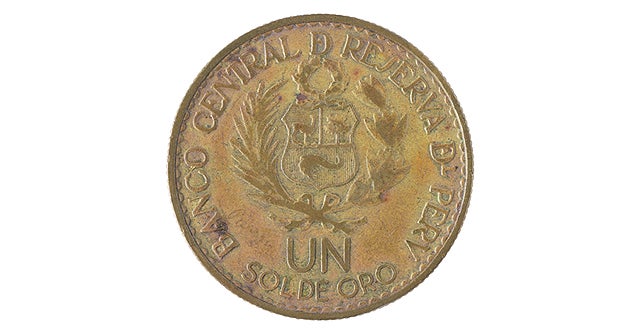 Originally an inviting target for foreign investment, Peru embarked on a program of increased public spending in the 1980s without a plan for dealing with the resulting debt. Investment dried up as liberalized trade policies slowed growth and inflation started to rise. In 1985, the government replaced the Sol with the Inti at an exchange rate of 1,000 to 1. The largest denomination of the new bill was 1,000 Inti note. By September 1990, monthly inflation had reached 400% and a 10 million inti note was created to deal with hyperinflated prices for goods and services. Only six years after its creation, the Inti was replaced by a new version of the Sol with a conversion rate of one billion to one.  5. Escudo (Chile)  Salvador Allende was elected president of Chile in 1970. An avowed Marxist and member of the Socialist Party, he nationalized industries and dramatically increased social spending to redistribute wealth to the poor. To pay for this, he adopted an expansive monetary policy that initially produced economic growth, but also fueled a rise in inflation. By the end of 1972, inflation had reached 600%. The rate had doubled to 1,200% within one year and the government defaulted on debts owed to other countries and international banks. The Allende government was overthrown and he committed suicide. In 1985 the Escudo was replaced by the new peso at a 1,000 to 1 rate. From East Germany we have a postage stamp declaring solidarity with the people of Chile and portraying a portrait of Salvador Allende  More failed currencies Yugoslavia 1992-1995  Between 1988 and 1989, the Yugoslavian Dinar’s largest denomination switched from 50,000 to 2,000,000 notes. The New Dinar replaced the Dinar in 1992, at a rate of 1 to 10, with the highest denomination being 50,000. By 1993, this was 10,000,000,000. In answer to this sharp increase inflation, the government simply removed six zeros, meaning that the “Newer” Dinar replaced the “Old Dinar” at a rate of 1 to 1,000,000. In the next year the currency was replaced yet again, this time at the rate of 1 to 1,000,000,000! By January 1995, prices had increased a quadrillion percent in two years, and as a result the German Mark became the country’s Fiat currency. It is estimated that during the height of hyperinflation (December 1994), inflation was increasing by a rate of 100% per day. In fact many Yugoslavians during this time sought to forgo paying their bills for as long as possible, because it several weeks the amount owed would seem relatively cheap! Hungary 1945-1946 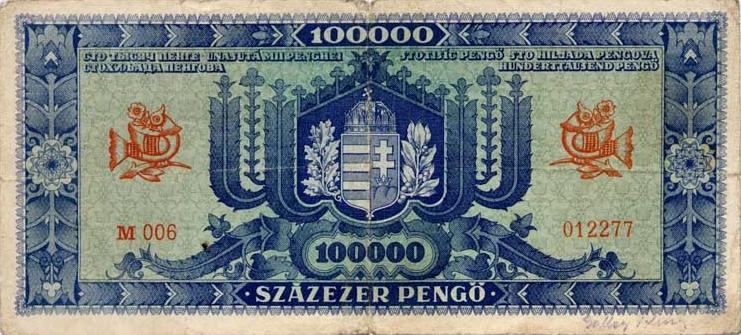 The Great Depression put an initial strain on the Austrian Pengo, originally introduced with great strength as a replacement to the Austrian-Hungarian Korona in 1926, per the Treaty of Versailles. Next, the associated effects of World War II would run their course. In 1944, the Hungarian Pengo’s highest denomination was the 1,000 note. A year later it was 10,000,000. And by mid-1946, it was 100,000,000,000,000,000,000. Realizing that this type of hyperinflation and denomination increase was not sustainable – and after 20 short years – the Pengo was replaced by the Forint. There are famous pictures of this event, which include street sweepers cleaning the sea of Pengo notes that Hungarians so eagerly discarded. At the time of this replacement, the Pengo to Forint exchange, was Four Hundred Octillion (That’s 29 Zeros) to one. That same Forint would exchange for 11.74 to $1USD. Inflation has since continued at a much more subdued rate, and the current exchange is valued at approximately 195.2 Forint to 1 $USD. It is estimated that at the time of replacement, the value of all Hungarian currency in circulation equaled less than one-thousandth of one US dollar! 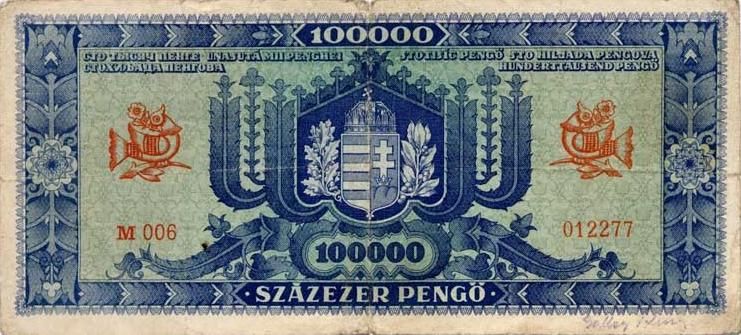 · |
|
#4
●
02-11-2013, 03:20 AM
| ||||||||
| So Fucking Banned Poster Rank:342 Male Join Date: May 2010 Posts: 3,762
Contributions: 26
Mentioned: 1 Post(s) Quoted: 32 Post(s)
| ||||||||
|
Re: 5 Failed Currencies And Why They Crashed
Yes he is. Perhaps that's why mengala worships him. Anytime Mengala has an issue he brings out his favorite Jew Hater.
|
|
#6
●
02-11-2013, 05:06 AM
| ||||||||
 My Rank: MASTER SERGEANT Poster Rank:424 Join Date: Jun 2011 Posts: 2,775
Contributions: 3
Mentioned: 13 Post(s) Quoted: 471 Post(s)
| ||||||||
|
Re: 5 Failed Currencies And Why They Crashed
Great thread thanks for posting  off topic- Its alleged that Allende killed himself using a AK47 given to him by castro!! Regardless of where you stand on his politics I dont think anyone could argue aginst the fact that things were better under him then Pinochet's junta. |
|
#7
●
02-11-2013, 11:38 PM
| ||||||||
 My Rank: LANCE CORPORAL Poster Rank:1837 Male Join Date: May 2011 Posts: 281 Mentioned: 0 Post(s) Quoted: 23 Post(s)
| ||||||||
|
Re: 5 Failed Currencies And Why They Crashed
I think the Papiermark is the most relevant. Too many public officials, on local and national levels, screw the people by taking out loans with unreasonable terms b/c someone at JP Morgan or whatever bought them a thousand dollar watch. The financial institutions get to be France and we get to be Germany. Hopefully it'll all end the same way, minus the bad parts...
|
|
#8
●
02-19-2013, 01:38 PM
| ||||||||
 King of East Texas Poster Rank:361 3 legs Join Date: Dec 2010 Posts: 3,443
Contributions: 1
Mentioned: 13 Post(s) Quoted: 915 Post(s)
| ||||||||
|
Re: 5 Failed Currencies And Why They Crashed
100 trillion bill zimbabwe and Burma's 9 based money system  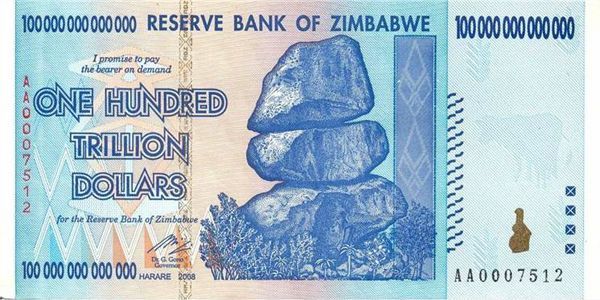 · 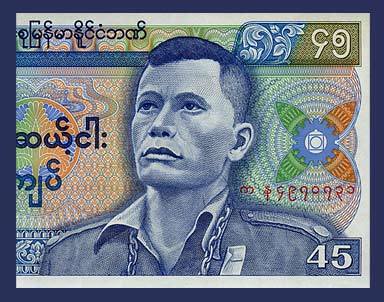 · 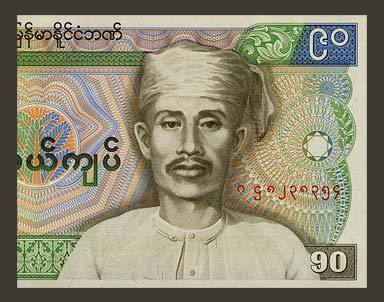 · |
|
#9
●
02-26-2013, 10:14 AM
| ||||||||
| So Fucking Banned Poster Rank:342 Male Join Date: May 2010 Posts: 3,762
Contributions: 26
Mentioned: 1 Post(s) Quoted: 32 Post(s)
| ||||||||
|
Re: 5 Failed Currencies And Why They Crashed
And "Charlie Bit Me" got 10 million views. Crazy Hater with fake religious costume posts notes all over his video just in case people don't understand his bizaare speech.
|