|
#1
●
06-28-2013, 07:41 AM
|
 ♚ Legacy Gold Member ♚ Poster Rank:35 Female Join Date: Nov 2008 Posts: 43,321
Contributions: 233
43,321Posts 76,137Thanked 2,282Quoted 95Mentioned 233Contrib. |
|
12 Glow-in-the-Dark Animals
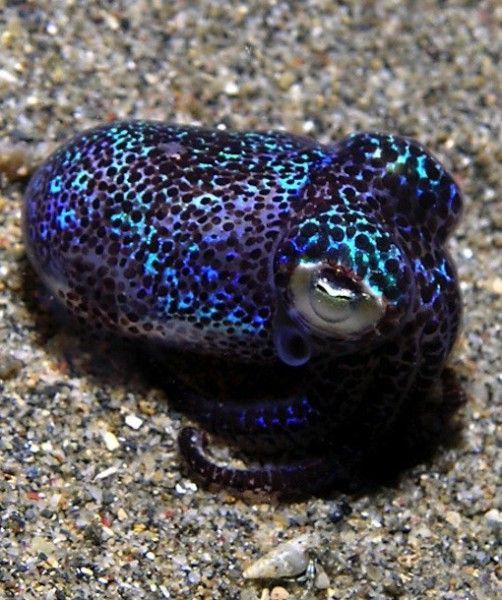 Bobtail squids have a built-in security system. It houses luminescent bacteria in special organs. Once the bacteria get settled, the squid can control the brightness and direction of the light to help it see through the dark waters of the deep. The bacterium also serves as extra eyes, generating a nervous signal when it detects something nearby. 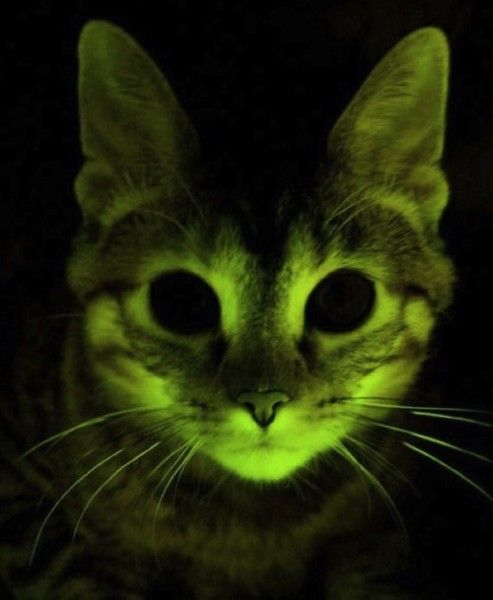 Recently, cats were used for a study to help the fight against AIDS. Several felines had a protein inserted into their genes to help them fight the feline version of AIDS. To track the progress of this protein, researchers added another protein, usually found in jellyfish, that caused the cats to glow. This allowed for the progress of cells to be easily monitored. 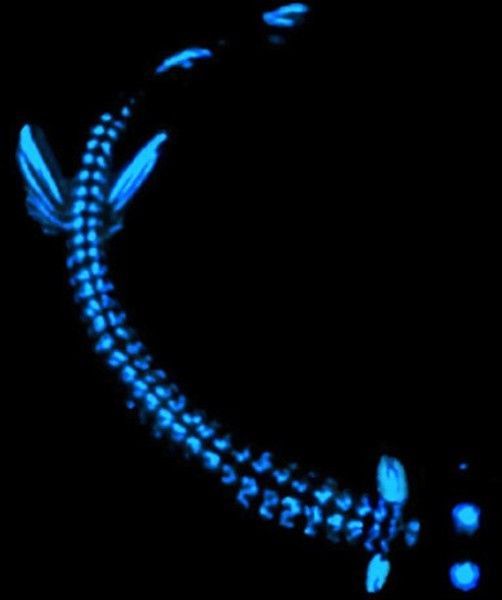 The black dragonfish is as cool as it sounds. These deep-sea swimmers are covered in photo-spores from face to tailfin, giving it an electric look. The fish's bioluminescence is a big help when trying to track down food in the dark. 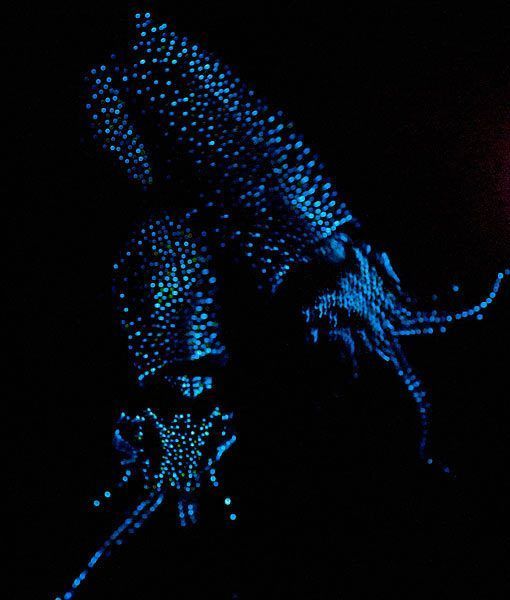 The three-inch-long firefly squid uses the bioluminescene in its tentacles to get the attention of its prey and lure them in. These tiny swimmers got national attention when a large number of them surfaced on a beach in Japan. Researchers also believe this is one of the few squids with colour vision, so they can enjoy their blue glow as well. 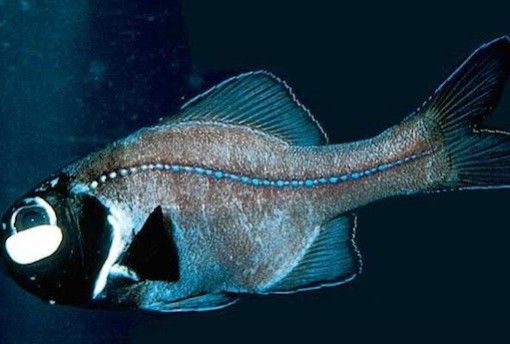 The flashlight fish uses bioluminescent organs under its eyes to communicate and confuse predators, as well as attract prey. 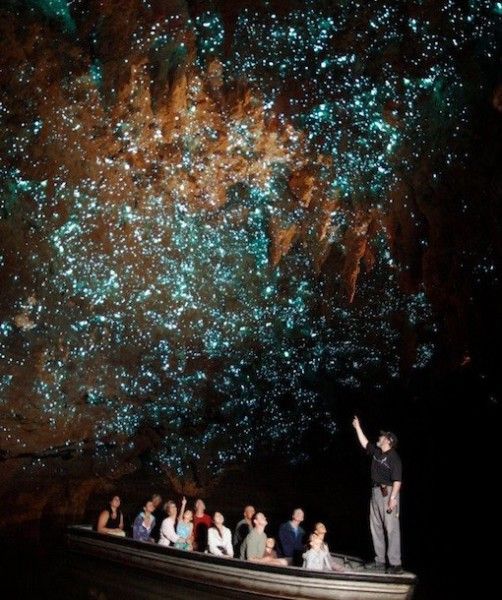 New Zealand gloworms put on quite a show in the Waitomo caves. These larvae use bioluminescence to burn off waste and attract food, and they depend on the damp environment of caves to mature. The large number of gloworms that call the cave home create an amazing spectacle for tourists. 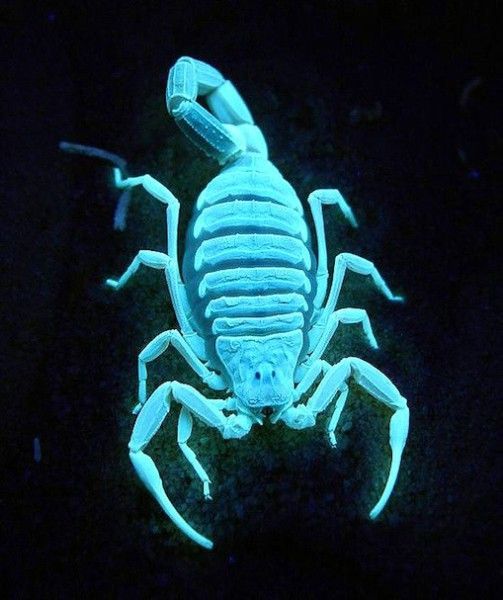 When you shine a black light on scorpions, their exoskeletons glow a neon blue. This transformation happens due to the way the proteins of a scorpion's outer shell convert the light. Scientists are still unsure what benefit (if any) this glowing feature serves. 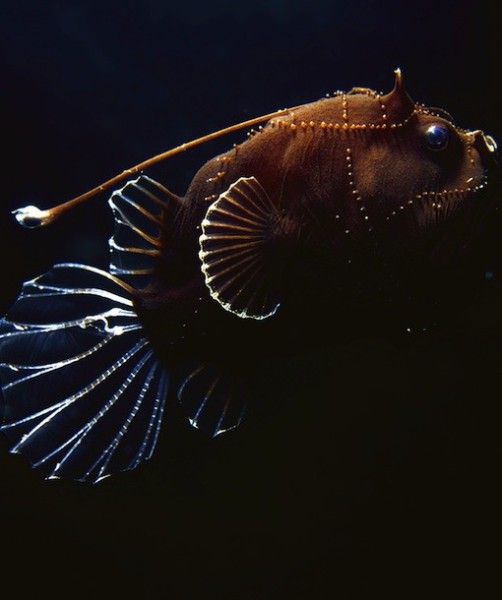 Many deep-sea fish are attracted to pretty lights. The anglerfish uses this to its advantage by dangling a bioluminescent lure above its jaws. Fish eagerly swim toward the light, only to find a hungry set of teeth 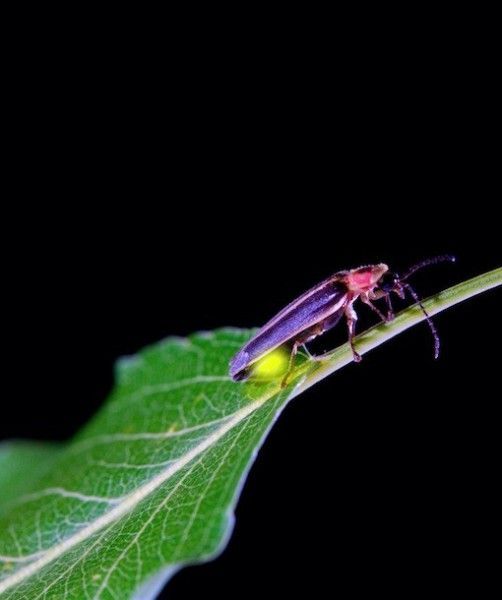 There are more than 2,000 species of fireflies, a member of the beetle family, which are found all over the world. Each species has a unique light-blinking pattern that is created by special light organs in their lower abdomens. By combining certain cells, fireflies are able to emit light that generates almost no heat. 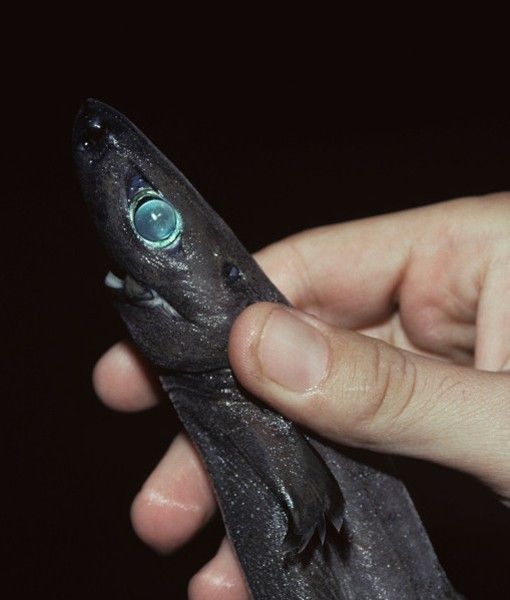 The small eye pygmy shark serves as its own nightlight. The tiny sea creature was only discovered April 2012, and the species sports a never-before-seen feature: a glowing belly. Through studies, scientists believe their glow is due to a bioluminescence that helps the sharks camouflage themselves in the deep ocean waters. 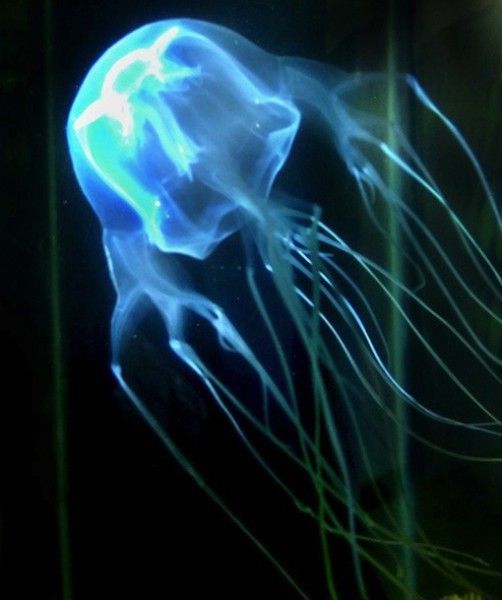 Multiple species of jellyfish are also masters of bioluminescent feats. For example, the alarm jellyfish sets off its natural light show when it is under attack. The organism does this in hopes of attracting a larger creature to scare away its attacker. 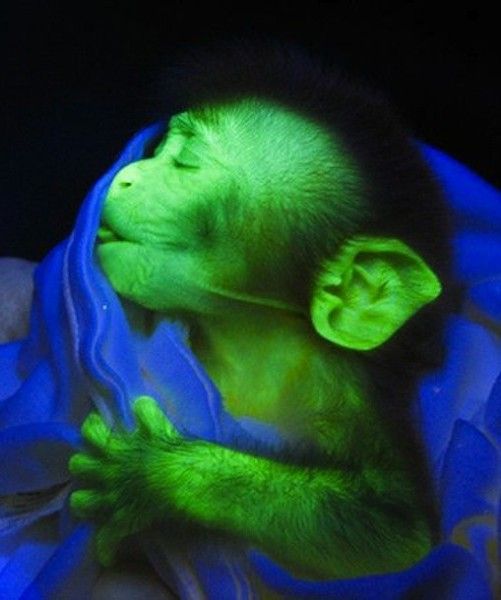 Rhesus monkeys aren't natural glowers. tTis bright baby boy was aided by science. Researchers added a protein to the fertilized egg that affected the DNA. One of the effects was the monkey's Hulk-like reaction to fluorescent light. |
|
#2
●
06-28-2013, 03:49 PM
|
 My Rank: FIRST SERGEANT Poster Rank:454 Female Join Date: Mar 2012 Posts: 2,488 2,488Posts 3,910Thanked 1,116Quoted 26Mentioned 0Contrib. |
|
Re: 12 Glow-in-the-Dark Animals
I want a glowing cat...wait and a monkey
|
|
#9
●
07-10-2013, 02:59 PM
|
| My Rank: LANCE CORPORAL Poster Rank:2405 Join Date: Feb 2010 Posts: 187 187Posts 155Thanked 12Quoted 0Mentioned 0Contrib. |
|
Re: 12 Glow-in-the-Dark Animals
At first i thought the picture of the glow worms was a picture of some far off spot in space
|