|
#1
●
07-04-2012, 03:14 PM
| ||||||||
 My Rank: LANCE CORPORAL Poster Rank:1799 female Join Date: Feb 2010 Posts: 290 Mentioned: 0 Post(s) Quoted: 0 Post(s)
| ||||||||
|
The 10 Remaining Galápagos Tortoise Subspecies
Let’s look at who’s left, in all their long-lived, slow-moving glory.  Volcán Alcedo Tortoise 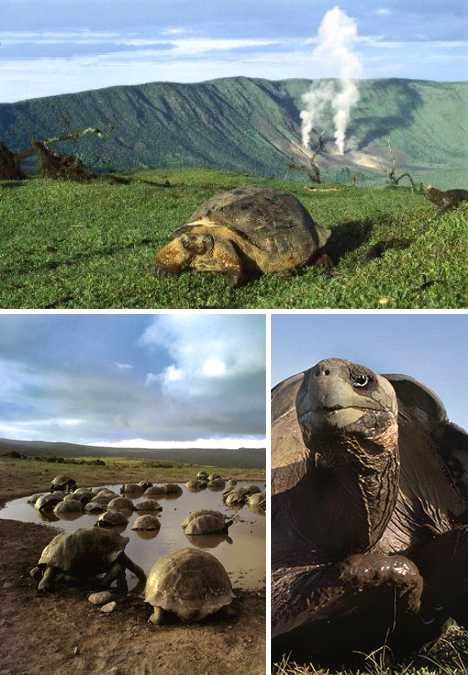 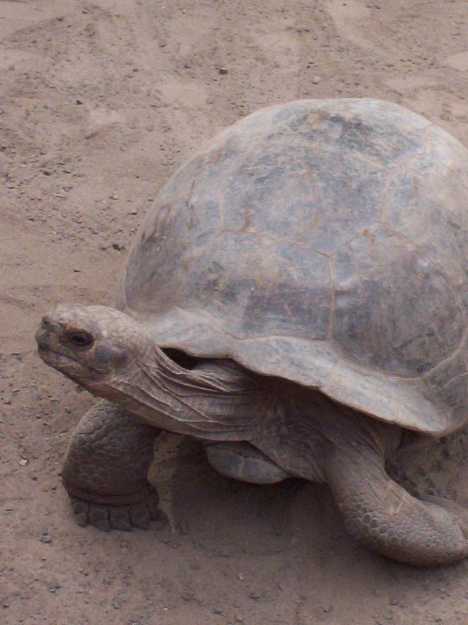 According to population estimates made by the Directorate of the Galápagos National Park in mid-2009, the overall number of giant tortoises is roughly 20,000 of which 6,320 belong to the Volcán Alcedo subspecies (Chelonoidis ***** vandenburghi). Though still considered Vulnerable by the IUCN Red List, Volcán Alcedo tortoises can be considered to be a success story in that the original estimated number of all subspecies of giant tortoise in the Galápagos Islands was roughly a quarter of a million, falling to a low of just 3,000 in 1974. Volcán Alcedo tortoises are native to the caldera and southern slopes of the Alcedo Volcano located on the central part of Isabela Island, the largest island in the Galápagos archipelago. Analysis of the tortoises’ DNA revealed a surprisingly low level of genetic diversity, a characteristic that may be the result of a natural catastrophe (likely a volcanic eruption) that occurred around 100,000 years ago. Chatham Island Tortoise 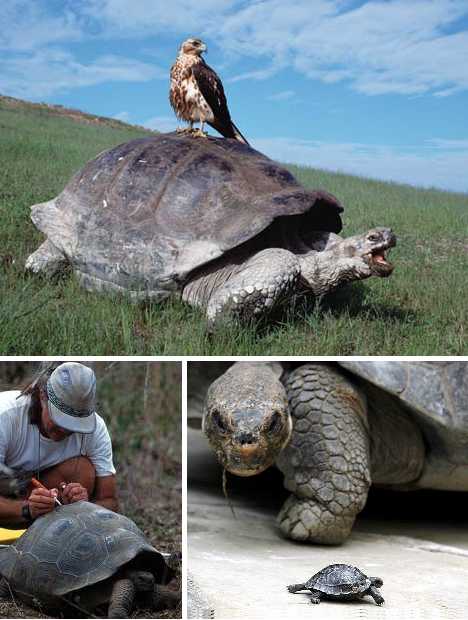 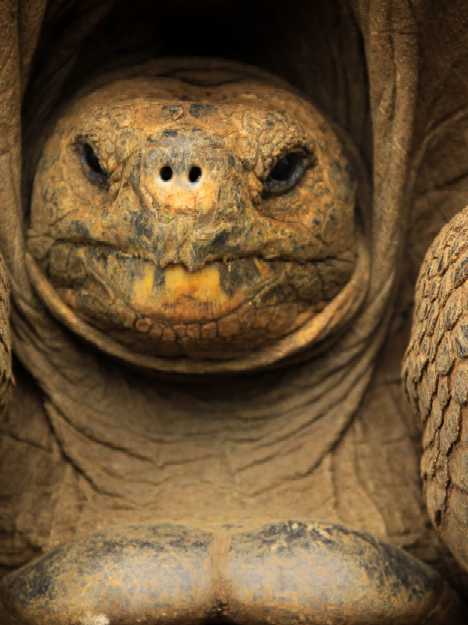 Approximately 1,820 Chatham Island tortoises live in the northeastern portions of San Cristóbal (formerly Chatham) island. Designated as Vulnerable by IUCN, the Chatham Island tortoise (Chelonoidis ***** chathamensis) has made an impressive recovery helped by the fencing off of its prime habitat and the eradication of feral dogs in the 1970s. Chatham Island tortoises are “giants” in the true sense of the word. Over an estimated 170-year lifespan they can grow to a maximum weight of 400 kg (880 lb), extending 1.8 meters (5.9 ft) in length from nose to tail tip. Volcán Wolf Tortoise 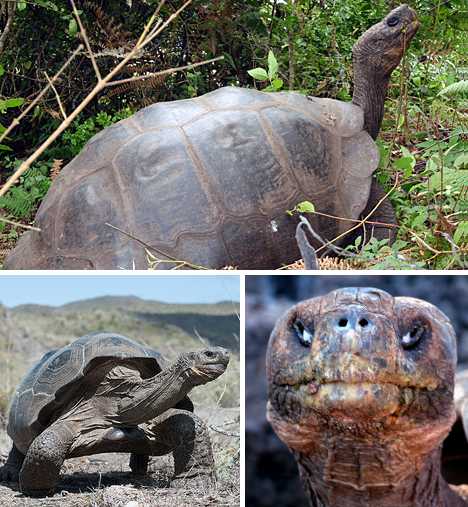 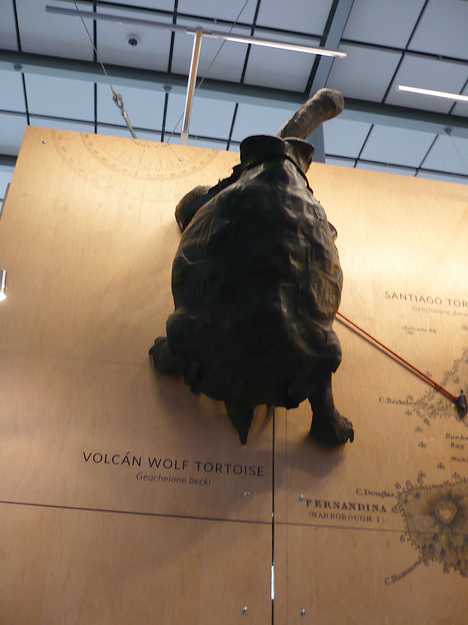 About 1,150 Volcán Wolf tortoises inhabit the northern and western slopes of Volcano Wolf, the largest of the six component volcanoes that together make up Isabella Island. These officially Vulnerable tortoises have adapted to the harsh conditions around 1,707 meter (5,600 ft) high Volcano Wolf, conditions that may hinder the tortoises main predators: rats, feral pigs and dogs, donkeys and goats. A recent genetic analysis of the Volcán Wolf tortoise (Chelonoidis ***** becki) has shed light on a longstanding mystery: the tortoises exhibit a range of shell shapes varying from dome-shaped to saddle-backed. The latter may be hybrids of the now-extinct C. Elephantopus tortoise native to Floreana Island, located 200 miles away. Biologists theorize that 19th century whalers captured Floreana tortoises for food and later threw any “extras” overboard; the tortoises then swam to nearby Isabella Island and mated with Volcán Wolf tortoises. Volcán Darwin Tortoise 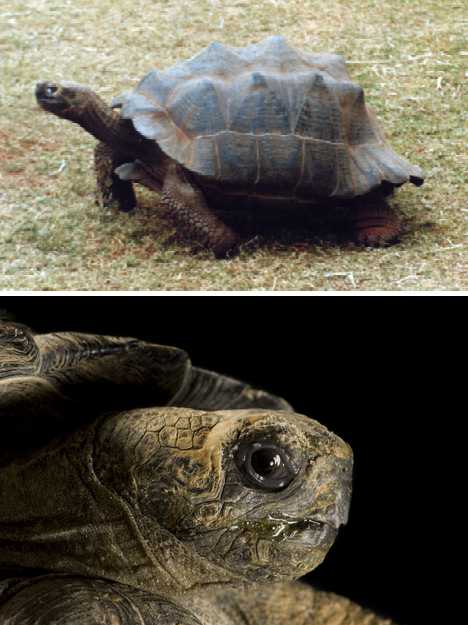 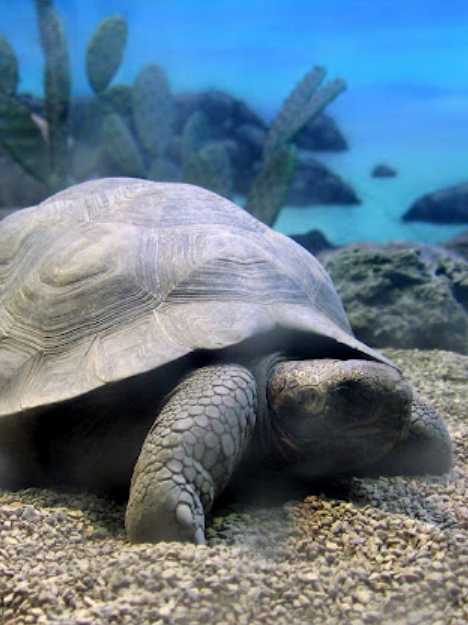 Though there are only around 800 or so Volcán Darwin tortoises (Chelonoidis ***** microphyes), IUCN lists them as Vulnerable due to their reasonably successful reproduction rate in the wild. The tortoises are found on the rugged southern and western slopes of 1,325 meter (4,350 ft) high Volcano Darwin, located just south of Volcano Wolf on Isabella Island. Volcán Darwin tortoises have relatively light-colored, brownish-gray carapaces that may have evolved to provide camouflage in their rocky habitat. They were extensively studied by Charles Darwin after his ship, HMS Beagle, laid anchor in a sheltered cove at the foot of the volcano that today bears his name. Indefatigable Island Tortoise 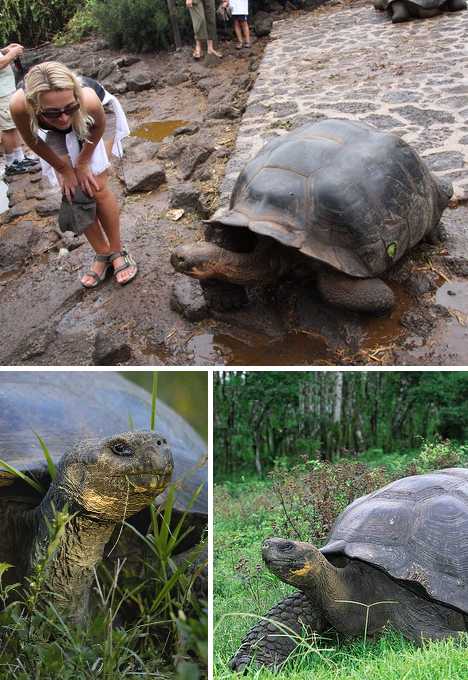 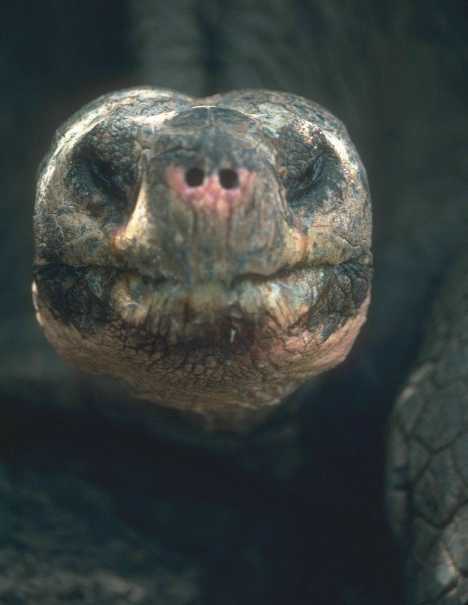 Just under 3,400 Indefatigable Island tortoises roam the scrubby hills of Santa Cruz Island, with most tortoises congregating in the southwest and a separate group roaming to the northwest. The tortoises display a more lowland-type appearance with black, domed shells and comparatively shorter necks. Recent studies point to the possibility of their actually being three distinct species of Indefatigable Island tortoise (Chelonoidis ***** porteri), creating a new challenge for biologists already struggling to boost the numbers of this officially Endangered giant tortoise. Iguana Cove Tortoise 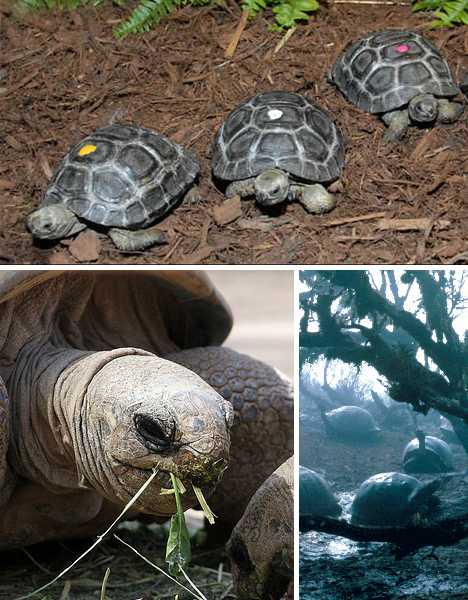 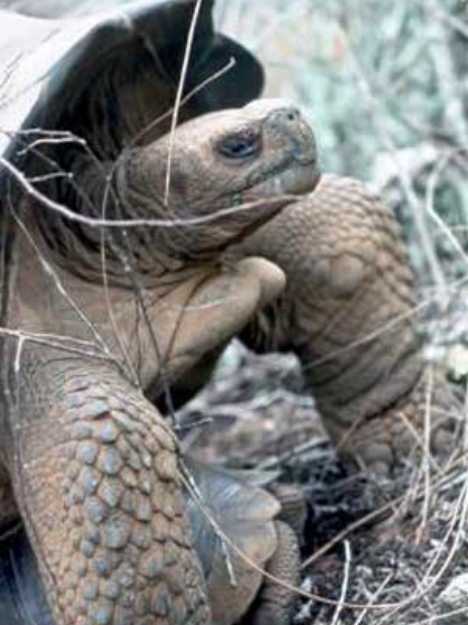 A population of roughly 2,575 Iguana Cove tortoises can be found at the southwestern tip of Isabella Island at the foot of the 1,640 meter (5,380 ft) high Cerro Azul volcano. Exposure to whalers and sealers over the past several centuries took a terrible toll on the Iguana Cove tortoises and human predation continued into the 1960s due to cattle companies established in the area. Now that pressure from feral cats, dogs, pigs and black rats has been reduced by concerted human intervention, the Iguana Cove tortoise (Chelonoidis ***** vicina) is enjoying a population rebound though IUCN still lists the subspecies as Endangered. James Island Tortoise 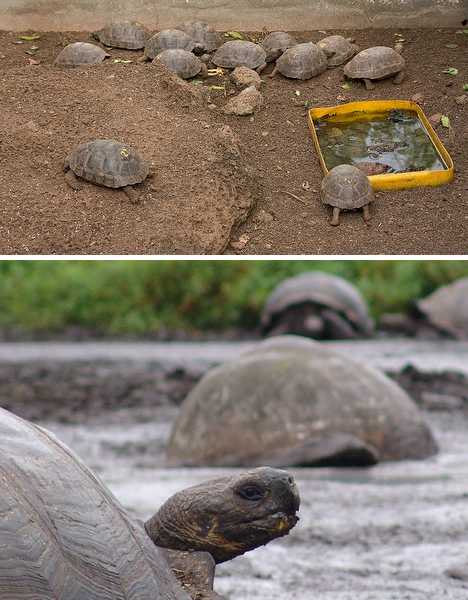 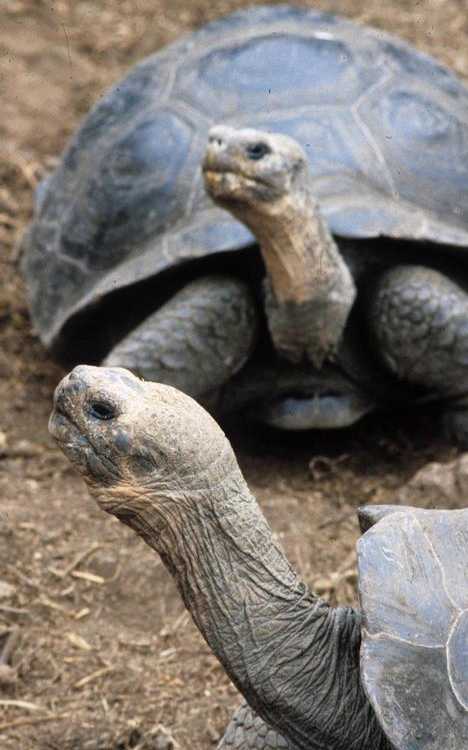 The officially Endangered (by IUCN) James Island tortoise (Chelonoidis ***** darwini) roams the central to western regions of Santiago Island where it remains under intense pressure by feral pigs (who dig up its nests) and goats (who destroy coastline vegetation). The estimated population of 1,165 is heavily tilted in favor of males though efforts by the Charles Darwin Research Station are assisting the subspecies in rebuilding its formerly abundant population. Charles Darwin may have laid the foundation for modern evolutionary theories but he was very much a man of his times in other ways. In describing this particular subspecies in 1845 and comparing it to other giant tortoises, he wrote “the tortoises from James Island are rounder, blacker, and have a better taste when cooked.” The Sierra Negra Tortoise 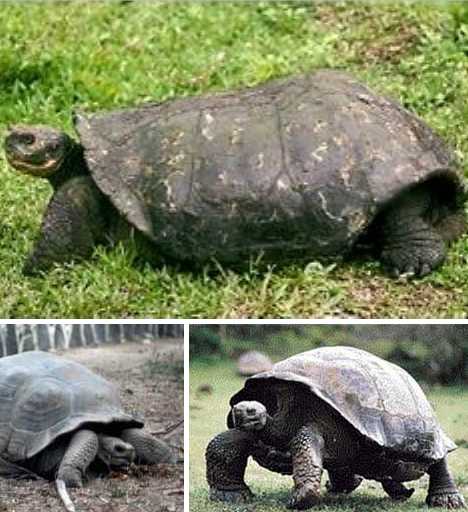 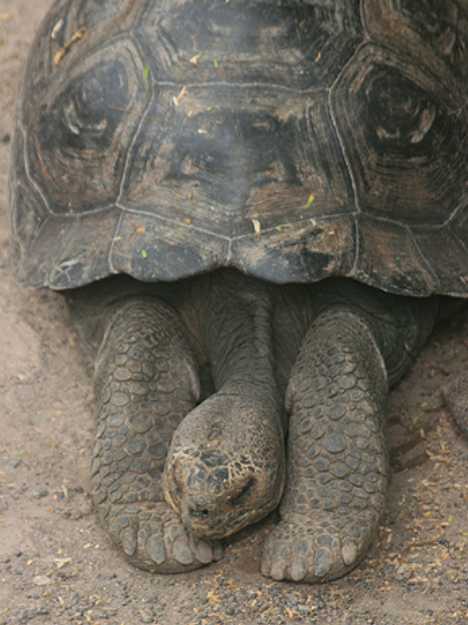 Considered to be Endangered by IUCN, the Sierra Negra tortoise (Chelonoidis ***** guentheri) numbers around 700 individuals making up two separate populations on the eastern and west to southwestern slopes of Isabella Island’s 1,124 meter (3,687 ft) high Sierra Negra Volcano. Once numerous, Sierra Negra tortoises were extensively exploited for their oil well into the 1950s. The Galápagos Islands are volcanic in origin and eruptions are not uncommon – the threat of an eruption from the Sierra Negra Volcano in 1998 prompted biologists to bring 20 tortoises into captivity where they could breed in relative peace. Though the numbers of this subspecies remain dangerously low, limited reproductive success in the wild plus the ongoing captive breeding program should keep Sierra Negra tortoises viable for some time to come. Hood Island Tortoise 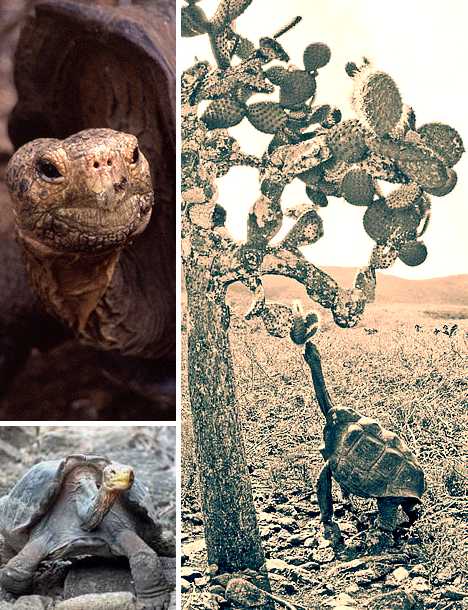 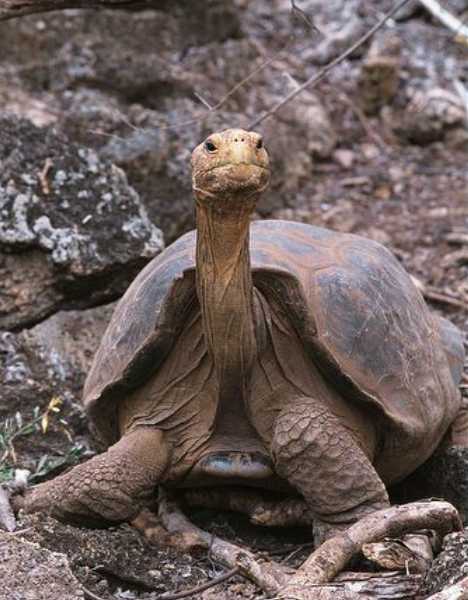 As the only Galápagos giant tortoise designated “Critically Endangered” by IUCN, the Hood Island tortoise (Chelonoidis ***** hoodensis) is enjoying a resurgence from the edge of extinction via the helping hands of the Charles Darwin Research Station. Only 2 males and 11 females could be found when the project began; they were joined by a third male fortuitously found at the San Diego Zoo. The research station’s captive breeding program has managed to multiply the original 13 tortoises to over 1,000 youngsters now roaming their ancestor’s original habitat on Española Island. Hood Island tortoises are one of the smallest giant tortoise subspecies, possibly as a function of Island Dwarfism on isolated, 60 square kilometers (23 sq mi) Española Island. Environmental pressures have encouraged the tortoises to evolve long limbs, extended necks and arched carapace openings that allow the tortoises to exploit vegetation growing higher than most other subspecies can reach. Duncan Island Tortoise 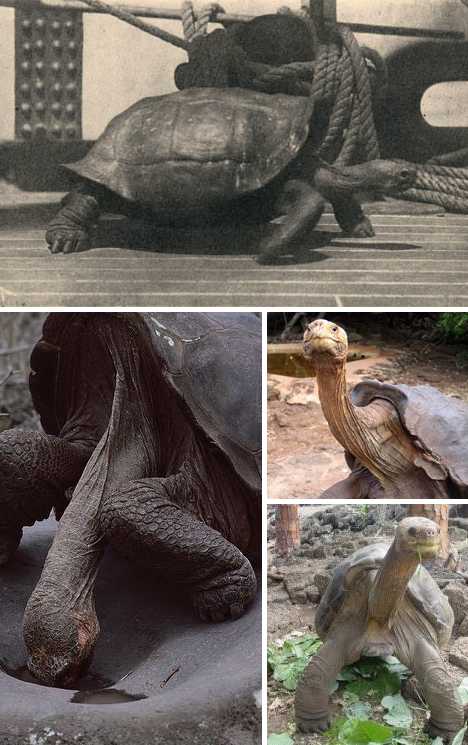 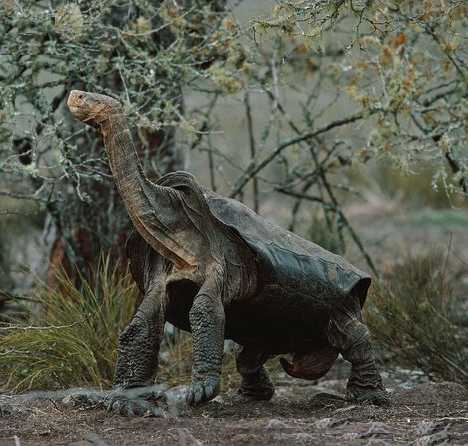 Native to the southwestern region of tiny (18 sq km or 6.95 sq mi) Pinzón Island, this particular subspecies of giant tortoise resembles the Hood Island tortoise with its long legs & neck and its saddle-shaped shell. Duncan Island tortoises (Chelonoidis ***** duncanensis) are small, as giant tortoises go, and their shells show exaggerated scalloping and a saddle-style shape. IUCN lists the Duncan Island tortoise as EW – “Extinct in the Wild”, though captive breeding programs have boosted the overall population to over 500 and most captive-bred youngsters released into the wild between 1970 and 1990 have survived. |
|
#2
●
07-04-2012, 05:34 PM
| ||||||||
 My Rank: GUNNERY SERGEANT Poster Rank:631 Male Join Date: Jun 2010 Posts: 1,431 Mentioned: 0 Post(s) Quoted: 11 Post(s)
| ||||||||
|
Re: The 10 Remaining Galápagos Tortoise Subspecies
That Duncan Island Tortoise in the last photo - that's got to be the tallest tortoise I've ever seen! The length of it's neck and legs is freaky compared to other species.
|