Hope and forgiveness print this article
Young girl in infamous Vietnam photo now woman with a purpose
BY MICHAEL RIGLER
The Western Star
DEER LAKE Phan This Kim Phuc has every reason to be filled with bitterness and hate.
But Kim, who became known around the world in 1972 when she was photographed fleeing her burning South Vietnamese village, has found peace and purpose through forgiveness.
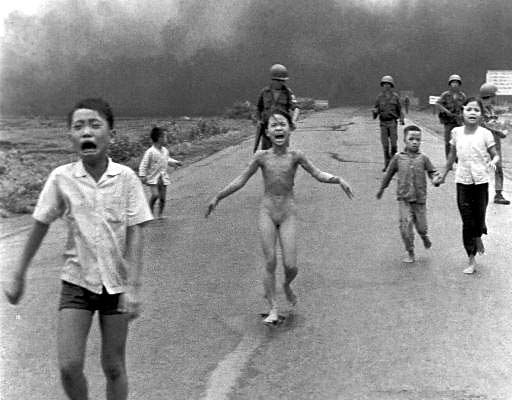
In the famous photograph, Kim is seen fleeing her village after a U.S. Air Force plane dropped napalm incendiary bombs during the height of the Vietnam war; her clothes and much of her skin have been burned off by the fireball that engulfed her village.
The photographer who captured the picture, which helped turn the tide of public opinion against the American involvement in the war, rushed Kim to a South Vietnamese hospital. Against all odds, she survived, despite suffering third degree burns on more than half her body.
Her life was forever changed that day, and she was left with agonizing pain, brutal scarring and a heart full of hate.
Her resentment grew when the communist government of Vietnam decided to make her a poster girl for the atrocities of the war. After years of suffering under Communist repression, she and her husband Toan defected to Canada on a stopover at Gander airport in 1982 from a flight bound to Havana from Moscow — where the newlyweds had been granted a short honeymoon by the communist regime.
She’s returned to Newfoundland after 15 years to tell her story around the province.
Kim credits the teachings of the Christian gospel with her salvation and her ability to let go of the anger and resentment, which she said poisoned her heart.
“I learned that forgiveness is far more powerful than any weapon of war,” Kim told an enraptured audience at the Deer Lake Motel Thursday.
“If the little girl in that picture can do it, then you can do it too.
“I started the Kim Foundation to help children who are the victims of war. Now I look at that photograph in a very different way. I hope all of you, when you see this picture, won’t see a little girl crying in pain and fear, but crying out for peace.”
The photograph became one of the iconic images of war in the 20th century. As an adult, and a Canadian immigrant, Kim has turned her life story into a symbol of hope and forgiveness.
In recent years, Kim has met with one of the Air Force veterans who was responsible for dropping the napalm on her village, and has forged a friendship with him out of her spirit of forgiveness and compassion.
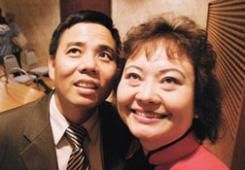
On Wednesday, she met with the immigration officer who first interviewed her and her husband in Gander when they defected. The couple now lives in Ajax, ON. And Kim devotes much of her time to spreading her message to the world.
“I knew that I had been saved that day because I had a higher purpose in life,” said. “Having known suffering and agony, I now know the value of reaching out to help others.
“Having known war, I now know the value of peace. Having lived with pain, I know the value of love. Having lost everything, I now know the value of cherishing everything I have that’s important and having known hatred, I now know the value and the power of faith and forgiveness.”
Source ABOUT KIM PHUC
Kim Phuc is often referred to as "The Girl in the Picture". She is the subject of the most famous photograph of the Vietnam War. It showed nine-year-old Kim, running naked up the road, her skin badly burned by napalm. The photograph shocked the world and changed the course of the war.
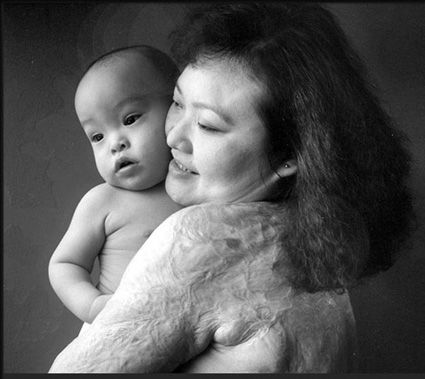
Anne Bayin has been a close personal friend and mentor to Kim Phuc since their meeting in Toronto in 1995. Bayin has helped guide Kim’s career as a public speaker. As well, she designed the photo illustration (seen above) [ed. The photo of mother and child below] for the exclusive use of THE KIM FOUNDATION, a charitable organization set up by Kim Phuc to help child victims of war.
Bayin and Associated Press/Nick Ut, the photographer who shot the original famous photograph, have donated this new work to The Kim Foundation. Proceeds from sales of this image will go directly to helping children of war.
Source