|
#1
●
03-15-2009, 12:28 PM
| ||||||||
 My Rank: LANCE CORPORAL Poster Rank:1844 Join Date: Feb 2009 Posts: 279 Mentioned: 0 Post(s) Quoted: 5 Post(s)
| ||||||||
|
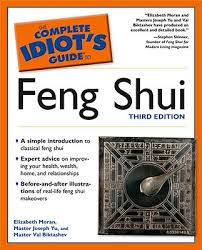
Complete Idiot's Guide to Feng Shui (Book)
Foreword Much has been written about feng shui in English: At the time of this writing there are over 300 separate titles in English and many thousands of websites on the subject. Yet 25 years ago the subject was virtually unheard of in the United States and very difficult to discover amongst Western-educated Chinese. Before that there were only books written by missionaries and colonial administrators living in the nineteenth century. Western interest was probably sparked by my first book, The Living Earth Manual of Feng Shui, which was written in 1976 when most material on feng shui was still available only in Chinese. Feng shui did not however become “dinner party conversation” until the late 1980s, and Lillian Too did much to popularize it in the 1990s. However, when interest in feng shui did finally gather speed, because of the lack of source material, many well-meaning teachers and writers seemed to forget that it is a really precise and exacting subject, and extended it in ways not originally part of its traditional Chinese roots. Now, although any science can be extended by new research and testing, this has got to be done with a full knowledge of all that has gone before. It is sometimes forgotten that feng shui is not a branch of interior decorating, but a practical science in its own right. To put not too fine a point on it, a lot of later-day Western feng shui has been simplified beyond the point where it works, or has been invented or “intuited.” Often intuition has provided a key or a direction in which to look, but it is never sufficient in itself to declare “it must be so” because I feel it to be so. It therefore came as a delight and a breath of fresh air when I laid my hands on The Complete Idiot’s Guide to Feng Shui. It was even more of a surprise to find that what at first glance (from its cover) was just another popularization of the subject, was in fact a very detailed text going a lot further than many of the apparently more ponderous texts, but starting with the real basics. Elizabeth Moran and Masters Joseph Yu and Val Biktashev have among them produced an excellent and detailed book, explaining precisely the detailed calculations undertaken to this day by professional Chinese feng shui practitioners. As complex as these calculations are, the authors have presented them in a way that is easy to grasp. Even if you fail to absorb all the detail, many excellent tables make it easy to read the type of house, the Four Pillar horoscope of its owner, and the subtle interaction between these two, which modifies the luck, health, wealth, and happiness of its occupants. Even now people question the effectiveness of such feng shui “luck manipulation.” Let me assure you that, properly done, it is every bit as effective as the curative properties of acupuncture, and if wrongly applied, every bit as devastating as a karate blow. Feng shui, acupuncture, and karate are the product of thousands of years of refinement by one of the most practical races on earth. Their recent arrival does not diminish their effectiveness. The fact that these three traditional Chinese sciences have only recently made their presence felt in the West is a tribute to the canniness of the Chinese, who kept the knowledge of gunpowder (among other things) from the West for hundreds of years. To transplant from one culture to another a science that is based on a completely different worldview is a very difficult thing to do. To counter some of the myths that have sprung up around modern feng shui is even more so, but to do this in bite size chunks and with considerable humor is truly a tour de force. Tying in Isaac Newton, Albert Einstein, and David Bohm sets feng shui in the context of science, and using the latest scholarly approaches to Chinese civilization and science keeps the material up to date. Feng shui is such a huge subject, that with any book on it, the main problem is what to leave out. The authors have handled this dilemma, by touching briefly upon most of those schools/methods of feng shui currently represented in the West (like Form School and Eight House feng shui), whilst choosing to focus on two main areas. These are Flying Star feng shui and its interrelation with that branch of Chinese astrology that deals with your personal Four Pillars of Destiny. Both of these aspects make up a large portion of the feng shui currently practiced in Hong Kong today. |