|
#1
●
11-16-2013, 12:49 AM
| ||||||||
 ★ Legacy Member ★ Poster Rank:639 Female Join Date: Nov 2013 Posts: 1,392
Contributions: 1
Mentioned: 8 Post(s) Quoted: 159 Post(s)
| ||||||||
|
"Trophy-Taking" During World War II
Only a newbie, so did a search to see if these have been posted before. Fingers crossed they haven’t. During World War II, United States military personnel mutilated dead Japanese service personnel in the Pacific theater of operations. The mutilation of Japanese service personnel included the taking of body parts as “war souvenirs” and “war trophies”. Teeth and skulls were the most commonly taken "trophies", although other body parts were also collected. The phenomenon of "trophy-taking" was widespread enough that discussion of it featured prominently in magazines and newspapers, and Franklin Roosevelt himself was reportedly given a gift of a letter-opener made of a man's arm (Roosevelt rejected the gift and called for its proper burial). The behavior was officially prohibited by the U.S. military, which issued additional guidance as early as 1942 condemning it specifically. February 1, 1943, Life magazine published a photograph taken by Ralph Morse during the Guadalcanal campaign showing a decapitated Japanese head that US marines had propped up below the gun turret of a tank. Life received letters of protest from people "in disbelief that American soldiers were capable of such brutality toward the enemy." The editors responded that "war is unpleasant, cruel, and inhuman. And it is more dangerous to forget this than to be shocked by reminders." However, the image of the decapitated head generated less than half the amount of protest letters that an image of a mistreated cat in the very same issue received Japanese soldier's decapitated head hung on a tree branch in Burma. 1945. Source of Photo; US National Archives. Japanese remains were repatriated from the Mariana Islands after the war, roughly 60 percent were missing their skulls 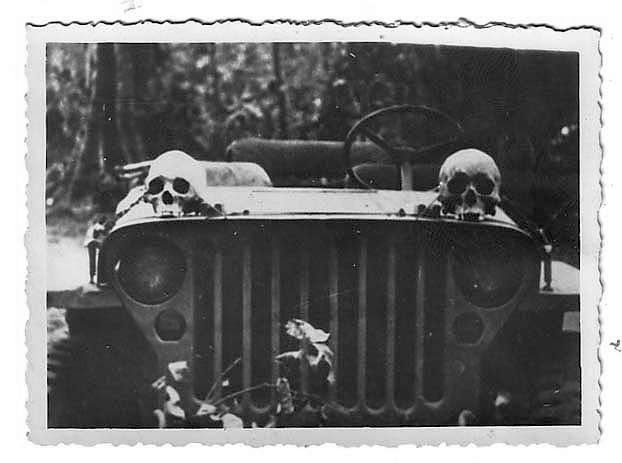 ·  · 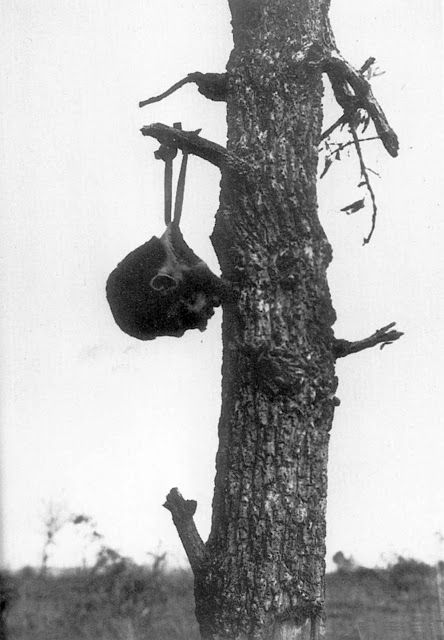 · |
|
#2
●
11-16-2013, 02:11 AM
| ||||||||
 I POOP ON U Poster Rank:127 Female Join Date: Oct 2009 Posts: 12,645
Contributions: 3
Mentioned: 12 Post(s) Quoted: 1263 Post(s)
| ||||||||
|
Re: "Trophy-Taking" During World War II
People were more shocked about a photo of a mistreated cat because they haven't at all forgotten that "war is unpleasant, cruel, and inhuman".  |
|
#3
●
11-16-2013, 11:31 PM
| ||||||||
 ★ Legacy Member ★ Poster Rank:1038 I like cunts, the female ones. Join Date: Feb 2010 Posts: 660 Mentioned: 0 Post(s) Quoted: 64 Post(s)
| ||||||||
|
Re: "Trophy-Taking" During World War II
War always create irrational behaviour, I think. Wether its a cat or a child,e.g., they are defenceless and therefore creates more emotion amongst people. |
|
#5
●
11-17-2013, 04:54 PM
| ||||||||
 ★ Legacy Member ★ Poster Rank:369 I need a nap =| Join Date: Aug 2012 Posts: 3,203
Contributions: 43
Mentioned: 42 Post(s) Quoted: 901 Post(s)
| ||||||||
|
Re: "Trophy-Taking" During World War II
At least they reserved their mutilation for bodies that were already dead. This is child's-play compared to what went down in Nanking.  Good thread, never seen these before  |
|
#6
●
11-18-2013, 01:27 AM
| ||||||||
 So Fucking Banned Poster Rank:655 Join Date: Sep 2010 Posts: 1,325 Mentioned: 2 Post(s) Quoted: 235 Post(s)
| ||||||||
|
Re: "Trophy-Taking" During World War II
One reason GI's probably did that was because of the discovery of some of their comrades with their heads cut off with samurai swords etc etc...
|
|
#7
●
11-18-2013, 10:07 AM
| ||||||||
 $lave Poster Rank:27 Regular White Guy Join Date: Sep 2010 Posts: 51,263
Contributions: 91
Mentioned: 599 Post(s) Quoted: 27907 Post(s)
| ||||||||
|
Re: "Trophy-Taking" During World War II
What the Nazi's did in Europe pales in comparison to what the Japanese did in China, Korea, south-east Asia and the Philippines. Not certain why the horrors of the Pacific theater are(for the most part) ignored by the media. Probably due to America's more Euro-centric view of WWII; but also might have to do with the number of Jewish people involved in the entertainment industry compared to the number of Asia's(of non-Japanese decent), who are involved in creating what we see. I think it may also be easier for a majority of Americans to relate to other Caucasians; whether they speak a different language or not, and label them evil or judge their actions. Seemingly overlooking or even outright disinterest in the war crimes of the Japanese is easy since it happened on the other side of the world and was, for the most part, Asian against Asian.. and far less documented that the atrocities in the European theater. That makes it less 'real' to the average American or European as it's easy to dismiss a foreign culture as alien and 'not like us'. Unless you lived and died the way these men did on god-forsaken, sun-scorched rocks in the Pacific ocean and endured what they endured - you can never really understand what they did or why they did it. It's really easy to sit in a comfortable chair, behind the screen of a computer, in the comfort of a climate controlled home, and judge men going thru an insane and inhuman experience. |
|
#8
●
11-18-2013, 01:29 PM
| ||||||||
 My Rank: MASTER SERGEANT Poster Rank:419 Join Date: Jun 2011 Posts: 2,775
Contributions: 3
Mentioned: 13 Post(s) Quoted: 471 Post(s)
| ||||||||
|
Re: "Trophy-Taking" During World War II
the more things change, the more they stay the same
|
|
#9
●
11-20-2013, 01:55 AM
| ||||||||
 ★ Legacy Member ★ Poster Rank:18 MAN Join Date: Nov 2009 Posts: 61,094 Mentioned: 825 Post(s) Quoted: 37482 Post(s)
| ||||||||
|
Re: "Trophy-Taking" During World War II
I would love to own a real human skull, other than the one I'm currently using.
|
|
#10
●
11-20-2013, 03:44 AM
| ||||||||
 ★ Legacy Member ★ Poster Rank:184 female Join Date: Oct 2013 Posts: 8,135 Mentioned: 19 Post(s) Quoted: 1185 Post(s)
| ||||||||
|
Re: "Trophy-Taking" During World War II
I happen to love catz more than people, so yeah, the cat pic would upset me more |