|
#1
●
08-18-2014, 07:13 PM
| ||||||||
 ✖ The Antique Christ ✖ Poster Rank:105 Gonzo Punk Join Date: Jan 2009 Posts: 15,488
Contributions: 58
Mentioned: 23 Post(s) Quoted: 2046 Post(s)
| ||||||||
|
Self Portrait As a Drowned Man
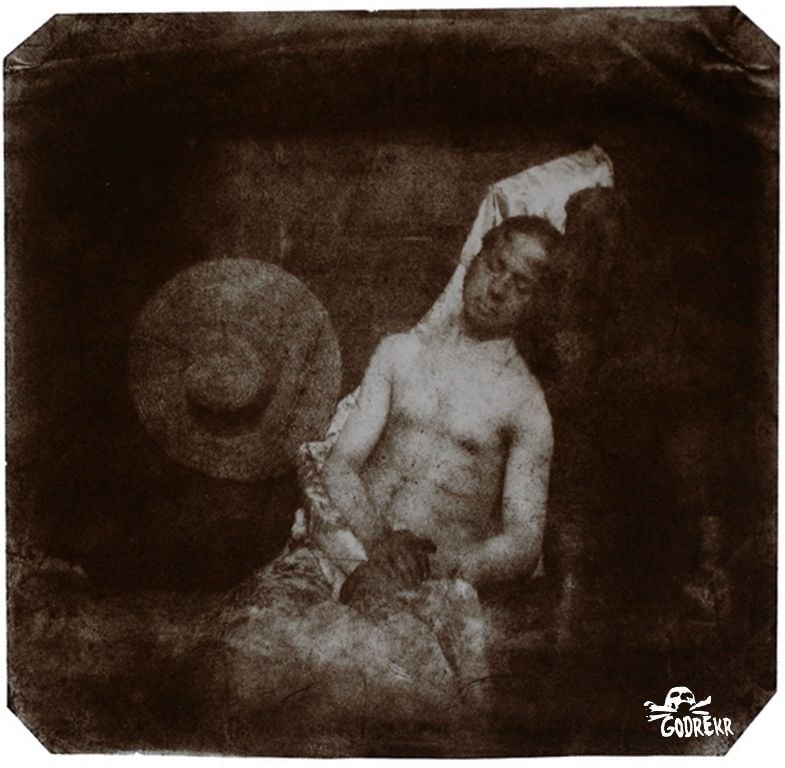 Hippolyte Bayard (20 January 1801 – 14 May 1887) was a French photographer a pioneer in the history of photography. He invented his own process known as direct positive printing and presented the world's first public exhibition of photographs on 24 June 1839. He claimed to have invented photography earlier than Louis-Jacques Mandé Daguerre in France and William Henry Fox Talbot in England, the men traditionally credited with its invention. Bayard was persuaded to postpone announcing his process to the French Academy of Sciences by François Arago, a friend of Louis Daguerre, who invented the rival daguerreotype process. Arago's conflict of interest cost Bayard the recognition as one of the principal inventors of photography. He eventually gave details of the process to the French Academy of Sciences on 24 February 1840 in return for money to buy better equipment. As a reaction to the injustice he felt he had been subjected to, Bayard created the first staged photograph entitled, Self Portrait as a Drowned Man. In the image, he pretends to have committed suicide, sitting and leaning to the right. Bayard wrote on the back of his most notable photograph: Despite his initial hardships in photography, Bayard continued to be a productive member of the photographic society. He was a founding member of the French Society of Photography. Bayard was also one of the first photographers to be commissioned to document and preserve architecture and historical sites in France for the Missions Héliographiques in 1851 by the Historic Monument Commission. He used a paper photographic process similar to the one he developed to take pictures for the Commission. Additionally, he suggested combining two negatives to properly expose the sky and then the landscape or building, an idea known as combination printing which began being used in the 1850s. 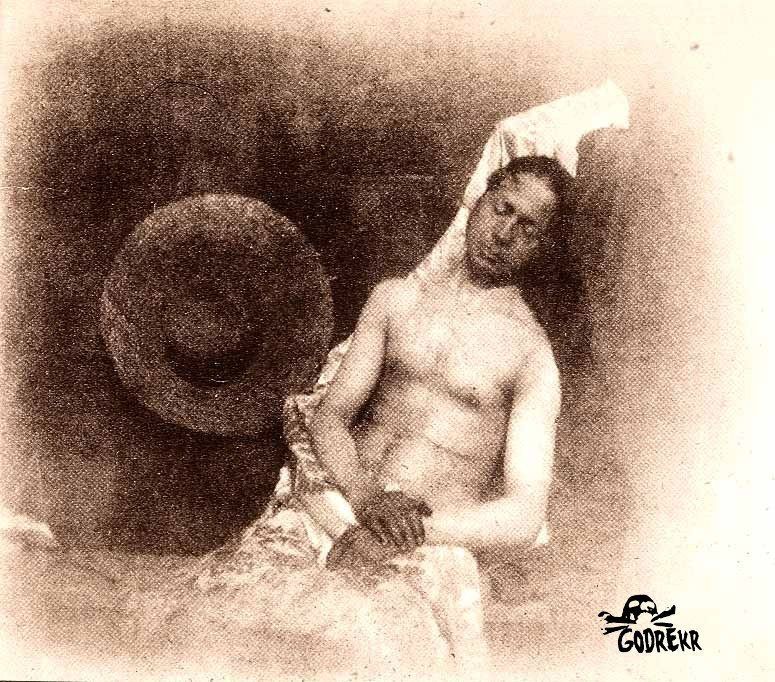 Hippolyte Bayard 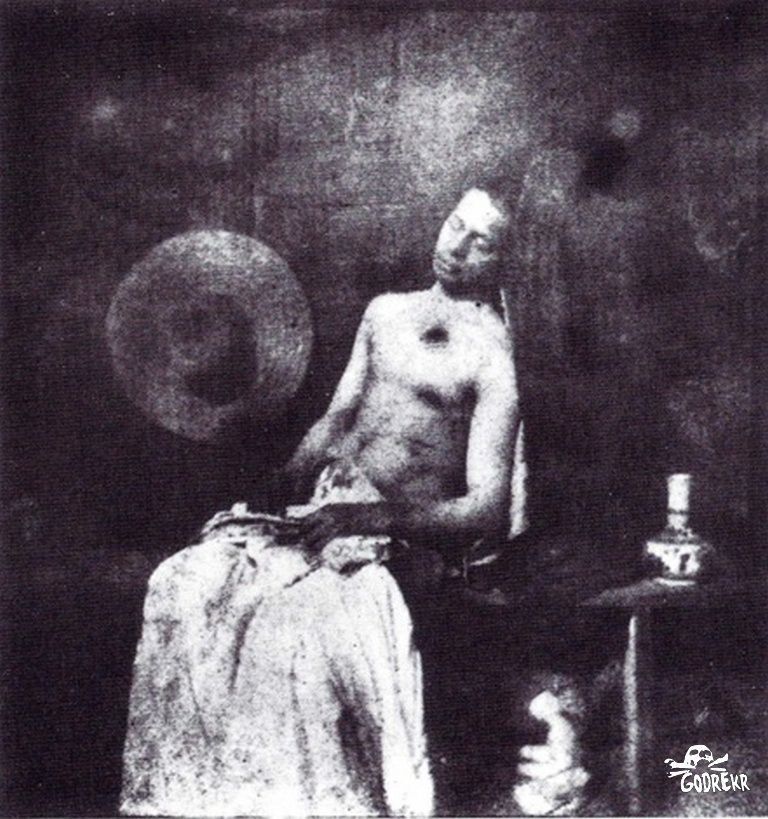 · |
|
#6
●
08-21-2014, 12:35 AM
| ||||||||
 ★ PSYCHOPOMP ★ Poster Rank:103 Man Join Date: Oct 2009 Posts: 15,952 Mentioned: 9 Post(s) Quoted: 1297 Post(s)
| ||||||||
|
Re: Self Portrait As a Drowned Man
So one of the first pictures of his person was showing him as a drowned man...  If I invented the camera and picture development process, you could be damn skippy sure that I'd take a more worthwhile photo... Like TITTIES  |