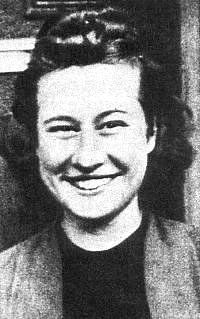
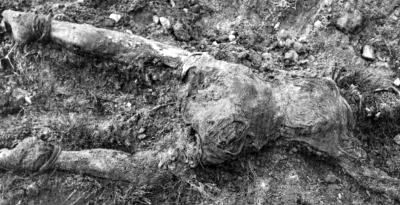
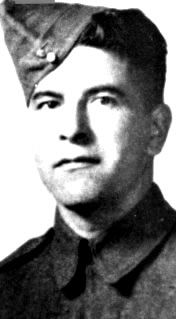
A young woman, Joan Pearl Wolfe, who was living a gypsy-style existence near an army camp in Surrey, England, met and fell in love with August Sangret, a French-Canadian solider stationed at the nearby camp at Godalming. Sangret helped Wolfe build shelters in the woods near his military post, where she lived and they met frequently as lovers. The wigwam-style huts and Wolfe’s American Indian heritage caused this case to be known as the “Wigwam Murder.” Wolfe became pregnant, and in September 1942 she insisted that Sangret marry her. He attacked and killer her and buried her body on a ridge in Hankley Common. Two soldiers walking in the vicinity several weeks later discovered the body. She had been stabbed repeatedly with a knife with a peculiar shaped blade and bludgeoned over the lead. A log found nearby was determined to be one of the weapons, and a knife, eventually found in the drain of a washroom on the army base, was identified as the other weapon. Sangret, waiting to be interviewed early on in the investigation, had asked permission to go to the washroom and had probably hidden the knife in the drain at the time. Sangret’s clasp knife was missing and bloodstains were found on his clothing. He was found Guilty and was hanged at Wandsworth Prison on April 2, 1943.