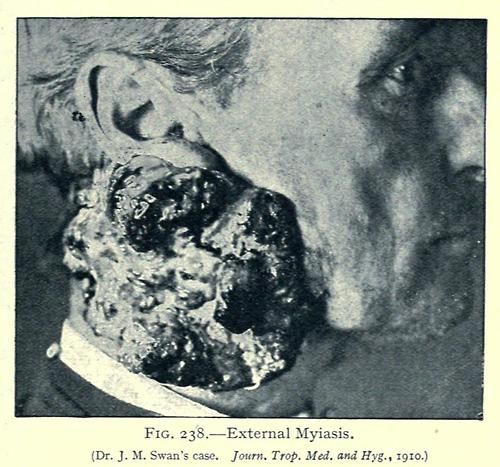
Myiasis is the term used for any infestation by parasitic insect (generally fly) larvae in a vertebrate, and is most commonly encountered as “flystrike” in the livestock industry. In some parts of the world, flies like the tumbu fly (Cordylobia anthropophagus) and human botfly (Dermatobia hominis) cause problems in people, especially when proper precautions are not taken to avoid contact with larvae.
This particular case was caused by the tumbu fly, and surprisingly, is both a fairly typical presentation of a severe subcutaneous infestation of the larvae - and it rarely causes long-term complications or serious problems. The weeping boils occasionally become infected after the larvae mature leave the body, but while the maggots are still growing, they eat the dead skin and infected skin around the wounds they cause, leading to minimal or no scarring, and a clean surface for the body to heal.
Still, can you imagine having an infestation that bad and being told “It’ll be better in a few weeks?” I would sooner rub mercury over the affected skin than “wait it out”…well, maybe not. That was actually one of the early attempted cures for myiasis in all animals. The problem is, it causes the larvae to die underneath the skin, and if they’re not promptly removed (which involves cutting open the wounds in a pretty serious way), they begin to decompose, and will quickly cause severe infection and sepsis.
Luckily for this guy, by the 1900s, doctors had both Vaseline, and knowledge that suffocating the larvae would draw them out - a far less dangerous, and far more effective, way to get the unwelcome guests to leave. In fact, applying Vaseline to the site and using manual extraction once the larvae emerge is still the preferred way to treat myiasis.
Diseases of the Skin. John Macleod, 1920