|
#1
●
01-02-2017, 08:56 AM
| ||||||||
 Psychotronic Grindhouse Poster Rank:3683 Male Join Date: May 2012 Posts: 91 Mentioned: 0 Post(s) Quoted: 12 Post(s)
| ||||||||
|
Death Doctor Shiro Ishii – Unit 731
Death Doctor Shiro Ishii experimented with biological weapons on hundreds of thousands of people. After the war the Americans let him escape in exchange for research results. 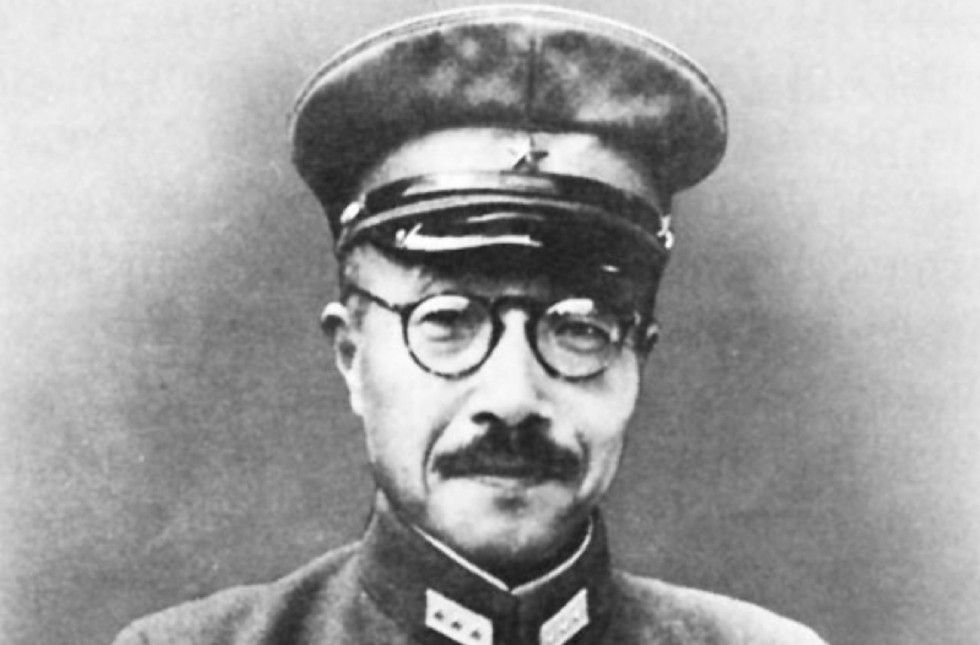 In December 1947 Pentagon received a top secret report from Tokyo. The report was signed two seconded experts in biological warfare: "This study will give us vital new knowledge. Japanese researchers have spent years and millions of dollars at work. We have not even been able to obtain such information in our laboratories because of reluctance to experiments on humans. We hope the individuals who have voluntarily provided this information will not experience discomfort due to this." 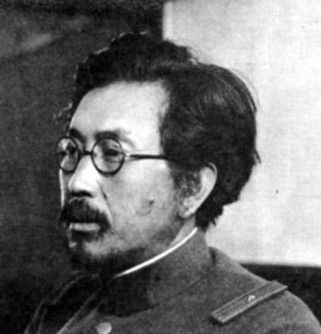 Dr. Shiro Ishii led Japan's biological weapons program during WW2. Countless prisoners were subjected to medical experiments. One of the individuals who would not experience discomfort was dr. Shiro Ishii. For ten years he was head of Japan's biological weapons program. At the research center Ping Fang, he tried out biological weapons and infectious diseases on prisoners of war and civilian Chinese and Russians. At least a quarter million people died as a result of Ishiis work. Now WW2 was replaced by the Cold War against communism. USA had use for men like Shiro Ishii. Prohibition Military doctor Shiro Ishii was fascinated by biological weapons. This he had been since he read the Geneva Convention in 1925. There, the great powers agreed to a prohibition of biological weapons. At that time, it was almost a theoretical ban, since no country possessed such weapons. But Ishii thought that when the great powers nevertheless chose to ban them, it had to be something to aim for. Ishii came from a noble family with connections up to the imperial family. In 1936 he used his connections to require a large area in the Japanese-controlled Manchuria near the village of Ping Fang. Here Ishii built a research complex with its own airport, farms, hospitals, cinemas and Shinto temple. It also included prisoner barracks, laboratories and crematoriums. The complex was inhabited by 3,000 physicians, scientists and guards. The official explanation for the building projects were that they revolved around a sawmill. One day in 1936 the Chinese slave laborer Fang Zheng-Yu received a trainload of what the Japanese called "maruta" - "logs": "The train of eight boxcars stopped. The soldiers opened the doors and took out what looked like bamboo mats lashed with wire. Then I saw arms that stuck out, heads moving and blood spilling out. I heard the Japanese soldiers shout 'Logs!' Then I knew that it was people. " 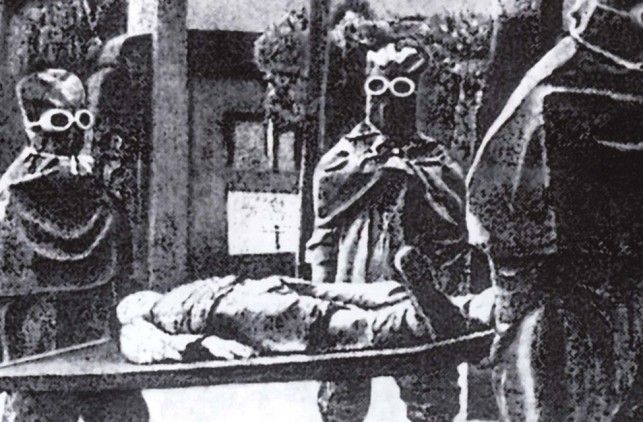 The Japanese researchers called the victims "logs". "They were not to be treated as human beings. Guinea pigs Several thousand Chinese, Russians and other ethnic groups the Japanese viewed as "inferior", were sent to Ping Fang. Eyewitnesses claim that also allied POWs ended up in Ping Fang. Takeo Wano, who worked at Ping Fang, told the New York Times: "I saw test tubes with labels that read" American, "Englishman" and "Frenchman," but most were Chinese. Those who were labeled Americans contained mostly body parts like hands and feet. " Regardless of nationality, they suffered the same fate: they were human guinea pigs. Prisoners were infected with contagious diseases. Then they were dissected alive to study how the disease developed. An assistant at Ping Fang explained in an interview with New York Times: "The dissections should be performed under normal conditions. If we had anesthetized them, it could have affected the organs and blood vessels we examined. Therefore, they were not anesthetized. " Vaccinations The purpose of the experiments was partly to develop vaccines against diseases. But the main objective was to find out which diseases were the best suited weapons. Ishii concluded that anthrax, cholera and plague were most effective. Infectious bacteria were grown in large cylinders. A Russian report stated that at its peak, Ping Fang could produce eight tons of bacteria per month. 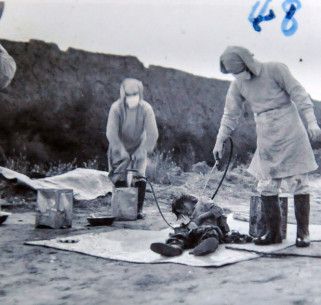 To test the biological weapons, they were released over the Chinese countryside. At least 200,000 people died. Ping Fang also had a large colony of rats. These were used as living factories for fleas of the kind that spread the bubonic plague. When production was at its most, Ping Fang could produce 500 million plague infected fleas per year. The next challenge for Ishii was to find effective ways of spreading the diseases. The first attempts consisted of spreading germs and fleas by dropping them from an aircraft or pour them into rivers. This was effective, but imprecise. Several attempts ended with the Japanese scientists or soldiers themselves being infected. The solution was porcelain air bombs. They were precise, and were pulverized when they hit the ground. Thus the contagion was spread, and all traces of the bombs obliterated. Trial bombing To test their methods, the researchers undertook so called "field tests." This meant that large areas of the Chinese countryside were prone to trial bombings with biological weapons. There are no precise figures on how many Chinese people died as a result of the tests. Historian Sheldon H. Harris from California State University has estimated that at least 200,000 civilian Chinese died of plague and other diseases. Others believe the figure was as high as 400,000. Work at Ping Fang was approved at the highest levels. The brother of emperor Hirohito visited the plant and saw footage of experiments with chemical weapons on Chinese prisoners. It is likely that the emperor himself knew of the experiments. Ishii was also awarded a medal for the experiments by Japanese prime minister Hideki Tojo. In 1945 US forces advanced on Japan. At Ping Fang scientists worked desperate to find a weapon that could stop the Americans. In late summer 1945, they embarked on the project "Cherry Flowers at Midnight." The plan was to attack the US mainland with submarines, airplanes and balloons full of plague germs. The plan went so far that the date for the attack was set to 22 September 1945. The month prior, the Americans released atomic bombs over Hiroshima and Nagasaki. Japan surrendered on August 15 1945, "Operation Cherry Flowers at Midnight " was never completed. 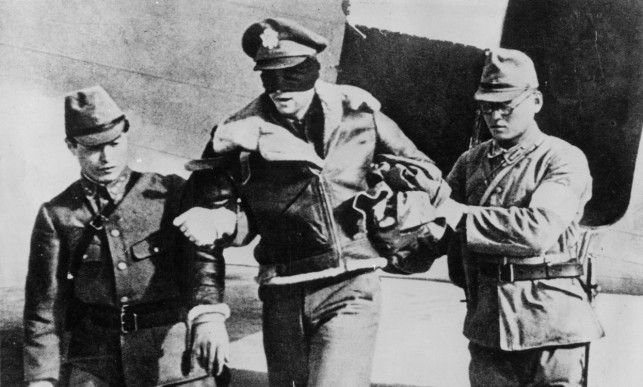 Several eyewitnesses claimed that American POWs were victims of experiments at Ping Fang. Possible allies As soon as WW2 was over, the Cold War began against the Soviet Union and communism. Germany and Japan were no longer enemies but potential allies in the new war. Especially the United States was interested in scientists from the former enemy states. Nazi and Japanese scientists had conducted experiments that were impossible in democratic states. At this time Shiro Ishii sat in US captivity. First he denied all allegations of war crimes: "Biological weapons are inhumane and it would be contrary to the emperor's honor and compassion to allow such a thing." But when the Americans threatened to extradite Ishii to the Russians, he reconsidered. In May 1947, Washington received a telegram from the American envoys in Japan, "Ishii argue that if he gets guarantees of immunity from charges of war crimes for himself, superiors and subordinates, he will describe the biological weapons program in detail." 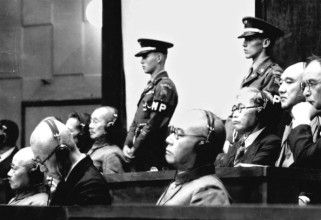 During the trials against Japanese war criminals, Shiro Ishii was relinquished of indictment. In the summer of 1947, the Pentagon sent two experts on biological weapons to Japan to interrogate Ishii. One was biologist Dr. Edwin V. Hill. He was head of the US's own research center for biological weapons Fort Detrick. They were impressed by what they learned, "Ishii led an organization which at its largest stretched from Harbin (in northern China) to Dutch East Indies (now Indonesia), and from the island of Hokkaido to Celebes". In other words the whole of the Japanese occupied southern east Asia. Ping Fang was only the center of an organization which included 18 research centers with a total of almost 6,000 scientists. Signed an agreement In the report from December 1947, the researchers argued strongly that the US government should make a deal with Ishii to get access to his research. It would be of vital importance to America's own research on biological weapons. At the end of the report the researchers revealed that they had already largely reached an agreement with Ishii: "We have gained this data against an expenditure of 250,000 dollars, a fraction of what the studies have cost ... ' Japanese Prime Minister Tojo Hadeki rewarded dr. Ishii with a medal for the biological weapons program. During the Tokyo War Crimes Tribunal, Tojo was sentenced to death. During the Tokyo War Crimes Tribunal, neither Shiro Ishii nor Ping Fang were mentioned with one word. To date no one has been held accountable for the crimes. One of Ishii's nearest coworkers became director of one of Japan's largest pharmaceutical companies. Another became governor of Tokyo, while a third became head of the Japanese Olympic Committee. Shiro Ishii himself lived a quiet life as general practitioner until he died of illness in 1959, 67 years old. Sources:
|
|
#2
●
01-02-2017, 12:23 PM
| ||||||||
 My Rank: STAFF SERGEANT Poster Rank:748 Join Date: Jun 2016 Posts: 1,082 Mentioned: 0 Post(s) Quoted: 245 Post(s)
| ||||||||
|
Re: Death Doctor Shiro Ishii – Unit 731
This is one of the true crimes of WWII that will never be forgotten. If there is a Hell, I am sure Dr. Ishii is burning there.  |
|
#3
●
01-07-2017, 02:16 PM
| ||||||||
 So Fucking Banned Poster Rank:55 Pull on it Join Date: Jun 2011 Posts: 25,957
Contributions: 3
Mentioned: 160 Post(s) Quoted: 12750 Post(s)
| ||||||||
|
Re: Death Doctor Shiro Ishii – Unit 731
I've been to the 9 18 35 museum in Shenyang China, lot's of info there on unit 731. More happened than I ever knew including biological weapons used in and around Shanghai |
|
#6
●
01-17-2017, 10:30 PM
| ||||||||
 My Rank: STAFF SERGEANT Poster Rank:877 Female Join Date: Feb 2010 Posts: 854 Mentioned: 1 Post(s) Quoted: 196 Post(s)
| ||||||||
|
Re: Death Doctor Shiro Ishii – Unit 731
This made me terribly depressed. I feel so bad for people who experience this type of atrocity: to have their lives snuffed so viciously in the name of someone's sick curiosity. I hate this planet.
|
|
#7
●
01-18-2017, 02:01 AM
| ||||||||
 ♚ Legacy Gold Member ♚ Poster Rank:2702 Female Join Date: Dec 2015 Posts: 153
Contributions: 1
Mentioned: 0 Post(s) Quoted: 48 Post(s)
| ||||||||
|
Re: Death Doctor Shiro Ishii – Unit 731
I've actually been researching Unit 731 for my podcast, so I want to thank you for the post! Its been helpful. I think when we record that episode it may have to be a 2-parter because there's soooo many horrible things to cover.  |
|
#9
●
02-21-2021, 09:36 PM
| ||||||||
| My Rank: SERGEANT Poster Rank:939 mail Join Date: Jun 2009 Posts: 779 Mentioned: 1 Post(s) Quoted: 100 Post(s)
| ||||||||
|
Re: Death Doctor Shiro Ishii – Unit 731
What do y'all think of Men Behind the Sun? While some argue it's first and foremost an exploitation film, a lot of its runtime is devoted to characterizing Ishii and his thought process in regards to Unit 731.
|