|
#1
●
10-18-2017, 12:21 PM
| ||||||||
| My Rank: LANCE CORPORAL Poster Rank:2589 Join Date: May 2017 Posts: 165 Mentioned: 0 Post(s) Quoted: 12 Post(s)
| ||||||||
|
Dead Bushrangers Outlaws and Bankrobbers
I’ll start this thread off with Ned Kelly’s gang last stand at Glenrowan. Ned Kelly, born in June 1855 at Beveridge, north-east of Melbourne, Northern Victoria, came to public attention as a bushranger in the late 1870s. He was hanged at the Melbourne Goal, November 11th, 1880. Kelly is perhaps Australia’s best known folk hero, not least of all because of the iconic armour donned by his gang in what became known as the Siege at Glenrowan (or The Last Stand), the event that led to Ned Kelly’s capture and subsequent execution. The siege at Glenrowan on Monday, June 28th, 1880, was the result of a plan by the Kelly Gang to derail a Police Special Train carrying Indigenous trackers (the Gang's primary targets), into a deep gully adjacent to the railway line. The plan was put into effect on Saturday, June 26 with the murder [near Beechworth] of Aaron Sherritt, a police informant, the idea being to draw the Police Special Train through the township of Glenrowan, an area the local Kellys knew intimately. After the Glenrowan Affair, the Kelly Gang planned to ride on to Benalla, blow up the undermanned police station and rob some banks. However, Ned miscalculated, thinking the train would come from Benalla not Melbourne. Instead of the 12 hours he thought it would take for a police contingent to be organized and sent on its way from Benalla, the train took 31 hours to reach Glenrowan. This resulted in a protracted and uncertain wait, leading to the long period of containment of more than 60 hostages in the Ann Jones Inn. It also resulted in a seriously sleep deprived Kelly Gang and allowed for the intervention of Thomas Curnow, a hostage who convinced Ned that he needed to take his sick wife home, enabling him to get away and warn the Police Special train of the danger. Eventually, in the early morning darkness of Monday, June 28th, the Police Special train slowly pulled into Glenrowan Railway Station, and the police contingent on board disembarked. The siege of the Glenrowan Inn began, terminating with its destruction by fire in the mid afternoon, and the deaths of Joe Byrne, Dan Kelly and Steve Hart. Earlier, shortly after daylight on the 29th, Ned was captured about 100 metres north east of the Inn. The group wore homemade suits of steel armour, fashioned from plough parts. The armour was not as effective as the gang had hoped – Ned Kelly’s armour weighed 44 kilograms (100 lbs) and his legs remained unprotected. After a tense shootout, Dan Kelly, Joseph Byrne and Steve Hart were shot and the hotel was burned to the ground. In the early hours of the morning of the 29 June, a wounded Ned Kelly emerged from behind the police, still in his armour, and began shooting. After a half hour battle, he was shot in his unarmoured legs, fell to the ground and was arrested. After his conviction for the murder of Constable Lonigan at Stringybark Creek in 1878, Kelly was hanged on 11 November 1880 at the Melbourne Gaol. It’s been said that bushranging ended with the shooting of the Kelly gang, which was made possible by the newly introduced Felons Apprehension Act 1865 (NSW) that allowed outlaws to be shot, rather than arrested. Even before his execution, there were signs that Ned Kelly would become a pivotal figure in Australian history, with a massive public petition demanding a reprieve. In the years since his death, Ned Kelly has captured the imagination of directors, authors and the general public, becoming a flawed hero and Robin Hood-esque figure. I’ll add further stories to this post over time. 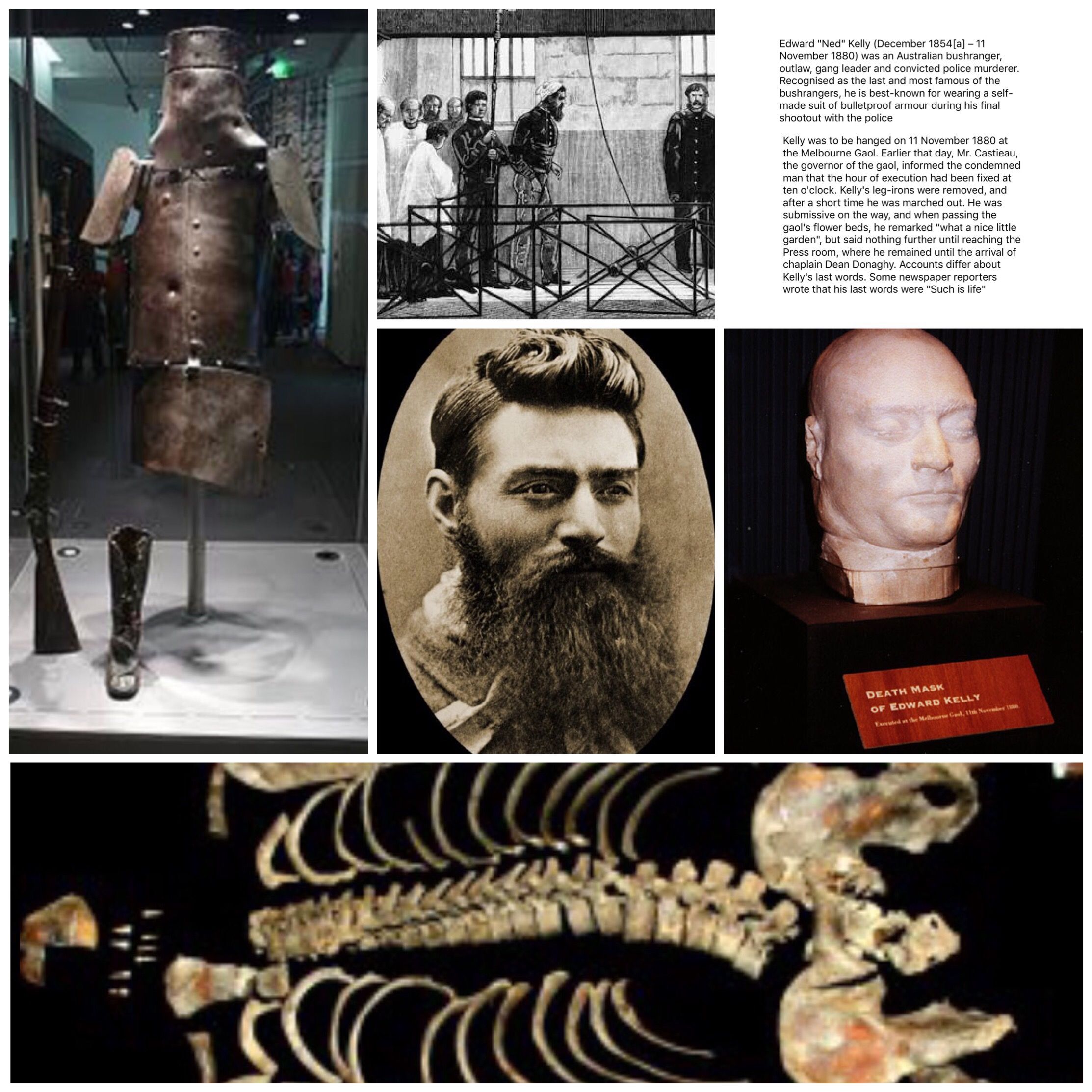 · 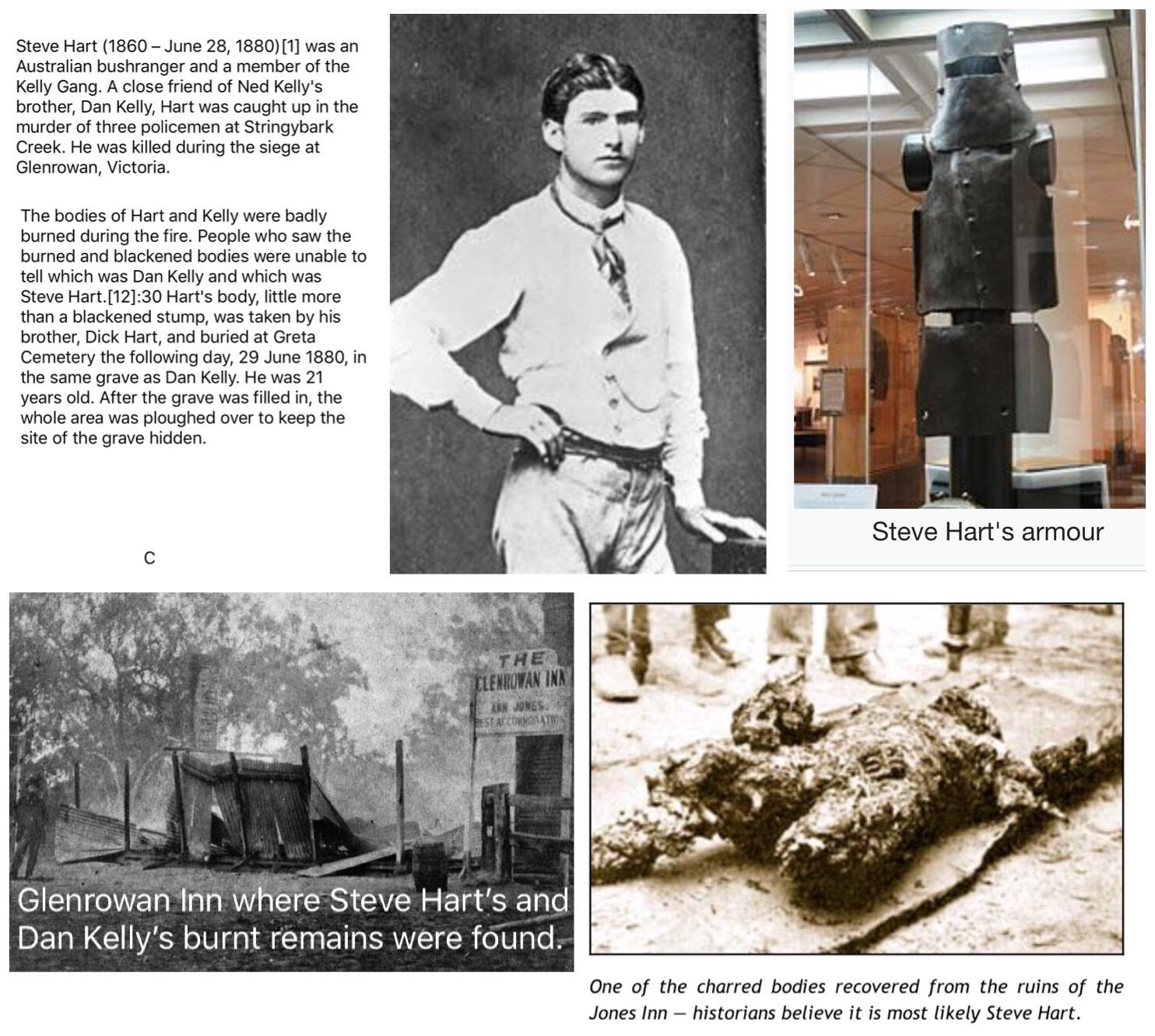 · 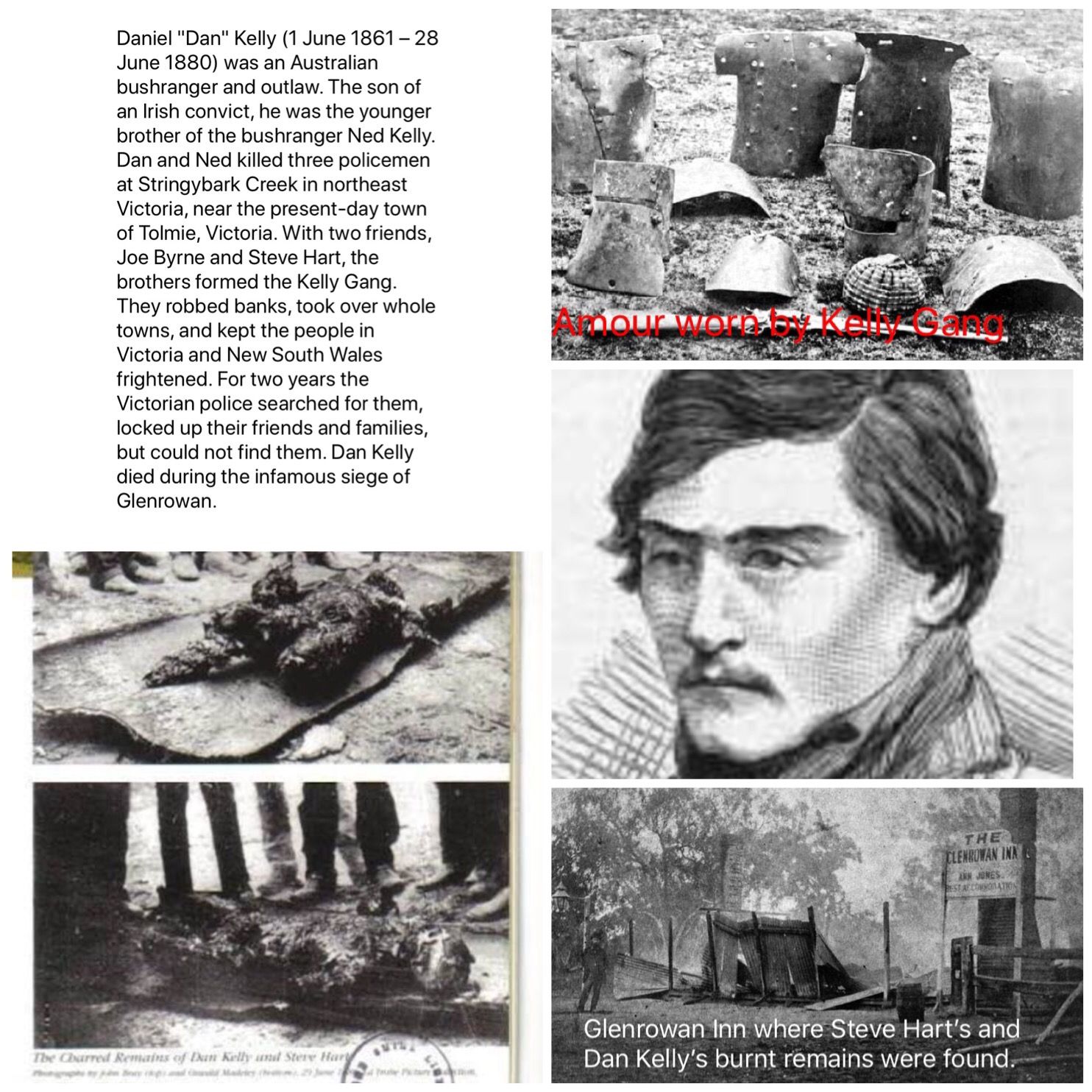 · 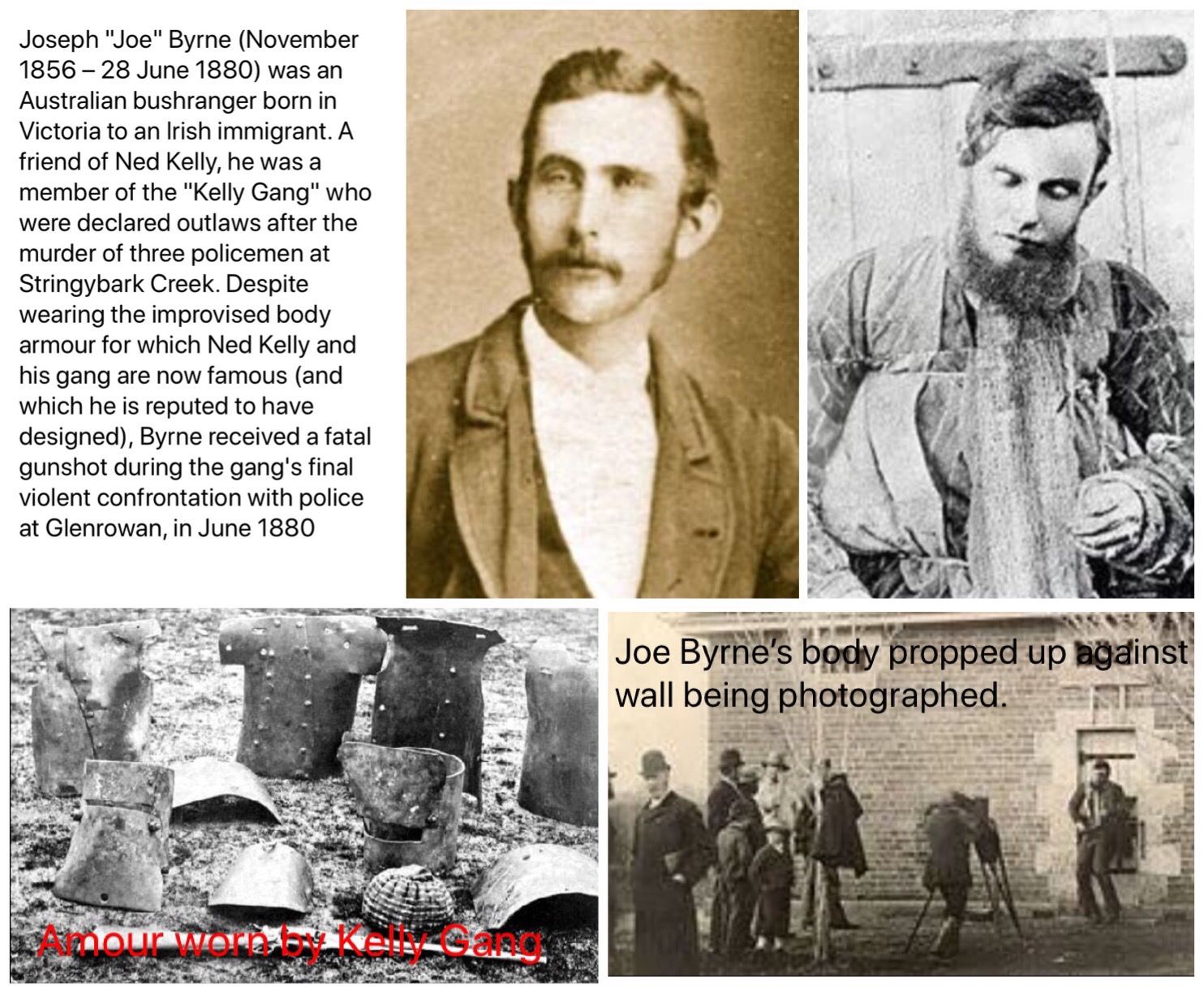 · |
|
#2
●
10-18-2017, 04:45 PM
| ||||||||
 Bela Lugosi's dead Poster Rank:62 Female Join Date: Jul 2017 Posts: 25,120 Mentioned: 23 Post(s) Quoted: 16633 Post(s)
| ||||||||
|
Re: Dead Bushrangers Outlaws and Bankrobbers
Nice post! I fuckin love the vintage ones. Man beard was sexy af btw ;)
|
|
#3
●
10-19-2017, 11:29 AM
| ||||||||
| My Rank: LANCE CORPORAL Poster Rank:2589 Join Date: May 2017 Posts: 165 Mentioned: 0 Post(s) Quoted: 12 Post(s)
| ||||||||
|
Re: Dead Bushrangers Outlaws and Bankrobbers
Frederick Wordsworth Ward (1835 – 25 May 1870), better known by the self-styled pseudonym of Captain Thunderbolt, was an Australian bushranger renowned for escaping from Cockatoo Island, and also for his reputation as the "gentleman bushranger" and his lengthy survival, being the longest roaming bushranger in Australian history. There are several theories on the origin of the name Thunderbolt. One is that the sound of him pounding on the walls of the tollbars* resembled thunder, another that he rode like a thunderbolt. These may be myths but, whatever the origin, the name stuck. The name Thunderbolt was so feared that Fred Ward often faced little opposition from his victims. Some historians believe it was so useful to invoke this type of fear that several bushrangers may have adopted the name. Two things that remained true throughout the career of Thunderbolt and support the theory that there was only one Thunderbolt are: • Thunderbolt always chose the best horses available, and • Thunderbolt didn't kill anyone. Thunderbolt's career as a bushranger began in October 1863 and ended with his death in May 1870. He committed at least 62 offences during this time and up to 200 crimes have been attributed to him over his entire life. In these crimes many high quality horses were stolen and no-one died at his hands. n 25 May 1870, after robbing travellers near the Big Rock, Ward was shot and killed by Constable Alexander Binney Walker at Kentucky Creek near Uralla.[15] The bushranger had spent his last few hours in and about the Royal Oak Inn, close by Split Rock, at Church Gully. There is much to suggest his judgement at that time was impaired by alcohol. Publican John Blanch, served the outlaw's last drinks at gun point. Thunderbolt ignored Eliza Blanch's warning to get away, the traps were in sight. While claims have been made that Ward did not die at Kentucky Creek on 25 May 1870, these claims are inaccurate. His body was identified at a magisterial inquiry the next day by the gunshot wound on the back of his left knee, as well as by his height, hair and eye colouring, and moles and warts noted in the Police Gazette Reward Notice in the aftermath of his escape from Cockatoo Island. Additionally, three witnesses testified under oath that they could personally identify the body as that of Fred Ward: his former accomplice William Monckton, a fellow Mudgee employee named George William Pearson, and Senior Sergeant John George Balls who had worked on Cockatoo Island during Ward's incarceration there. Hundreds flocked to see the body and a large sum was raised by the local community as a gesture of appreciation for Constable Walker. 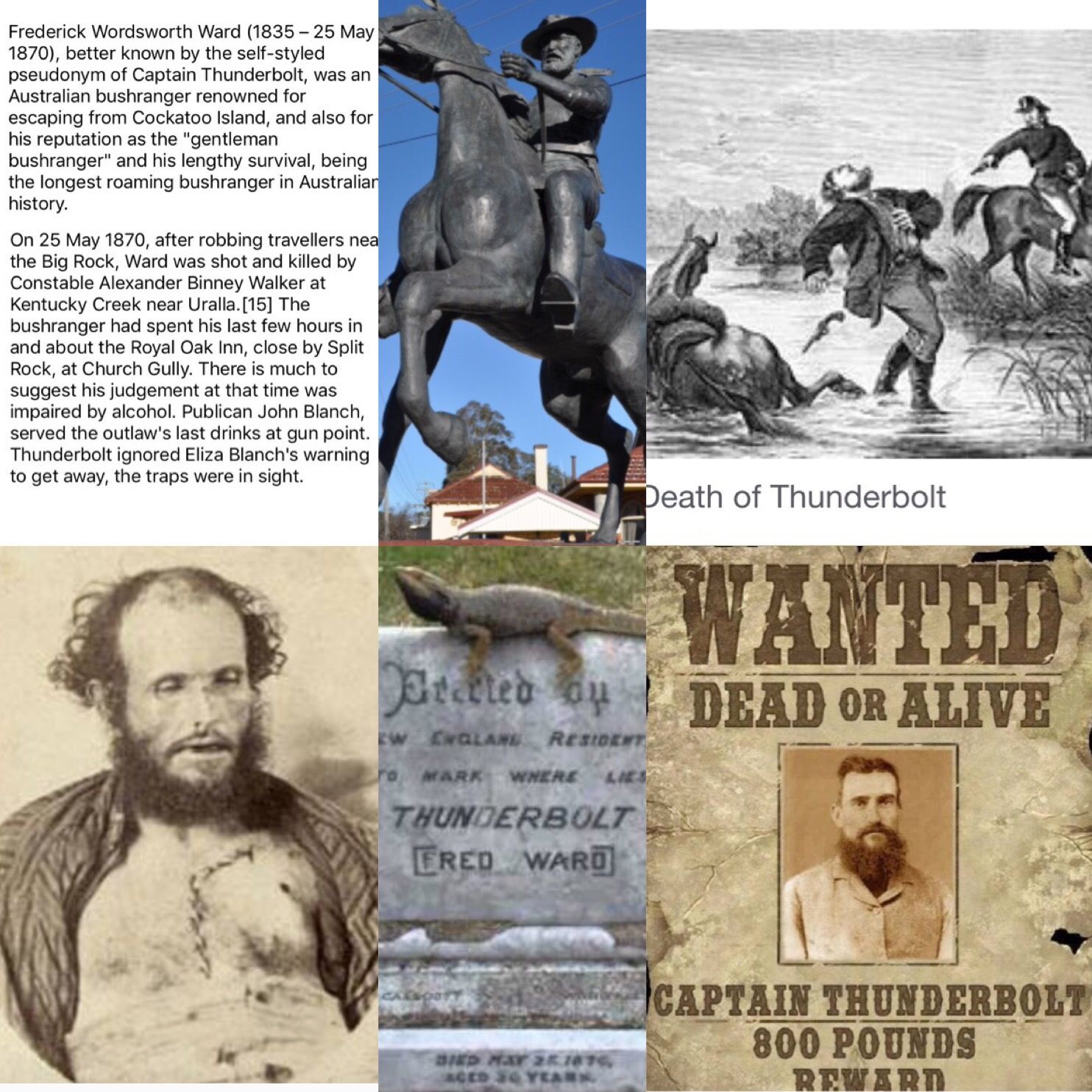 · 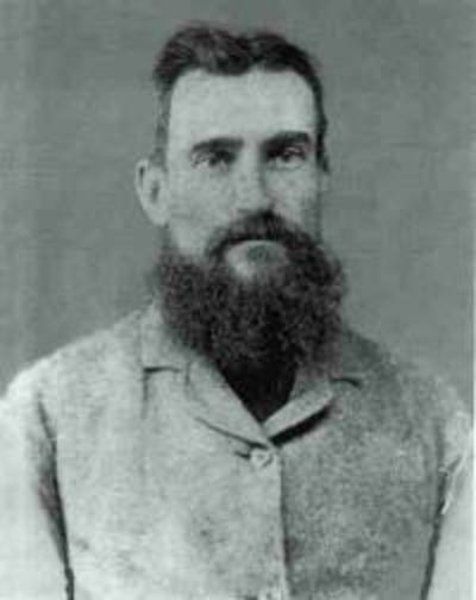 · 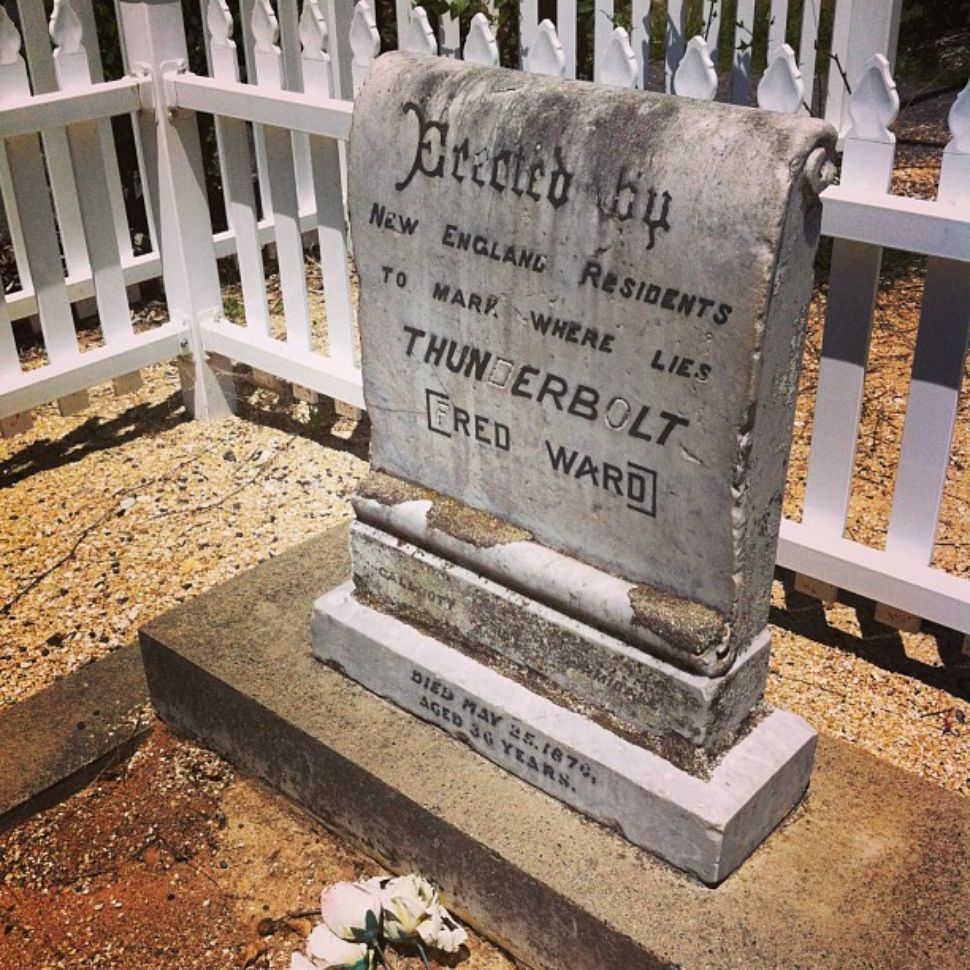 · 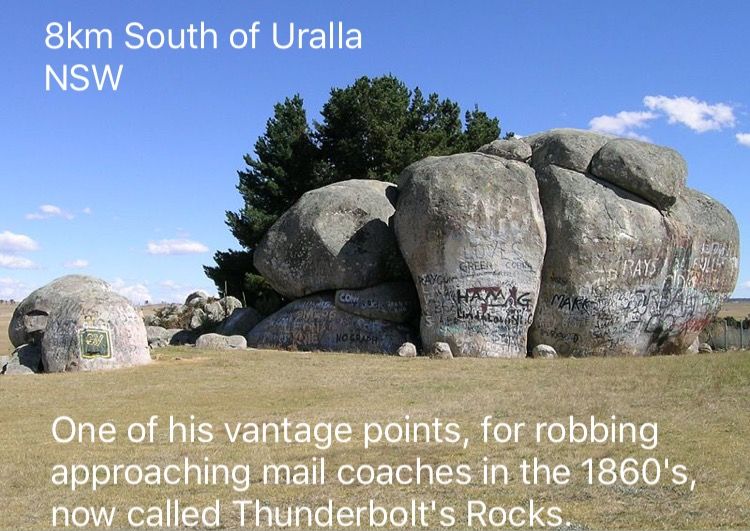 · 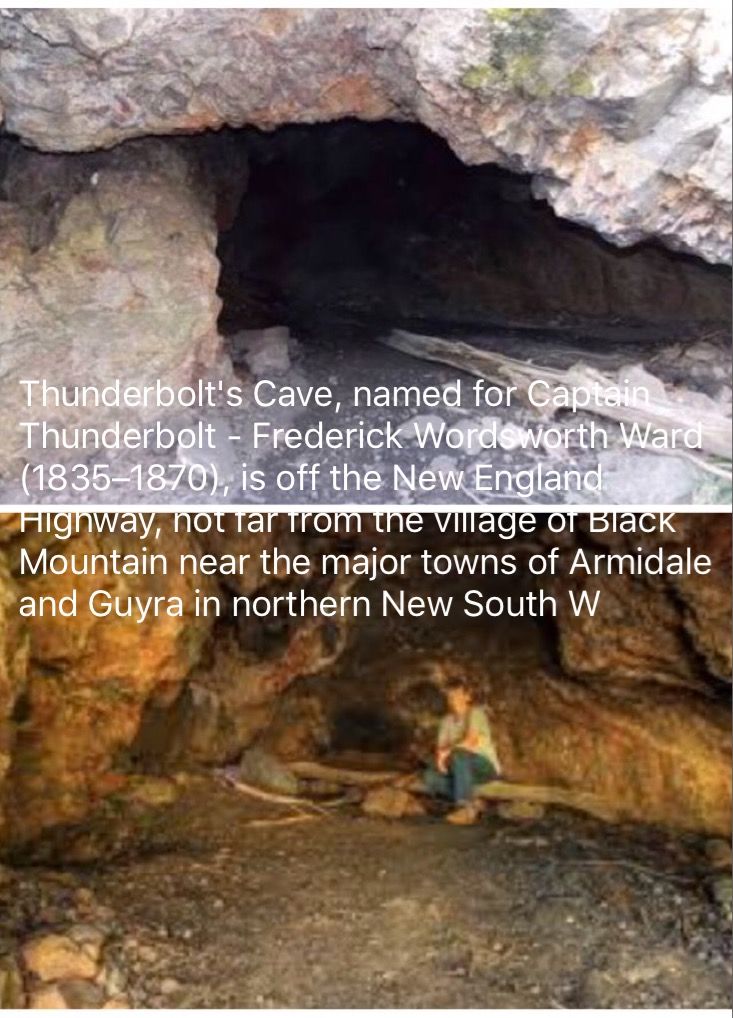 · 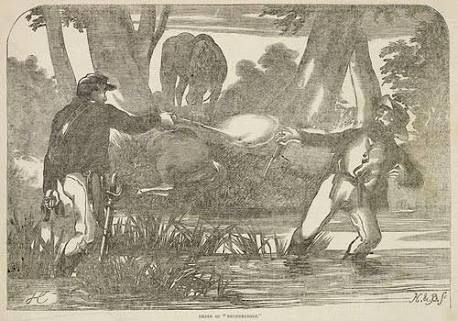 · |
|
#4
●
10-20-2017, 06:07 AM
| ||||||||
| My Rank: LANCE CORPORAL Poster Rank:2589 Join Date: May 2017 Posts: 165 Mentioned: 0 Post(s) Quoted: 12 Post(s)
| ||||||||
|
Re: Dead Bushrangers Outlaws and Bankrobbers
Daniel Morgan was born illegitimate in 1833 of poor Irish parents in Sydney and later brought up in the area around Campbelltown and Appin. In 1853 he went off to the Gold Rush in NSW and Victoria in search of his fortune. Disappointment followed and he took to a life of crime. He was caught two weeks after his first robbery of 4 shepherds at Castlemaine by an Aboriginal policeman under Mounted Sergeant Leonard Cahill and sentenced to 12 years hard labour in Melbourne, spending time in the prison hulks at anchor in Port Phillip Bay. Death of Dan Morgan He was paroled in 1860 but absconded to become a horse thief, being wounded in the arm during an unsuccessful crime at Whitfield, Victoria. By 1863 he had become a serious criminal and even held up and wounded Wagga magistrate, Henry Baylis. The Government then placed a £200 reward for the apprehension of Morgan. Morgan returned his loot on discovering the identity of his victim. In January, 1864, the reward on Morgan's head was raised to £500. On April 2nd, 1864, Morgan held up the Tumbarumba mail coach. In June, 1864 he shot stockman John McLean and police sergeant McGinnerty at Round Hill. McGinnerty was killed instantly and McLean died a few days later. The search was on. On 28th August, 1864, Morgan fired 6 shots into a tent containing pursuing troopers. Sergeant Smythe was hit and died some days later in Albury. On 8th March, 1865, the Colonial Secretary proclaimed a reward of £1,100 for the apprehension of Daniel Morgan and for information leading to his capture. On March 30th Morgan robbed the Albury mail near Kyamba. On April 11th, 1865, he was shot dead, with a bullet in the back, fired by John Wendlan, at Peechelba station, near Wangaratta. Morgan did not die straight away but his spine was shattered. When he finally died his head was cut off and tobacco pouches were made from his scrotum. 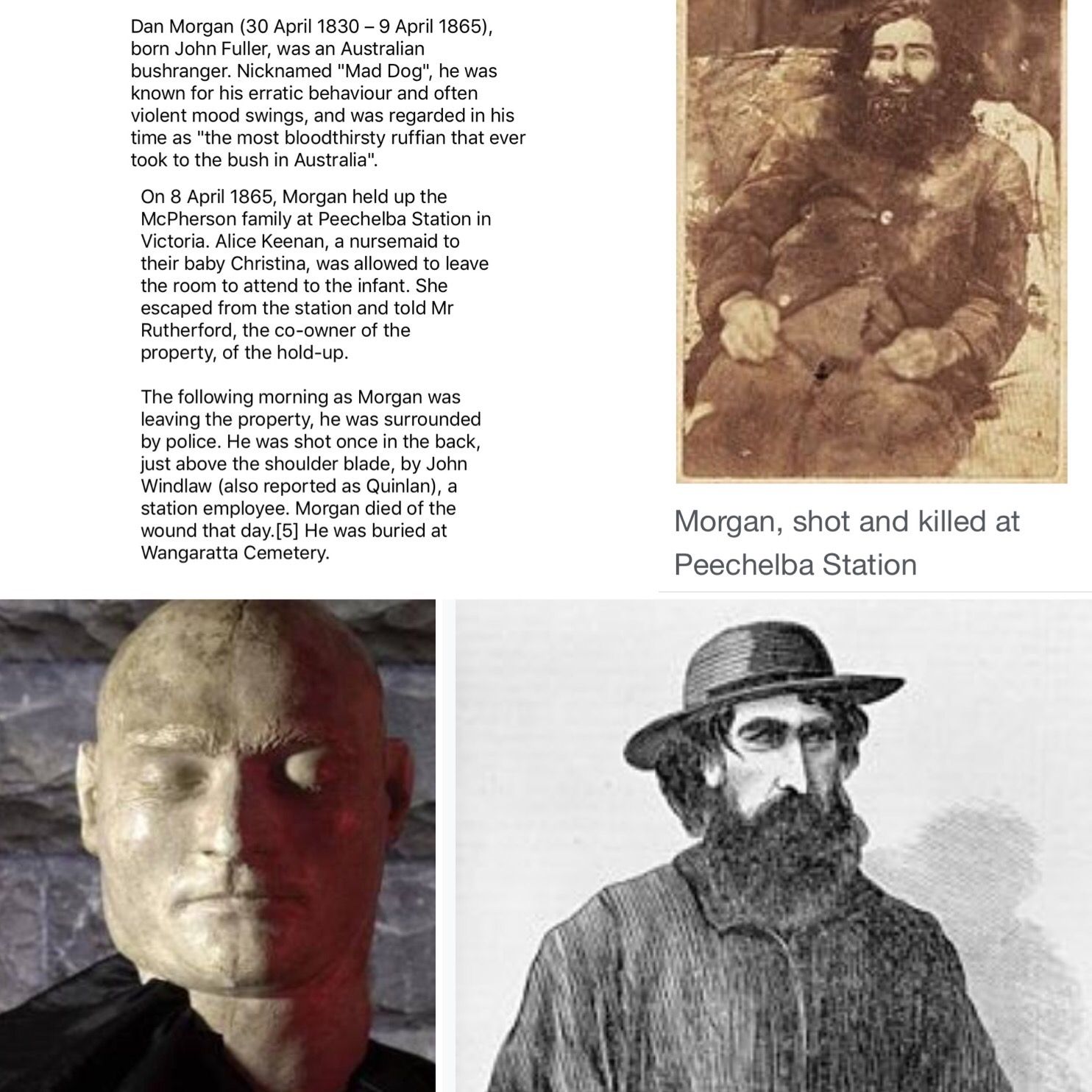 · |
|
#5
●
10-21-2017, 12:03 PM
| ||||||||
| My Rank: LANCE CORPORAL Poster Rank:2589 Join Date: May 2017 Posts: 165 Mentioned: 0 Post(s) Quoted: 12 Post(s)
| ||||||||
|
Re: Dead Bushrangers Outlaws and Bankrobbers
Brave' Ben Hall 1865 Ben Hall was born at Breza on the Liverpool Plains in north-central New South Wales in 1837, the son of two convict transportees to Van Dieman's Land, his mother chosen by his father whilst she was at the Female Convict Factory at Parramatta. Hall's father had become a freeholder and a successful farmer, working as an overseer on a property in the Lachlan district. Ben Hall spent his youth working with horses and cattle, developing expertise and great skills. He took a lease on a property in Sandy Creek, adjacent to Wheogo station, with his wife Bridget Walsh. Ben Hall was said to have taken up bushranging at the age of 22, in 1861, after two wrongful arrests and 'to meet the man who ruined his happiness' when his wife ran away with a former policeman. After a wrongful arrest, on suspicion of being an accomplice of bushranger Frank Gardiner, he spent four or five weeks in the lockup until he was released due to lack of evidence. A second arrest when he was mustering his horses also foundered due to lack of evidence. When Hall returned to Wheogo, after the second wrongful arrest, he was devastated to find that his house had been burned down and his stock lay dead, perished in the yards for lack of water - the sliprails had not been dropped by the arresting officers. This shocked the other settlers who remained sympathetic. Not long after that, Hall joined up with Frank Gardiner and his gang who robbed from Yass to the Wedden Ranges. As Australian-born men, they had excellent knowledge of the country and were known as great horse riders. 'That settles it... There's no getting out of this. May as well have the game as the blame.' Ben Hall took over as leader of the gang after a robbery at Eugowra, when Frank Gardiner absconded to a new life in the north. Over a few short years, he committed over 600 robberies but he never killed anyone, and this contributed to his image as a popular folk hero. In 1863 the whole gang bailed up the entire town of Canowindra, shepherding everybody into Robinson's Hotel and instructed them to eat or drink all they wished - at the gang's expense. The 'party' lasted for three days until the 14 dray drivers warned Hall that the river was rising and that they needed to leave before they were stranded. There were plenty of sympathisers who offered them safe hiding places and who in turn were often rewarded with a share of the goods. Ben Hall was also seen as a 'Robin Hood' figure, stealing from the rich and redistributing the booty to his supports, family and friends. The original arresting officer, Sir Frederick Pottinger, a baronet, was said by Hall, in a statement to Inspector Morton, to be threatening and bullying him because he could not catch the bushranger Gardiner. In 1864, the Melbourne Punch lampooned the police as fashionable and working country women - scrubbing and cleaning 'scouring the country after Bushrangers'. In 1865 Pottinger was recalled to Sydney, having neglected his duty when he rode in the races at Wowingragong and failed to notice Hall's gang there on the course. While Pottinger resigned his commission, his actions were described with the dubious term of 'even Blind Freddy couldn't see it'. Felons Apprehension Act 1865 (NSW) The activities of Ben Hall's gang and the inefficiencies of the police were discussed almost daily in the NSW Parliament. As a result, the government rushed through the Felons Apprehension Act 1865 (NSW). The Act enabled the gang to be outlawed and made it possible for anyone to shoot them, rather than arrest them and go to trial. People named in the summons were expected to give themselves up. Anyone found to be harbouring or assisting the bushrangers were also considered to be felons. The death of Ben Hall Ben Hall's hiding place was betrayed to police by an accomplice who was safeguarding Hall's escape money. Troopers arrived at Ben Hall's camp before dawn, but waited until sunrise until they could identify him. When the plain clothes but armed men emerged from the bush, Hall ran in the opposite direction before being shot in the shoulder and back. Hall called out to this friend Billy Dargin, an Aboriginal tracker who was close by (trying to take him alive), 'I am dying! I am dying! Shoot me dead', Hall having previously vowed 'They'll never hang Ben Hall'. The other troopers opened fire after he hit the ground. The police report stated that 30 bullets were found in his body. The bushranger ballad The Streets of Forbes records the life and death of Ben Hall, believed to have been devised by his brother-in-law after he saw Ben's body paraded through Forbes. Dargin he was chosen to shoot the outlaw dead; The troopers then fired madly; filled him full of lead. They rolled him in a blanket, and strapped him to his prad, And led him through the streets of Forbes to show The prize they had. John Gilbert and John Dunn, the two remaining outlaws from Hall's gang, were captured by police. Gilbert was shot by police in May 1865 and his body exhibited at Binalong Police Station for three days. Dunn was captured on Christmas Eve 1865 and taken to stand trail for his earlier shooting of Constable Nelson at Collector. Dunn was executed in March 1866 stating, in a letter to his father, that he was 'in very tolerant spirits'. 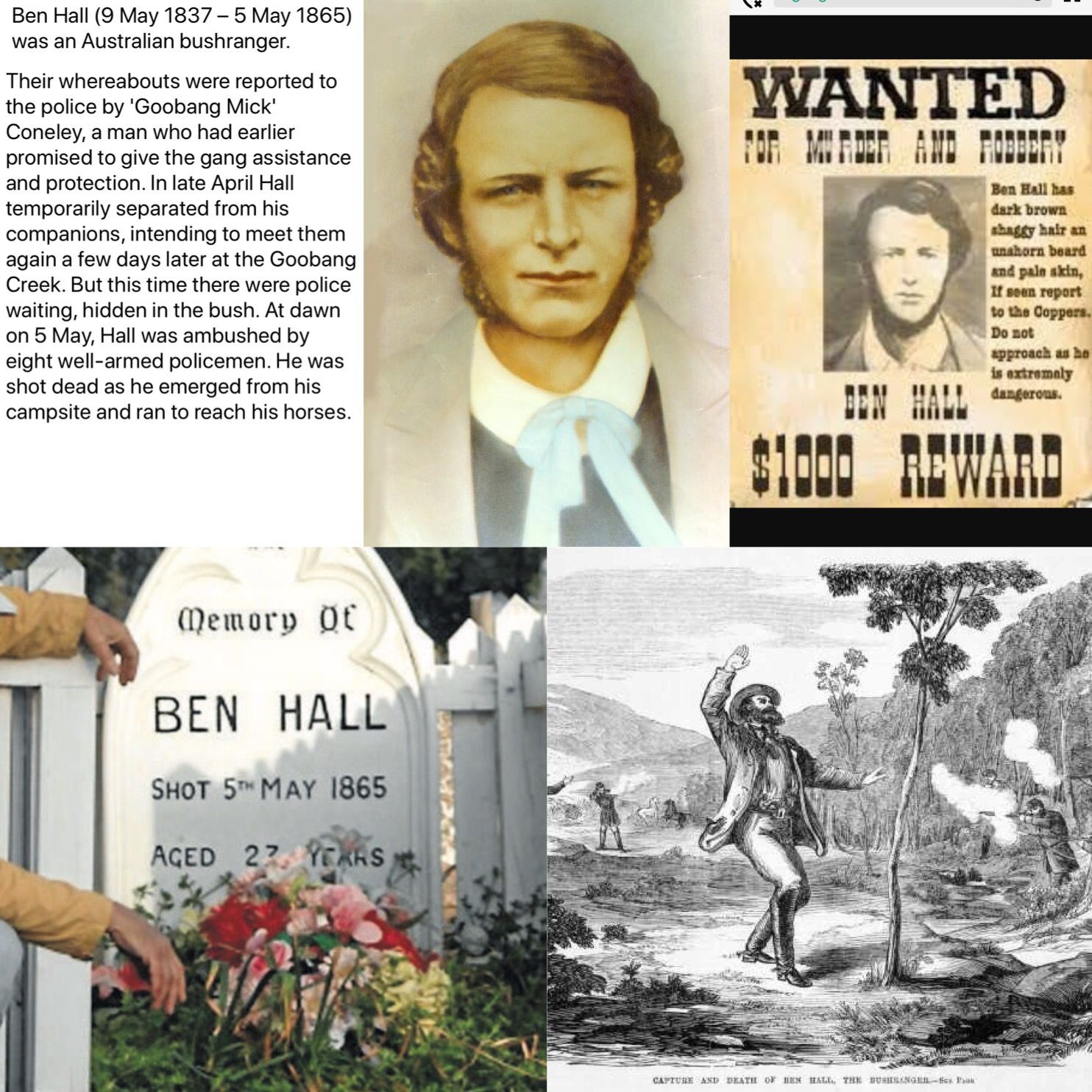 · 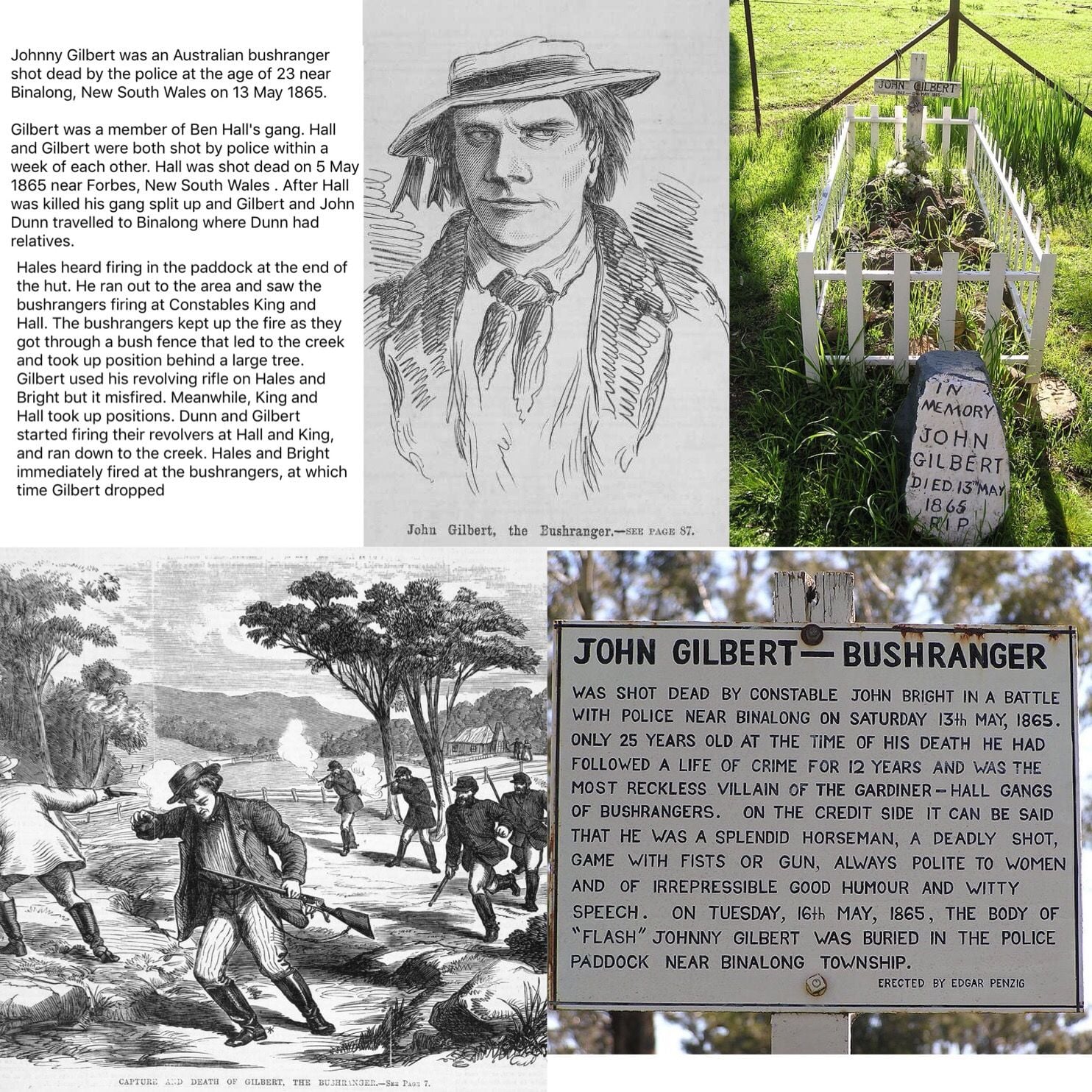 · |
|
#6
●
10-23-2017, 06:52 PM
| ||||||||
| My Rank: LANCE CORPORAL Poster Rank:2589 Join Date: May 2017 Posts: 165 Mentioned: 0 Post(s) Quoted: 12 Post(s)
| ||||||||
|
Re: Dead Bushrangers Outlaws and Bankrobbers
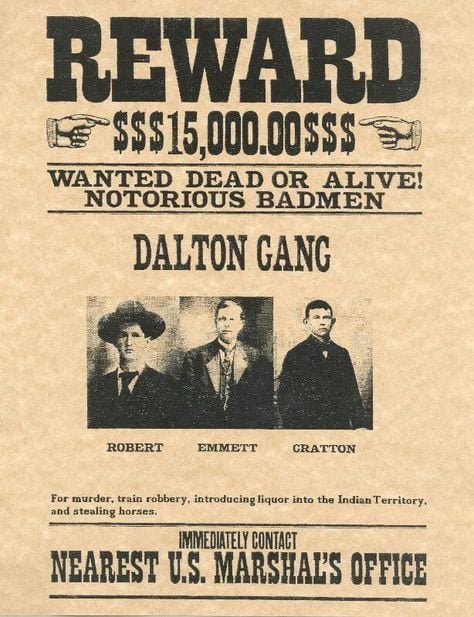
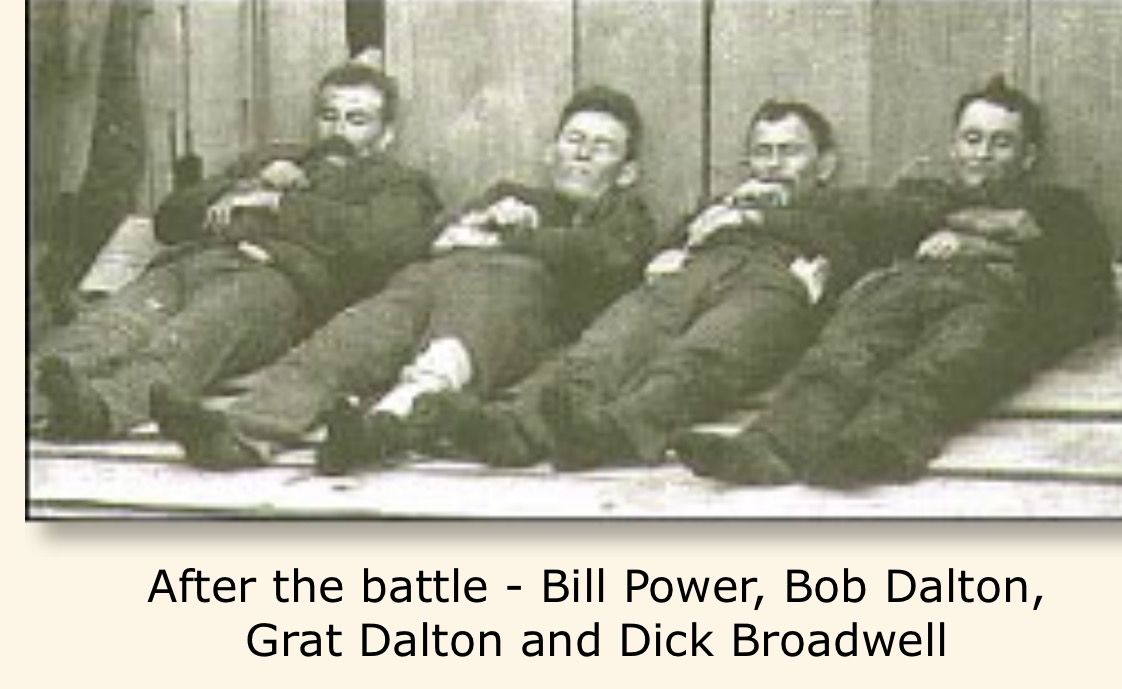
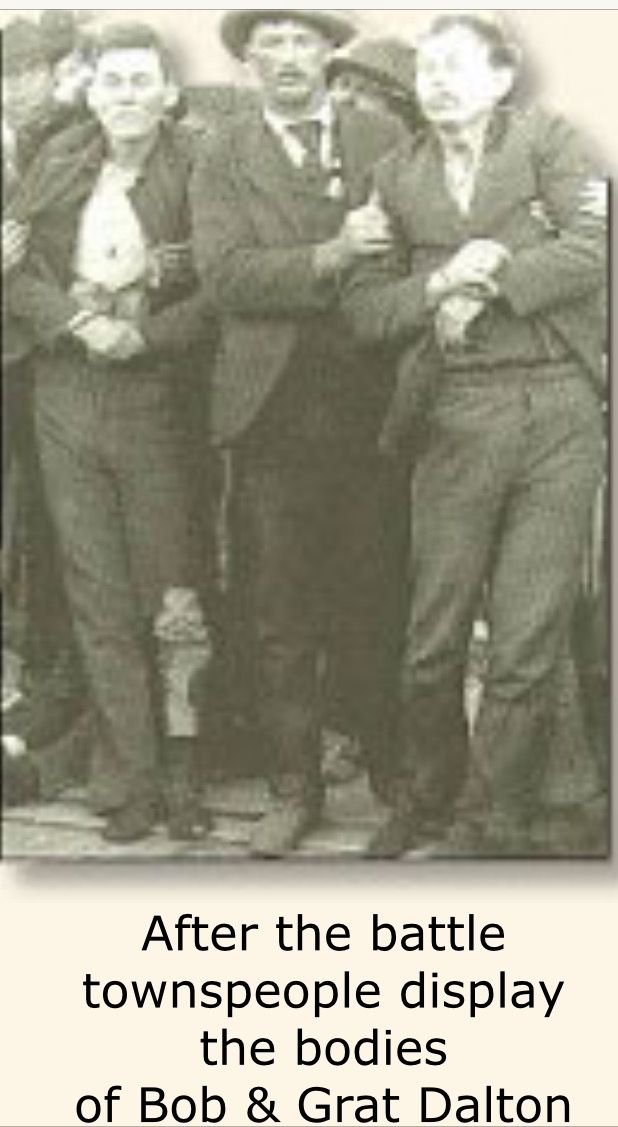
The Dalton Gang was a group of outlaws in the American Old West during 1890–1892. It was also known as The Dalton Brothers because three of its members were brothers. The gang specialized in bank and train robberies. During an attempted bank robbery in Coffeyville, Kansas in 1892, two of the brothers and two other gang members were killed; Emmett survived and was captured, tried, and convicted. He was paroled after serving 14 years in prison.
 ·  ·  · |
|
#7
●
10-25-2017, 11:29 AM
| ||||||||
| My Rank: LANCE CORPORAL Poster Rank:2589 Join Date: May 2017 Posts: 165 Mentioned: 0 Post(s) Quoted: 12 Post(s)
| ||||||||
|
Re: Dead Bushrangers Outlaws and Bankrobbers
Bill Doolin (1858–1896) aka: William Doolin William Doolin was an Arkansas-born outlaw who rode with the infamous Dalton outlaws in the Oklahoma Territory and Indian Territory. He formed his own outlaw bunch, which operated from October 1892 until Doolin died on August 25, 1896. Though his exact date of birth is unknown, Bill Doolin’s tombstone states that he was born in 1858. He was born on a homestead near Big Piney River approximately thirty-five miles northeast of Clarksville (Johnson County). He was the son of sharecroppers Artemina and Michael Doolin and worked on his family’s farm until his twenty-third birthday. In 1881, Doolin left Arkansas for the area that is now the state of Oklahoma and found employment as a cowboy on the ranch of Oscar D. Halsell in what was then called Logan, Oklahoma. After some restless drifting and trouble with the law, Doolin joined the infamous Dalton gang in 1891. Led by Robert (Bob) Dalton, with his brothers Gratton (Grat) and Emmett, the Daltons were labeled the “most cold-blooded robbers in the West.” The Daltons came from a family of fifteen, though only Bob, Grat, and Emmett Dalton—and, later, Bill—turned to a life of crime. While riding with the Daltons, Doolin was reported to be with the gang when they robbed several trains and depots from May 1891 through July 14, 1892. Doolin decided to forego the gang’s ill-fated and final double bank robbery at Coffeyville, Kansas, on October 5, 1892, where only Emmett Dalton survived the legendary shootout in the streets. After the Coffeyville fiasco, Doolin organized his own gang and, with an assortment of misfits, commenced to terrorize southern Kansas and the Oklahoma Territory and Indian Territory, robbing banks, trains, and stagecoaches over a four-year period. Nearly all these men met violent deaths, but not before the gang amassed a purported $165,000. On July 1, 1893, Evett Dumas Nix, a Guthrie, Oklahoma, businessman, was appointed United States marshal under the jurisdiction of Judge Isaac Parker, the "Hanging Judge." Nix quickly assembled an impressive group of over 100 field deputies, including Heck Thomas, Chris Madsen, and Bill Tilghman, known collectively as the “Three Guardsmen.” Late in August, Nix was informed that the Doolin gang was in Ingalls, Oklahoma, and he dispatched Deputy Marshal John Hixson and a posse of thirteen to the town. It was in Ingalls that Doolin met and married Edith Ellsworth, the daughter of a part-time minister and purported town official. The Ingalls raid has been considered by many Western historians as the most deadly gun battle between outlaws and U.S. marshals in the history of the Southwest. Six men in the posse were wounded or killed on the streets during the raid, but Doolin and several others had escaped. Elevated due to his intelligence and successes, William Tilghman was assigned as a United States marshal. He learned that Doolin had fled to Eureka Springs (Carroll County) to nurse his wounds and take the healing the powers of the baths. On January 15, 1896, Tilghman arrested Doolin in the Eureka Springs Bathhouse. Doolin was indicted in Stillwater, Oklahoma, for murder in connection with the Ingalls shootout. The U.S. District Attorney offered the outlaw fifty years in prison in exchange for a plea of guilty, but Doolin entered a plea of “not guilty,” telling a surprised Bill Tilghman later that fifty years was too long to stay in prison. On the night of July 5, 1896, before his trial, Doolin and a number of inmates escaped from the Guthrie Federal Prison. Within an hour of the massive jail escape, Marshal Heck Thomas formed a posse and rode after the escapees but found none. Doolin made his way over the Cimarron Brakes towards Lawson, Oklahoma (now called Quay in Payne County), where his wife, Edith, and son were staying with her father on his farm nearby. Thomas received information from a local blacksmith that Doolin was at his father-in-law’s homestead. On the night of August 25, 1896, Thomas and nine deputies went to the farm and hid near the house. When Doolin emerged from the barn, Thomas shouted for the outlaw to halt, but Doolin shot at the marshal instead. The posse, in turn, shot and killed Doolin. He is buried in Guthrie, Oklahoma. 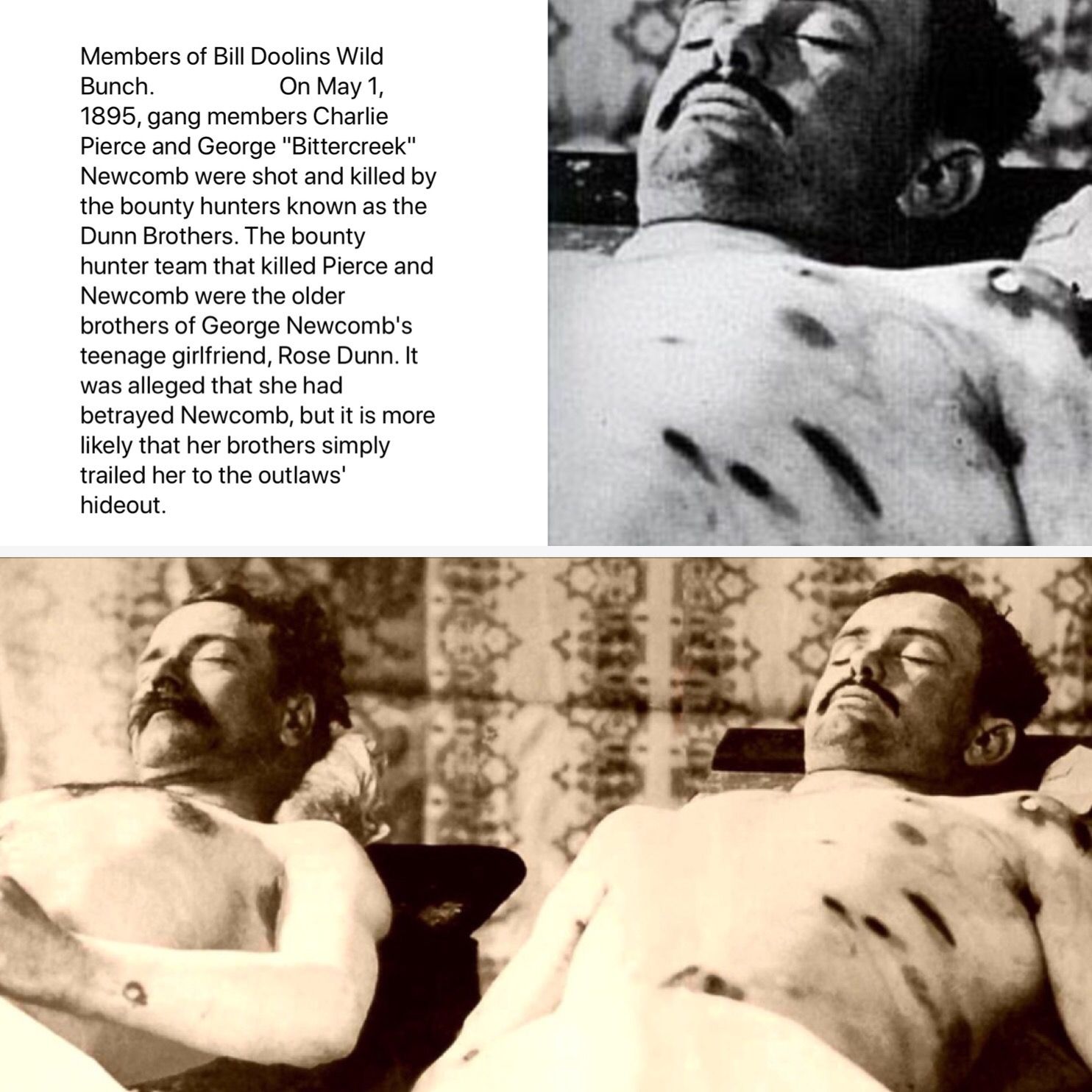 · 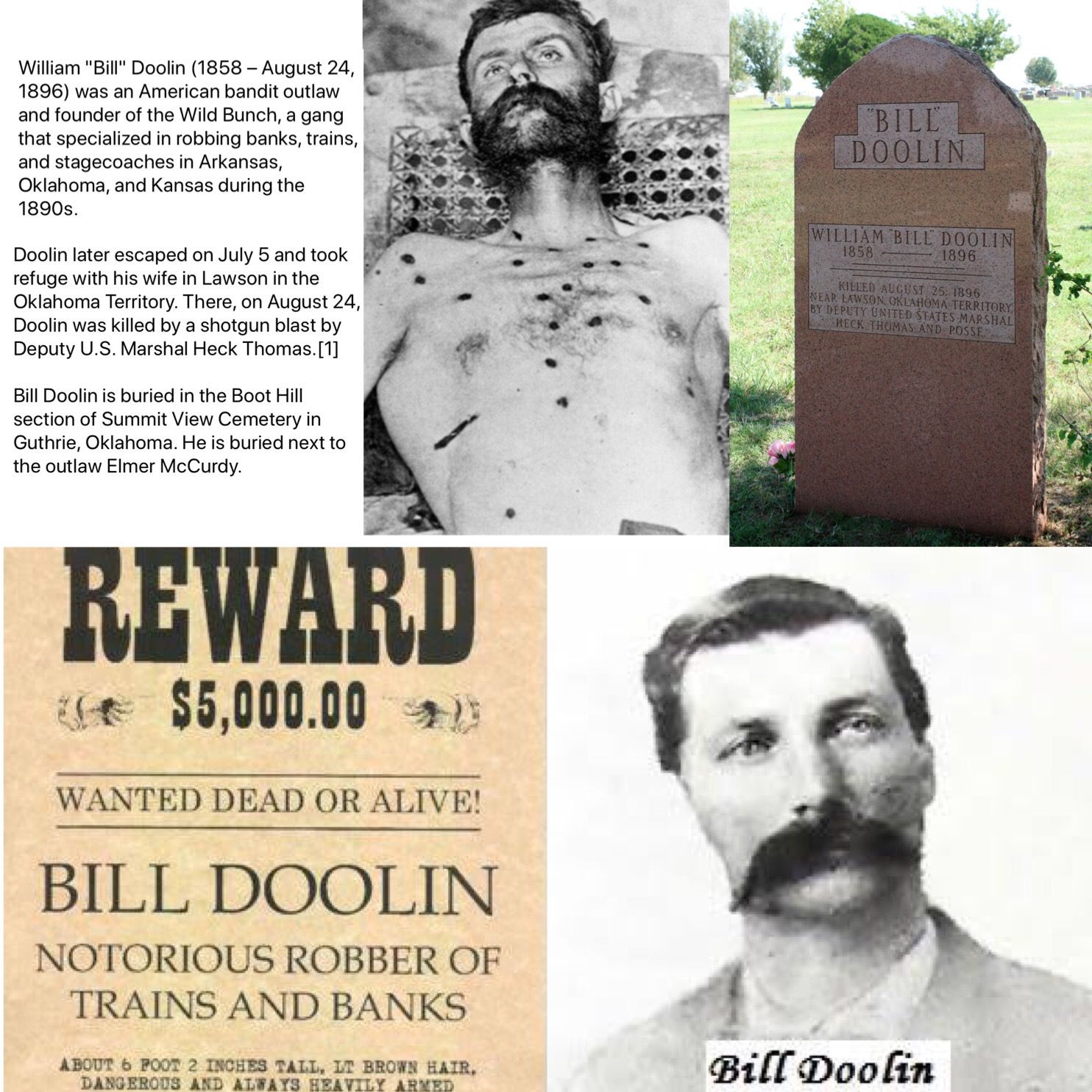 · |
|
#10
●
10-30-2017, 03:57 PM
| ||||||||
| My Rank: LANCE CORPORAL Poster Rank:2589 Join Date: May 2017 Posts: 165 Mentioned: 0 Post(s) Quoted: 12 Post(s)
| ||||||||
|
Re: Dead Bushrangers Outlaws and Bankrobbers
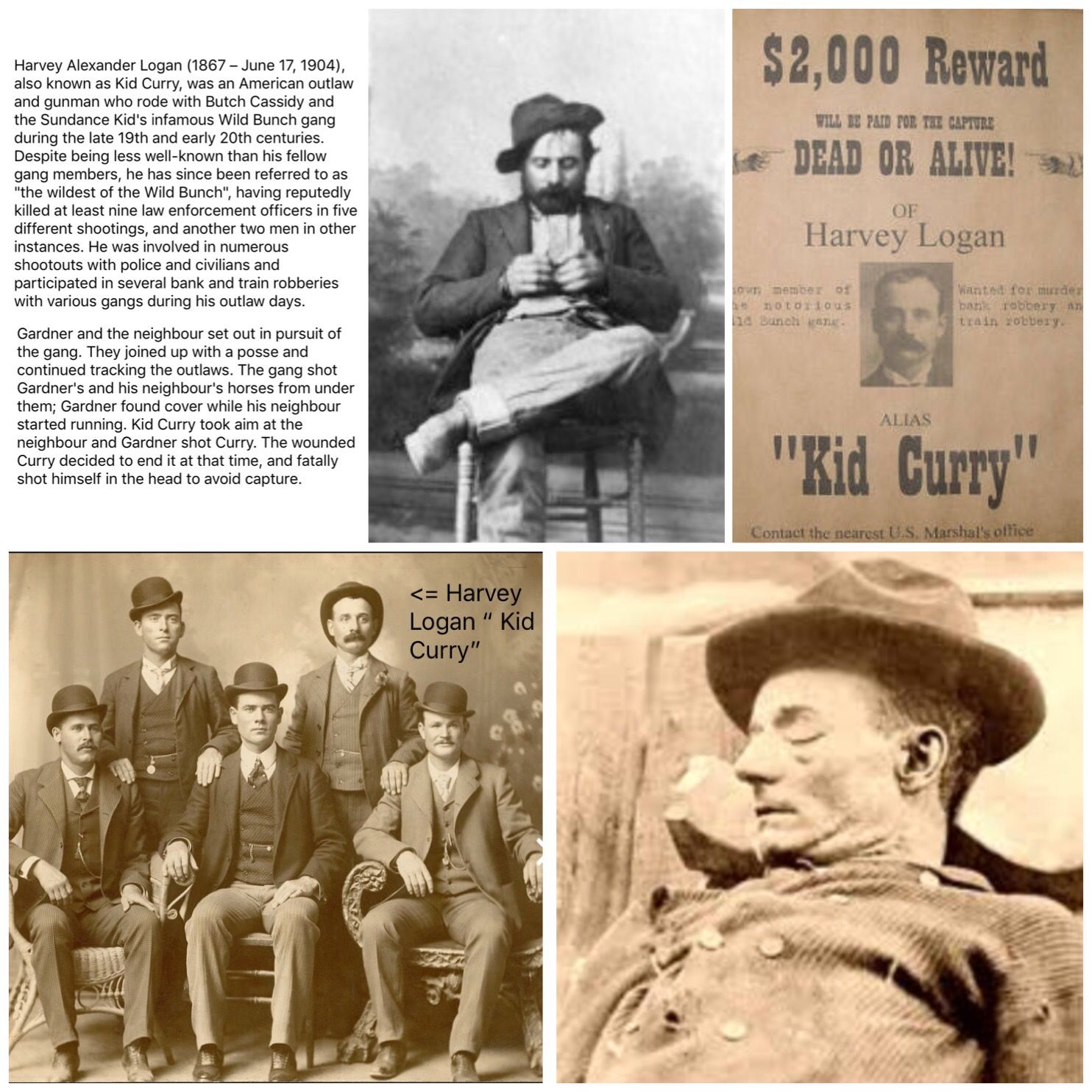
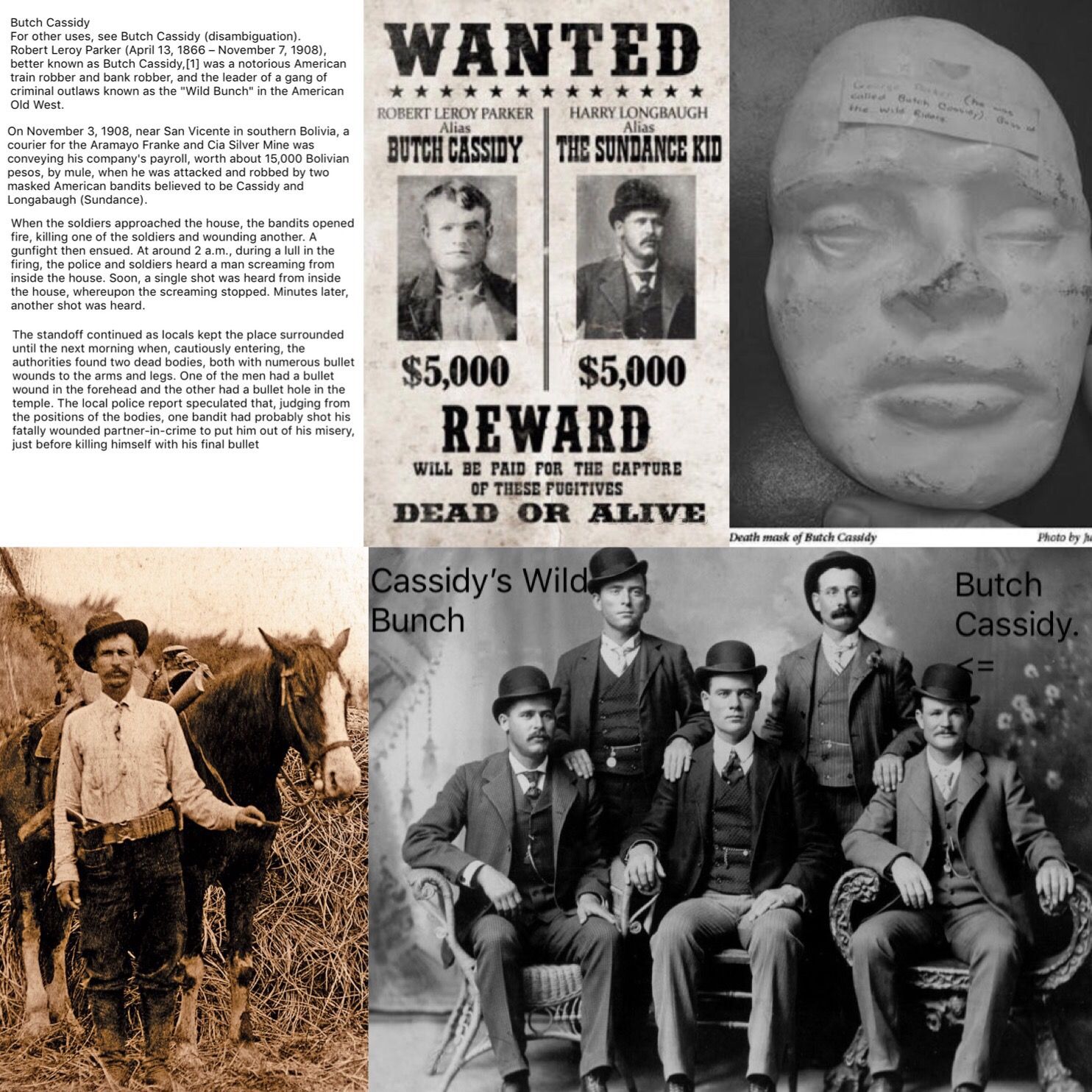
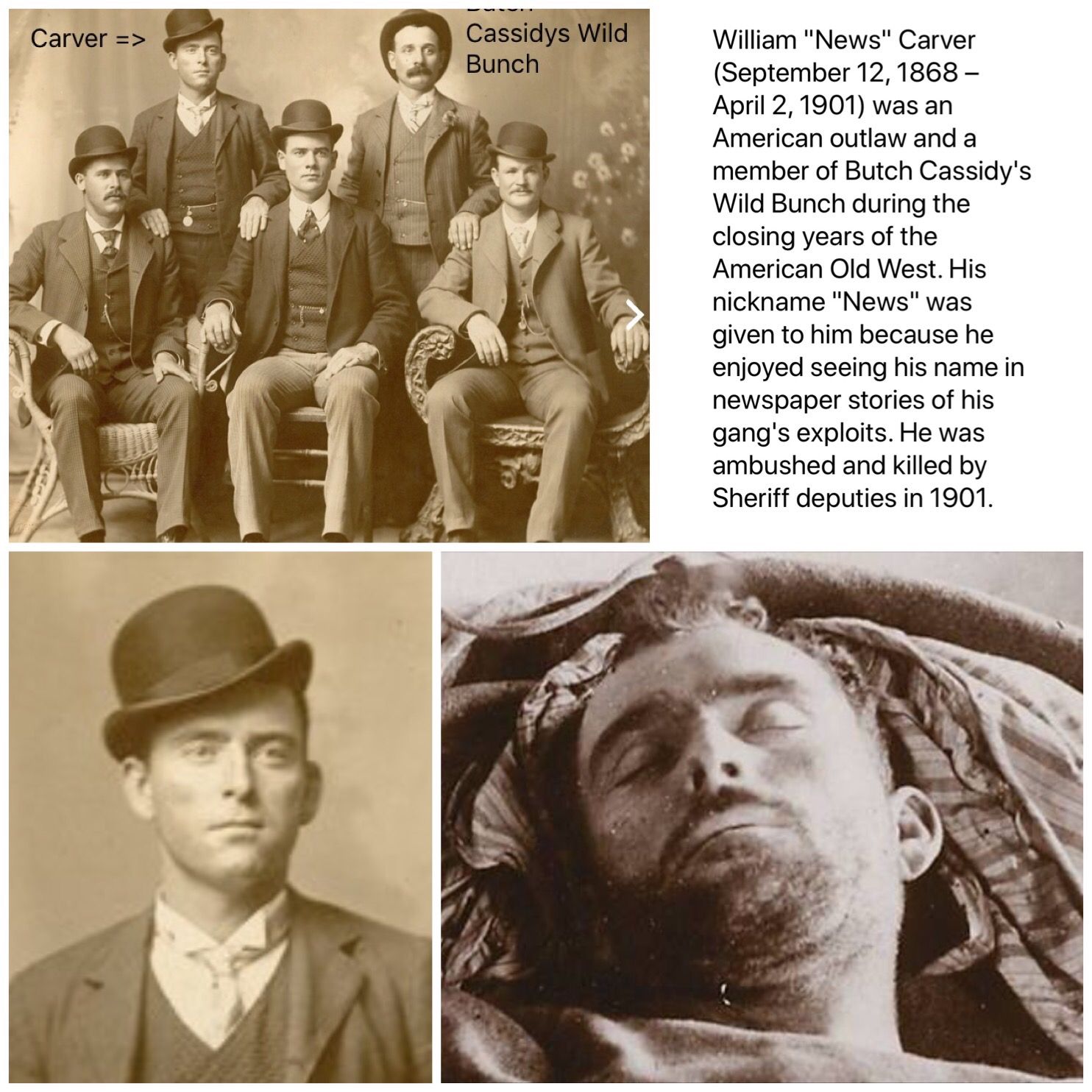
Another Wild Bunch
 ·  ·  · |