|
#1
●
12-10-2010, 01:55 PM
| ||||||||
 My Rank: GUNNERY SERGEANT Poster Rank:617 Male Join Date: Mar 2010 Posts: 1,473 Mentioned: 0 Post(s) Quoted: 3 Post(s)
| ||||||||
|
Bury My Heart at Wounded Knee.
The massacre took place on December 29,1890 near Wounded Knee Creek, in South Dakota. On December 28, 1890, Chief Spotted Elk of the Miniconjou Lakota nation and 350 of his followers were intercepted by a 7th Cavalry detachment under Major Samuel M. Whitside southwest of the badlands near Porcupine Butte. John Shangreau, a scout and interpreter who was half Sioux, advised that they not be disarmed immediately, as it would lead to violence. The troopers escorted the Lakota about five miles westward to Wounded Knee Creek where they made camp. Later that evening, Col. James W. Forsyth and the rest of the 7th Cavalry arrived, bringing the number of troopers at Wounded Knee to 500. In contrast, there were 350 Native Americans, of whom all but 120 were women and children. On the morning of December 29, the troops went into the camp to disarm the Lakota. One version of events claims that during the process of disarming the Lakota, a deaf tribesman named Black Coyote was reluctant to give up his rifle claiming he had paid a lot for it. A scuffle over Black Coyote's rifle escalated and a shot was fired which resulted in the 7th Cavalry opening firing indiscriminately from all sides, killing men, women, and children, as well as some of their own fellow troopers. Those few Lakota warriors who still had weapons began shooting back at the attacking troopers, who quickly suppressed the Lakota fire. The surviving Lakota fled, but U.S. cavalrymen pursued and killed many who were unarmed. By the time it was over, at least 150 men, women, and children of the Lakota Sioux had been killed and 51 wounded (4 men, 47 women and children, some of whom died later); some estimates placed the number of dead at 300. Twenty-five troopers also died, and thirty-nine were wounded (6 of the wounded would also die). It is believed that many were the victims of friendly fire, as the shooting took place at close range in chaotic conditions. Following a three-day blizzard, the military hired civilians to bury the dead Lakota. The burial party found the deceased frozen in contorted positions; they were gathered up and placed in a common grave on a hill overlooking the encampment from which some of the fire from the Hotchkiss guns originated. It was reported that four infants were found alive, wrapped in their deceased mothers' shawls. In all, 84 men, 44 women, and 18 children reportedly died on the field, while at least seven Lakota were mortally wounded. They later hired civilians to remove the bodies and bury them in a mass grave. General Nelson Miles denounced Colonel Forsyth and relieved him of command. An exhaustive Army Court of Inquiry convened by Miles criticized Forsyth for his tactical dispositions but otherwise exonerated him of responsibility. The Court of Inquiry, however, was not conducted as a formal court-martial. The Secretary of War concurred with the decision and reinstated Forsyth to command of the 7th Cavalry. Testimony indicated that for the most part troops attempted to avoid non-combatant casualties. Nevertheless, Miles ignored the results of the Court of Inquiry and continued to criticize Forsyth, who he believed had deliberately disobeyed his commands in order to destroy the Indians. Miles promoted the conclusion that Wounded Knee was a deliberate massacre rather than a tragedy caused by poor decisions, in an effort to destroy the career of Forsyth. This was later understood and Forsyth was promoted to Major General. The Army awarded twenty Medals of Honor, its highest award, for the action. Native American activists have urged the medals be withdrawn, as they say they were "Medals of Dishonor". According to Lakota tribesman William Thunder Hawk, "The Medal of Honor is meant to reward soldiers who act heroically. But at Wounded Knee, they didn't show heroism; they showed cruelty." In 2001, the National Congress of American Indians passed two resolutions that condemned the Medals of Honor awards and called on the U.S. government to rescind them. Historian Will G. Robinson noted that in contrast, only three Medals of Honor were awarded among the 64,000 South Dakotans who fought for four years of World War II. tl;dr: Frozen Bodies of dead Lakotans. 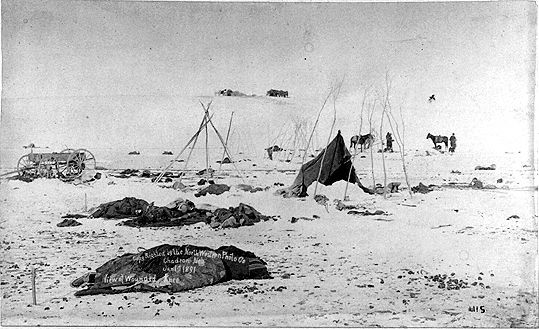 · 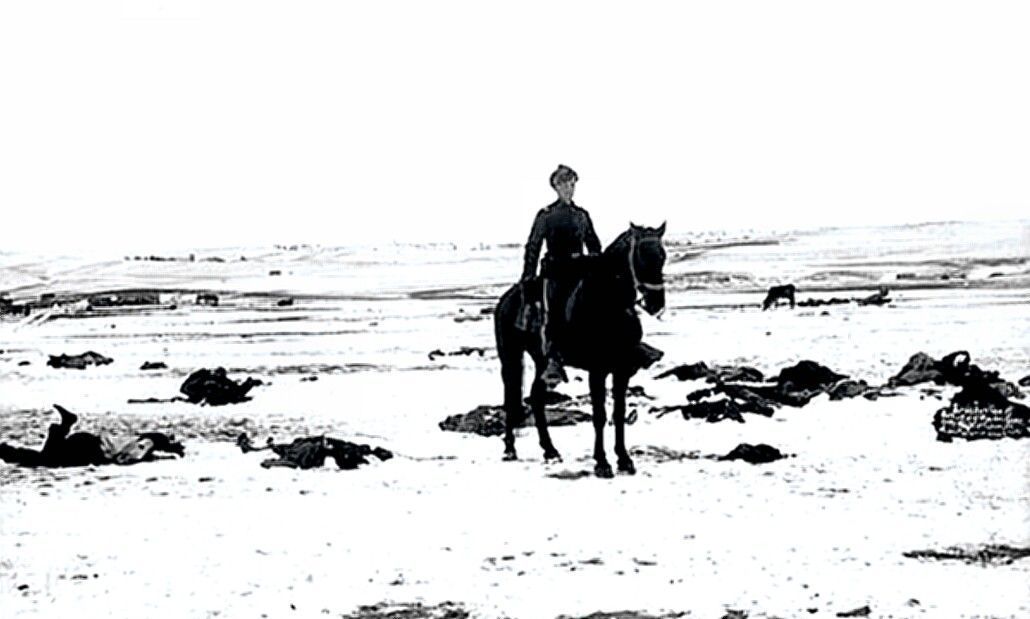 · 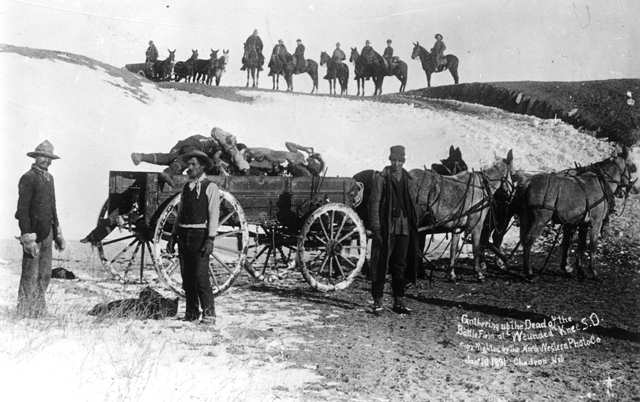 · 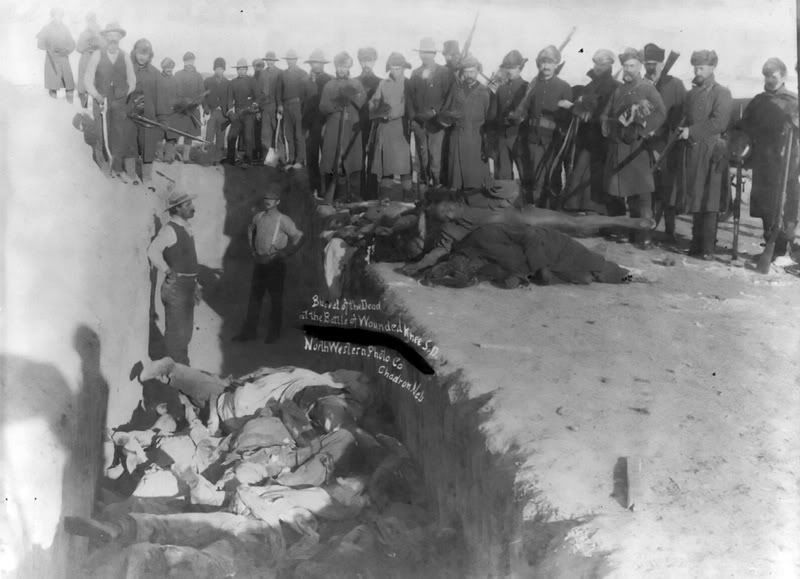 · 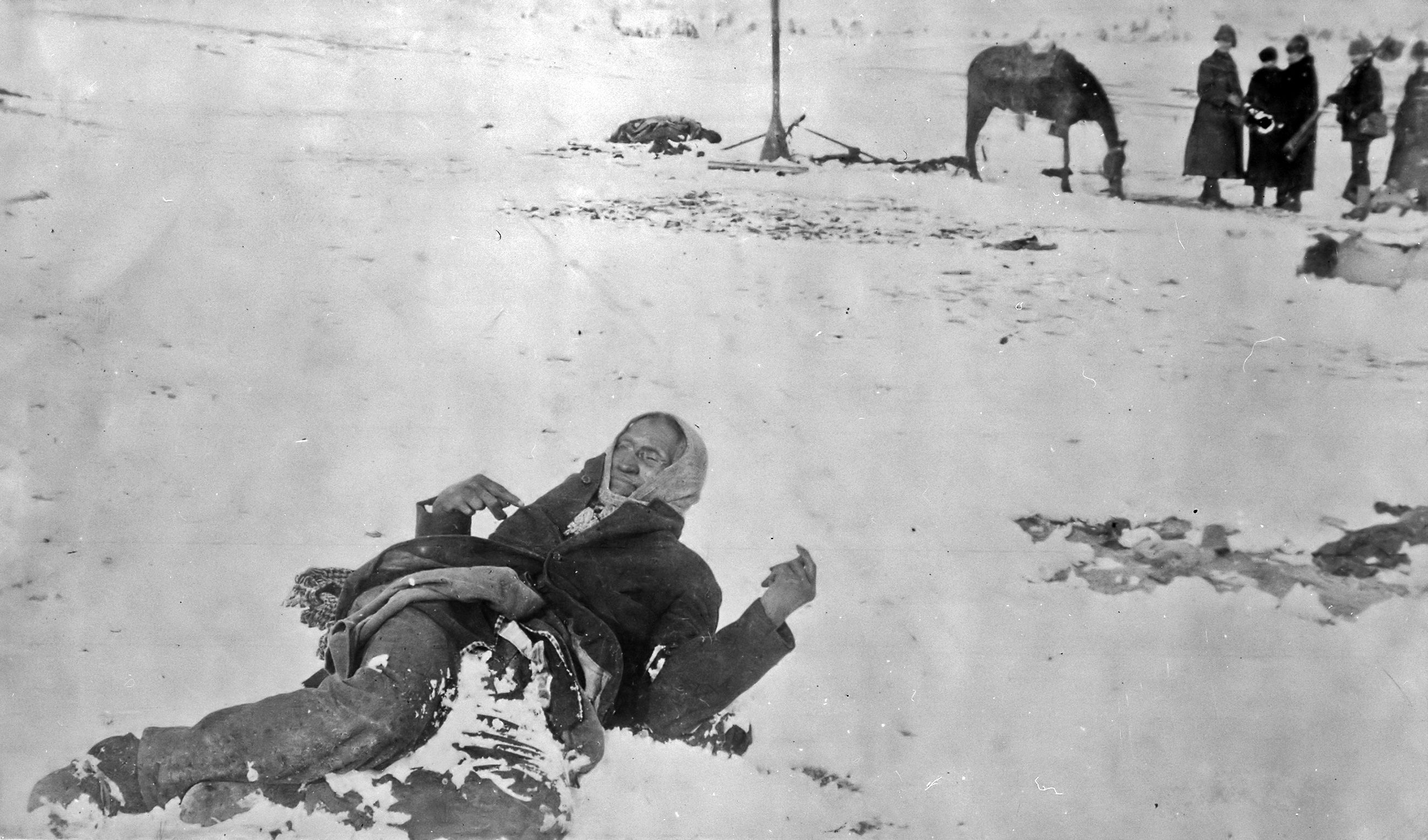 · 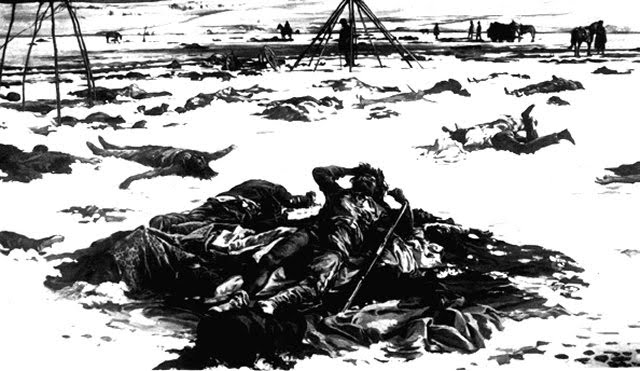 · 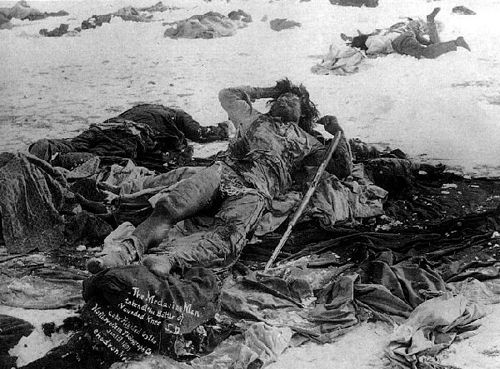 · 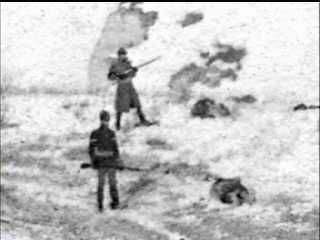 · |
|
#3
●
12-10-2010, 03:27 PM
| ||||||||
 My Rank: FIRST SERGEANT Poster Rank:466 DooD Join Date: Jan 2010 Posts: 2,316 Mentioned: 1 Post(s) Quoted: 31 Post(s)
| ||||||||
|
Re: Bury My Heart at Wounded Knee.
its kinda fucked up how the natives were treated for being here first...
|
|
#4
●
12-10-2010, 03:36 PM
| ||||||||
 So Fucking Banned Poster Rank:261 Join Date: May 2010 Posts: 5,344 Mentioned: 4 Post(s) Quoted: 41 Post(s)
| ||||||||
|
Re: Bury My Heart at Wounded Knee.
WOW...with all the Hollywood movie's I have seen,looking at first hand picture's of an actual event send's chill's down my spine.It make's it real!!!!awesome post!!!  |
|
#6
●
12-10-2010, 04:56 PM
| ||||||||
 My Rank: LANCE CORPORAL Poster Rank:1826 Male Join Date: Jun 2009 Posts: 281 Mentioned: 0 Post(s) Quoted: 0 Post(s)
| ||||||||
|
Re: Bury My Heart at Wounded Knee.
Jake Sully: When people are sitting on shit that you want you make them your enemies, and then you can justify taking it away from them! - Avatar. America was built on lies and murder. |