|
#1
●
01-11-2013, 11:58 AM
| ||||||||
 ♚ Legacy Gold Member ♚ Poster Rank:34 Female Join Date: Nov 2008 Posts: 43,396
Contributions: 204
Mentioned: 95 Post(s) Quoted: 2281 Post(s)
| ||||||||
|
Burnt Corpse Of French Aviator (January, 1918)
Click for larger size and find the aviator  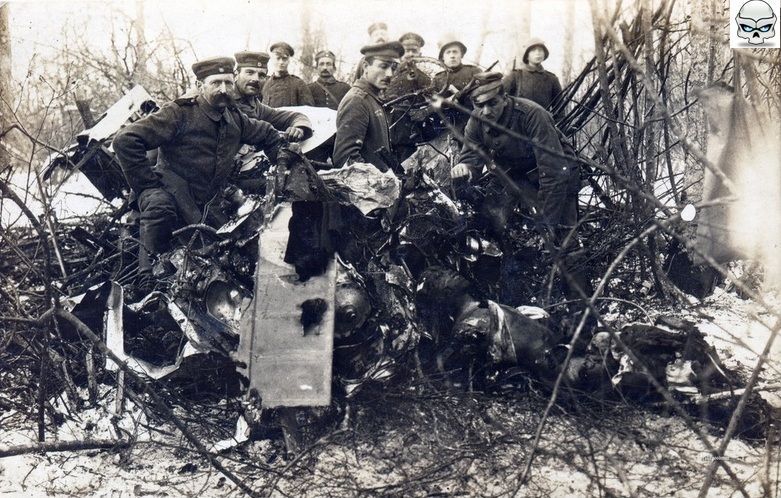 · |
|
#2
●
01-12-2013, 02:57 AM
| ||||||||
 My Rank: FIRST LIEUTENANT Poster Rank:243 Male Join Date: Aug 2009 Posts: 5,695 Mentioned: 15 Post(s) Quoted: 1530 Post(s)
| ||||||||
|
Re: Burnt Corpse Of French Aviator (January, 1918)
Is this a WWI edition of "Where's Waldo?"  |
|
#5
●
05-30-2013, 07:54 PM
| ||||||||
| Your Mothers Nightmare... Poster Rank:412 Male Join Date: Oct 2012 Posts: 2,856 Mentioned: 4 Post(s) Quoted: 1036 Post(s)
| ||||||||
|
Re: Burnt Corpse Of French Aviator (January, 1918)
This was the early flyers greatest fear and was refered to as a "flamer" when the unarmoured fabric planes and paper thin steel fuel tanks got shot up and the fuel caught fire. almost every plane had its fuel tanks in the front mounted on the stong wooden or possibly metal engine mounts. To put them (fuel tanks) behind as often the pilots wanted meant increasing the structure and thus the weight reducing the often already terriblely slow speed and manourerablitity. Also remember these poor brave souls had no parachutes. Parachutes where invented and where used by the Observer Corp when they whenup in the large obsevation ballons (that where filled with highly flammible gasses) whilst basic they where usable and would have saved hundreds of British pilots but over all the nations the figure would be well into the thousands of lives saved The reason for not allowing the wearing of even privately purchased parachutes? "It would possibbly encourage the pilots/flyers to abandon their planes when badly damaged or they themselves where injured" The thinking was give a man a parachute and you will lose more planes (save the flyers but lose a valuable plane) but if there is no parachute the pilot is going to do his damnedest to land that plane and each plane that was landed and repaired saved £££'s lives where cheap planes where not.... I studied WW1 in depth and the early days of the Royal Flying Corp (RFC) Royal Naval Air Service (RNAS) and the budding Royal Air Force (RAF) that grew from the merger of the RFC and most of the RNAS. We still have a Naval Air element to this day/ |