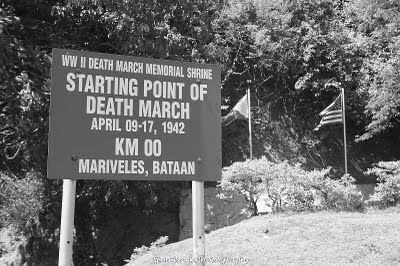
Lengthy text but here is an account of the Bataan Death March during WWII, 1942:
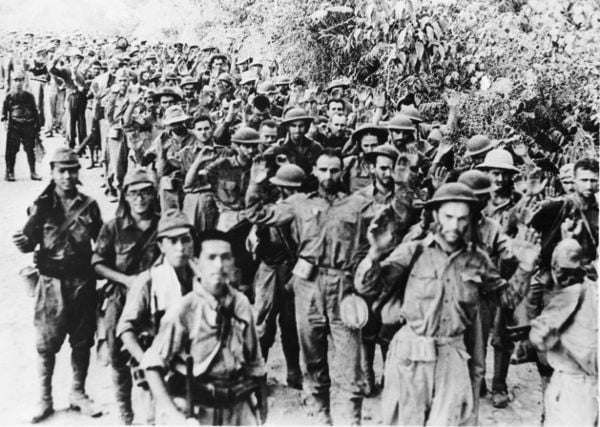
The Battle of Bataan ended on April 9, 1942, when U.S. General Edward P. King surrendered to Japanese General Masaharu Homma. At that point 75,000 soldiers became Prisoners of War: about 12,000 Americans and 63,000 Filipinos. What followed was one of the worst atrocities in modern wartime history—the Bataan Death March.
During the Battle of Bataan, the American and Filipino soldiers of General Douglas MacArthur’s United States Army Forces in the Far East (USAFFE) had held out for four months against the Imperial Japanese Army, while every other island and nation in the Pacific and Southeast Asia fell to the Japanese. By March 1942, Japan controlled all of the Western Pacific except the Philippines.
General MacArthur’s plan was to hold his ground on the Bataan Peninsula and Corregidor Island in the Philippines until the U.S. Navy could bring reinforcements and supplies from the United States. Once the reinforcements arrived, he planned to attack north from Bataan, defeat the Japanese Army, and push onward to the Japanese islands and victory. But with the U.S. Navy in shambles after the attack on Pearl Harbor, there were no ships capable of bringing the needed reinforcements to Bataan.
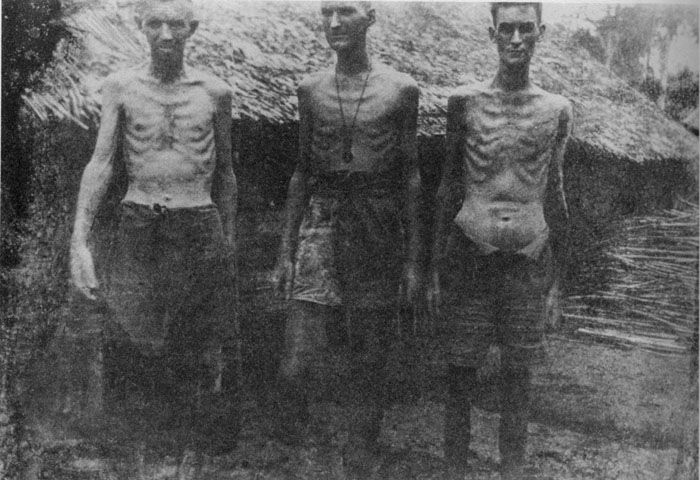
The Japanese Navy blockaded Bataan and nearby Corregidor, and prevented any food, ammunition or medicine from reaching the U.S. troops. For months the soldiers on Bataan lived on half rations in the hot, tropical jungle. Nevertheless, they fought back against Japanese attacks and defeated the Japanese Army at battles along the Bataan defense line and along the rugged coastline of the peninsula. But without supplies they could barely hold out. By the first of April, 1942, most of the starving men had lost as much as thirty percent of their body weight and they became so weak that they could barely lift their weapons. As medical supplies ran out, malaria, dysentery and other tropical diseases ravaged their ranks. 10,000 men were confined to the two open-air jungle hospitals for wounds and illnesses, and less than half of the remainder could be considered “combat effective”—defined as a man who could walk 100 yards without staggering and still have enough strength left to fire his weapon.
On April 3, 1942 the Japanese Army launched its final assault on Bataan. Although the starving American and Filipino soldiers fought as best they could, they were no match for the fresh troops the Japanese brought in for the attack. As General Homma’s army rolled back the front line on Bataan, General Edward King, the American field commander, made a fateful decision—on April 9 he surrendered rather than see any more of his starving, diseased men slaughtered by the advancing Japanese Army.
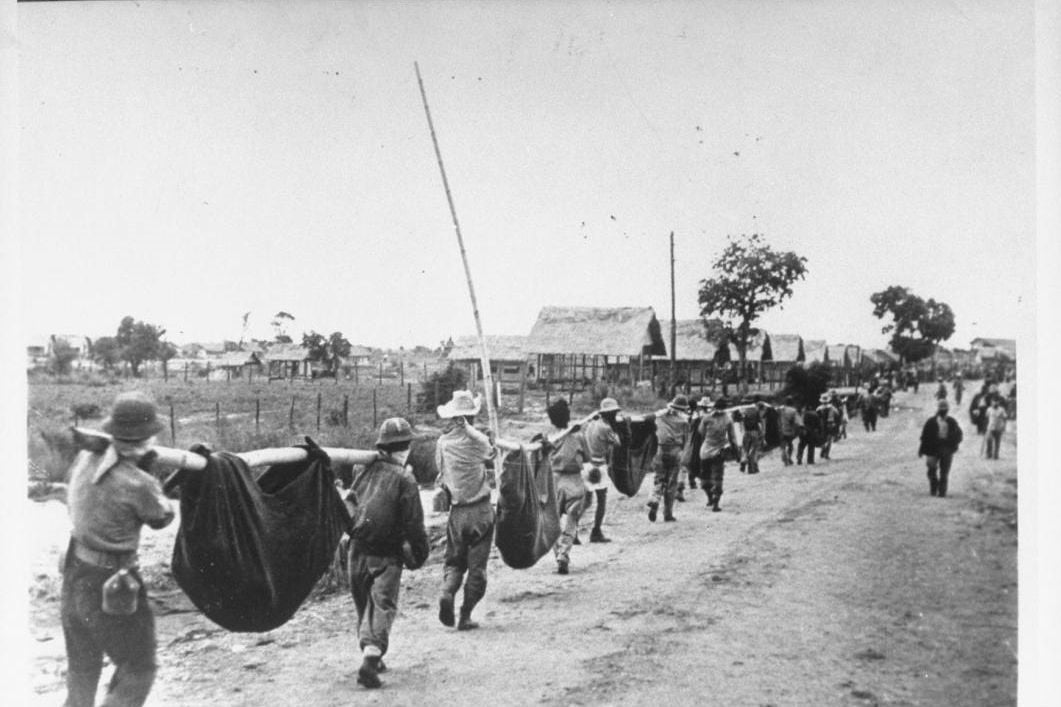
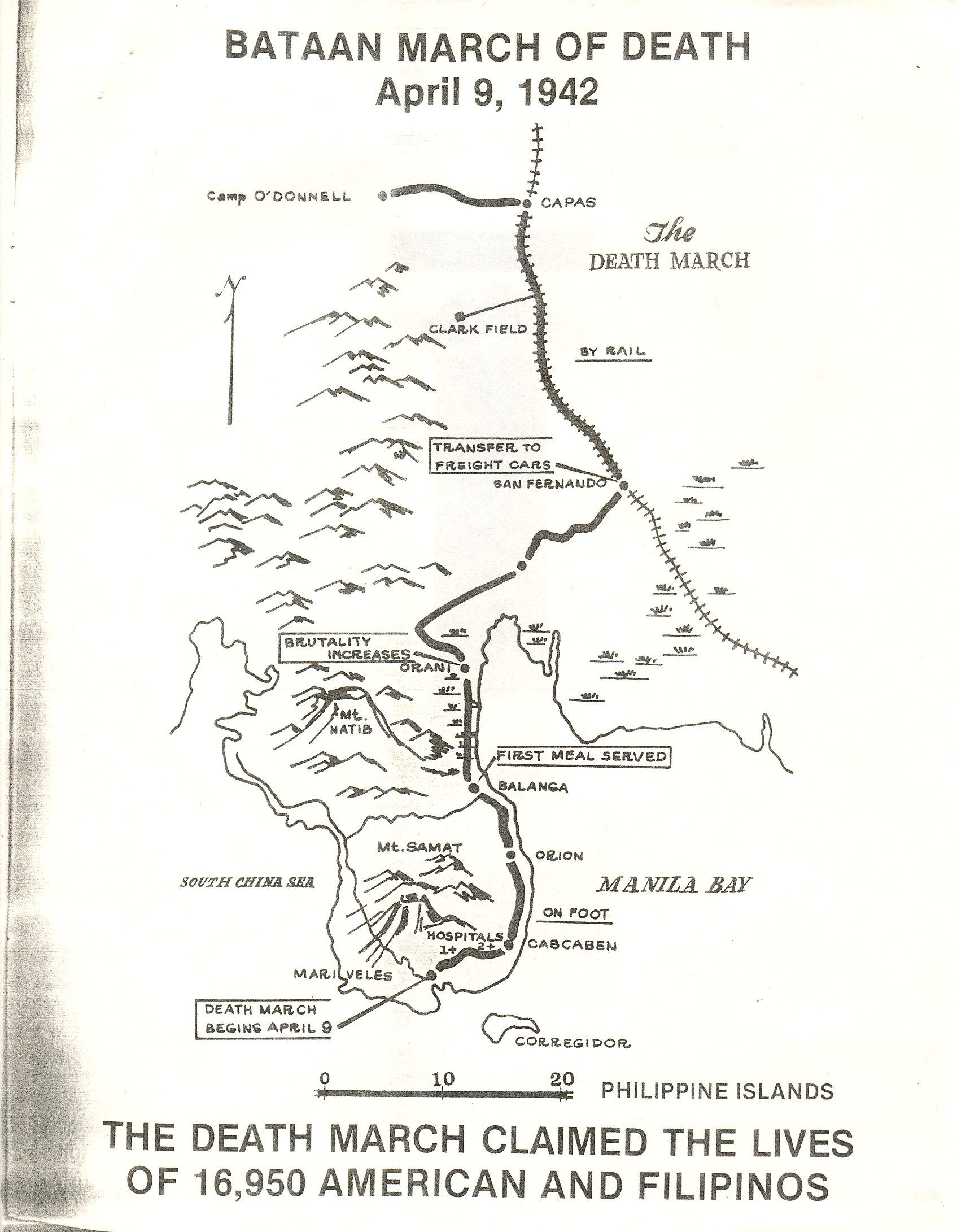
Once the surrender went into effect, the Japanese rounded up the American and Filipino soldiers and gathered them into groups of 100 on the only paved road that ran down the Bataan peninsula. The Japanese assigned four guards to each group. They lined the men up four abreast, and they began marching them north toward Camp O’Donnell in Tarlac Province, sixty-five miles away.
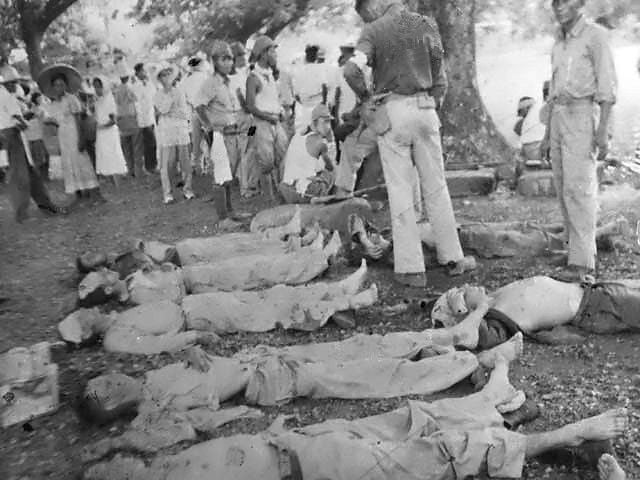
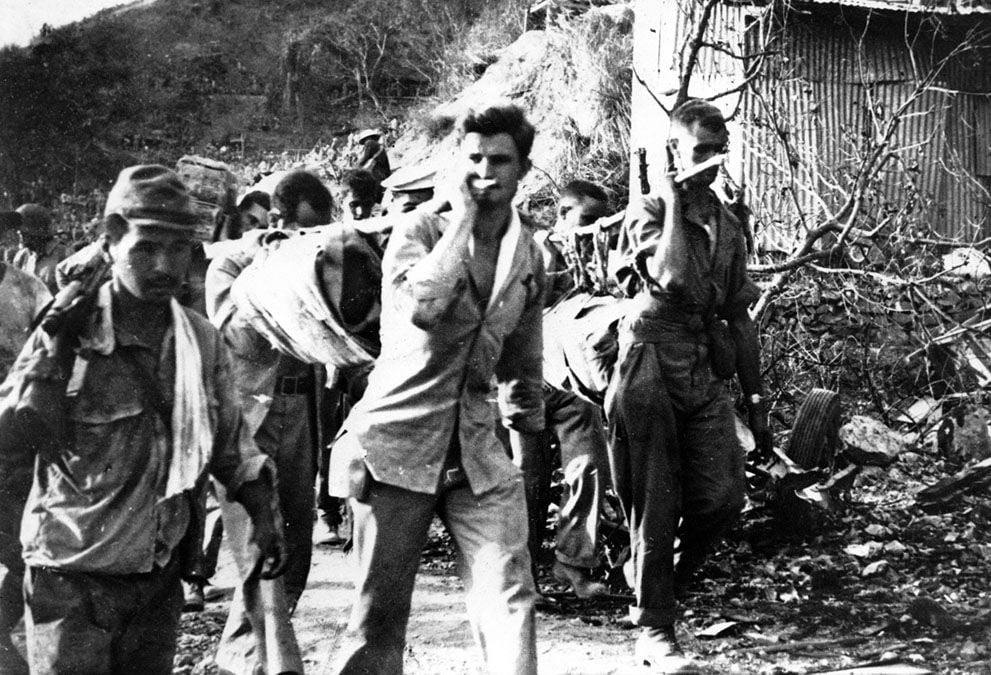
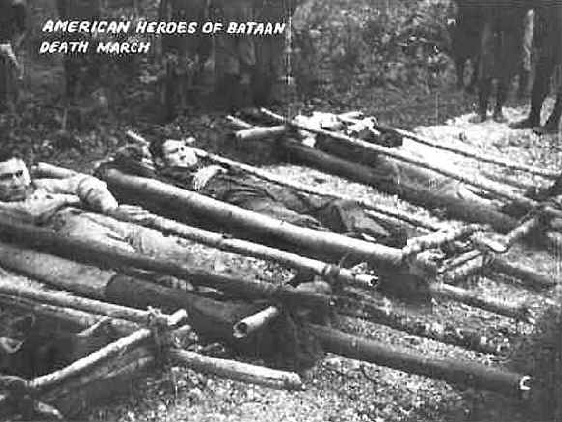
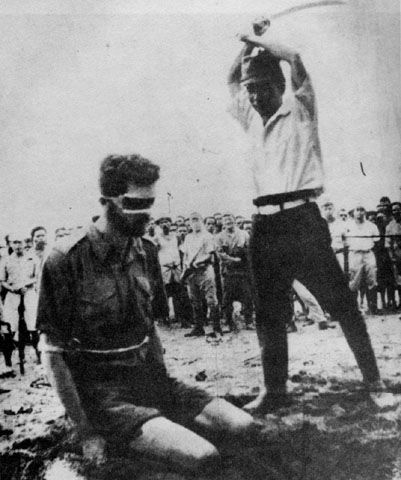
As the emaciated men proceeded north up the highway in the blistering heat, the Japanese guards summarily shot or bayoneted any man who fell, attempted to escape, or stopped to quench his thirst at a roadside spigot or puddle. The men were given little water or food for the entire length of the Bataan Death March, which took about five days for each group to complete. The guards chased off, bayoneted or shot any Filipino civilian who tried to give water or bits of food to the passing lines of prisoners. At various points along the route of the March they singled out prisoners, sometimes in groups, tied them to trees or fences, and shot them to death as examples to the others. The Japanese guards killed between 7,000 and 10,000 men on the Death March—they kept no records and no one knows the exact number. If a man fell, it was certain death unless another could pick him up and support him.
When they got to their prison camp, Camp O’Donnell, conditions were even worse. Camp O’Donnell was a former Philippine Army camp designed to accommodate about 10,000 men. The Japanese crammed 60,000 survivors of the Death March into the camp. There was little running water, sparse food, no medical care, and only slit trenches along the sides of the camp for sanitation. The heat was intolerable, flies rose out of the latrines and covered the prisoner’s food, and malaria, dysentery, beriberi and a host of other diseases swept through the crowds of men. They began to die at the rate of four hundred per day. It got so bad that by July, 1942, the Japanese replaced the camp commander, moved the American prisoners to another camp, Cabanatuan, and decided to parole the Filipino prisoners.
From September through December 1942, the Japanese gradually paroled the Filipino soldiers to their families and to the mayors of their hometowns, who would be held personally responsible for each man’s conduct. To be paroled a soldier had to sign an oath that he would not participate in guerrilla activity, and he had to be well enough to walk. Anyone who was too sick to walk was simply held in camp until he either got well or died. By the time Camp O’Donnell closed in January 1943, after eight months of operation, 26,000 of the 50,000 Filipino Prisoners of War there had died.
The American prisoners fared no better. Conditions in Cabanatuan were marginally better than Camp O’Donnell, and the prisoner doctors were able to somewhat stem the disease and death rate. However, as U.S. forces pulled closer to the Philippines in 1944, the Japanese decided to evacuate the American prisoners to Japan and Manchuria, to use them as slave laborers in Japanese factories and coal mines. Thousands of men were crammed into the dark holds of cargo ships so tightly that the men could not sit or lay down. Again, food and water were scarce, sanitary facilities were virtually non-existent, and the heat in the closed holds of the ships was unbearable. Men suffocated to death standing up. In some cases, the guards would not even let the dead bodies be removed from the holds. The Japanese ships were unmarked and some of them were attacked by American planes and torpedoed by American submarines. Once they arrived at the slave-labor camps more of the men died of malnutrition and exposure. By the time Japan surrendered and the U.S. Army liberated the Bataan Prisoners of War, two-thirds of the American prisoners had died in Japanese custody.