|
#1
●
09-11-2013, 08:18 PM
| ||||||||
 ★ Legacy Member ★ Poster Rank:52 Join Date: Mar 2013 Posts: 28,076
Contributions: 37
Mentioned: 175 Post(s) Quoted: 11875 Post(s)
| ||||||||
|
The 1936 Murder of Nancy Titterton
This is my first post. I have not yet found this case on here. This case has always intrigued me. Perhaps because of the photo, the story behind it, the fact that her husband was an executive at NBC or simply because less than one year after her murder, the bad guy was put to death. That is justice!!  Not much gore, a few photos and a LONG but interesting story. I found a few photographs online of the suspect and the one of the victim is from a book I own called, Shots in the Dark True Crime Pictures. I found an article online and credit to it goes to a girl named Jennifer Rodriguez. I also added in a various details that I located from various other articles. I hope you enjoy it. The Titterton case is interesting for several reasons. It took place in 1936 New York and demonstrates the abilities of forensic science and the tenacity of law enforcement at that time; and although the mystery had its twists and turns, it was a little thing that paid off. The year was 1936. Nancy Titterton was 33 years old at the time. She lived at 22 Beekman Place, a neighborhood comprised of New York artists and intellectuals. There she resided with her husband of seven years, Lewis Titterton, an executive at NBC. Nancy was a gifted writer and the two were very happy and known to be completely devoted to one another. Lewis' world was forever shattered one dreary Friday when Nancy was found murdered in their own home. Theodore Kruger and his young assistant, Johnny Fiorenza, went to 22 Beekman Place to return a loveseat that they had repaired for the Tittertons. The door was ajar, so Kruger called out Nancy's name. She did not answer and the two gentleman heard the sound of running water. They slowly entered the house and followed the sound to uncover a grisly sight: Nancy was lying face down in an empty bathtub with a pajama top tied around her neck. She had on nothing but a pair of stockings and the shower was left running. Fiorenza phoned the police and Assistant Chief Inspector Lyons reported to the crime scene. The torn undergarments on the bedroom floor implied that the motive was of a sexual nature. The door showed no signs of forced entry, which suggested that Nancy knew her killer. The initial search of the Titterton home yielded no concrete clues. It was not until Nancy's body was being removed from the tub that the first piece of evidence came to light: a 13-inch long piece of severed cord was found underneath the victim's body. Marks on Nancy's wrists indicated that she was bound. The killer took the cord with him, but overlooked the small fragment that was hidden under Nancy's body. The knife that was used to cut the cord was found nearby, but there were no fingerprints on it. The fact that the killer brought the cord with him, took it with him when he left, and wiped the knife clean suggested that the attack was premeditated. Lyons and his fellow detectives worked to trace the cord to its source. The cord was the kind used in Venetian blinds and therefore very common. While the police tried to trace the cord, they got another lead: a smear of green paint on the bed sheets. The building was being painted that exact shade of green, which implied that the killer brushed up against the wet paint and unknowingly left some on Nancy's bed. Lyons began to wonder if the killer could have been one of the four painters who were working in the building. The lead turned out to be a dead end: only one of the four painters was working that day and the other tenants in the building confirmed his whereabouts at the time in question. Dr. Alexander Gettler, a toxicologist, made an interesting discovery while examining the bedclothes from the crime scene: horsehair, similar to the kind used to stuff furniture. The horsehair was not only used to stuff furniture, but also matched up to the hair used to stuff the loveseat that Theodore Kruger and Johnny Fiorenza repaired for the Tittertons. Lyons paid a visit to Kruger's upholstery shop. He found Kruger there alone and questioned him about his whereabouts on that fateful Friday. Kruger claimed that he was at the shop working. When asked about the whereabouts of his assistant on the day in question, Kruger revealed some interesting information: Johnny was not working that morning because he had a meeting with his parole officer. Given this new information, Lyons looked into Johnny's past and learned that he was arrested four times for car theft and incarcerated for 2 years. Lyons soon realized that the day that Nancy was killed was Good Friday. Upon checking he learned that the parole office was closed on Good Friday. Then came the confirmation that Lyons needed to interrogate Johnny: the cord found under Mrs. Titterton was manufactured by Hanover Cordage Company in New York and records showed that a roll of that exact cord was sold to Kruger's upholstery shop. Johnny Fiorenza, 24, was brought to the police station for questioning. He was on parole and had previously been diagnosed as delusional by a prison psychiatrist. He was interrogated for nearly five hours before finally confessing. He confessed that on April 9th he was called to the apartment to pick up a loveseat that needed repair. He had become infatuated with Mrs. Titterton. Early on April 10th he went to her apartment where he raped and strangled her. He clamped a hand over her mouth and jammed it with a piece of cloth. He tied her hands with the rope he brought with him, and carried her to the bedroom where he removed her blouse and skirt, threw her down on the bed and tore off her brassiere and panties. Then the attack. After the rape, he knotted a pajama jacket around her throat (and a red blouse), took her into the bathroom, cut the cord from her wrists and turned on the shower. He hurried out, leaving the door open behind him. Fiorenza then reported to work. Later that afternoon he, along with his employer, delivered the loveseat back to the apartment. Upon arrival the door was ajar and after entering, Fiorenza's employer heard running water, found the body and Johnny Fiorenza called the police. Fiorenza claimed he was temporarily insane at the time of the murder. His case went to trial and he was found guilty. He was executed on January 22, 1937 via electric chair at Sing Sing Correctional Facility in New York. 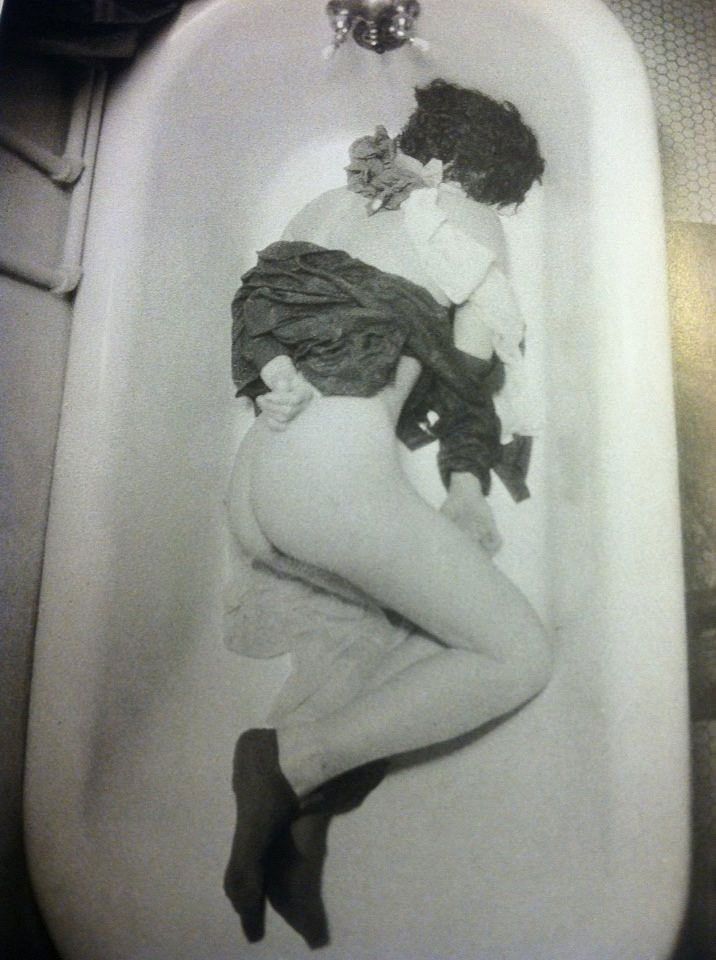 · 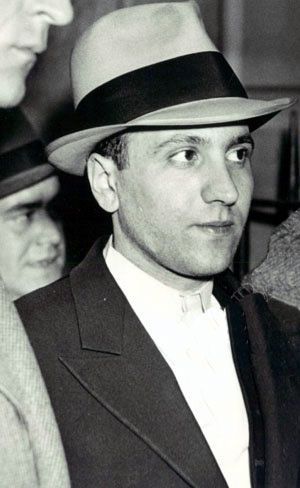 · 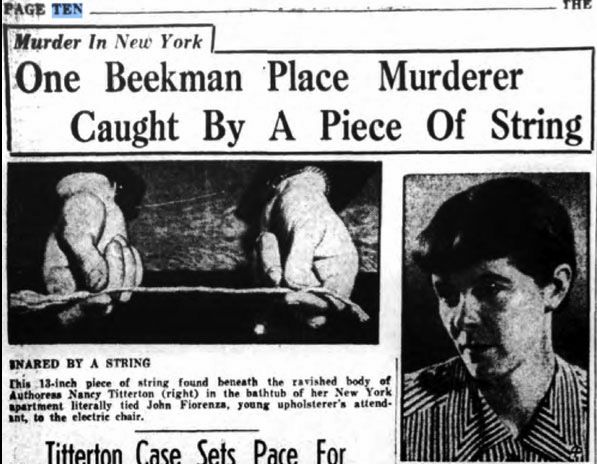 · 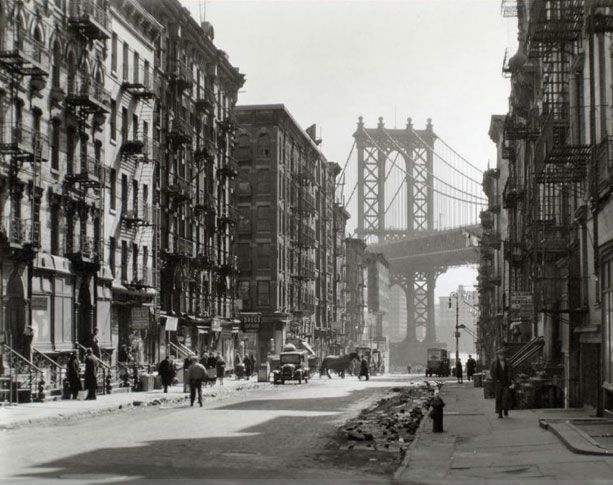 · 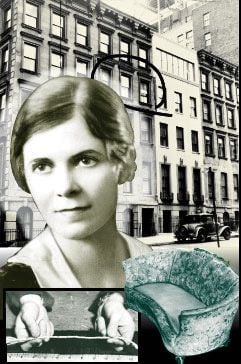 · 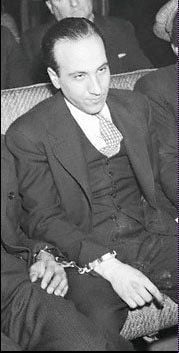 · |
|
#2
●
09-12-2013, 01:21 AM
| ||||||||
 ★ Legacy Member ★ Poster Rank:946 Female Join Date: Oct 2012 Posts: 768 Mentioned: 0 Post(s) Quoted: 42 Post(s)
| ||||||||
|
Re: The 1936 Murder of Nancy Titterton
Never heard of this, had to google it. Very interesting though :) great post  |
|
#3
●
09-12-2013, 04:23 AM
| ||||||||
 ★ ********* ★ Poster Rank:247 Male Join Date: Jul 2009 Posts: 5,564
Contributions: 368
Mentioned: 66 Post(s) Quoted: 932 Post(s)
| ||||||||
|
Re: The 1936 Murder of Nancy Titterton
Great first post and thanks, never heard of this either |
|
#4
●
09-12-2013, 07:24 AM
| ||||||||
| ★ Legacy Member ★ Poster Rank:52 Join Date: Mar 2013 Posts: 28,076
Contributions: 37
Mentioned: 175 Post(s) Quoted: 11875 Post(s)
| ||||||||
|
Re: The 1936 Murder of Nancy Titterton
Thank you!! I was excited to actually post something! |
|
#8
●
09-13-2013, 02:16 PM
| ||||||||
| Your Mothers Nightmare... Poster Rank:412 Male Join Date: Oct 2012 Posts: 2,856 Mentioned: 4 Post(s) Quoted: 1036 Post(s)
| ||||||||
|
Re: The 1936 Murder of Nancy Titterton
Never heard of it either very interesting and she was quite a pretty thing...soiled by a piece of filth..
|