|
#1
●
09-19-2013, 05:38 AM
| ||||||||
 ★ ********* ★ Poster Rank:251 Male Join Date: Jul 2009 Posts: 5,564
Contributions: 368
Mentioned: 66 Post(s) Quoted: 932 Post(s)
| ||||||||
|
Winners Of Astronomy Photographer Of The Year 2013 Revealed
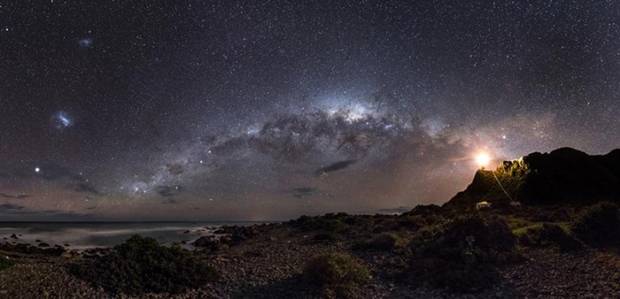 Winner and Overall Winner - Guiding Light to the Stars © Mark Gee (Australia): The skies of the Southern Hemisphere offer a rich variety of astronomical highlights. The central regions of the Milky Way Galaxy, 26,000 light years away, appear as a tangle of dust and stars in the central part of the image. Two even more distant objects are visible as smudges of light in the upper left of the picture. These are the Magellanic Clouds, two small satellite galaxies in orbit around the Milky Way. 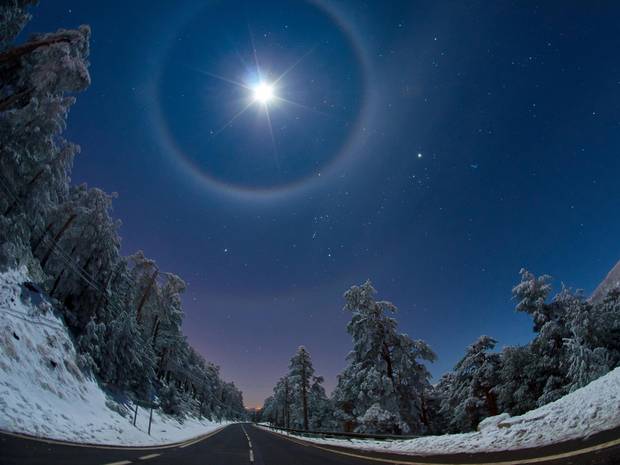 Highly Commended in Earth and Space category - A Quadruple Lunar Halo © Dani Caxete (Spain): All of the light which reaches the ground from space must first travel through the Earth’s atmosphere. During its journey the light can be altered by all sorts of atmospheric phenomena. Tiny ice crystals high above the ground refract the moonlight diverting it into a number of beautiful haloes. 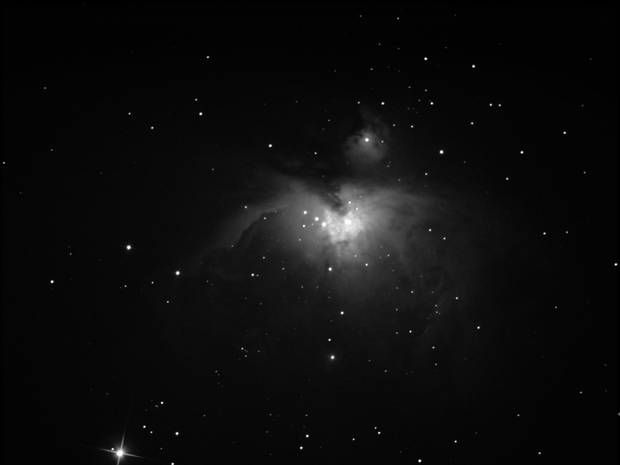 Highly Commended in the Young Astronomy Photographer category - The Great Nebula © Samuel Copley (UK, aged 15): The Great Nebula, also referred to as The Orion Nebula and M42 is found in the well-known constellation of Orion, just below the hunter’s belt. 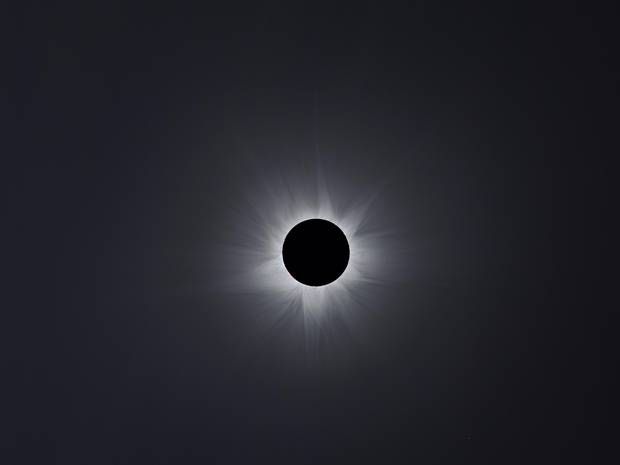 Winner of Our Solar System category - Corona Composite of 2012: Australian Totality © Man-To Hui (China): This image is a demonstration of both precision timing and rigorous post-processing. It gives the viewer a window onto the elusive outer atmosphere of the Sun – the corona. 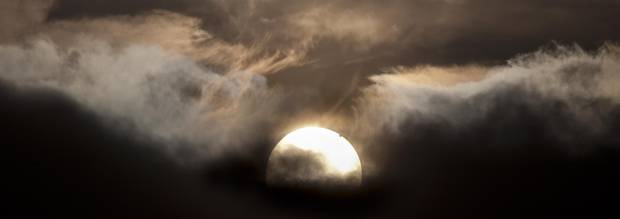 Winner of the Sir Patrick Moore prize for best newcomer - Venus Transit, Foxhunter’s Grave, Welsh Highlands © Sam Cornwell (UK): For those lucky enough to see it, the transit of Venus was one of the astronomical highlights of 2012. As the Planet took just six hours to cross the face of the Sun, cloudy weather was a potential disaster for observers – the next transit will not take place until 2117.  Runner Up in Young Astronomy Photographer category - Goodbye Sun, Hello Moon © Ariana Bernal (USA, aged 10): The awesome scale presented in this image depicts what as far as we’re concerned, are the three most significant objects in the Universe. The Sun and Moon each play an important role to us on Earth, and both are seen here, reddened by our vital atmosphere, presiding over the horizon. 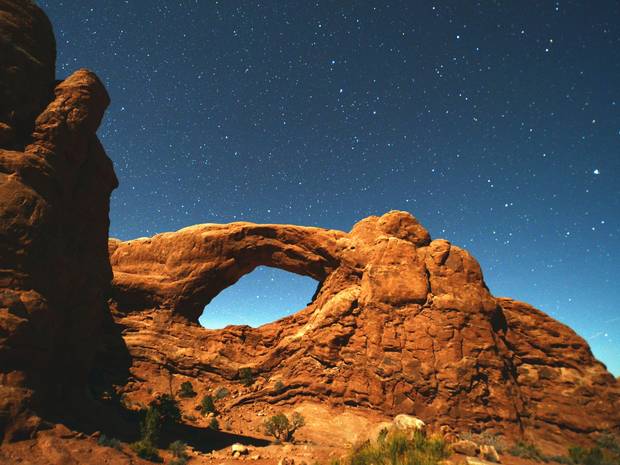 Highly Commended in the Young Astronomy Photography category - The Windows District © Eric Dewar (Canada, aged 15): By keeping the camera shutter open this young photographer gathers precious light, making the desert scenery seem as bright as day. But the stars in the blue sky give the game away, showing that this dramatic photograph was actually taken in the middle of the night. 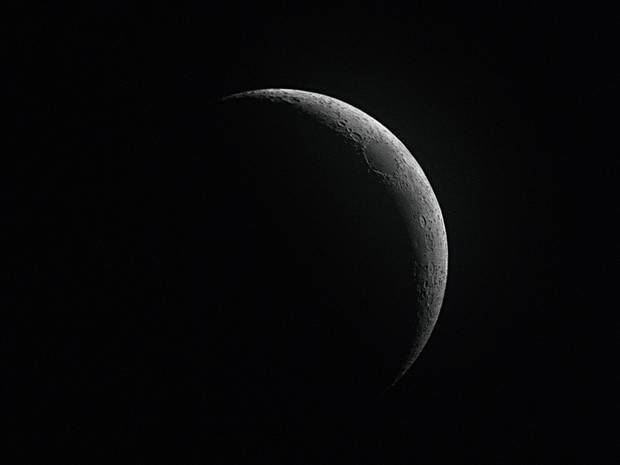 Highly Commended in the Young Astronomer Photographer category - The Waxing Crescent Moon © Jacob Marchio (USA, aged 14): The Moon seems to be emerging from the interplanetary darkness, and the young photographer has captured the contrast been the dark lava-filled lunar ‘seas’ and the mountainous southern highlands. 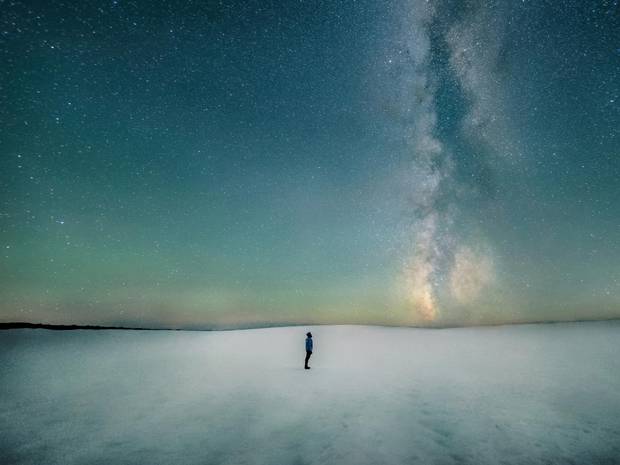 Runner Up in People and Space category - Hi.Hello © Ben Canales (USA): Appearing like a column of smoke rising from the horizon, a dark lane of dust marks the plane of the Milky Way in this photograph. This dust plays a vital role in the life story of our galaxy. Formed from the ashes of dead and dying stars, the dust clouds are also the regions in which new stars will form. 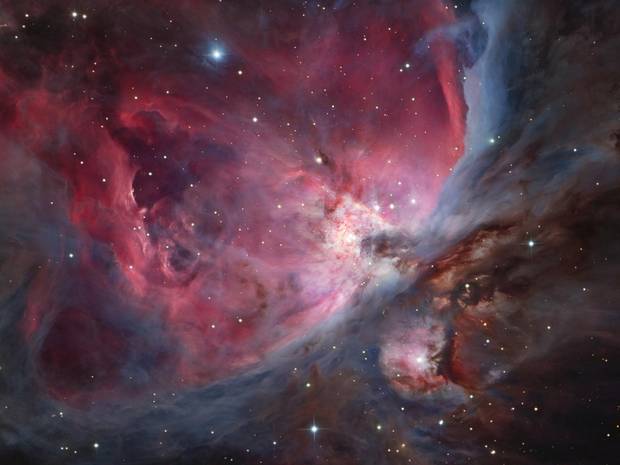 Winner in Robotic Scope category - The Trapezium Cluster and Surrounding Nebulae © László Francsics (Hungary): The great Orion Nebula is often described as a ‘stellar nursery’ because of the huge number of stars which are being created within its clouds of dust and glowing gas. As dense clumps of gas collapse under their own gravity any remaining debris settles into a dark disc surrounding each newly-formed star. 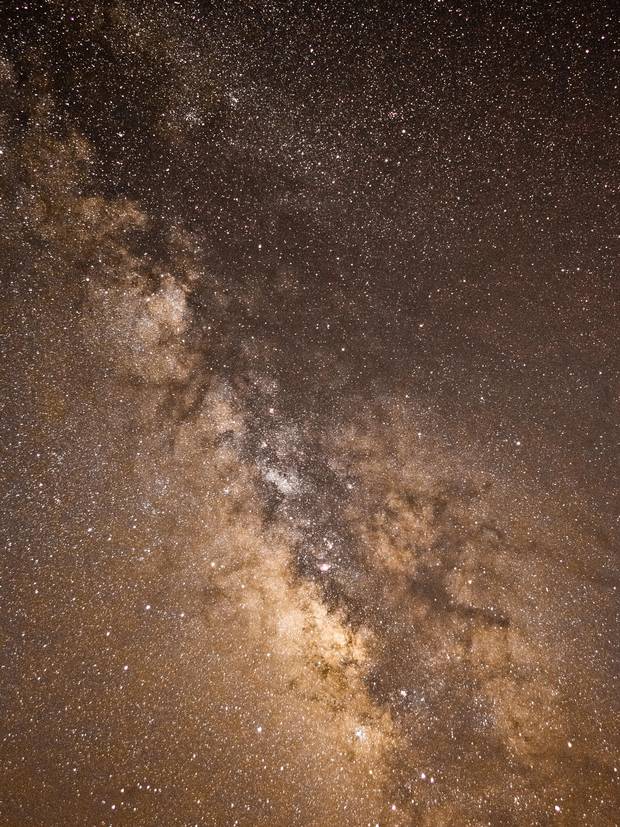 Winner in the Young Astronomy Photographer category - The Milky Way Galaxy © Jacob Marchio (USA, aged 14): This young astrophotographer has focused on one of the most spectacular vistas looking towards the very centre of the galaxy, capturing the glow of tens of billions of stars painting streaks of light across the sky. 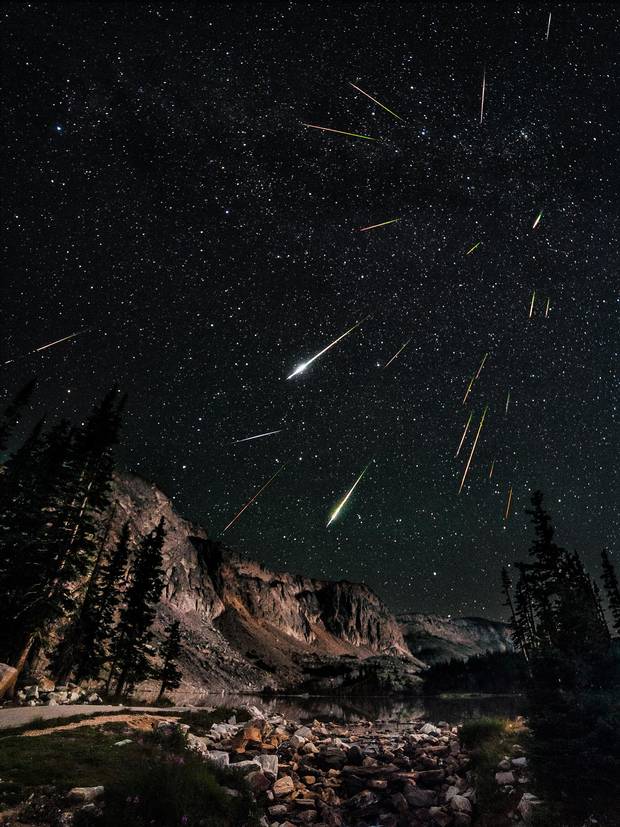 Highly Commended in Earth and Space category - Snowy Range Perseid Meteor Shower © David Kingham (USA): A great deal of careful planning, a long night of photography and hours of painstaking image processing have gone into creating this startling composite image of the Perseid meteor shower. 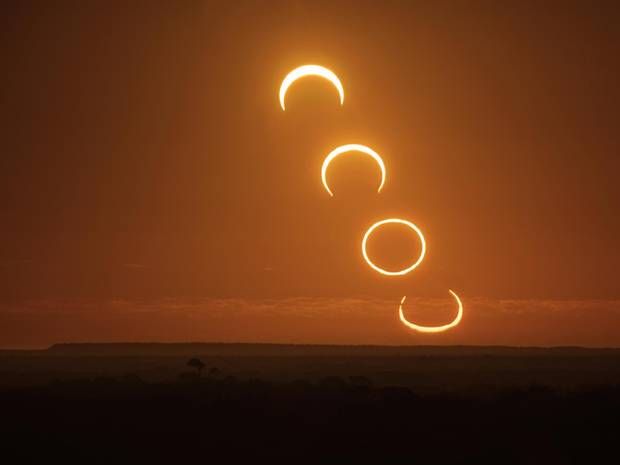 Highly Commended in Our Solar System category - Ring of Fire Sequence © Jia Hao (China): The Moon’s orbit about the Earth is not perfectly circular, so that at different times the Moon can be slightly closer or further away than usual. If the Moon passes in front of the Sun when it is at its furthest point, it will appear to be too small to entirely cover the solar disc. This is an ‘annular eclipse’ in which a ring, or annulus, of the Sun remains visible. 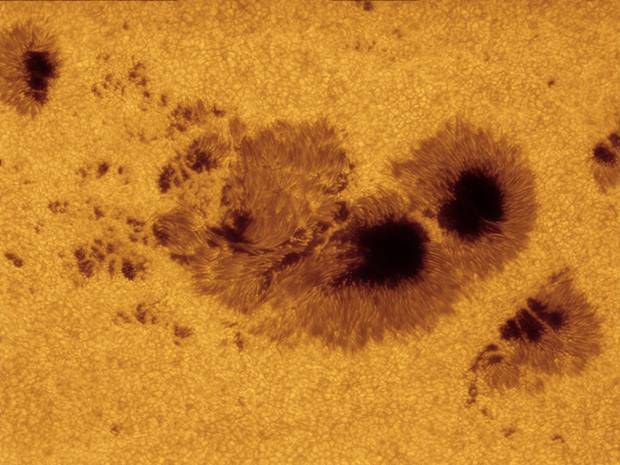 Runner Up in Our Solar System category - Magnetic Maelstrom © Alan Friedman (USA): The darkest patches or ‘umbrae’ in this image are each about the size of Earth, with the entire region of magnetic turmoil spanning the diameter of 10 Earths. This image captures rich details directly around the sunspots, and further out in the so-called ‘quiet’ Sun where simmering hot plasma rises, cools and falls back. 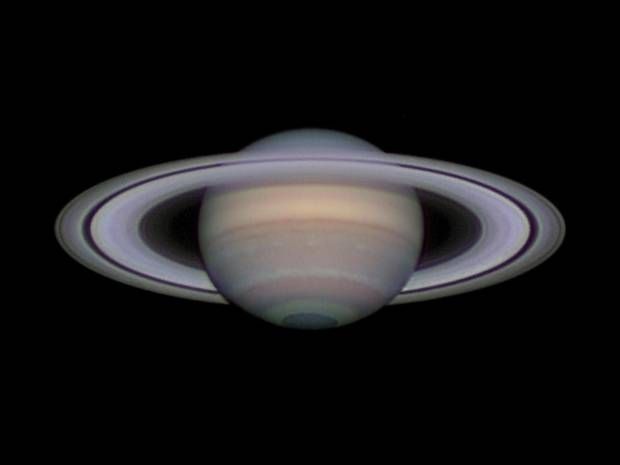 Highly Commended of Our Solar System category - Saturn at Opposition System © Damian Peach (UK): This incredibly sharp portrait brilliantly captures the jewel of our solar system, revealing the subtle banding around the orb that results from the planet’s weather. 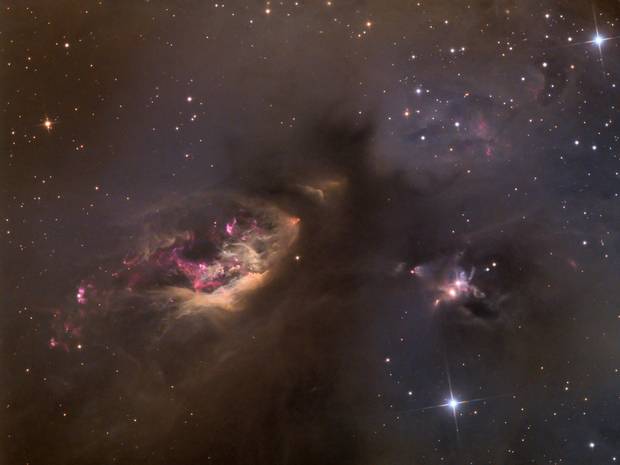 Winner in Deep Space category - Celestial Impasto: Sh2 - 239 © Adam Block (USA): Structures like this often seem unchanging and timeless on the scale of a human lifetime. However, they are fleeting and transient on astronomical timescales. 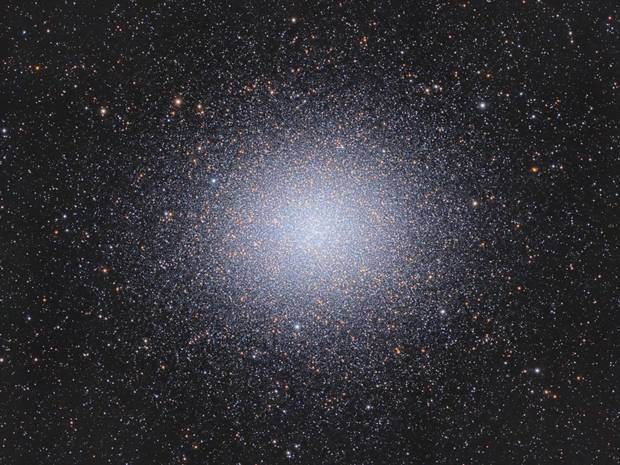 Highly Commended in the Deep Space category - Omega Centauri © Ignacio Diaz Bobillo (Argentina): Omega Centauri is a globular cluster, a spherical cloud containing several million stars. As this image shows, the stars are more densely clustered towards the centre. 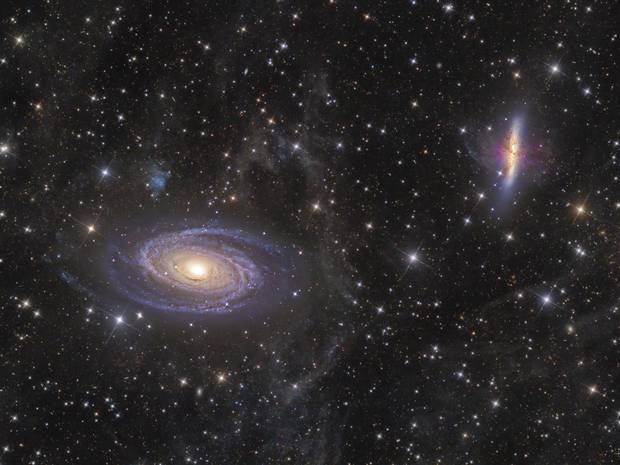 Highly Commended in Deep Space category - M81 – 82 and Integrated Flux Nebula © Ivan Eder (Hungary): Lying at a distance of twelve million light years from Earth, M81 and M82 are galaxies with a difference. Close encounters between the two objects have forced gas down into their central regions. 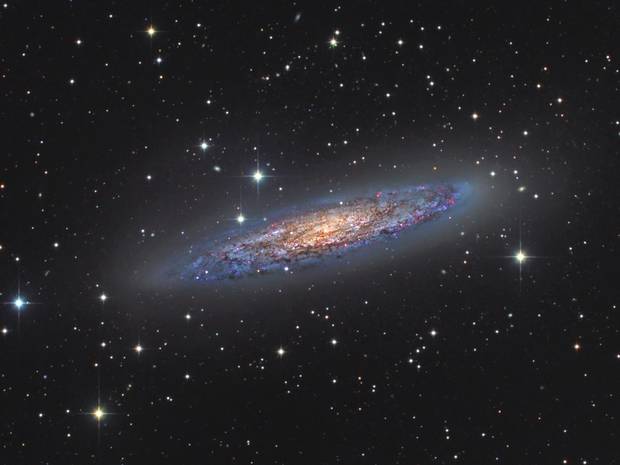 Highly Commended in Deep Space category - Floating Metropolis – NGC 253 © Michael Sidonio (Australia): First discovered by astronomer Caroline Herschel in 1783, NGC 253 is a rare example of a ‘starburst galaxy’ with new stars being formed at many times the rate in our own galaxy, the Milky Way. 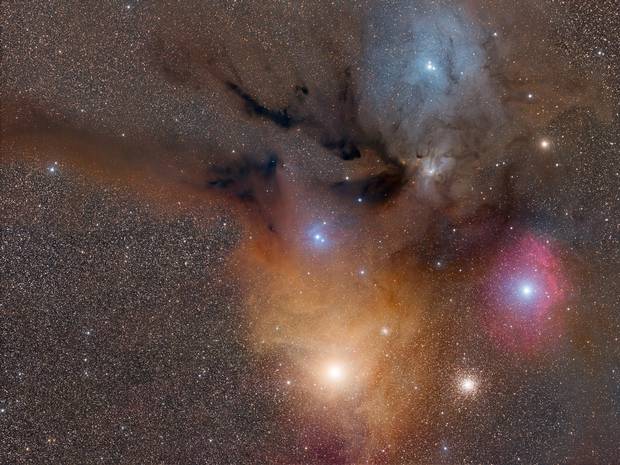 Runner Up in Deep Space category - Rho Ophiuchi and Antares Nebulae © Tom O’Donoghue (Ireland): The smoky appearance of the dust clouds in this image is fitting, since the grains of dust which make up the nebula are similar in size to particles of smoke here on Earth. The dust can reflect the light of nearby stars, as seen in the blue and yellow regions. 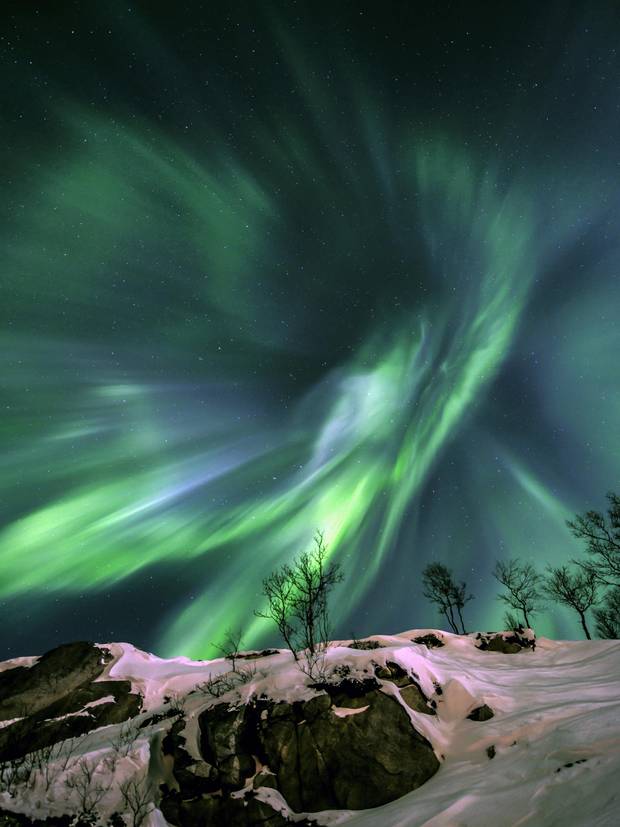 Runner Up in Earth and Space category - Green Energy © Fredrik Broms (Norway): The shifting lights of the Aurora Borealis can take on many shapes and forms as they are moulded by the Earth’s complex magnetic field. Sheets and planes of glowing gas appear to be twisted into a giant vortex above Grøtfjord in Norway. 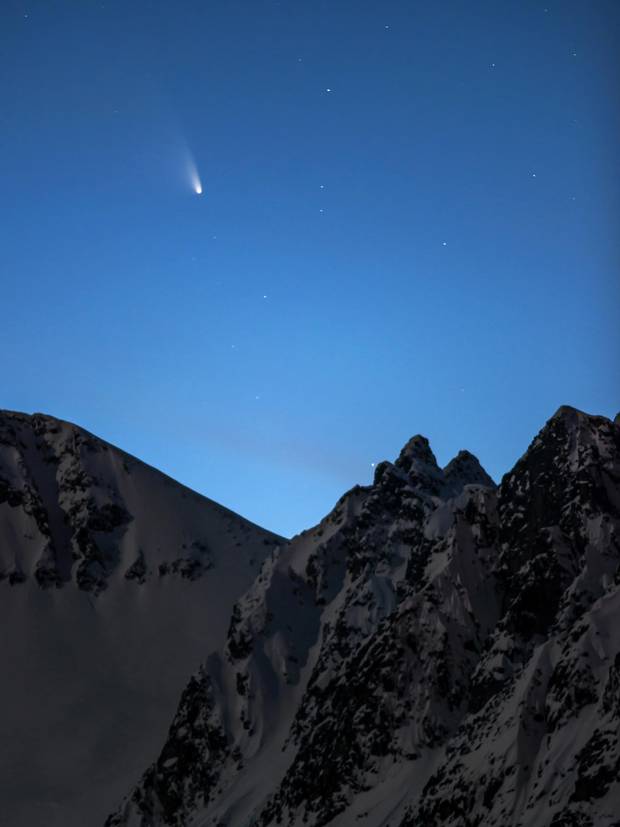 Highly Commended in Earth and Space category - Icy Visitor © Fredrik Broms (Norway): Like the snowy mountains in the foreground, the nucleus of Comet Panstarrs is composed largely of ice and rock. The nucleus itself is just a few kilometres across but as it neared the Sun in early 2013, ice evaporating from the surface formed a tail of gas and dust hundreds of thousands of kilometres long http://www.universetoday.com/104869/...otos-revealed/ http://www.bbc.co.uk/news/science-environment-24131917 |
|
#3
●
09-19-2013, 08:13 AM
| ||||||||
 ★ Legacy Member ★ Poster Rank:373 I need a nap =| Join Date: Aug 2012 Posts: 3,203
Contributions: 43
Mentioned: 42 Post(s) Quoted: 901 Post(s)
| ||||||||
|
Re: Winners Of Astronomy Photographer Of The Year 2013 Revealed
The deep space images may not be the most beautiful, but they are definitely the most mind-blowing  |
|
#4
●
09-19-2013, 02:03 PM
| ||||||||
 My Rank: MAJOR Poster Rank:12 Join Date: Jun 2009 Posts: 93,128
Contributions: 226
Mentioned: 91 Post(s) Quoted: 2009 Post(s)
| ||||||||
|
Re: Winners Of Astronomy Photographer Of The Year 2013 Revealed
So stunning i can't pick a favourite  |
|
#5
●
09-19-2013, 04:29 PM
| ||||||||
 ✝Mudderator from Hell✝ Poster Rank:10 e-mail Join Date: Oct 2006 Posts: 96,393
Contributions: 817
Mentioned: 476 Post(s) Quoted: 10321 Post(s)
| ||||||||
|
Re: Winners Of Astronomy Photographer Of The Year 2013 Revealed
all beautiful images but esp the allover winning pic and saturn |
|
#6
●
09-19-2013, 04:43 PM
| ||||||||
 ♚ Legacy Gold Member ♚ Poster Rank:35 Female Join Date: Nov 2008 Posts: 43,394
Contributions: 204
Mentioned: 95 Post(s) Quoted: 2282 Post(s)
| ||||||||
|
Re: Winners Of Astronomy Photographer Of The Year 2013 Revealed
Wow what amazing images, such depth and clarity. Stunning is an understatement |