|
#11
●
12-04-2013, 10:24 PM
|
|
Re: Truck Carrying 'Extremely Dangerous' Radioactive Material Stolen In Mexico
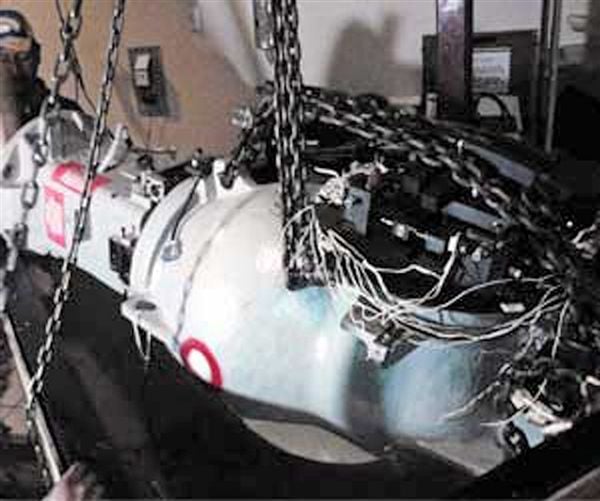
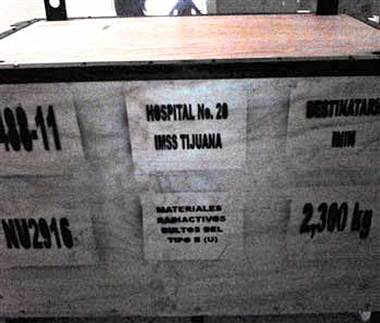
http://wtvr.com/2013/12/04/mexico-ra...terial-stolen/ Mexico: Stolen truck that carried radioactive material found (CNN) — A pair of thieves in Mexico may have stolen more than they bargained for when they targeted a truck this week. The stolen vehicle was carrying a delicate cargo — a radioactive element used for medical purposes that also can be used to make a so-called dirty bomb. Mexican authorities said they’d found the stolen truck and the container that had been holding radioactive cobalt Wednesday, hours after the International Atomic Energy Agency announced the theft. The container was found about a kilometer away from the truck and had been opened, said Juan Eibens Chutz, head of Mexico’s National Commission for Nuclear Security. There was cobalt inside, but officials do not know whether any of the original cargo is missing, he said. Authorities were preparing to send a special team to the area, where radiation has been detected, he said. Mexican authorities told the IAEA that the truck, which was transporting the cobalt-60 teletherapy source from a hospital in Tijuana to a radioactive waste storage center, was stolen Monday in Tepojaco, near Mexico City. An early theory is that the thieves were unaware of what exactly they had taken. “At the time the truck was stolen, the source was properly shielded,” the IAEA said. “However, the source could be extremely dangerous to a person if removed from the shielding, or if it was damaged.” The U.S. Department of Homeland Security is assisting with the investigation into the stolen truck, Mexican authorities said. The U.S. government has sensors at border crossings and sea ports to prevent radioactive materials from entering the country. This includes large stationary sensors designed to scan vehicles going through land border crossings as well as pager-size devices carried by agents. Some of this equipment is sensitive enough that it has been set off by people who had recently undergone radiation therapy, according to a U.S. law-enforcement source. Experts consider cobalt-60 one of the “candidates” for making dirty bombs. Bombs made with cobalt-60 “pose a threat mainly because even a fraction of a gram emits a huge number of high-energy gamma rays; such material is harmful whether outside or inside the body,” according to a 2011 report by the Congressional Research Center. In a speech last year, the IAEA director warned that such a dirty bomb “detonated in a major city could cause mass panic, as well as serious economic and environmental consequences.” The preliminary information suggests that the thieves did not know what the truck’s cargo was when they stole it, said Jaime Aguirre Gomez, deputy director of radiological security at the National Commission for Nuclear Security and Safeguards. The radioactive material had been used in radiotherapy for cancer treatments at a Tijuana hospital and is now in disuse, he said. The shielding that protects the cobalt-60 is designed so that the radioactive source is difficult to extract, Aguirre said. The casing is designed not to be opened or perforated easily. The driver of the white 2007 Volkswagen truck and an assistant had stopped to rest at a gas station, local prosecutor Marcos Morales told CNN. At around 1 a.m. Monday, a man armed with a handgun knocked on the passenger window. When the passenger rolled down his window, the gunman demanded the keys to the vehicle, Morales said. Both the driver and his assistant were taken to an empty lot where they were bound and told not to move. They heard one of the assailants use a walkie-talkie type device or phone to tell someone, “It’s done,” Morales said. Mexico alerted the IAEA to the theft, following international protocol, Aguirre said. Cobalt-60 is used in radiotherapy and in industrial tools such as leveling devices and thickness gauges. Large sources of cobalt-60 are used to sterilize certain foods, as the gamma rays kill bacteria but don’t damage the product, according to the U.S. Environmental Protection Agency. If released into the environment, the radioactive material can harm people. According to the Congressional Research Center report, in Thailand in 2000, a disused cobalt-60 source was stored outdoors and bought by two scrap collectors, who took it to a junkyard where it was cut open. Some workers suffered burn-like injuries, and eventually three people died and seven others suffered radiation injuries, the report says. Nearly 2,000 others who lived nearby were exposed to radiation. Cobalt-60 has a half-life of 5.27 years. |
|
#15
●
12-05-2013, 02:27 PM
|
|
Re: Truck Carrying 'Extremely Dangerous' Radioactive Material Stolen In Mexico
Mexican cobalt-60 thieves will soon die of radiation exposure The radioactive material hijacked in a Mexico truck heist has been recovered and, although the two gunmen remain on the run, officials believe they won't have long to live. Thanks to Megamel29 for the update |
|
#16
●
12-06-2013, 06:30 PM
|
|
Re: Truck Carrying 'Extremely Dangerous' Radioactive Material Stolen In Mexico
http://news.yahoo.com/police-block-m...190702180.html Police block Mexico hospital, 6 may have radiation PACHUCA, Mexico (AP) — Federal police blocked access Friday to a central Mexico hospital where six people were reported to have been admitted with radiation exposure. An official familiar with the case confirmed Mexican media reports that the six have been admitted to the general hospital in the city of Pachuca and may have been exposed to a stolen source of highly radioactive cobalt-60. The official, who spoke Friday on condition of anonymity because she was not authorized to be quoted by the media, said only one person so far was dizzy and vomiting, symptoms of severe radiation poisoning. She said two people were admitted on Thursday and four more Friday. She did not provide any other details. It was not clear if the people under observation were also the thieves, who early Monday stole a cargo truck at gunpoint that was carrying the radioactive material in Hidalgo state, where Pachuca is located. The federal attorney general's office, which is handling the case, could not be reached for comment on whether suspects were in custody. The theft triggered alerts in six Mexican states and Mexico City, as well as international notifications to the U.S. and the International Atomic Energy Agency in Vienna. It raised concerns that the material could have been stolen to make a dirty bomb, a conventional explosive that disseminates radioactive material. But Mexican officials said that the thieves seemed to have targeted the cargo truck with moveable platform and crane, and likely didn't know about the dangerous cargo. The atomic energy agency said the cobalt has an activity of 3,000 curries, or Category 1, meaning "it would probably be fatal to be close to this amount of unshielded radioactive material for a period in the range of a few minutes to an hour." "What I was told yesterday is that there might be two people with severe radiation syndrome, but I do not have confirmation," said Juan Eibenschutz, director general of Mexico's National Commission of Nuclear Safety and Safeguards. Pedro Luis Noble, health minister for Hidalgo state, told Reforma newspaper that the people believed to be exposed pose no risk to other patients and that they are in an isolated area. The truck was found abandoned Wednesday about 40 kilometers (24 miles) from where it was stolen, and the container for the radioactive material was found opened. The cobalt-60 pellets were left about a kilometer (half mile) from the truck in an empty rural field, where authorities said they were a risk only to anyone who had handled them and not to anyone in Hueypoxtla, the closest town of about 4,000 people. There was no evacuation. The material was from obsolete radiation therapy equipment at a hospital in the northern city of Tijuana and was being transported to nuclear waste facility in the state of Mexico, which borders Mexico City. Eibenschutz said authorities continued to work on Friday at the site in Mexico state where the material was found to extract it safely. "It's quite an operation and it is in the process of being planned," he said. "It's highly radioactive, so you cannot just go over and pick it up. It's going to take a while to pick it up." |