|
#1
●
01-06-2018, 12:11 PM
| ||||||||
 So Fucking Banned Poster Rank:270 MAN Join Date: Jul 2010 Posts: 5,143 Mentioned: 20 Post(s) Quoted: 2832 Post(s)
| ||||||||
|
Public Health Response to a Nuclear Detonation
January 06, 2018 at 1:00 p.m. (ET) While a nuclear detonation is unlikely, it would have devastating results and there would be limited time to take critical protection steps. Despite the fear surrounding such an event, planning and preparation can lessen deaths and illness. For instance, most people don’t realize that sheltering in place for at least 24 hours is crucial to saving lives and reducing exposure to radiation. While federal, state, and local agencies will lead the immediate response efforts, public health will play a key role in responding. Join us for this session of Grand Rounds to learn what public health programs have done on a federal, state, and local level to prepare for a nuclear detonation. Learn how planning and preparation efforts for a nuclear detonation are similar and different from other emergency response planning efforts. CDC’s Public Health Grand Rounds Presents: “Public Health Response to a Nuclear Detonation” Tuesday, January 16, 2018 1:00 p.m. – 2:00 p.m. (ET) Global Communications Center (Building 19) Alexander D. Langmuir Auditorium Roybal Campus https://www.cdc.gov/cdcgrandrounds/a...anuary2018.htm 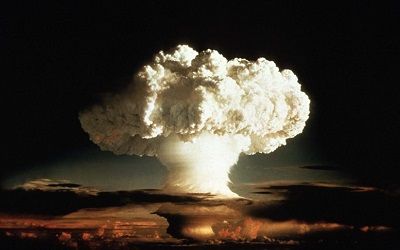 · |
|
#2
●
01-06-2018, 09:44 PM
| ||||||||
 My Rank: MASTER SERGEANT Poster Rank:510 Kill all humans Join Date: Sep 2017 Posts: 2,053 Mentioned: 4 Post(s) Quoted: 434 Post(s)
| ||||||||
|
Re: Public Health Response to a Nuclear Detonation
Nice pic. That would look great blown up and hung on a wall.... get it?  |
|
#3
●
01-07-2018, 01:17 AM
| ||||||||
| ★ Legacy Member ★ Poster Rank:1013 Join Date: Apr 2013 Posts: 685
Contributions: 8
Mentioned: 0 Post(s) Quoted: 226 Post(s)
| ||||||||
|
Re: Public Health Response to a Nuclear Detonation
Recently I was looking at one of those (1960's or earlier) government issued radiation detectors. One of those yellow ones (about the size of a shoe box with a handle) with the blue and red CDC logo that were stored in those underground shelters, the ones marked by signs all over the city. Thing is, by the time the radiation registered on the LOWEST scale of those old devices, you would already be FAWKED. They read from 1 to 500 rads. Anything above 20 millirems per hour (0.02 rads) and you want to leave the area. 5 rads a year is the government maximum occupational safety if you have to work around radiation. The average US citizen is exposed to 360 millirems (0.000041 rads/hr) a year of "natural" radiation (0.36 rad total). So by the time you are around something that is giving off 1 rad on the meter (3 years natural dose every minute you are standing there), question will be how long have you already been exposed to it? How long were you exposed to 1/2 rad when it wasn't even registering on the meter? 3 mile island exposure = 0.08 rad. (80 millirem) Chernobyl - outside, near plant after explosion = 10 rad. (10,000 millirem) Fukushima 8pm March 21, 2011 = 0.00075 rad = 0.018 rad per day = 6.57 rad in a year. (doesn't seem plausible, so these "official" Fuk numbers are likely doctored) |
|
#4
●
01-07-2018, 05:39 AM
| ||||||||
 ★ Legacy Member ★ Poster Rank:7 What we've got here is failure to communicate. Join Date: Aug 2009 Posts: 103,583
Contributions: 3
Mentioned: 112 Post(s) Quoted: 43400 Post(s)
| ||||||||
|
Re: Public Health Response to a Nuclear Detonation
Google "Shoe-Fitting Fluoroscope" in use from the 30's to the 50's. If you only bought a pair of shoes a couple of times a year you would be fine using this machine, but if you worked at the shoe shop you were getting zapped daily by unshielded x-rays. One woman had her legs so badly burned they had to amputate them both. https://www.wired.com/2010/11/vintag...zap-your-feet/ |
|
#5
●
01-14-2018, 08:47 AM
| ||||||||
| So Fucking Banned Poster Rank:150 Join Date: Nov 2017 Posts: 11,232 Mentioned: 21 Post(s) Quoted: 2440 Post(s)
| ||||||||
|
Re: Public Health Response to a Nuclear Detonation
All discussions having to do with survival in that situation are irresponsible. For there would be no meaningful survival.
|