|
#1
●
03-17-2012, 04:13 PM
| ||||||||
 Super ********* Poster Rank:90 Join Date: Nov 2008 Posts: 17,425 Mentioned: 5 Post(s) Quoted: 99 Post(s)
| ||||||||
|
'H-Bomb' Asteroid To Skim Past Earth In 2013
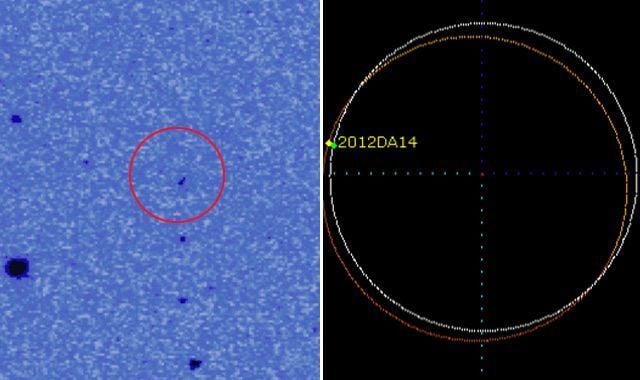 The circled dot on the left shows Asteroid 2012 DA14 as filmed by scientists in Spain. The graph on the right shows Earth in green and the asteroid in yellow, with orbits that intersect twice a year (Pics: ESA) http://news.sky.com/home/technology/article/16189789  ·  · |
|
#2
●
03-17-2012, 05:39 PM
| ||||||||
 To infinity and beyond! Poster Rank:733 Weener Join Date: Mar 2011 Posts: 1,132 Mentioned: 0 Post(s) Quoted: 18 Post(s)
| ||||||||
|
Re: 'H-Bomb' Asteroid To Skim Past Earth In 2013
Not the first time, won't be the last. That would be some show if it hit amiright? |
|
#6
●
03-19-2012, 12:26 PM
| ||||||||
 ★ Legacy Member ★ Poster Rank:7 What we've got here is failure to communicate. Join Date: Aug 2009 Posts: 103,583
Contributions: 3
Mentioned: 112 Post(s) Quoted: 43400 Post(s)
| ||||||||
|
Re: 'H-Bomb' Asteroid To Skim Past Earth In 2013
Please hit Wales.  |
|
#7
●
03-20-2012, 02:43 AM
| ||||||||
 My Rank: CORPORAL Poster Rank:1373 male Join Date: Apr 2010 Posts: 438 Mentioned: 0 Post(s) Quoted: 8 Post(s)
| ||||||||
|
Re: 'H-Bomb' Asteroid To Skim Past Earth In 2013
Pff all we have to do is send Bruce Willis and a bunch of B actors....and one nuke....
|
|
#8
●
03-20-2012, 12:26 PM
| ||||||||
| So Fucking Banned Poster Rank:337 Male Join Date: Mar 2010 Posts: 3,852 Mentioned: 13 Post(s) Quoted: 750 Post(s)
| ||||||||
|
Re: 'H-Bomb' Asteroid To Skim Past Earth In 2013
Then whatever will we do about jokes? Also, no! Fuck the cost of cleaning that sheep mess up. |
|
#9
●
03-21-2012, 06:24 AM
| ||||||||
 My Rank: MASTER SERGEANT Poster Rank:542 Male Join Date: Jan 2012 Posts: 1,886 Mentioned: 0 Post(s) Quoted: 22 Post(s)
| ||||||||
|
Re: 'H-Bomb' Asteroid To Skim Past Earth In 2013
Thanks for posting. Very interesting and scary at the same time. I guess it's irrelevant if the world is ending on 12.21.12  |
|
#10
●
03-22-2012, 07:11 PM
| ||||||||
 ★ Legacy Member ★ Poster Rank:861 dude Join Date: Dec 2011 Posts: 887 Mentioned: 0 Post(s) Quoted: 18 Post(s)
| ||||||||
|
Re: 'H-Bomb' Asteroid To Skim Past Earth In 2013
Maybe its secretley a vessel that will carry us to a better place in the heavens. I bet the only way to get on board is to kill ourselves. Who's with me? I need to know how strong to make the punch.... |