|
#1
●
03-06-2023, 03:56 PM
| ||||||||
 My Rank: FIRST SERGEANT Poster Rank:460 Join Date: Apr 2013 Posts: 2,426 Mentioned: 1 Post(s) Quoted: 597 Post(s)
| ||||||||
|
Gunmen Kidnap US Citizens Who Crossed into Mexico to Buy Medicine
Gunmen kidnapped four US citizens who crossed into Mexico from Texas last week to buy medicine and got caught in a shootout that killed at least one Mexican citizen, officials said on Monday. The four were in a white minivan with North Carolina license plates. They came under fire on Friday shortly after entering the city of Matamoros from Brownsville, the southernmost tip of Texas near the Gulf coast, the FBI San Antonio division office said in a statement Sunday. “All four Americans were placed in a vehicle and taken from the scene by armed men,” the office said. The FBI is offering a $50,000 reward for the victims’ return and the arrest of the culprits. The Mexican president, Andrés Manuel López Obrador, said Monday that the four were going to buy medicine and ended up in the crossfire between two armed groups, without offering details. A video posted to social media Friday shows armed men, some wearing tan body armor, who load four people into the bed of a pickup truck in broad daylight. One was alive and sitting up, but the others appeared to be either dead or wounded. Matamoros is home to warring factions of the Gulf drug cartel as leadership changes have led to bloody infighting. Amid the violence, thousands of Mexicans have disappeared. Shootouts there on Friday were so bad that the US consulate issued an alert about the danger and local authorities warned people to shelter in place. It was not immediately clear how the abductions could have been connected to that violence Friday. US ambassador to Mexico Ken Salazar said in a statement Monday that the Americans were kidnapped at gunpoint and an “innocent” Mexican citizen died in the attack. He said various US justice agencies were working with their Mexican counterparts to recover the missing US citizens. Authorities have provided no other details about who the victims were or where they were from. Joe Biden had been informed of the situation, the White House press secretary, Karine Jean-Pierre, said Monday. She declined to answer other questions, citing privacy concerns. Tamaulipas state police said people had been killed and injured on Friday, but did not say how many. The state police said that neither police nor the military were involved in Friday’s shootouts. “There have been two armed incidents between unidentified civilians,” the state police said Friday on social media. “The exact number of the fallen is being corroborated.” Victims of violence in Matamoros and other large border cities of Tamaulipas often go uncounted, because the cartels have a history of taking bodies of their own with them. Local media often avoid reporting on such incidents out of safety concerns, creating an information vacuum. Photographs from the scene viewed by The Associated Press show a white minivan with the driver’s side window shot out and all of the doors open sitting on the side of the road after apparently colliding with red SUV. Several people were lying in the street beside it surrounded by rifle-toting gunmen. Their positions appeared to correspond with the video posted online which showed them being dragged across the street and loaded into the bed of a white pickup. The US state department’s travel warning for Tamaulipas state warns US citizens not to travel there. However, being a border city, US citizens who live in Brownsville or elsewhere in Texas frequently cross to visit family, attend medical appointments or shop. It would also be a crossing point for people traveling deeper into Mexico. Previously, as the headquarters of the powerful Gulf cartel, Matamoros was relatively calm. For years, a night out in Matamoros was also part of the “two-nation vacation” for spring breakers flocking to Texas’s South Padre Island. But increased violence there over the past 10 to 15 years frightened away much of that business. But increased cartel violence over the past 10 to 15 years frightened away much of that business. Sometimes US citizens are swept up in the violence. https://www.theguardian.com/world/20...xico-matamoros 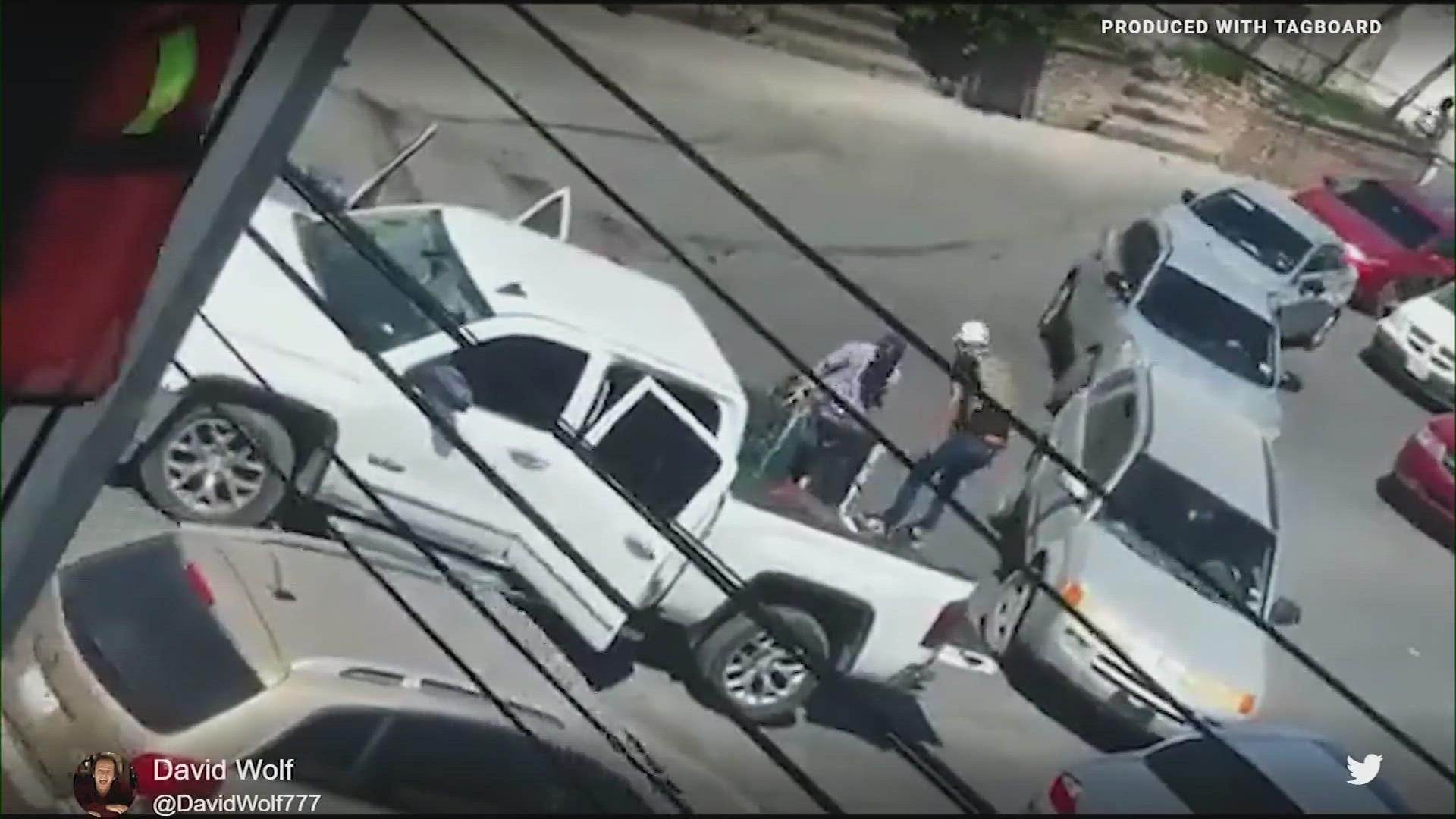 |
|
#2
●
03-06-2023, 03:58 PM
| ||||||||
| My Rank: FIRST SERGEANT Poster Rank:460 Join Date: Apr 2013 Posts: 2,426 Mentioned: 1 Post(s) Quoted: 597 Post(s)
| ||||||||
|
Re: Gunmen Kidnap US Citizens Who Crossed into Mexico to Buy Medicine
 |
|
#3
●
03-06-2023, 09:54 PM
| ||||||||
 My Rank: MAJOR Poster Rank:198 male Join Date: Mar 2021 Posts: 7,766 Mentioned: 2 Post(s) Quoted: 1468 Post(s)
| ||||||||
|
Re: Gunmen Kidnap US Citizens Who Crossed into Mexico to Buy Medicine
...but they were gonna get such a great deal on their black market meds!
|
|
#4
●
03-06-2023, 10:28 PM
| ||||||||
| My Rank: LANCE CORPORAL Poster Rank:2375 Join Date: Jun 2021 Posts: 192 Mentioned: 0 Post(s) Quoted: 67 Post(s)
| ||||||||
|
Re: Gunmen Kidnap US Citizens Who Crossed into Mexico to Buy Medicine
That’s terrible for the cartel to treat their customers like that
|
|
#5
●
03-06-2023, 10:38 PM
| ||||||||
| ♚ Legacy Gold Member ♚ Poster Rank:93 Male Join Date: Nov 2009 Posts: 17,069 Mentioned: 8 Post(s) Quoted: 4673 Post(s)
| ||||||||
|
Re: Gunmen Kidnap US Citizens Who Crossed into Mexico to Buy Medicine
Meds ARE are LOT cheaper in Mexico than in the U.S. I know a lot of people that I used to work with, who went to Mexico for medical care, and also for prescriptions, which cost a few dollars there, for what costs $500 in the U.S. Only in the U.S. is medicine this expensive, AND OUR TAXPAYERS FUNDED THE RESEARCH THAT DEVELOPED THE DRUGS! Everywhere else the drugs sell for $1 or $2 per prescription. But in the U.S. every prescription is in the $100s of dollars. People complain about socialized medicine. But THAT is exactly what they are getting here. The drug companies here are VERY socialist, meaning they help themselves to YOUR money.  |
|
#6
●
03-06-2023, 10:40 PM
| ||||||||
| ♚ Legacy Gold Member ♚ Poster Rank:93 Male Join Date: Nov 2009 Posts: 17,069 Mentioned: 8 Post(s) Quoted: 4673 Post(s)
| ||||||||
|
Re: Gunmen Kidnap US Citizens Who Crossed into Mexico to Buy Medicine
A family friend has a daughter who is epileptic, and her meds are currently running the family about $80,000 per year. Fortunately for them, they are pretty wealthy. But what would an average person do?I guess just wait to die.
|
|
#10
●
03-08-2023, 05:38 PM
| ||||||||
 My Rank: SERGEANT Poster Rank:955 Join Date: Jun 2016 Posts: 761 Mentioned: 0 Post(s) Quoted: 202 Post(s)
| ||||||||
|
Re: Gunmen Kidnap US Citizens Who Crossed into Mexico to Buy Medicine
I suspect the "cosmetic surgery" was either a bunch of malarkey or a cover story/side trip to the primary goal of picking up a hefty chunk of dope to spread around South Carolina. So many Qs with just a few being...Did any of them have priors for distribution? Was the event location on the route to the clinic? Why did everyone who embarked on the trip leave their significant others behind? Etc. I'm not convinced from what's on the surface, but then again I am a suspicious type that would need to "rule out" certain aspects before I donated to a "gofundme" page.
|