|
#1
●
11-29-2014, 11:44 PM
| ||||||||
 My Rank: MAJOR Poster Rank:189 Join Date: Jan 2014 Posts: 8,103 Mentioned: 18 Post(s) Quoted: 4490 Post(s)
| ||||||||
|
Ferguson Lesson: Police Can Better Calm Situations
SEATTLE (AP) — The grand jury that declined to indict Ferguson police officer Darren Wilson was focused on whether he might have acted in self-defense when he shot and killed unarmed, 18-year-old Michael Brown. But the case raises another question: Could Wilson have avoided getting into a spot where he had to make that split-second, life-or-death decision? Departments around the country have in recent years stepped up their training in "de-escalation" — the art of defusing a tense situation with a word or a gesture instead of being confrontational or reaching for a weapon. Proponents, including the Justice Department, say the approach can improve trust and understanding between police and residents, curtail the unnecessary use of force and improve the safety of officers and civilians alike. "We haven't taught officers to just walk away," said Cambridge, Massachusetts, Police Commissioner Robert Haas. "But if the only reason a person is acting up is because you're standing there ... isn't that a viable approach?" Haas and other law enforcement officials said they didn't want to second-guess Wilson's actions because they weren't in his shoes at the time of the Aug. 9 shooting. But, many said, the case should accelerate a national discussion about police culture and the potential for broader training in de-escalation, which is considered especially important in dealing with people in mental health or drug-related crises. In Missouri this month, a federal law enforcement team held training with St. Louis-area police, including top commanders from Ferguson, on how unintentional bias affects police work. That approach goes hand-in-hand with de-escalation. "In every police encounter, the officer and the civilian bring with them and see the world through their experiences. The more these views diverge, the more they immediately see the other as a threat," said Jenny Durkan, the former U.S. attorney in Seattle who led the effort to curb excessive uses of force by city police. According to Wilson's grand jury testimony, Brown and a friend were walking down the middle of the street when he drove up and asked them to use the sidewalk. When they declined, he suggested it again. Brown responded by cursing at him, Wilson said. He backed up his vehicle to confront Brown, who was carrying stolen cigars. Brown shoved the vehicle's door shut as Wilson tried to open it, and then attacked the officer through the door's open window, Wilson said. The officer began shooting, then got out of the car, chased Brown, and fired some more when Brown turned around. "My job isn't to just sit and wait," Wilson told ABC News. In its investigations of police agencies, the Justice Department has singled out poor de-escalation tactics. In a July report on the Newark, New Jersey, department, the DOJ faulted a "pattern and practice of taking immediate offensive action" rather than acting within the bounds of the Constitution and displaying the "thick skin and patience" needed for the job. In Seattle and in Albuquerque, New Mexico, the DOJ blasted police for too quickly using flashlights, batons or stun guns as weapons when force could have been avoided. In Seattle in 2010, an officer killed a Native American woodcarver who had crossed the street while holding a small knife and a block of wood. The officer got out of his car, and when the carver — who turned out to be hard of hearing — didn't immediately drop the tool as ordered, he was shot. Like Wilson, the officer wasn't charged criminally because of the high bar for such prosecutions against police, but the case helped spur the federal civil rights investigation of the department. A consent decree overhauled the department's training, putting a premium on de-escalation and bias-free policing. The DOJ has already launched a similar investigation in Ferguson. In practice, de-escalation can take many forms, said Seattle police spokesman Sean Whitcomb. Sometimes it means that multiple officers respond rather than one, because the larger presence can make excitable subjects realize they're outnumbered. But for an officer, it can also mean calmly introducing yourself, listening to what someone is saying and simply relating to the person. The use of body-worn cameras can also help, experts say, because both officers and civilians tend to behave better when they know they're being recorded. "If we can use language and presence to get people to comply with lawful orders, we can consider that a win," Whitcomb said. Still, reducing tension can be easier said than done. A 2012 report from the Police Executive Research Forum describes challenges in utilizing de-escalation techniques, saying a younger generation of officers accustomed to communicating through email and other electronic media may be less skilled at face-to-face encounters. And some officers worry about giving away the upper hand. A group of Seattle police officers sued over the department's new use-of-force policy. They said while they too want to prevent excessive uses of force, the policy is overly complicated and could endanger officers by requiring them to hesitate before using force. A federal judge dismissed the lawsuit, but the officers have appealed. "Traditional police training reinforces that you must always display a very strong, assertive presence," said Sue Rahr, executive director of Washington state's police academy. "But if the officer reacts to a challenge as most human beings would — by challenging back — the situation is going to devolve." http://news.yahoo.com/ferguson-lesso...155317421.html 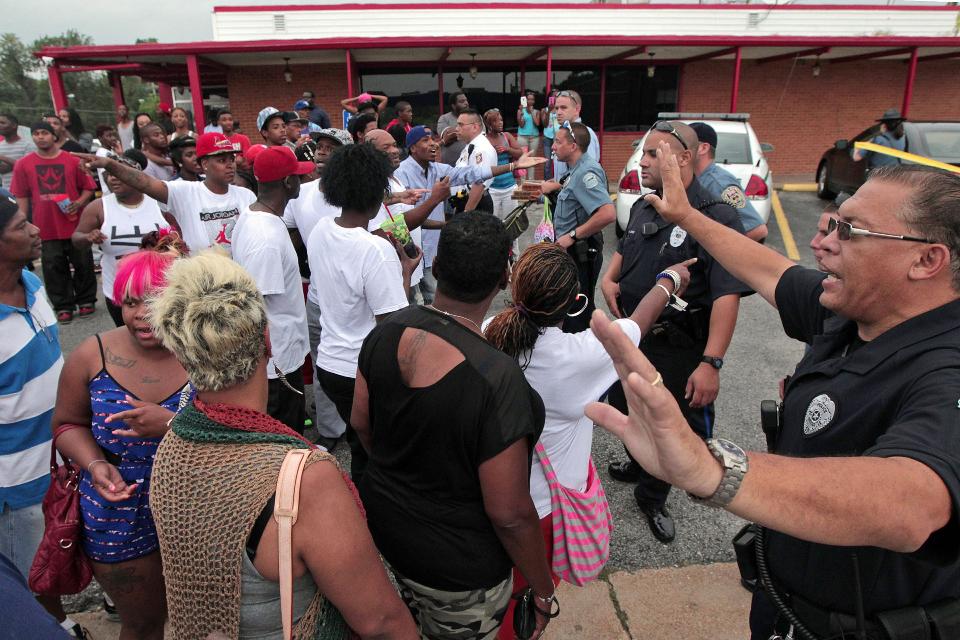 · 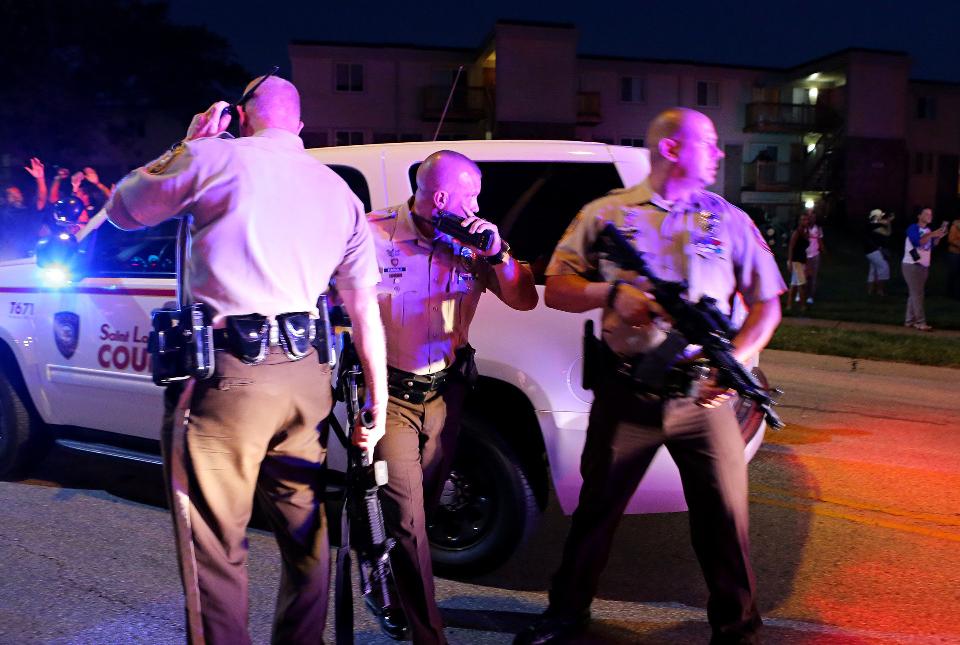 · 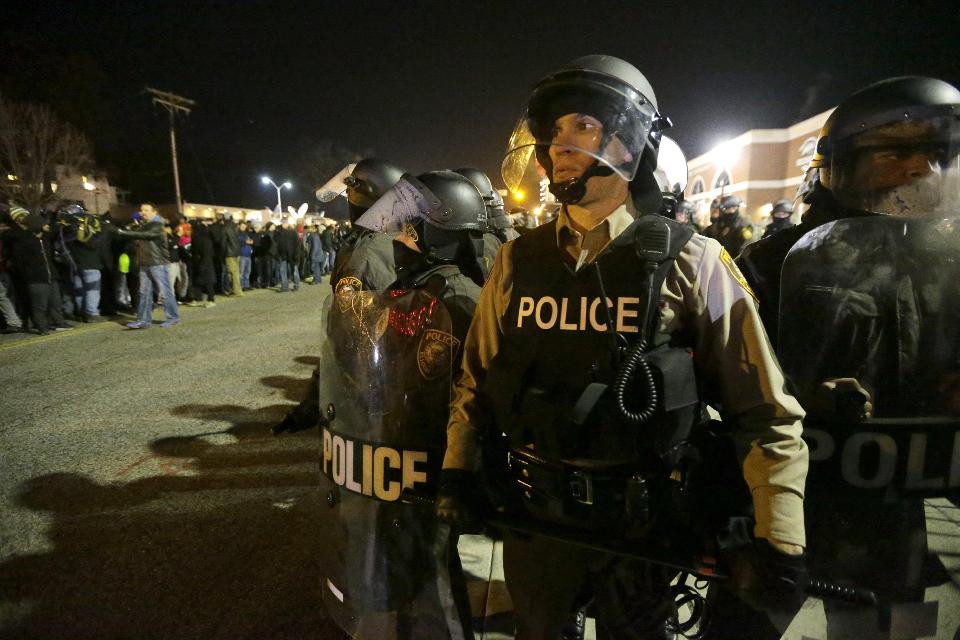 · |
|
#2
●
11-30-2014, 12:16 PM
| ||||||||
 My Rank: MAJOR Poster Rank:98 Join Date: Jan 2010 Posts: 16,762 Mentioned: 261 Post(s) Quoted: 8276 Post(s)
| ||||||||
|
Re: Ferguson Lesson: Police Can Better Calm Situations
Is that the lesson?  Like I said. Try and prove the system is broken, and the authority is wrong. No justice No peace. I suppose justice is what they say it is. |
|
#3
●
11-30-2014, 12:20 PM
| ||||||||
 Poster Rank:77 dude Join Date: Jan 2010 Posts: 19,454
Contributions: 1
Mentioned: 42 Post(s) Quoted: 8690 Post(s)
| ||||||||
|
Re: Ferguson Lesson: Police Can Better Calm Situations
I think today's law enforcement has lost any level of humility. In many prisons, county jails, they have went far as to down play the staffs uniforms, because of studies proving a person's demeanor can change, simply by the cloths they wear. |
|
#4
●
11-30-2014, 12:47 PM
| ||||||||
| My Rank: MAJOR Poster Rank:98 Join Date: Jan 2010 Posts: 16,762 Mentioned: 261 Post(s) Quoted: 8276 Post(s)
| ||||||||
|
Re: Ferguson Lesson: Police Can Better Calm Situations
I've heard a little about that. I've watched blacks on TV discuss the lack of understanding and respect of authority in the black community. And now the police think looking less authoritative is the answer?
|
|
#5
●
11-30-2014, 01:20 PM
| ||||||||
| Poster Rank:77 dude Join Date: Jan 2010 Posts: 19,454
Contributions: 1
Mentioned: 42 Post(s) Quoted: 8690 Post(s)
| ||||||||
|
Re: Ferguson Lesson: Police Can Better Calm Situations
The "look" of authority serves no purpose from the perspective of the general public. Or the excessive of it anyway. It does however impact the person wearing it. In many county jails, the sheriffs will let their C.Os run around in fully garbed field uniforms. Often times, the guards had trouble doing their jobs, simply because they were more focused on the image aspect of themselves. Their on the job personalities were less "detention staff" and more "bad ass cop" towards the inmates. The inmates could care less about their uniforms, they were C.Os rather they wore all the glam, or wore a pink dress. They hold the keys, so they hold the authority. Now many jails are placing their guards in basic, plane dress uniforms, not even a janitor could take pride in. The C.Os perform their jobs as listed, and their demeanor changed. Would it be any different in the public? Take the "bad ass" image the officer adopts for himself, give him a janitors style uniform, and a basic car. Would he then focus more on job related things? Its an interesting theory. Because no matter how you dress a cop, its how he does the job, that matters. Right? But what if the psychological study of "what we wear effects who we become" hold true. |
|
#6
●
11-30-2014, 01:33 PM
| ||||||||
| My Rank: MAJOR Poster Rank:98 Join Date: Jan 2010 Posts: 16,762 Mentioned: 261 Post(s) Quoted: 8276 Post(s)
| ||||||||
|
Re: Ferguson Lesson: Police Can Better Calm Situations
I think it matters both ways. But I get what you're saying, like when you see a security guard acting as if they are the police because they wear a badge.
|
|
#7
●
11-30-2014, 01:51 PM
| ||||||||
 puelling pueman Poster Rank:175 m Join Date: Apr 2010 Posts: 8,912 Mentioned: 21 Post(s) Quoted: 2948 Post(s)
| ||||||||
|
Re: Ferguson Lesson: Police Can Better Calm Situations
that's true... if you have cops who look like nazis then people tend to think of them as nazis.. |
|
#8
●
11-30-2014, 01:56 PM
| ||||||||
| Poster Rank:77 dude Join Date: Jan 2010 Posts: 19,454
Contributions: 1
Mentioned: 42 Post(s) Quoted: 8690 Post(s)
| ||||||||
|
Re: Ferguson Lesson: Police Can Better Calm Situations
And the other way around, Nazis loved their empowering attire.
|
|
#9
●
11-30-2014, 02:01 PM
| ||||||||
| My Rank: MAJOR Poster Rank:98 Join Date: Jan 2010 Posts: 16,762 Mentioned: 261 Post(s) Quoted: 8276 Post(s)
| ||||||||
|
Re: Ferguson Lesson: Police Can Better Calm Situations
Nazis did have some cool uniforms.
|
|
#10
●
11-30-2014, 08:48 PM
| ||||||||
 ★Athena★ Poster Rank:187 Join Date: Dec 2013 Posts: 8,146
Contributions: 17
Mentioned: 29 Post(s) Quoted: 4603 Post(s)
| ||||||||
|
Re: Ferguson Lesson: Police Can Better Calm Situations
I think the real lesson is police can do better by not starting situations. Do not mistake abuse of authority by using authority. Police are in a position of authority. With it comes great responsibility and the knowledge to use it wisely. You can avert situations by having a command presence or making it known you will take no shit by how you carry yourself. You do not have to be aggressive, rude or even mean just have the body language you mean business. This is not taught in rookie school and comes for some later and some never get it. But it is effective in doing an extremely difficult job, protecting yourself but also finding compassion and understanding for others. There are a lot of people who probably should not be cops because they cover their weakness and lack of command presence with aggression that escalates situations. While we are on this subject I wanted to add that the race problem the media is hyping is more of a class issue. Yes there are more black people arrested and in jail but most of them are guilty and poor. This is NOT the 40's, 50's and 60's where atrocities were committed and sanctioned against black people because of their race. There are more opportunities for minority racial groups to succeed as far as in school, jobs, etc. Although these demonstrations are meant to I highlight a social problem they only really are looking at the spurious correlation of race and police brutality, imprisonment and violence. The real cause is class or specifically poverty where there still is a gap between minority groups as far as numbers living in poverty. But the poor black or white get arrested more and serve more time. Notice during these 'demonstrations' the upper class black folk are not there-except the politicians who need votes. They are not there because they do not identify with it. They got ahead. Lest we forget OJ. He may be in jail now but he used his wealth to get him off. Again with the class variable. Had he been poor he would have never gotten off. So my point is this is not a race issue it comes down to money and pretige. So Obama is an activist - great. But would he let his daughters date someone like Michael Brown? Of course not as he was a poor gangster. Class matters more than race. |