|
#1
●
06-20-2011, 10:31 AM
| ||||||||
 TROLLBEGONE!!!!! Poster Rank:23 female Join Date: Feb 2009 Posts: 59,620 Mentioned: 70 Post(s) Quoted: 10860 Post(s)
| ||||||||
|
DIGITAL ARCHAEOLOGY:some Web History, and History Still Being Written
THE PROJECT Year: 1991 Designed by: Tim Berners-Lee Organization: CERN 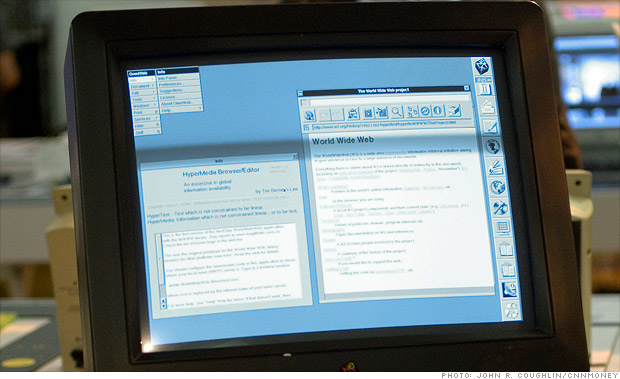 Digital history erases itself. Projects like Archive.org's Wayback Machine capture snapshots, but many of the Web's pioneering sites have vanished. Enter "Digital Archaeology," a curated tour of the Internet's not-so-distance past. The exhibit, which had its U.S. debut at New York City's recent Internet Week, resurrects 28 milestone sites from the Web's formative years. The exhibit's centerpiece is "The Project," Tim Berners-Lee's invention for using hypertext (HTTP) to link together documents through the Internet. He called the outcome the World Wide Web. No one kept screenshots of that very first website. Digital Archaeology features what is believed to be the earliest available copy, from 1992. Ever wonder why links on the Web are underlined? The design choice dates back to Berners-Lee's prototype pages. "These tiny decisions have influenced the way we access information in our daily lives," says Jim Boulton, Digital Archaeology's curator and the deputy managing director of advertising agency Story Worldwide. * THE BLUE DOT Year: 1995 Designed by: Craig Kanarick Organization: Razorfish 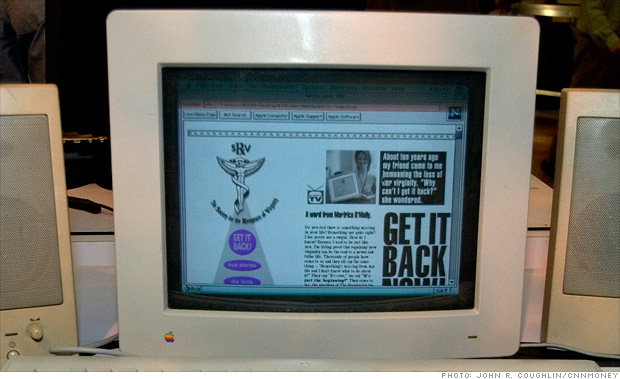 When Netscape introduced its newest browser in 1995, it published bits of code that would enable people to do something radical: create animations on the Web. But there was one problem -- the code had a typo. One of design firm Razorfish's founders, Craig Kanarick, who had a degree in computer science, was desperate to play with the new animation technology. He stayed up all night in an East Village apartment hunting down and repairing Netscape's bug. One he'd fixed it, he created one of the first online animations: a bouncing blue dot. From there, Kanarick and fellow Razorfish founder Jeffrey Dachis launched the Web's first art gallery, called The Blue Dot. It's now in the permanent collection of the San Francisco Museum of Modern Art. "The primary thrust of what we were trying to do, as far as the curation of The Blue Dot, was taking traditional artworks that were analog and offline -- photography, painting, illustration -- and trying to create the appropriate ways of displaying those in a browser," Kanarick says in a Digital Archeology interview. **** JONNI NITRO Year: 1999 Created by: Alex Ogle, Aaron Hoffman, Aaron Weber Organization: Tubatomic 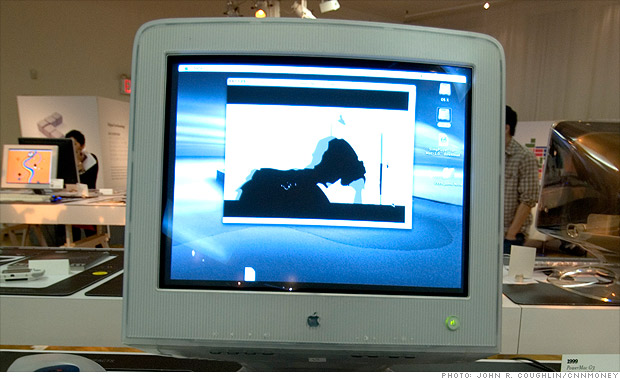 Six years before YouTube came into the picture, Jonni Nitro hit the Web as one of the first online films, using Flash and a sophisticated video-to-vector process. The crew converted film into black-and-white art and used quick animations to tell the story of G-Woman, a female secret agent fighting a terrorist threat. "It blew the industry away," Boulton says of the ahead-of-its time animated series. **** SUBSERVIENT CHICKEN Year: 2004 Developed by: Keith Butters Agency: The Barbarian Group 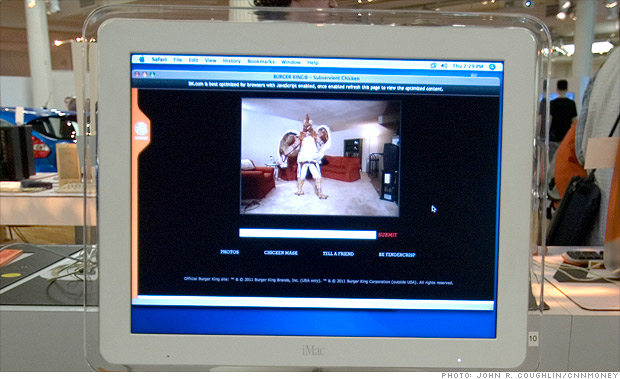 When The Barbarian Group's Keith Butters gave Web surfers the ability to make an animated chicken dance, he changed the digital landscape. Working with ad agency Crispin Porter Bogusky on behalf of Burger King, the Barbarian Group created the wildly popular "subservient chicken." The seemingly interactive video let users control a chicken-costumed actor's actions through their keyboards. Type in any of some 300 commands -- ranging from common ones like "dance" or "sit" to the less-intuitive "poke your eye out" -- and the chicken would oblige. A sly riff on webcam culture, the site instantly went viral. Within 48 hours it had 25 million hits. "All of a sudden, digital was the central part of the marketing campaign," Boulton recalls. "Viral marketing suddenly became mainstream." Burger King still features the famous video on its site today. **** WE FEEL FINE Year: 2006 Developed by: Jonathan Harris, Sep Kamvar 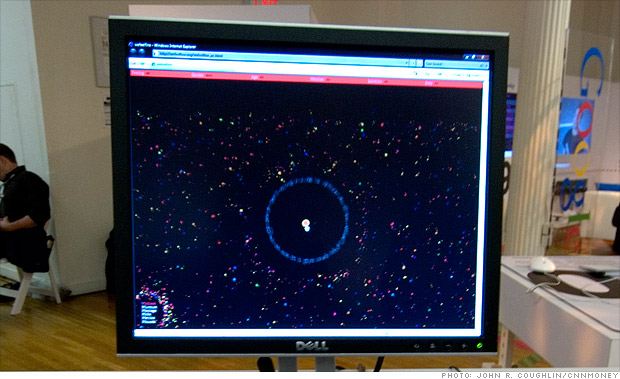 As the Internet evolved, people began turning their attention to the social realm. In 2006, MySpace was booming, Facebook started growing and blogging went mainstream. "It was the year the social Web really became mass market," Boulton says. Enter "We Feel Fine." The site searches blogs, MySpace, Facebook and a host of other social sites looking for the phrases "I feel," and "I am feeling." Using those keywords, the app pulls in a host of information about the individual: age, location, gender, even the current weather when and where the phrase was written. Harris and Kamvar featured those "feelings" as multi-colored dots, creating a visual look at the world's emotions. Those dots, each one sized and colored based on a person's metrics, explode on the screen. The site showed the power of the social data being collected on the Web, and helped humanize the millions of individual stories unfolding. **** THE WILDERNESS DOWNTOWN Year: 2010 Developed by: Aaron Koblin, Chris Milk, Eduard Prats Molner, Ben Tricklebank Agency: Google Creative Labs/ B-Reel 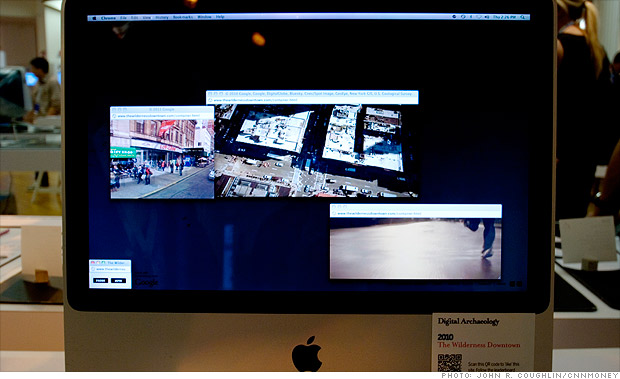 When indie rock band Arcade Fire collaborated with film director Chris Milk and digital production company B-Reel and Google to create a video for their song, "We Used to Wait," they invented a new user experience for music videos.Before showing the video, the site asked users to type in their childhood address. Using images from Google Street View and Google Earth, the software then personalized the video based on that address. It unfolds across multiple windows, featuring a person running through the streets of the user's hometown ending at his or her childhood home. Relying on HTML5 -- an emerging technology that will radically advance what a Web browser can do -- the art project shows how technology can pack an emotional wallop. It also illustrates that the Web's history is still being written: New technological and creative breakthroughs happen constantly. |
|
#2
●
06-20-2011, 10:38 AM
| ||||||||
 King of East Texas Poster Rank:361 3 legs Join Date: Dec 2010 Posts: 3,443
Contributions: 1
Mentioned: 13 Post(s) Quoted: 915 Post(s)
| ||||||||
|
Re: DIGITAL ARCHAEOLOGY:some Web History, and History Still Being Written
facebook, myspace, HA!, no thanks, but awesome post. I miss all the pages from the 90's.  |
|
#3
●
06-20-2011, 10:50 AM
| ||||||||
| TROLLBEGONE!!!!! Poster Rank:23 female Join Date: Feb 2009 Posts: 59,620 Mentioned: 70 Post(s) Quoted: 10860 Post(s)
| ||||||||
|
Re: DIGITAL ARCHAEOLOGY:some Web History, and History Still Being Written
i AGREE ABOUT FB MS AND TWATTER TOO. People piss and moan about their privacy being invaded, yet they insist on putting it all out there.....their bowel movements and all.....NO THANKS....  |
|
#6
●
06-21-2011, 07:05 AM
| ||||||||
 ✝Mudderator from Hell✝ Poster Rank:10 e-mail Join Date: Oct 2006 Posts: 96,417
Contributions: 817
Mentioned: 476 Post(s) Quoted: 10324 Post(s)
| ||||||||
|
Re: DIGITAL ARCHAEOLOGY:some Web History, and History Still Being Written
How things have changed in 20 years only makes me curious how things will be in another 20, regarding the internet.
|