|
#1
●
08-05-2011, 02:59 PM
| ||||||||
 ✝Mudderator from Hell✝ Poster Rank:10 e-mail Join Date: Oct 2006 Posts: 96,423
Contributions: 817
Mentioned: 476 Post(s) Quoted: 10326 Post(s)
| ||||||||
|
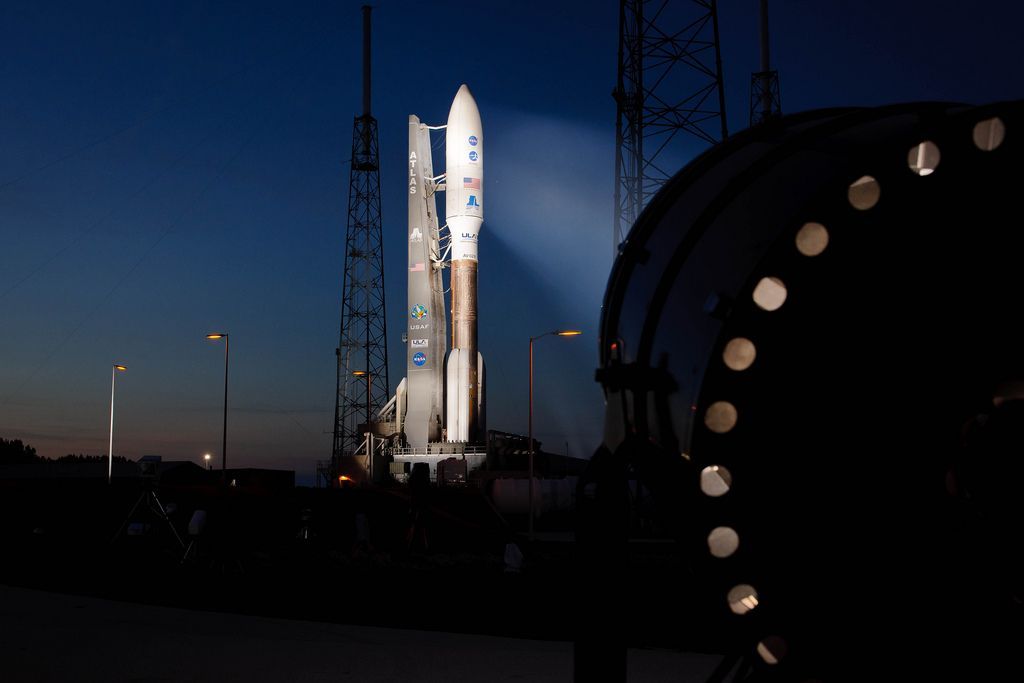
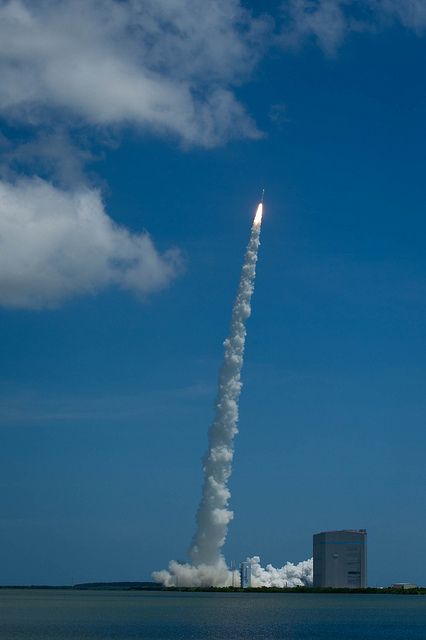
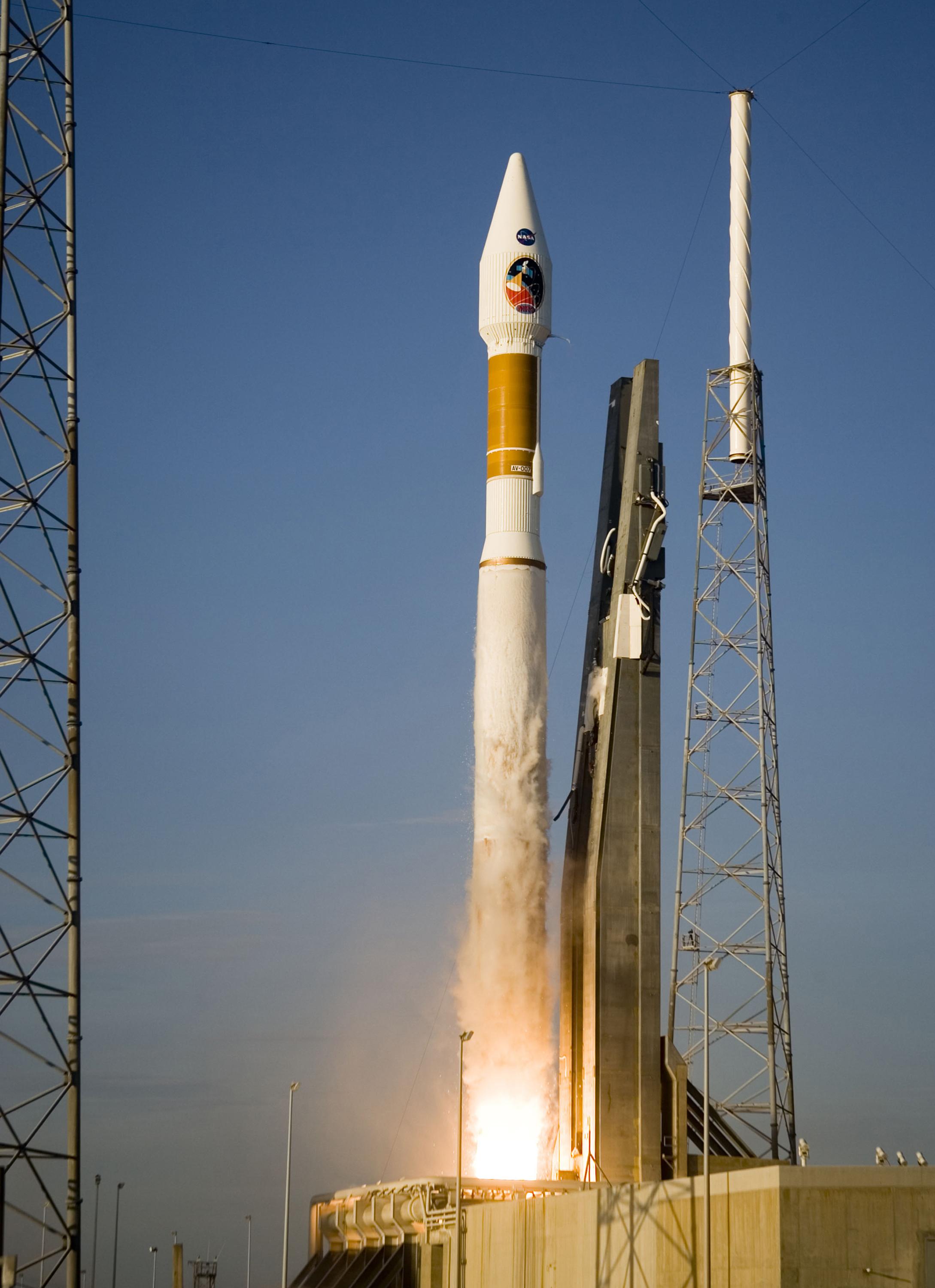
Atlas V Rocket Launched with the Juno Spacecraft on a Voyage to Jupiter
|
|
#3
●
08-05-2011, 08:49 PM
| ||||||||
 Benevolent dictator Poster Rank:58 Arse fucker Join Date: May 2009 Posts: 25,637 Mentioned: 17 Post(s) Quoted: 1450 Post(s)
| ||||||||
|
Re: Atlas V Rocket Launched with the Juno Spacecraft on a Voyage to Jupiter
Atlas V History The Atlas V is the newest member of the Atlas family. Compared to the Atlas III vehicle, there are numerous changes. Compared to the Atlas II, it is a near-redesign. There was no Atlas IV. 1.The "1.5 staging" technique was dropped on the Atlas III, in favor of a more-advanced RD-180 engine.[7] 2.The main-stage diameter increased from 10 feet to 12.5 feet. As with the Atlas III, the different mixture ratio of the engine called for a larger oxygen tank (relative to the fuel tank) compared to western engines and stages.[citation needed] 3.First-stage tanks no longer use stainless steel monocoque "balloon" construction. The tanks are isogrid aluminum and are stable when unpressurized.[7] 4.Use of aluminum, with a higher thermal conductivity than stainless steel, requires insulation for the liquid oxygen. The tanks are covered in a polyurethane-based layer. 5.Accommodation points for parallel stages, both smaller solids and identical liquids, are built into first-stage structures.[7] The Atlas V was developed by Lockheed Martin Commercial Launch Services as part of the US Air Force Evolved Expendable Launch Vehicle (EELV) program. The term expendable launch vehicle means each vehicle is only used once. Launches are from Space Launch Complex 41 at Cape Canaveral Air Force Station and Space Launch Complex 3-E at Vandenberg Air Force Base. Lockheed Martin Commercial Launch Services continues to market the Atlas V to commercial customers worldwide.[8] The first Atlas V was launched on August 21, 2002, and all subsequent launches have been successful except for the 2007 anomaly. The Atlas V family uses a single-stage Atlas main engine, the Russian RD-180 and the newly developed Common Core Booster (CCB) with up to five Aerojet made strap-on solid rocket boosters. The CCB is 12.5 ft (3.8 m) in diameter by 106.6 ft (32.5 m) long and uses 627,105 lb (284,450 kg) of liquid oxygen and RP-1 rocket fuel propellants. The booster operates for about four minutes, providing about 4 meganewtons (860,000 lbf) of thrust at start, the major part of this thrust, 4.152 meganewtons being provided by Russian RD-180 engine.[7] The Centaur upper stage uses a pressure stabilized propellant tank design and cryogenic propellants. The Centaur stage for Atlas V is stretched 5.5 ft (1.68 m)[clarification needed] and is powered by either one or two Pratt & Whitney RL10A-4-2 engines, each engine developing a thrust of 99.2 kN (22,300 lbf). Operational and reliability upgrades are enabled with the RL10A-4-2 engine configuration.[citation needed] The inertial navigation unit (INU) located on the Centaur provides guidance and navigation for both Atlas and Centaur, and controls both Atlas and Centaur tank pressures and propellant use. The Centaur engines are capable of multiple in-space starts, making possible insertion into low-earth parking orbit, followed by a coast period and then insertion into GTO. A subsequent third burn following a multi-hour coast can permit direct injection of payloads into geostationary orbit.[9] As of 2006, the Centaur vehicle had the highest proportion of burnable propellant relative to total mass of any modern hydrogen upper stage and hence can deliver substantial payloads to a high energy state.[10] Many systems on the Atlas V have been the subject of upgrade and enhancement both prior to the first Atlas V flight and since that time. Work on a new Fault Tolerant INU (FTINU) started in 2001 to enhance mission reliability for Atlas vehicles by replacing the existing non-redundant navigation and computing equipment with a fault tolerant unit.[11][Full citation needed] The upgraded FTINU first flew in 2005,[12][Full citation needed] and in 2010 a follow-on order for more FTINU units was awarded.[13][Full citation needed] On April 14, 2008, Atlas V lifted its heaviest payload to date into orbit—a 14,625-pound (6,634 kg) telecommunications satellite built by Space Systems/Loral.[14] |
|
#4
●
08-05-2011, 09:15 PM
| ||||||||
| Benevolent dictator Poster Rank:58 Arse fucker Join Date: May 2009 Posts: 25,637 Mentioned: 17 Post(s) Quoted: 1450 Post(s)
| ||||||||
|
Re: Atlas V Rocket Launched with the Juno Spacecraft on a Voyage to Jupiter
Fly me to the moon.........
 ·  · |
|
#5
●
08-05-2011, 11:38 PM
| ||||||||
 So Fucking Banned Poster Rank:134 8=====> Join Date: Oct 2009 Posts: 12,437 Mentioned: 0 Post(s) Quoted: 0 Post(s)
| ||||||||
|
Re: Atlas V Rocket Launched with the Juno Spacecraft on a Voyage to Jupiter
HARGBLERBARGEHAR Also watch your national debt skyrocket...........like the ATLAS ROCKET !! |
|
#7
●
07-04-2016, 02:24 PM
| ||||||||
 My Rank: MASTER SERGEANT Poster Rank:572 mc² Join Date: Aug 2009 Posts: 1,722 Mentioned: 1 Post(s) Quoted: 299 Post(s)
| ||||||||
|
Re: Atlas V Rocket Launched with the Juno Spacecraft on a Voyage to Jupiter
in 9 hrs it will be T0: entering into a orbit around Jupiter http://www.nasa.gov/image-feature/pi...-in-on-jupiter This is the final view taken by the JunoCam instrument on NASA's Juno spacecraft before Juno's instruments were powered down in preparation for orbit insertion. Juno obtained this color view on June 29, 2016, at a distance of 3.3 million miles (5.3 million kilometers) from Jupiter. The spacecraft is approaching over Jupiter's north pole, providing an unprecedented perspective on the Jupiter system, including its four large moons. NASA's Jet Propulsion Laboratory, Pasadena, California, manages the Juno mission for the principal investigator, Scott Bolton, of Southwest Research Institute in San Antonio. The Juno mission is part of the New Frontiers Program managed at NASA's Marshall Space Flight Center in Huntsville, Alabama. Lockheed Martin Space Systems, Denver, built the spacecraft. JPL is a division of Caltech in Pasadena. More information about Juno is online at http://www.nasa.gov/juno and http://missionjuno.swri.edu.  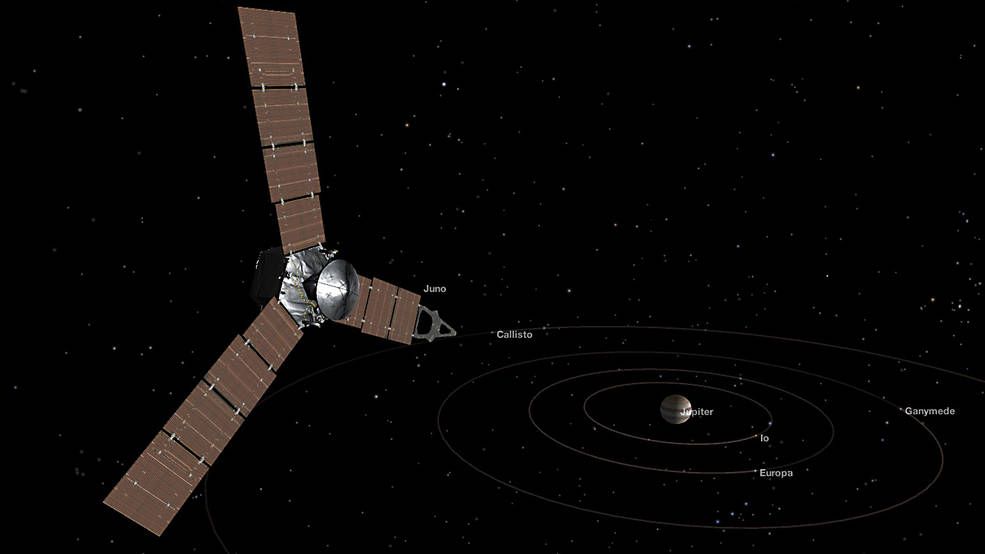 · |