|
#1
●
12-22-2012, 05:09 AM
|
 ★ ********* ★ Poster Rank:251 Male Join Date: Jul 2009 Posts: 5,547
Contributions: 415
5,547Posts 25,715Thanked 932Quoted 66Mentioned 415Contrib. |
|
'Alien-Like' Skulls Are Unearthed in 1,000-year-old Cemetery
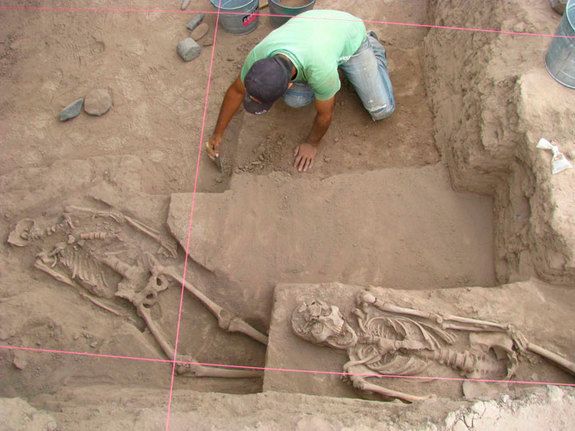 The first evidence of deforming skulls was found in the northern Mexican state of Sonora when residents were digging an irrigation canal in 1999. 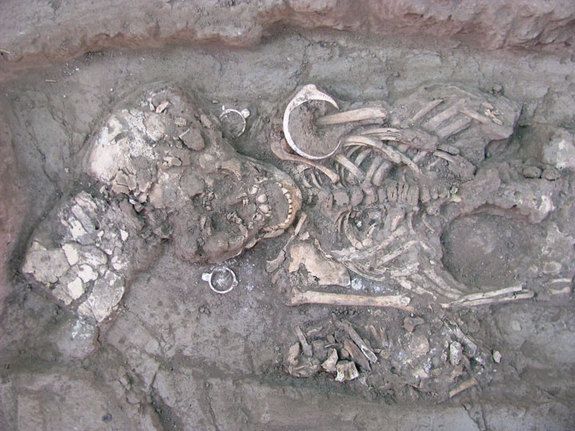 Many of the burials at the site were healthy children, suggesting the process of cranial deformation may have been inept and dangerous. 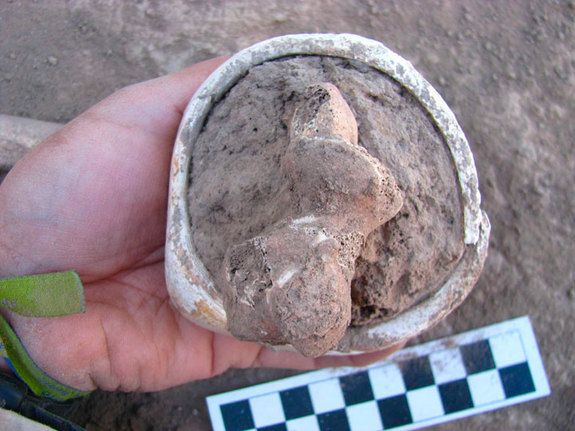 Some of the skeletons were found with various pieces of jewelry. 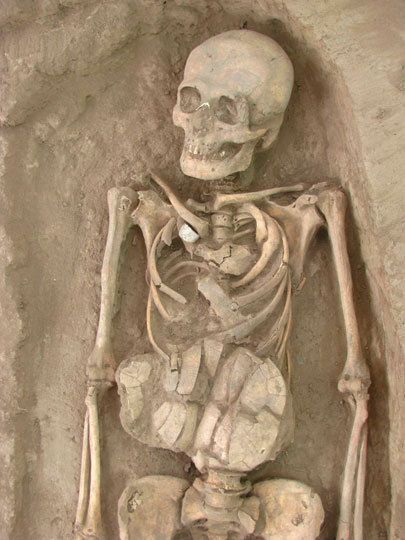 One of the burials included a turtle shell on the individual's chest. 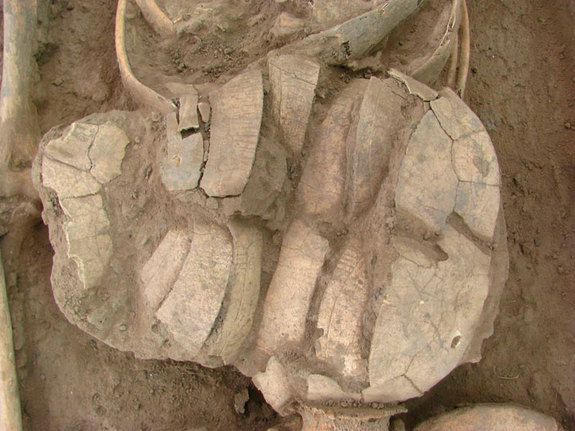 An up-close image of the turtle shell in the burial. 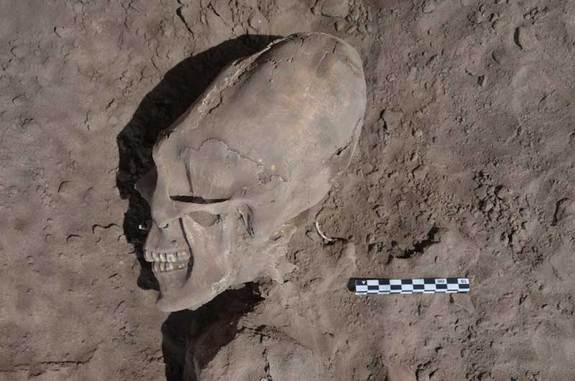 It is common for people to wonder if skeletons such as these are alien rather than human. 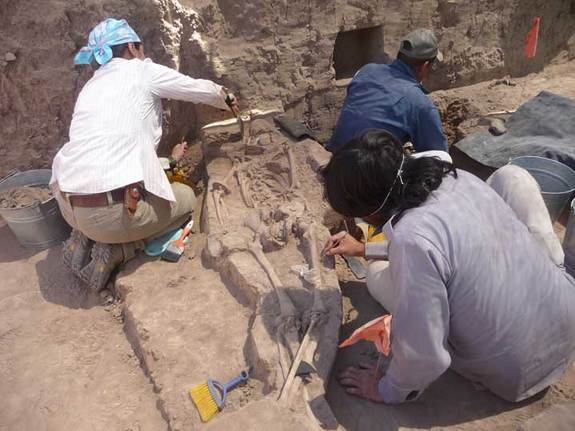 The pre-Hispanic cemetery is located 300 metres from the village of Onavas, Sonora.  Artificial skull deformation is known to have been practiced by the Chinookan tribes of the U.S. Northwest and the Choctaw of the U.S. Southeast. Shown here, a painting by Paul Kane, showing a Chinookan child in the process of having its head flattened, and an adult after the process. 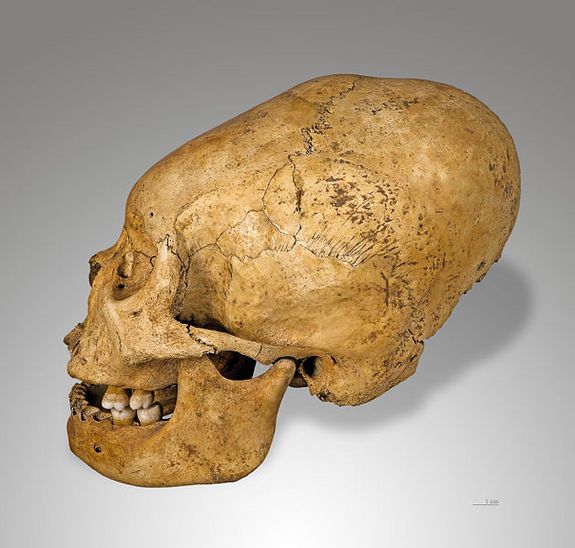 A deformed skull dating to between 200 B.C. and 100 B.C. and belonging to an individual of the Nazca culture, which flourished along the Peruvian coast. http://www.msnbc.msn.com/id/50270582...ience-science/ http://www.livescience.com/25734-ali...ng-mexico.html http://abcnews.go.com/blogs/headline...und-in-mexico/ |
|
#2
●
12-22-2012, 07:25 AM
|
 ★ Legacy Member ★ Poster Rank:1214 Female Join Date: Apr 2011 Posts: 523 523Posts 590Thanked 56Quoted 7Mentioned 0Contrib. |
|
Re: 'Alien-Like' Skulls Are Unearthed in 1,000-year-old Cemetery
I heard about the culture before. Interesting find. With todays genetics we can probably find out what they looked like during the time. Probably compare earlier hominins.  |
|
#3
●
12-22-2012, 10:35 AM
|
 ★ Legacy Member ★ Poster Rank:416 Join Date: Feb 2011 Posts: 2,865
Contributions: 17
2,865Posts 3,380Thanked 140Quoted 11Mentioned 17Contrib. |
|
Re: 'Alien-Like' Skulls Are Unearthed in 1,000-year-old Cemetery
people can still have skulls like that these days.. with even just fucked up baby sleeping positions.
|
|
#6
●
12-23-2012, 04:21 PM
|
 ✝Mudderator from Hell✝ Poster Rank:10 e-mail Join Date: Oct 2006 Posts: 96,626
Contributions: 901
96,626Posts 542,997Thanked 10,364Quoted 479Mentioned 901Contrib. |
|
Re: 'Alien-Like' Skulls Are Unearthed in 1,000-year-old Cemetery
wonder if these skull modification were done only for status or if this was a form of worship or a demonstration of piety to their gods ?
|
|
#7
●
12-27-2012, 12:19 AM
|
 My Rank: GUNNERY SERGEANT Poster Rank:677 Join Date: Dec 2010 Posts: 1,287
Contributions: 9
1,287Posts 2,455Thanked 157Quoted 1Mentioned 9Contrib. |
|
Re: 'Alien-Like' Skulls Are Unearthed in 1,000-year-old Cemetery
I wonder what they used for asprin; what ever they used, they would have used alot of it.  |
|
#8
●
12-27-2012, 12:31 AM
|
 My Rank: FIRST SERGEANT Poster Rank:393 Join Date: Oct 2009 Posts: 3,072 3,072Posts 3,545Thanked 144Quoted 0Mentioned 0Contrib. |
|
Re: 'Alien-Like' Skulls Are Unearthed in 1,000-year-old Cemetery
With a head like that I know these fuckers dreamed in IMAX 3D
|
|
#9
●
12-28-2012, 11:21 PM
|
 Yaut'ja Elite Poster Rank:549 Male Join Date: Jul 2009 Posts: 1,843
Contributions: 12
1,843Posts 1,909Thanked 107Quoted 3Mentioned 12Contrib. |
|
Re: 'Alien-Like' Skulls Are Unearthed in 1,000-year-old Cemetery
I love how whenever skulls shaped by skull binding are found, everyone is automatically like  |