|
#1
●
02-15-2017, 12:21 PM
| ||||||||
 ★ ★ GENERAL ★ ★ Poster Rank:37 male Join Date: Oct 2006 Posts: 42,015
Contributions: 35
Mentioned: 2255 Post(s) Quoted: 21159 Post(s)
| ||||||||
|
Oil Train Fireball Forces Casselton Evacuation
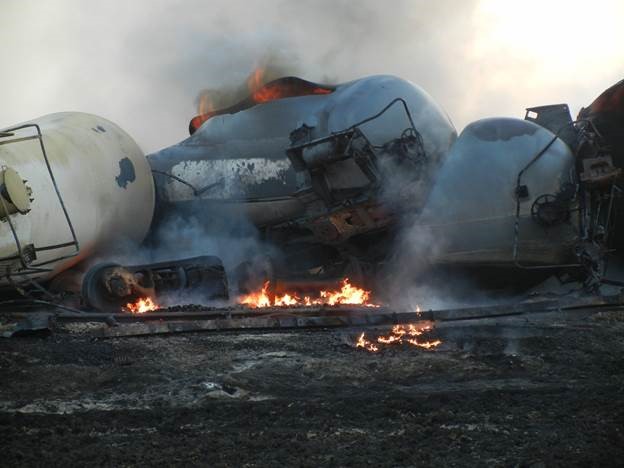
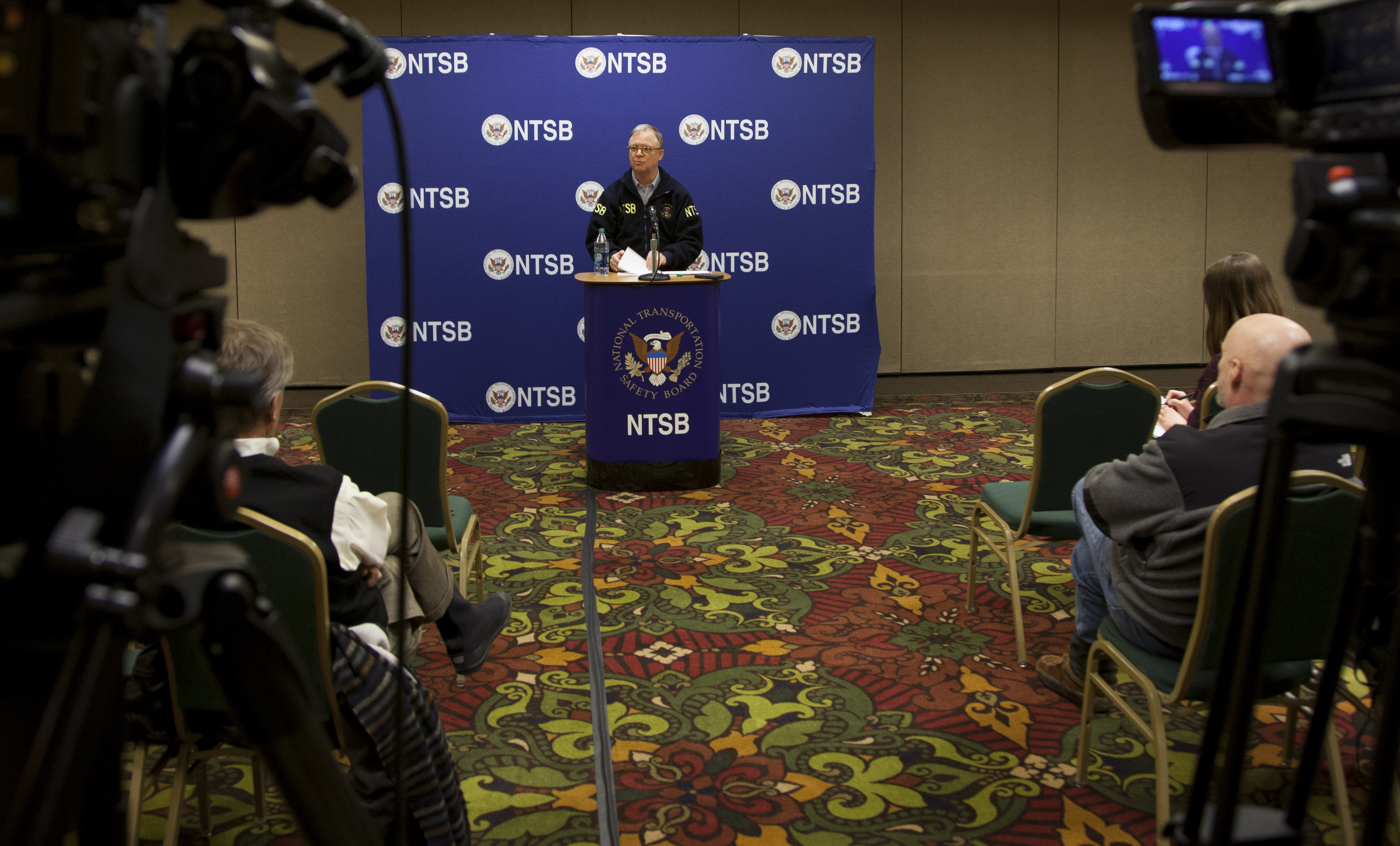
A BNSF Railway train hauling crude oil collided with the wreckage of a derailed grain train west of Casselton, North Dakota, on Dec. 30, 2013, igniting a series of explosions that sent black smoke miles into the sky and led to the evacuation of much of the town, authorities said. The National Transportation Safety Board found that a westbound train of 112 grain cars derailed shortly after 2 p.m. near milepost 28.5, about a mile outside Casselton, after an axle broke on one car. Thirteen cars left the tracks, and one fouled the adjacent line just as an eastbound train carrying 104 tank cars of Bakken crude oil approached. The oil train struck the wreckage, derailing two locomotives and 20 tank cars. Eighteen of those cars ruptured, spilling an estimated 476,000 gallons of crude that pooled and caught fire, the NTSB said. Investigators later said the resulting fireballs rose several hundred feet in the air and the smoke plume was visible from Fargo, roughly 25 miles away. Dispatch records show the Red River Regional Dispatch Center began fielding 911 calls within two minutes of the crash. The first caller, a railroad worker, reported a fire but believed the cars involved carried grain. A second caller, an employee at the nearby Tharaldson Ethanol plant, told a dispatcher minutes later that the burning cars were oil tankers and that flames were spreading from car to car. A member of one of the train crews called dispatchers at 2:16 p.m. and initially said the tank cars held ethanol before the cargo was corrected to crude oil. He told the dispatcher no one had been injured but said, "I'd be worried about these empties blowing up." A fourth call, placed about 20 minutes later, came from a crewman asking permission to detach cars and pull them away from the flames as another voice in the background warned the wreckage was "going to start blowing up instead." No one was hurt in the collision. Crew members from both trains got clear on foot before the tank cars began exploding. Local officials expanded a voluntary evacuation to cover all of Casselton, a town of roughly 2,300 people, displacing an estimated 1,400 residents overnight. The NTSB adopted its final report on the accident in February 2017, more than three years after the crash. Investigators attributed the derailment to a defective axle with an internal void that had been reconditioned and returned to service. The board recommended new testing standards for secondhand axles, additional buffer cars between locomotives and hazardous materials shipments, and a faster phaseout of the puncture prone DOT-111 tank car model involved in the spill. BNSF later put its damage estimate from the wreck at $13.5 million, not including cleanup and lost cargo costs.
__________________ Support the site and our continued existance by upgrading to a Green Name |