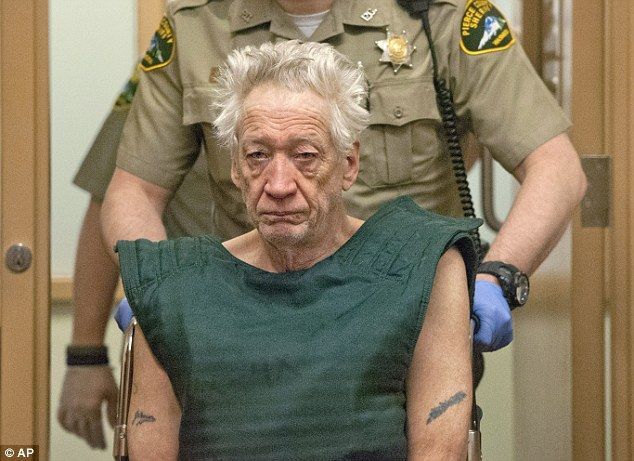
Pamela Mandery answered the phone when a Puyallup man called 911 about 3:30 a.m. March 24 to say he had shot his son and daughter and was going to kill himself.
The 43-year-old dispatcher at the City of Puyallup communications center used her roughly 20 years of experience to repeatedly tell the man to put down his gun, cooperate with police and not hurt himself or anyone else.
He listened.
Michael League, 69, was safely taken into custody minutes later. His wife and two young grandchildren were unharmed. His son and his daughter died.
Few who listen to the recording of the call would dispute that Mandery’s directions and composure kept the tragedy from escalating further.
Q: Walk us through that shift, from the start of the day to the end.
A: The day itself was just a typical day. You get calls from all ranges, from simple noise complaints to some priority calls, but you never expect something of this magnitude. When it happened, it did change the com center, that’s for sure.
Q. What changed?
A. We had an incredible team that night, and everybody has their jobs to do. I took the call, I entered it into the computer and then it sends it to the dispatcher, who sends it to the units. Nothing stops. We still had other stuff. We had to have someone take over my radio so I could focus on that (the call). Everyone worked together to make the outcome the way it was. It wasn’t just one single person, for sure.
Q. When you get a call like that, what’s your first priority?
A. Your heart sinks, and then your mind turns to: “You have to switch, you have to focus on the task at hand.” Your training and experience kicks in. My priority first and foremost is officer safety. And then I need to focus on other people, make sure nobody else is getting hurt, or that he doesn’t harm himself.
Q. When you find out there are children in the house, how does that change what you do?
A. It’s definitely hard not to get emotionally involved, but you really have to separate yourself. There’s more of a focus: “Now I need to make sure these other people don’t get hurt, and make sure I am talking with him and he is communicating with me.” That way I can have him listen to what I need to tell him to do, and hopefully he does it.
Q. The way you remain calm during the call and repeatedly give him instructions, is that your training?
A. That’s what we’re all trained to do. If you don’t have that calmness, it could change the outcome and how he reacts. Me getting upset isn’t going to help the situation. My job is to talk him out of doing what he wanted to do, and the only way to do that is to try to remain calm and get him to listen. I had to focus on that.
Q. Describe your training.
A. It is constantly a learning atmosphere. I can’t say in 20 years I’ve ever taken the call that somebody said: “I just shot two people and I want to kill myself.” You definitely can’t prepare yourself for something like that, but you do what you’ve got to do to make sure they get the help that they need. You hope you made a difference, but it doesn’t always work that way. In this case, he didn’t harm anyone else after he called and he didn’t harm himself, and no officers were hurt. So that’s what was important on my side of it.
Q. What happens after you finish a call?
A. That is one of the hardest parts. You do get that adrenaline and you’re working, and then when the officers get on scene, you disconnect and you’re done and they take over. Then you have the adrenaline dump. You don’t get that closure. A lot of officers are good at keeping us posted afterward, because they know how important it is to have closure, so that way we can process it.
Q. Did you connect with them after this call?
A. I made sure to follow up the next day. It’s important that we do follow-up together and get the whole picture. If I need to talk to somebody, I have no problem calling them up and getting some answers.
Q: Do you follow cases as they are prosecuted, or watch media coverage of calls you take?
A: Different calls affect you differently. A lot of different things happened in this call. I tried not to watch the media too much, but I do have questions, and I want to know what happens. I’m just very selective.
Q: At the end of that day, did you go home to your family? What happened after?
A: I was fortunate that I was off a couple hours later. I go to the gym after work, so that was my outlet at the time. And then I have two little grandchildren that I just love on, so I had them come over. That makes it all better.
Q: When you come in for work the next day, does it just start all over?
A: Emergencies don’t stop. You finish your shift, you continue taking calls. There are resources, if something affects any of us. They will make sure we’re taken care of. After a critical incident, we make sure we get enough sleep, get enough exercise, eat right, take care of ourselves. We’re pretty good at knowing what we need to do to make sure everything is OK.
Q: Did you have a shift the next day?
A: Yes. It’s part of the job.
Q: What do you think the public should know about your job?
A: It takes an incredibly unique person to do it, and we are definitely a special group that is a very integral part of the first responders. Dispatchers as a whole are a vital link to these types of calls. We’re the anonymous voice.