JavaScript and Cookies are required to view this site. Please enable both in your browser settings.
Hubble Space Telescope Advent Calendar 2008 (25 Pix)

Hubble Space Telescope Advent Calendar 2008 (25 Pix) 

Current Rating:

Unlimited Views No Ads No Algorithms Lifetime Account

Documenting Reality

Community Forum · Est. 2006

Join Now
Thread Tools
  #1  
04-04-2010, 12:51 AM
güttsfükk's Avatar
güttsfükk
Offline:
Super *********
Poster Rank:89
Join Date: Nov 2008
Posts: 17,426
 
Mentioned: 5 Post(s)
Quoted: 99 Post(s)
Activity Longevity
0/20 18/20
Today Posts
0/11 ssss17426
Hubble Space Telescope Advent Calendar 2008 (25 Pix)

Source : http://www.boston.com/bigpicture/200...pe_advent.html

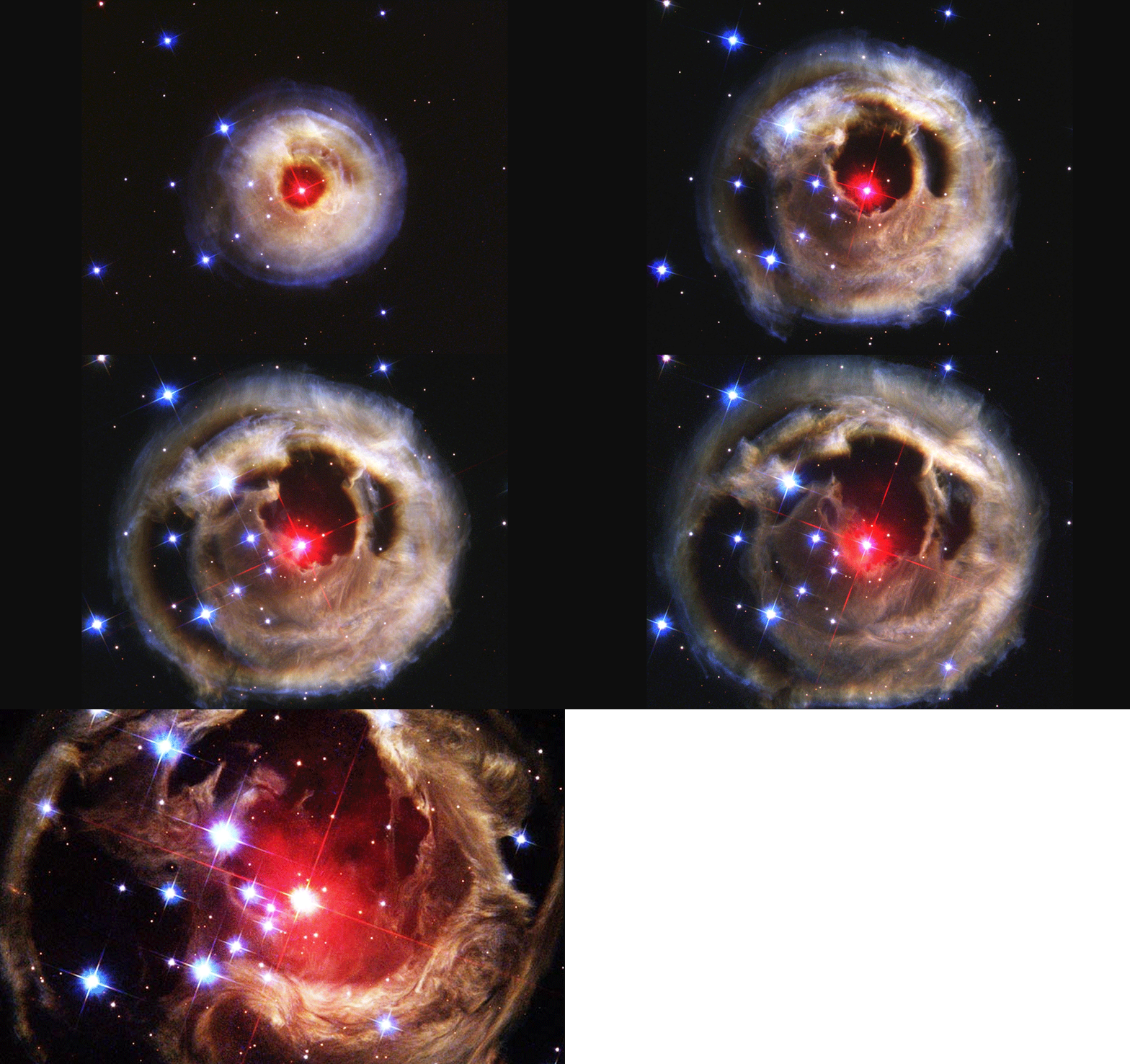
January 2002, a dull star in an obscure constellation suddenly became 600,000 times more luminous than our Sun, temporarily making it the brightest star in our galaxy. The star, called V838 Monocerotis, has long since faded back to obscurity, but observations of a phenomenon called a "light echo" around the star have uncovered remarkable new features over the following years (this animation covers two years' time). The light echo is light from the earlier explosion echoing off dust surrounding the star. Light from the outburst traveled to the dust and then was reflected to Earth. Because of this indirect path, the light arrived at Earth months after light from the star that traveled directly from the star.
(click image to see it move)
v838.gif
1.24 MB ·1803 views
4 Users Say Thank You For This Post:
Beard, Creepy, Nve, Psychonautical.
▼ PROMO FROM DOCUMENTING REALITY
Cheaper than child support
Join Now
Hidden for upgraded members.
  #2  
04-04-2010, 12:52 AM
güttsfükk's Avatar
güttsfükk
Offline:
Super *********
Poster Rank:89
Join Date: Nov 2008
Posts: 17,426
 
Mentioned: 5 Post(s)
Quoted: 99 Post(s)
Activity Longevity
0/20 18/20
Today Posts
0/11 ssss17426
Re: Hubble Space Telescope Advent Calendar 2008 (25 Pix)

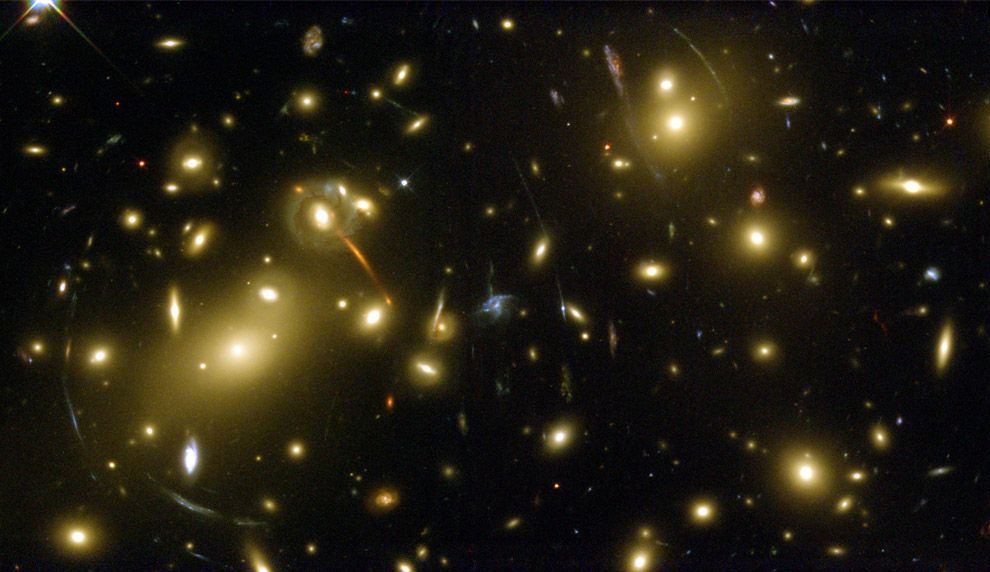
In early January of 2000, Hubble took this image of Galaxy Cluster Abell 2218, and its massive amount of "gravitational lensing". Abell 2218 lies some 2 billion light-years away in the Draco constellation and is so massive that its enormous gravitational field deflects light rays passing through it, much as an optical lens bends light to form an image. These magnifying powers provides a powerful "zoom lens" for viewing distant galaxies that could not normally be observed with the largest telescopes. The visible "arcs" are the distorted images of very distant galaxies, which lie 5 to 10 times farther away than the lensing cluster itself.
lensing01.jpg
156.1 KB ·575 views
3 Users Say Thank You For This Post:
Beard, Creepy, Nve
  #3  
04-04-2010, 12:53 AM
güttsfükk's Avatar
güttsfükk
Offline:
Super *********
Poster Rank:89
Join Date: Nov 2008
Posts: 17,426
 
Mentioned: 5 Post(s)
Quoted: 99 Post(s)
Activity Longevity
0/20 18/20
Today Posts
0/11 ssss17426
Re: Hubble Space Telescope Advent Calendar 2008 (25 Pix)

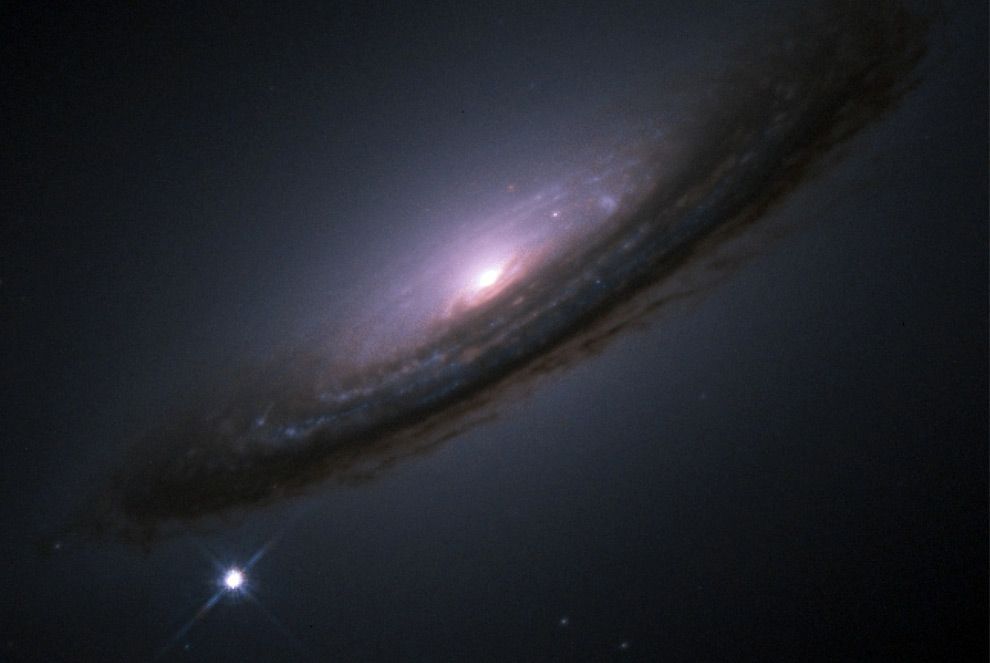
About 55 million years ago, a star near the dusty lenticular galaxy NGC 4526 exploded into a supernova, seen as a bright spot at lower left. In 1994, the Hubble Space telescope caught the weeks-long explosion as the light from it finally reached the Earth, and we called it Supernova 1994D, a fairly typical stellar explosion. The host galaxy also known as the Lost Galaxy lies in the background and is part of the Virgo Cluster.
sn1994D.jpg
98.8 KB ·60111 views
2 Users Say Thank You For This Post:
Beard, Nve
  #4  
04-04-2010, 12:54 AM
güttsfükk's Avatar
güttsfükk
Offline:
Super *********
Poster Rank:89
Join Date: Nov 2008
Posts: 17,426
 
Mentioned: 5 Post(s)
Quoted: 99 Post(s)
Activity Longevity
0/20 18/20
Today Posts
0/11 ssss17426
Re: Hubble Space Telescope Advent Calendar 2008 (25 Pix)

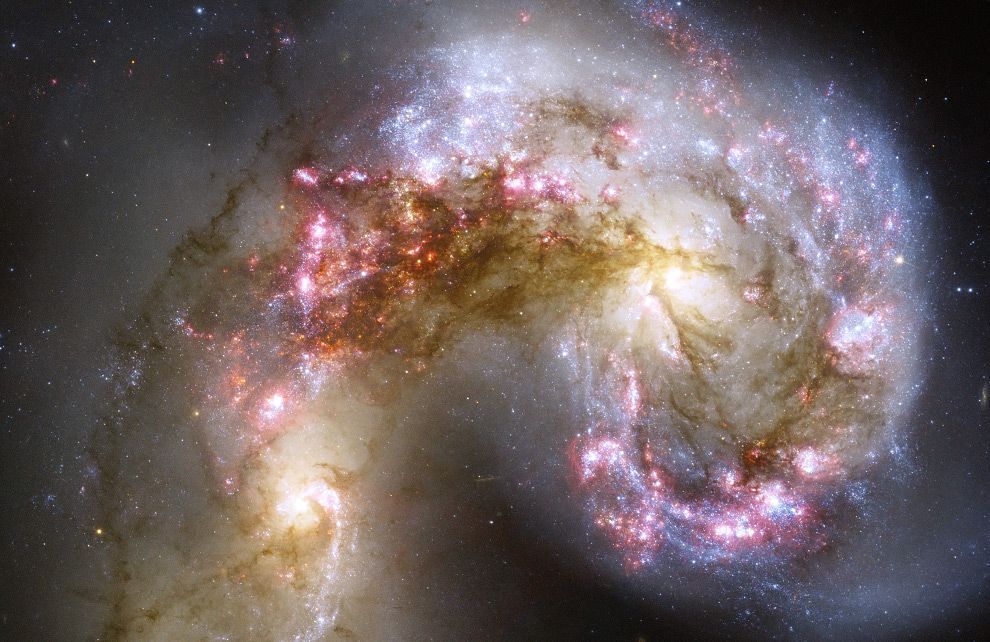
Also around 55 million light-years distant, we see here the colliding Antennae Galaxies (NGC 4038/NGC 4039) - a pair of interacting galaxies that lie in the constellation Corvus. The two spiral galaxies started to fuse together a few hundred million years ago making the Antenna galaxies the nearest and youngest example of a pair of colliding galaxies. Nearly half of the faint objects in the Antennae are young clusters containing tens of thousands of stars.
04_antennae.jpg
262.1 KB ·1350 views
2 Users Say Thank You For This Post:
Beard, Nve
  #5  
04-04-2010, 12:55 AM
güttsfükk's Avatar
güttsfükk
Offline:
Super *********
Poster Rank:89
Join Date: Nov 2008
Posts: 17,426
 
Mentioned: 5 Post(s)
Quoted: 99 Post(s)
Activity Longevity
0/20 18/20
Today Posts
0/11 ssss17426
Re: Hubble Space Telescope Advent Calendar 2008 (25 Pix)

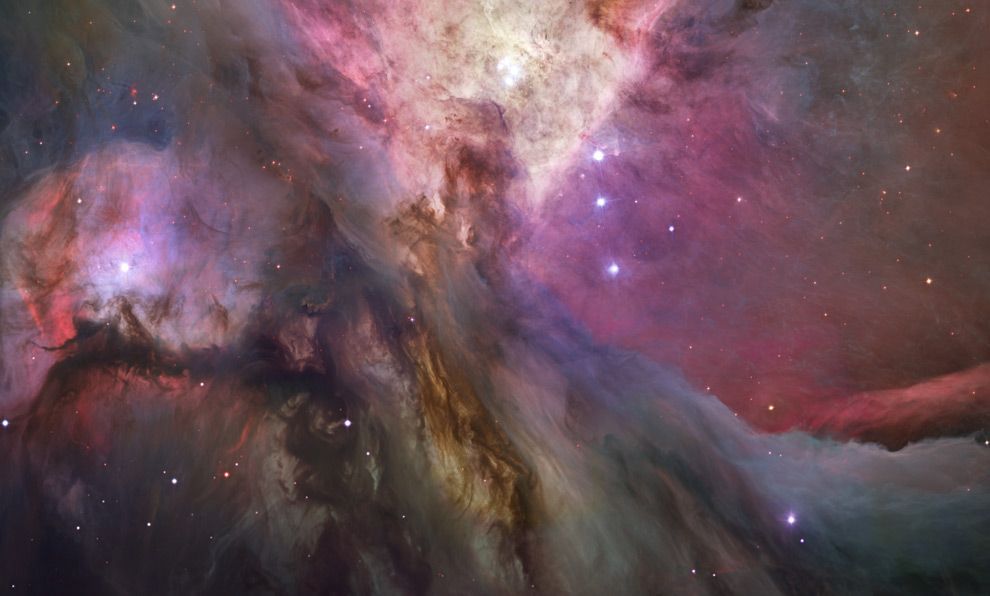
This image, taken by the Advanced Camera for Surveys (ACS), represents a small section of a larger mosaic - the sharpest view ever taken of the Orion Nebula - a picture book of star formation with massive young stars that are shaping the nebula and pillars of dense gas that may be the homes of budding stars. The bright glow at left is from M43, a small region being shaped by ultraviolet light from a massive young star. Astronomers call the region a miniature Orion Nebula because only one star is sculpting the landscape. The Orion Nebula has four such stars. The Orion Nebula is 1,500 light-years away, the nearest star-forming region to Earth.
05_orion.jpg
131.2 KB ·396 views
2 Users Say Thank You For This Post:
Beard, Nve
  #6  
04-04-2010, 12:55 AM
güttsfükk's Avatar
güttsfükk
Offline:
Super *********
Poster Rank:89
Join Date: Nov 2008
Posts: 17,426
 
Mentioned: 5 Post(s)
Quoted: 99 Post(s)
Activity Longevity
0/20 18/20
Today Posts
0/11 ssss17426
Re: Hubble Space Telescope Advent Calendar 2008 (25 Pix)

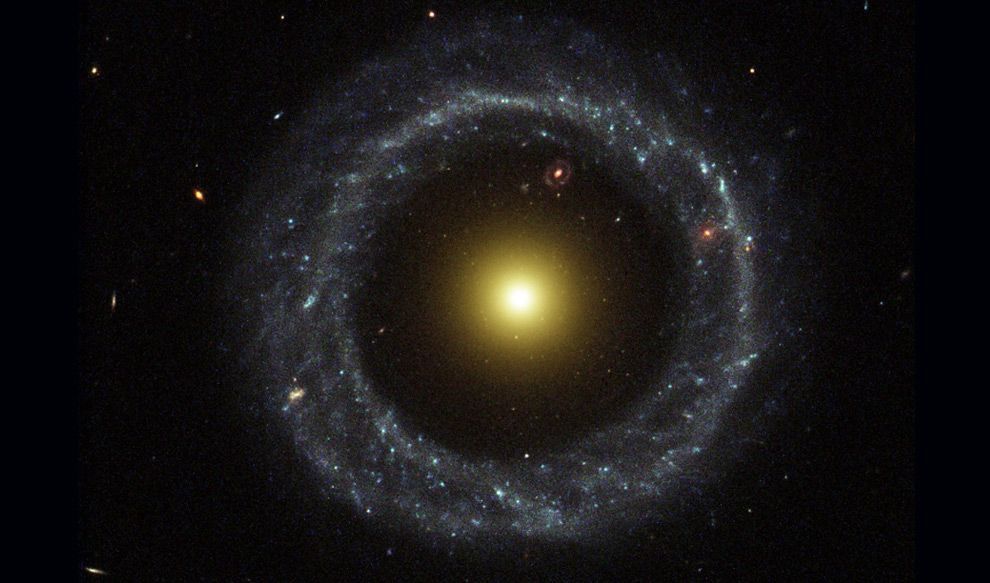
A nearly perfect ring of hot, blue stars pinwheels about the yellow nucleus of an unusual galaxy known as Hoag's Object. This image captures a face-on view of the galaxy's ring of stars, revealing more detail than any existing photo of this object. The entire galaxy is about 120,000 light-years wide, which is slightly larger than our Milky Way Galaxy. The blue ring, which is dominated by clusters of young, massive stars, contrasts sharply with the yellow nucleus of mostly older stars. What appears to be a gap separating the two stellar populations may actually contain some star clusters that are almost too faint to see. Curiously, an object that bears an uncanny resemblance to Hoag's Object can be seen in the gap at the one o'clock position. The object is probably a background ring galaxy.
06_221.jpg
185.6 KB ·250 views
2 Users Say Thank You For This Post:
Beard, Nve
  #7  
04-04-2010, 12:56 AM
güttsfükk's Avatar
güttsfükk
Offline:
Super *********
Poster Rank:89
Join Date: Nov 2008
Posts: 17,426
 
Mentioned: 5 Post(s)
Quoted: 99 Post(s)
Activity Longevity
0/20 18/20
Today Posts
0/11 ssss17426
Re: Hubble Space Telescope Advent Calendar 2008 (25 Pix)

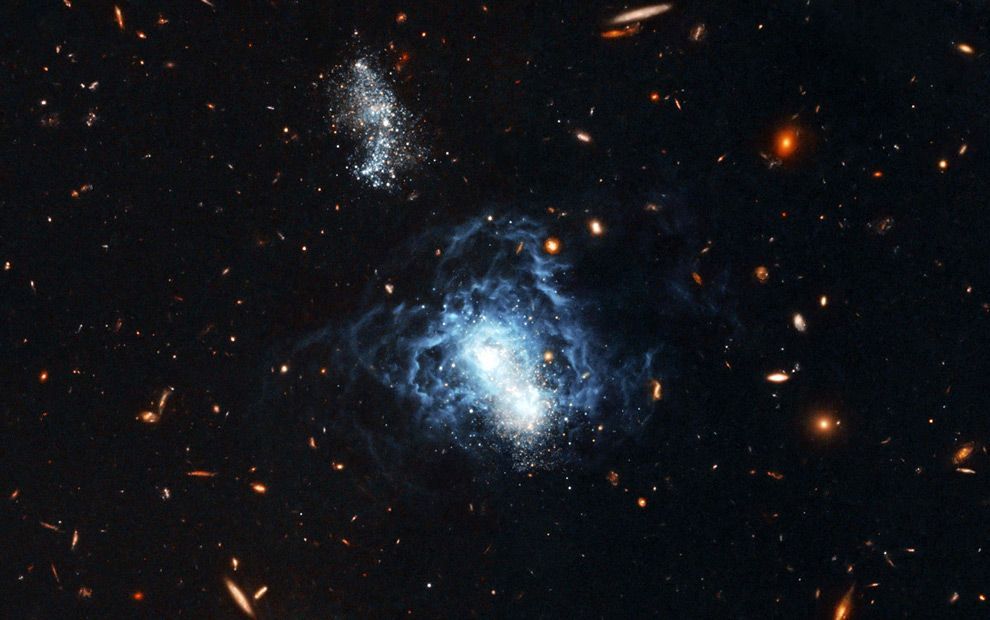
Called I Zwicky 18, this galaxy - some 59 million light-years distant - has a youthful appearance that resembles galaxies typically found only in the early universe. Hubble has now found faint, older stars within this galaxy, suggesting that the galaxy may have formed at the same time as most other galaxies. I Zwicky 18 is classified as a dwarf irregular galaxy and is much smaller than our Milky Way Galaxy. The concentrated bluish-white knots embedded in the heart of the galaxy are two major starburst regions where stars are forming at a furious rate. The wispy blue filaments surrounding the central starburst regions are bubbles of gas that have been blown away by stellar winds and supernovae explosions from a previous generation of hot, young stars. A companion galaxy lies just above and to the left and may be interacting with I Zwicky 18.
07_zwicky.jpg
182.5 KB ·197 views
3 Users Say Thank You For This Post:
Beard, Creepy, Nve
  #8  
04-04-2010, 12:56 AM
güttsfükk's Avatar
güttsfükk
Offline:
Super *********
Poster Rank:89
Join Date: Nov 2008
Posts: 17,426
 
Mentioned: 5 Post(s)
Quoted: 99 Post(s)
Activity Longevity
0/20 18/20
Today Posts
0/11 ssss17426
Re: Hubble Space Telescope Advent Calendar 2008 (25 Pix)

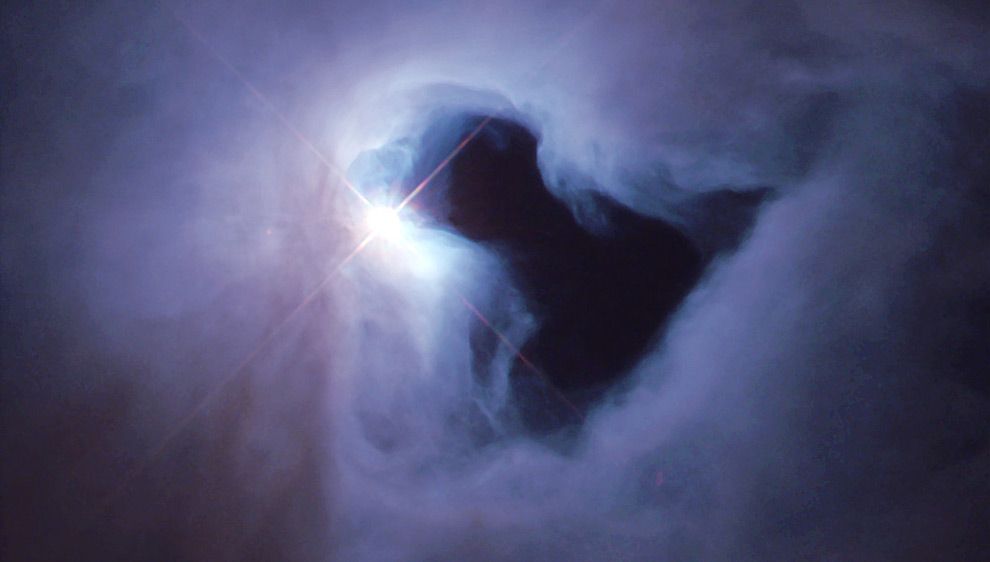
Just weeks after NASA astronauts repaired the Hubble Space Telescope in December 1999, the Hubble Heritage Project snapped this picture of NGC 1999, a nebula some 1,500 light-years away from Earth, in the constellation Orion. The Hubble Heritage astronomers, in collaboration with scientists in Texas and Ireland, used Hubble's Wide Field Planetary Camera 2 (WFPC2) to obtain this colour image.
08_0010.jpg
89.5 KB ·166 views
2 Users Say Thank You For This Post:
Beard, Nve
  #9  
04-04-2010, 12:57 AM
güttsfükk's Avatar
güttsfükk
Offline:
Super *********
Poster Rank:89
Join Date: Nov 2008
Posts: 17,426
 
Mentioned: 5 Post(s)
Quoted: 99 Post(s)
Activity Longevity
0/20 18/20
Today Posts
0/11 ssss17426
Re: Hubble Space Telescope Advent Calendar 2008 (25 Pix)

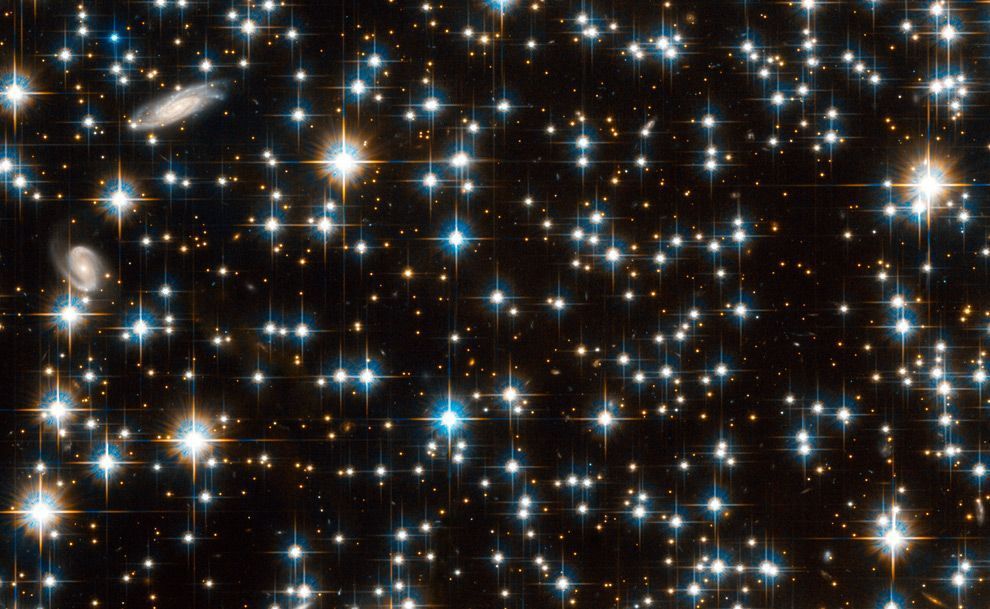
This image of the ancient open star cluster NGC 6791 was taken in early 2008. Studying the dimmest stars in the cluster, astronomers uncovered three different age groups of stars. Two of the populations are burned-out stars called white dwarfs. One group of these low-wattage stellar remnants appears to be 6 billion years old, another appears to be 4 billion years old. The ages are problematically out of sync with those of the cluster's normal stars, which are 8 billion years old. Located 13,300 light-years away in the constellation Lyra, NGC 6791 is one of the oldest and largest open clusters known, containing roughly 10,000 stars. Also interesting to note are the numerous distant galaxies far beyond our Milky Way Galaxy that are visible between the crowded mass of stars.
09_200825.jpg
282.8 KB ·352 views
4 Users Say Thank You For This Post:
Beard, Creepy, Nve, thefabmrsp
  #10  
04-04-2010, 12:57 AM
güttsfükk's Avatar
güttsfükk
Offline:
Super *********
Poster Rank:89
Join Date: Nov 2008
Posts: 17,426
 
Mentioned: 5 Post(s)
Quoted: 99 Post(s)
Activity Longevity
0/20 18/20
Today Posts
0/11 ssss17426
Re: Hubble Space Telescope Advent Calendar 2008 (25 Pix)

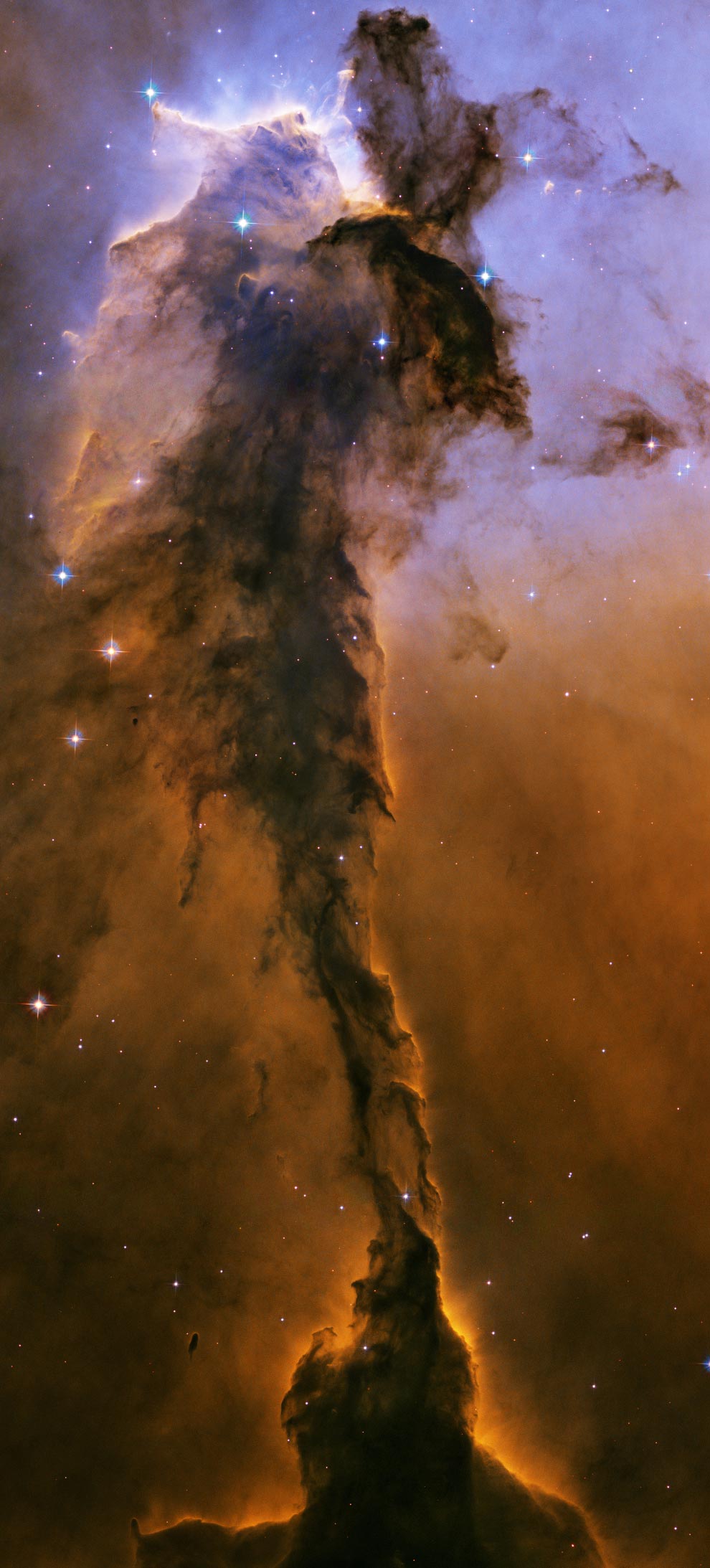
This object is a billowing tower of cold gas and dust rising from a stellar nursery called the Eagle Nebula. 7,000 light-years distant from us, the soaring tower is 9.5 light-years or about 90 trillion kilometers tall. Stars in the Eagle Nebula are born in clouds of cold hydrogen gas that reside in chaotic neighbourhoods, where energy from young stars sculpts fantasy-like landscapes in the gas. The tower may be a giant incubator for those newborn stars. A torrent of ultraviolet light from a band of massive, hot, young stars [off the top of the image] is eroding the pillar. The column is silhouetted against the background glow of more distant gas. The bumps and fingers of material in the center of the tower are examples of stellar birthing areas. These regions may look small but they are roughly the size of our solar system. The blue colour at the top is from glowing oxygen, the red color in the lower region is from glowing hydrogen. This image was taken in November 2004 with the Advanced Camera for Surveys
10_506b.jpg
190.8 KB ·565 views
2 Users Say Thank You For This Post:
Beard, Nve


Powered by vBulletin Copyright 2000-2010 Jelsoft Enterprises Limited.

Search Engine Friendly URLs by vBSEO