Investigation report D6/2010L
An ultralight amphibian aircraft crashed into water in Taipalsaari on 26 June 2010
Translation of the Finnish original report
Aircraft type:
SeaMax M-22
Registration:
OH-U567 INVESTIGATION NUMBER: D6/2010L INVESTIGATOR: Kalle Brusi
INVESTIGATION COMPLETED: 9.6.2011
Time: 26 June 2010 at 11:40
Location of incident: Taipalsaari, south-east of Kutvele canal
Aircraft type: SeaMax M-22
Registration: OH-U567
Engines: Rotax 912 ULS 100 hp
Year of manufacture: 2007
Type of flight: Sport aviation
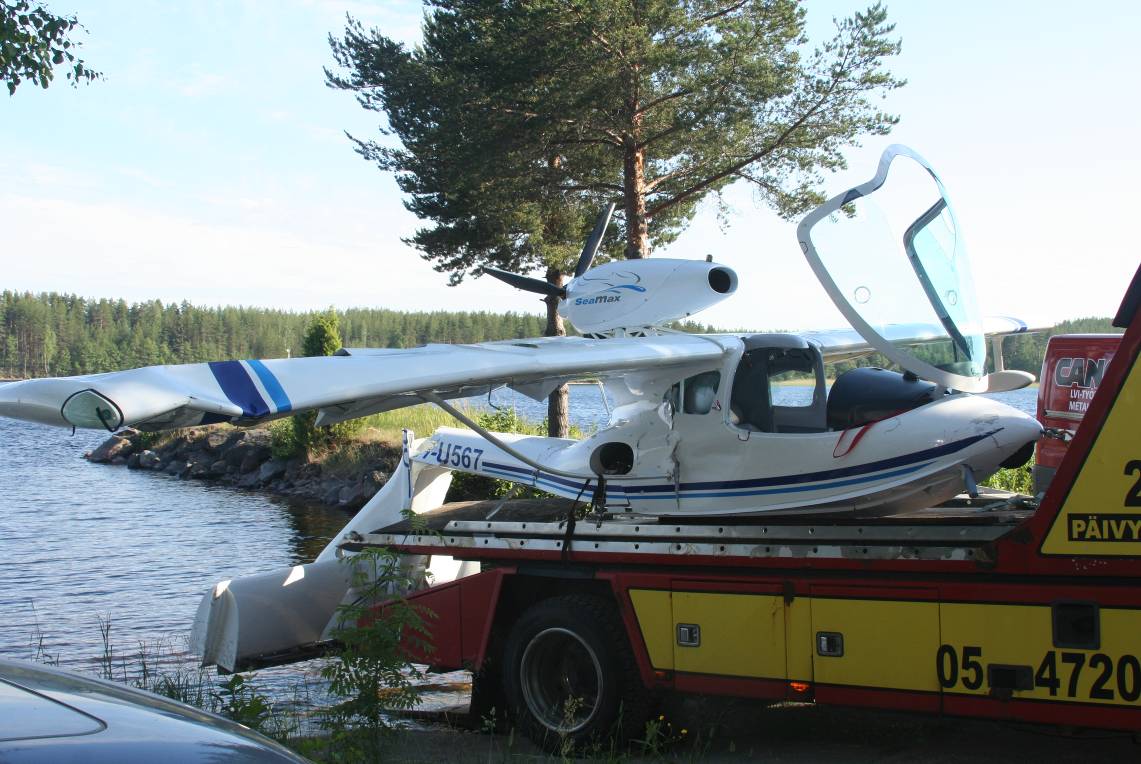
Damage to aircraft: The aircraft was destroyed in the accident.
Number of persons: 1
Pilots: 1
Pilot-in-command: Age 47
Licences: UPL, GPL, MGPL
Flying experience: About 300 hours (ultralight, sailplane, powered sailplane), a few hours with seaplanes
On type: About 40–45 hours, most of which was not sea flying.
Weather: Wave height about 0.3 metres. Wave direction from south.
Wind 5–6 knots from south. Good visibility. No precipitation, few clouds. Barometric pressure 1008 hPa. Visual meteorological conditions (VMC) prevailed at the aerodrome of departure.
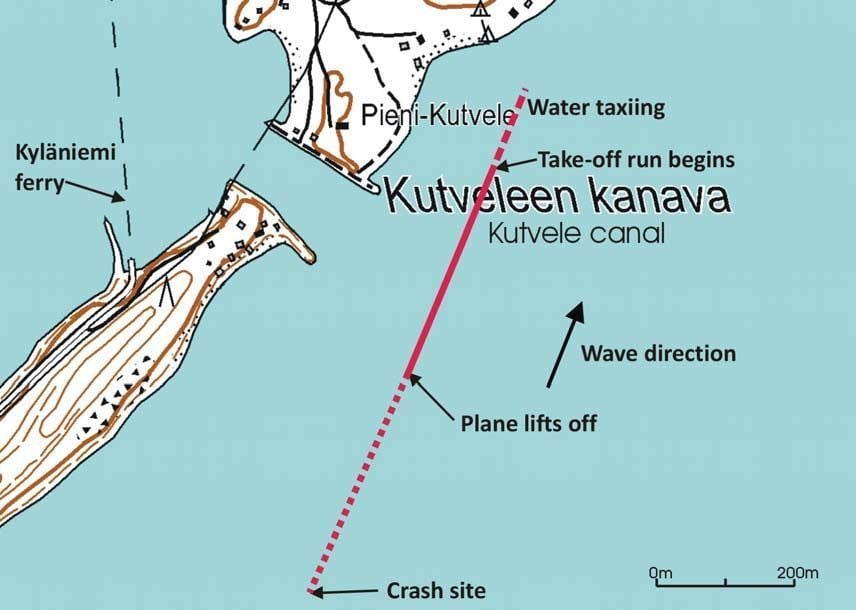
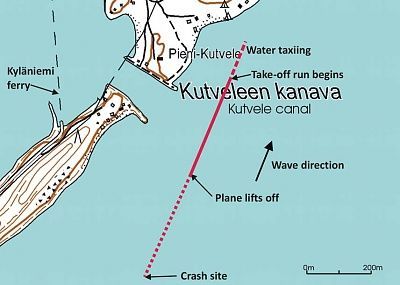 Accident flight shown on a map. (KTJ/Ministry of Justice/National Land Survey
of Finland Preparations and accident flight
After the last flight of the previous day, the pilot moved the aircraft to the sand shore. He
pulled the aircraft on the shore with landing gear retracted, and it was stored there for
the night so that the rear part was in water or slightly above water level.
The pilot intended to fly to Immola aerodrome (EFIM). Before the flight, he checked the
aircraft as usual and used the bilge pump for about 10 seconds. After this the pilot and
his assistants pushed the aircraft into the water rear first. The pilot water-taxied the
plane towards Kutvele canal. During taxiing, the waves occasionally broke over the hull.
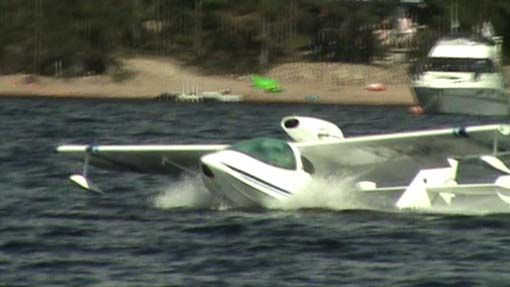
Water had condensed inside the canopy. The pilot tried to take off, but the aircraft would
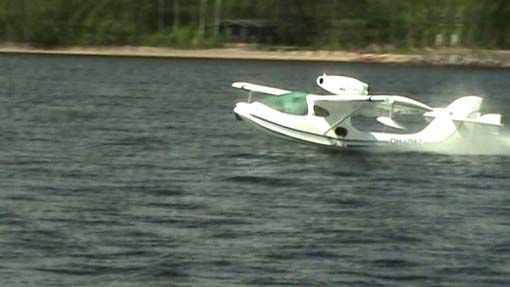
not lift off the water, and he tried again. During take-off, the aircraft did not start planing
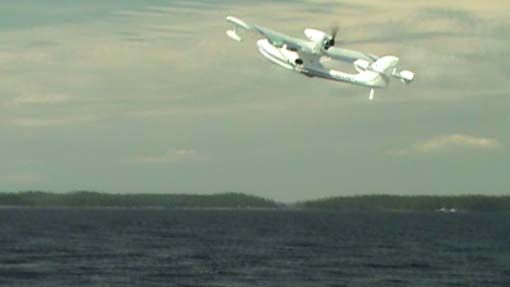
normally and the tail was lower than usual. The climb angle was rather steep immediately
after take-off. The water rudder was down at take-off. The pilot tried to make the
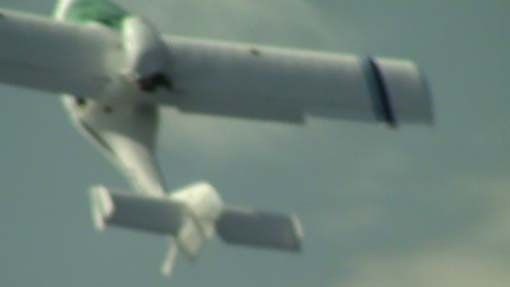
climb angle lower, without succeeding. He then reduced engine power, which caused a
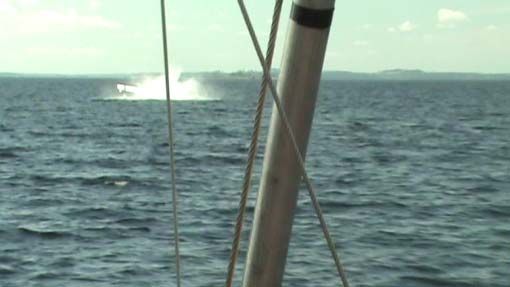
sudden nose-up movement. The plane stalled immediately and fell into the lake in a
steep angle from a height of more than 20 metres. The pilot exited the aircraft, inflated
the life vest and remained floating close to the aircraft. (Figure 1)
An eyewitness, who had been acting as an assistant, saw that the plane made a longer
take-off run than usual before becoming airborne. The assistant told that the plane
climbed rather steeply upwards, then dipped downwards and up again before crashing
into water. He described the flight path as similar to that of a ”nodding” paper plane. One
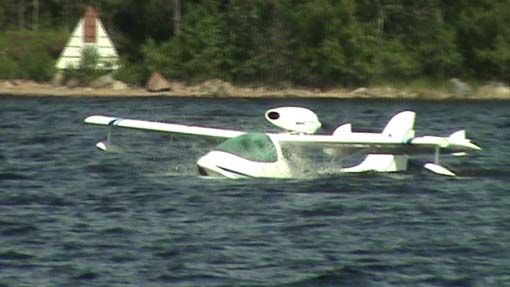
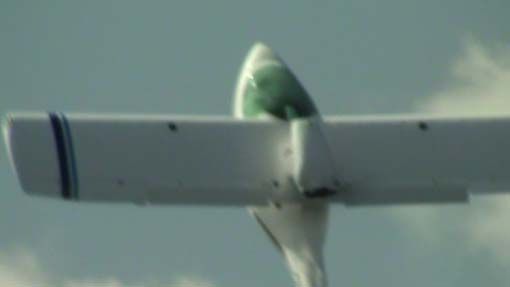
eyewitness filmed the accident flight on video.
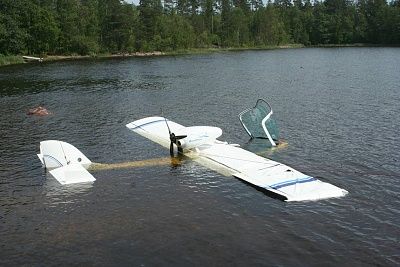
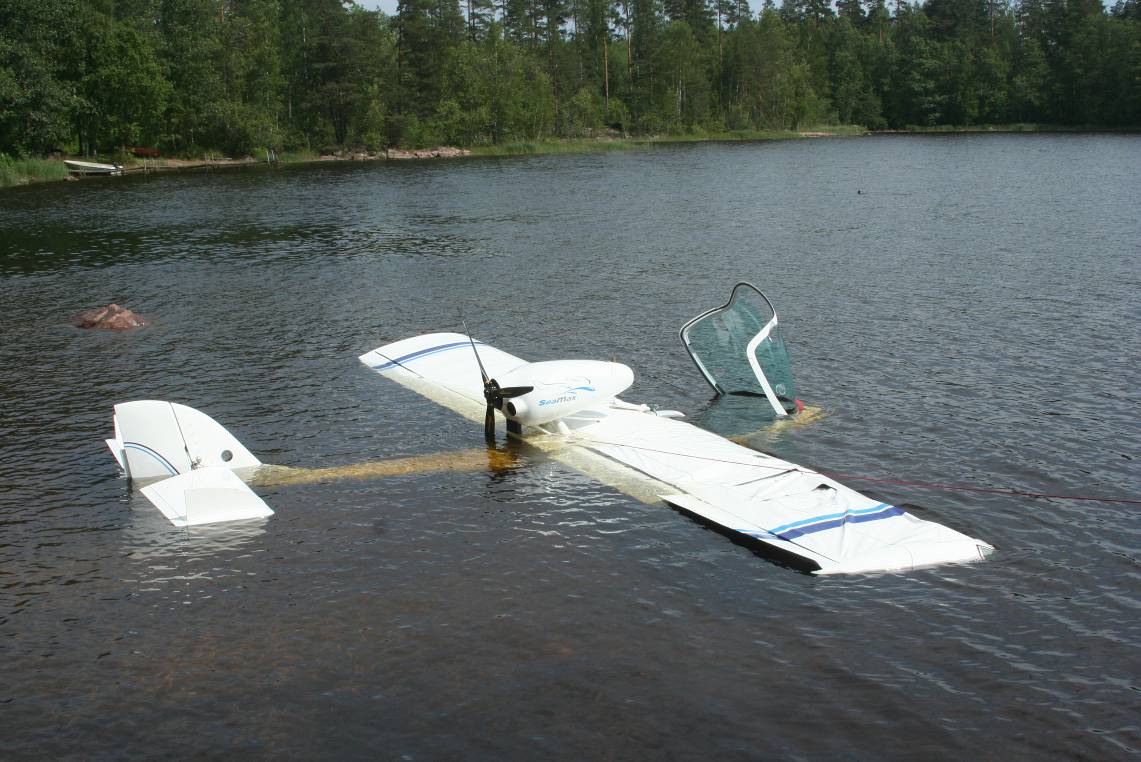
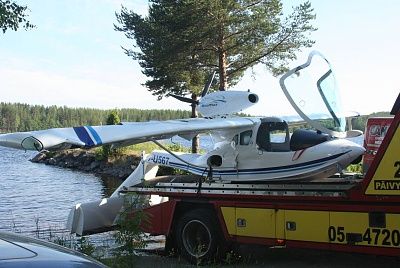 The destroyed aircraft waiting to be lifted from water. (Southern Carelia Police
Department)
Obviously the (relatively inexperienced) pilot lost the control of the aircraft, but also the presence of water not properly drained may have moved the baricenter to the rear as the plane was climbing (see report), which would have lead to the loss of control.
I'll add the full crash report to the OP as contribution, thanks for sharing