|
Community Forum · Est. 2006
|
#1
●
09-13-2012, 11:54 PM
|
 My Rank: MASTER SERGEANT Poster Rank:582 "Indy500 Or Die" Join Date: May 2012 Posts: 1,682 1,682Posts 7,620Thanked 205Quoted 2Mentioned 0Contrib. |
|
USS Akron: 05/11/1932 (My Introduction To Reality From My Great Grandfather)
The first real horror story I ever heard as a child was told to me by my great grandfather who was Electricians Mate in the United States Navy stationed at Camp Kearney who was a witness to the horrific events that took place on May 11th 1932 His story gave me nightmares for most of my childhood When I saw the actual footage of the event as a teenager on a "Ripley's Believe it or Not" re-run with Jack Palance's horrifyingly low deadpan narration and realized that my great gramps was not just pulling my leg about what happened but was telling me the absolute truth about the event.....I almost had a heart attack on the spot and could not move from the couch for the next 16 straight hours until my mom peeled me off the cushions and threw me into an ice cold shower  |
|
#2
●
09-14-2012, 12:04 AM
|
| My Rank: MASTER SERGEANT Poster Rank:582 "Indy500 Or Die" Join Date: May 2012 Posts: 1,682 1,682Posts 7,620Thanked 205Quoted 2Mentioned 0Contrib. |
|
Re: USS Akron: 05/11/1932 (My Introduction To Reality From My Great Grandfather)
The above clip is not the "Ripley's Believe it or Not" clip I saw as a teenager which I have recorded on VHS I am working on transferring it and then ripping it to my computer so I can download it to this thread to prove its arm hair raising qualities   · 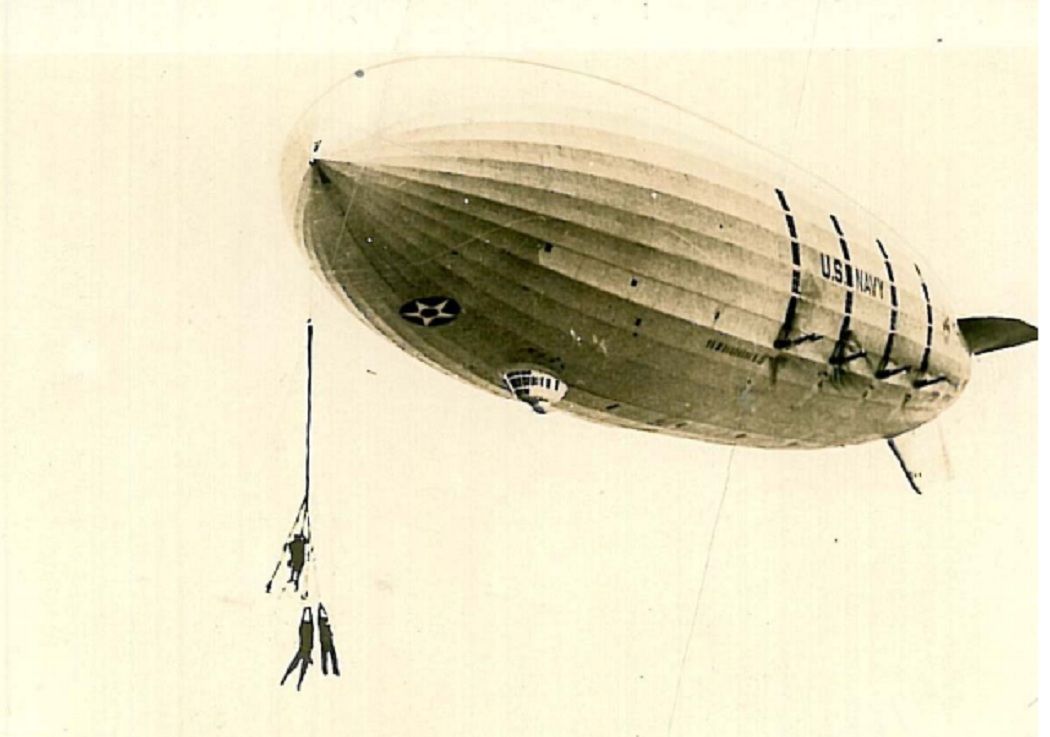 · |
|
#3
●
09-14-2012, 12:32 AM
|
 Ph-Italian Vulpino Poster Rank:60 Join Date: Jan 2010 Posts: 25,495
Contributions: 1
25,495Posts 81,359Thanked 3,547Quoted 29Mentioned 1Contrib. |
|
Re: USS Akron: 05/11/1932 (My Introduction To Reality From My Great Grandfather)
Thanks Shipmate  |
|
#5
●
09-14-2012, 02:39 AM
|
 ★ Legacy Member ★ Poster Rank:137 meow Join Date: Nov 2011 Posts: 12,242
Contributions: 61
12,242Posts 9,934Thanked 438Quoted 11Mentioned 61Contrib. |
|
Re: USS Akron: 05/11/1932 (My Introduction To Reality From My Great Grandfather)
interesting - love Ripley's so looking forward to it
|
|
#7
●
09-14-2012, 06:22 AM
|
 ✝Mudderator from Hell✝ Poster Rank:10 e-mail Join Date: Oct 2006 Posts: 96,741
Contributions: 902
96,741Posts 544,070Thanked 10,377Quoted 479Mentioned 902Contrib. |
|
Re: USS Akron: 05/11/1932 (My Introduction To Reality From My Great Grandfather)
don't see any shooting skywards and imo there was enuff time for them to let go off the line. they probably panicked and held on to the line  |
|
#8
●
09-14-2012, 10:50 AM
|
| My Rank: MASTER SERGEANT Poster Rank:582 "Indy500 Or Die" Join Date: May 2012 Posts: 1,682 1,682Posts 7,620Thanked 205Quoted 2Mentioned 0Contrib. |
|
Re: USS Akron: 05/11/1932 (My Introduction To Reality From My Great Grandfather)
Thats exactly what happened IMO You see like 20 sailors letting go once all the lines start moving skyward The three that held on im sure were just trying to keep the lines on the ground In those few seconds when the last of their shipmates were letting go from 15 or so feet I bet they wished they had let go then as well and broke their arm, or leg or anything besides losing their grip at a couple 100 feet |
|
#10
●
09-14-2012, 03:48 PM
|
 My Rank: STAFF SERGEANT Poster Rank:832 Inny Join Date: Sep 2009 Posts: 928 928Posts 1,013Thanked 42Quoted 1Mentioned 0Contrib. |
|
Re: USS Akron: 05/11/1932 (My Introduction To Reality From My Great Grandfather)
Oh man. That would be terrifying!
|