|
#1
●
03-28-2023, 06:08 PM
|
 These are the rooms Poster Rank:26 of ruin. Join Date: Sep 2014 Posts: 54,008 54,008Posts 87,658Thanked 30,403Quoted 145Mentioned 0Contrib. |
|
A Ventilator- and Feeding Tube-dependent Patient with ALS Was Burned
Source: The patient is a 52-year-old male with a history of ALS diagnosed in 2015 who is both ventilator- and feeding tube-dependent. He was admitted to the burn center with a 2% total burn surface area (TBSA) mixed partial- and full-thickness scald burn involving his left foot as a result of a hot water bath. At baseline, he is completely dependent for all care with his wife as the primary caregiver as well as with a home health assistant three times per week. He communicates by blinking and with the use of an assistive computer device. The patient and his wife reaffirmed a pre-existing do-not-resuscitate (DNR) code status prohibiting chest compressions. The left foot burn exhibited blistering to the dorsal aspect of all five toes and overlying the calcaneus and inframalleolar regions bilaterally (Figure 1). Both blanching and non-blanching erythema were present. Sensation was intact and dorsalis pedis and posterior tibial pulses were palpable. The blisters were debrided at the bedside, and the foot was treated with bacitracin ointment and wrapped in a non-adherent dressing per standard protocol. Twelve hours following admission (16 hours post-injury), the patient became increasingly less responsive and was only arousable to deep stimuli. The mean arterial pressure (MAP) had dropped to the 50-59 mm Hg range with initial tachycardia up to 140 beats per minute (bpm). Intravenous fluid boluses were administered with resolution of the tachycardia, but the hypotension worsened. There was initially a concern for septic shock in the setting of three deep pre-existing decubitus ulcers. A norepinephrine infusion for cardiovascular support and broad-spectrum antibiotics were initiated. Twenty minutes following initiation of norepinephrine, the patient experienced profound bradycardia requiring atropine. Initially, decreased coronary perfusion was suspected as the cause vs cardiogenic shock. However, a full cardiac workup including an electrocardiogram, bedside cardiac ultrasound, troponin levels, D-dimer, and B-type natriuretic peptide (BNP) was negative. During and after the event, there were no changes in renal or hepatic function, which were normal at baseline. In addition, a full infectious workup was negative (including complete inspection of the pressure wounds with wound cultures) and the patient had no further vasopressor requirements following 18 hours with the norepinephrine infusion. Nonetheless, he continued to intermittently exhibit mild asymptomatic bradycardia (50-59 bpm) and hypotension, especially at night while asleep, both resolving with stimulation or arousal. The patient’s foot burn converted into a third-degree (Figure 2) injury and he ultimately underwent tangential excision and a split-thickness skin graft on a subsequent admission. Post-operative admission for cardiovascular monitoring again demonstrated asymptomatic, self-limited episodes of bradycardia and hypotension, usually during sleep. At home and in the outpatient burn clinic, there was no further evidence of cardiovascular dysfunction. Subsequently, he had a near 100% take of the graft and the donor site healed without complications (Figure 3). 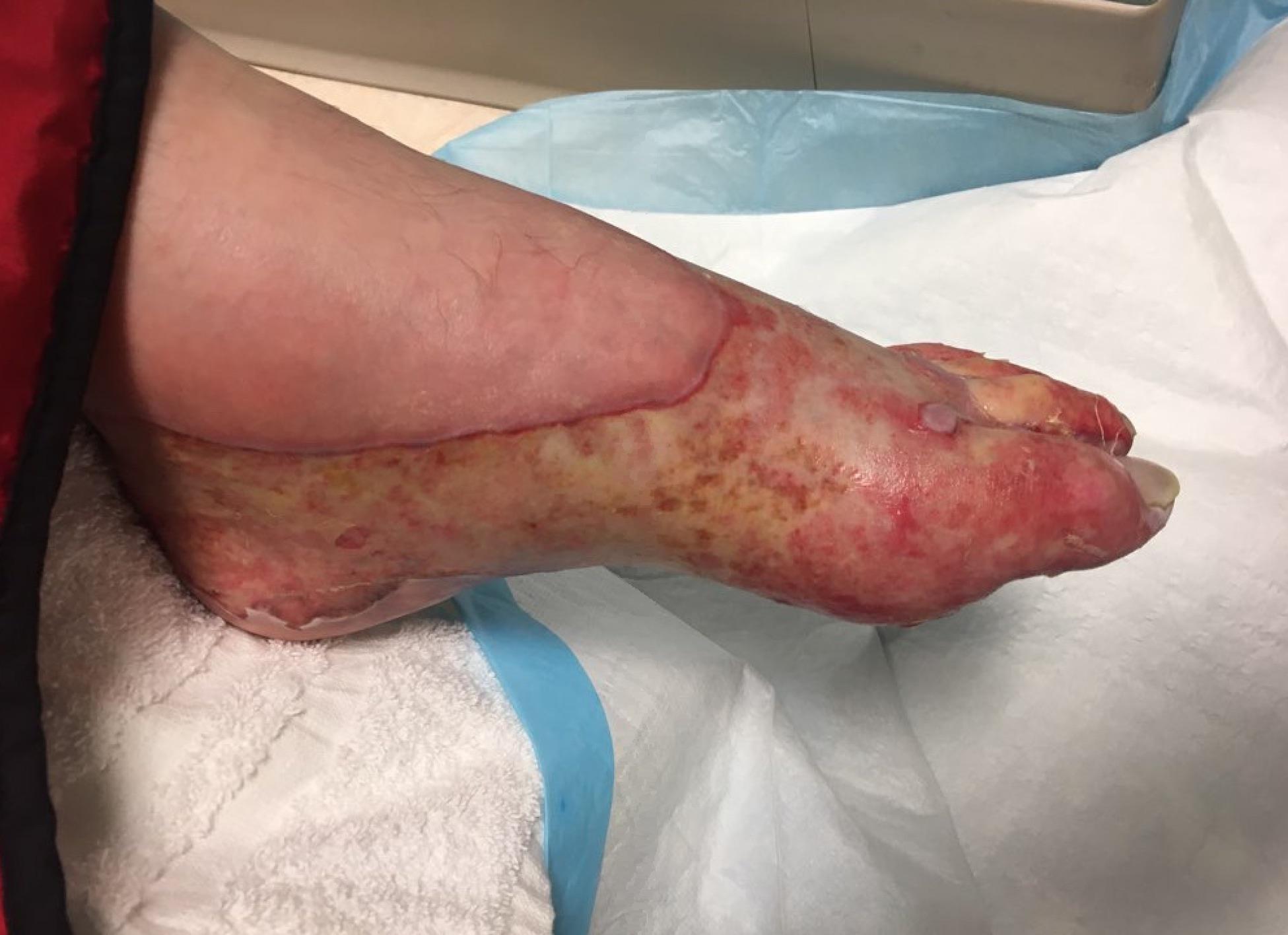 · 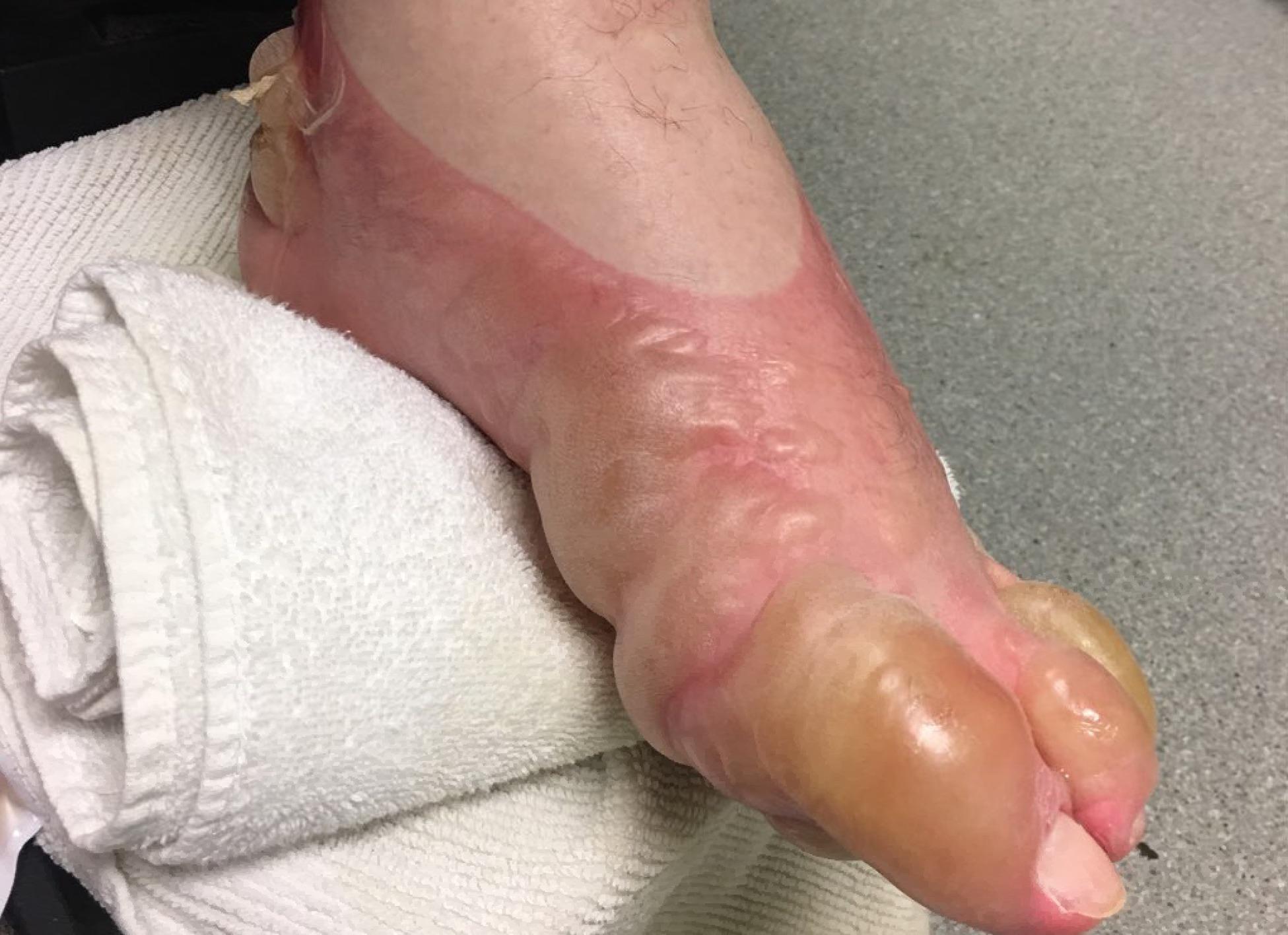 · 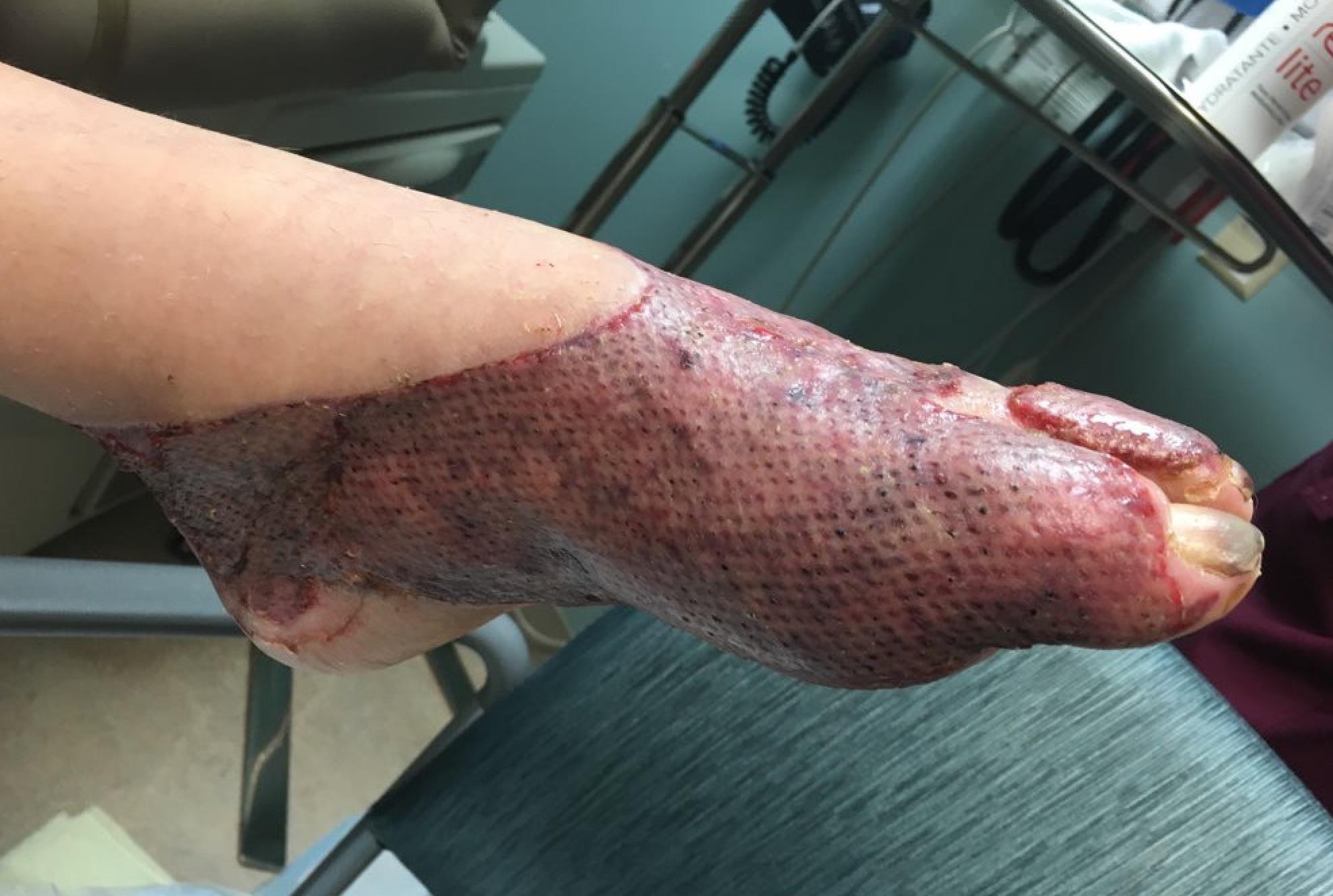 · |
|
#2
●
03-29-2023, 07:08 AM
|
 ♚ Legacy Gold Member ♚ Poster Rank:206 Iceman Join Date: Aug 2017 Posts: 7,503 7,503Posts 12,801Thanked 3,630Quoted 19Mentioned 0Contrib. |
|
Re: A Ventilator- and Feeding Tube-dependent Patient with ALS Was Burned
Looks like some tortuous shit right there
|
|
#3
●
03-29-2023, 09:36 AM
|
 My Rank: MAJOR Poster Rank:12 Join Date: Jun 2009 Posts: 93,062
Contributions: 239
93,062Posts 137,674Thanked 2,009Quoted 91Mentioned 239Contrib. |
|
Re: A Ventilator- and Feeding Tube-dependent Patient with ALS Was Burned
Crazy perfect line from where he dipped the foot.
|
|
#4
●
03-29-2023, 03:40 PM
|
 ★ Legacy Member ★ Poster Rank:110 Secret Agent Join Date: Dec 2009 Posts: 14,783 14,783Posts 49,101Thanked 3,050Quoted 6Mentioned 0Contrib. |
|
Re: A Ventilator- and Feeding Tube-dependent Patient with ALS Was Burned
Pull the plug..  |
|
#5
●
03-29-2023, 06:04 PM
|
 ✖ The Antique Christ ✖ Poster Rank:106 Gonzo Punk Join Date: Jan 2009 Posts: 15,478
Contributions: 62
15,478Posts 39,140Thanked 2,046Quoted 23Mentioned 62Contrib. |
|
Re: A Ventilator- and Feeding Tube-dependent Patient with ALS Was Burned
I was thinking the same thing.
|
|
#6
●
07-14-2023, 03:03 AM
|
 My Rank: LANCE CORPORAL Poster Rank:2499 Join Date: Mar 2010 Posts: 175 175Posts 572Thanked 44Quoted 0Mentioned 0Contrib. |
|
Re: A Ventilator- and Feeding Tube-dependent Patient with ALS Was Burned
I’ve never understood how a caregiver giving a bath could possibly burn someone so badly. I mean, it looks like the boiled the water and poured it right on the skin!! How do you prepare a sponge bath that scalding hot without knowing it’s scalding hot?!
|
|
#7
●
07-14-2023, 03:09 AM
|
 My Rank: CAPTAIN Poster Rank:218 Join Date: May 2016 Posts: 6,886
Contributions: 22
6,886Posts 6,617Thanked 853Quoted 3Mentioned 22Contrib. |
|
Re: A Ventilator- and Feeding Tube-dependent Patient with ALS Was Burned
How long was the foot dipped in?  |
|
#8
●
09-08-2023, 08:45 PM
|
| My Rank: LANCE CORPORAL Poster Rank:2714 Join Date: Oct 2018 Posts: 153 153Posts 250Thanked 38Quoted 0Mentioned 0Contrib. |
|
Re: A Ventilator- and Feeding Tube-dependent Patient with ALS Was Burned
People with this condition should have the right to assisted suicide.
|