|
#1
●
07-29-2012, 02:29 PM
| ||||||||
 Wide 'n' sassy Poster Rank:1254 Female Join Date: Mar 2009 Posts: 497 Mentioned: 5 Post(s) Quoted: 69 Post(s)
| ||||||||
|
Vanishing Twin Syndrome
Found out that this happened from my Dad about 5 years ago. I was joking with him about how he'd cope if there were two of me and he went all pale and said "We thought there would be." Took me ages to get more info out of him but he said I shouldn't ask my Mum about it or mention it to her as she never even talked to him about it after it happened or throughout their 19 years of marriage. There was supposed to be me and "Hannah" but after at some point "she" didn't show up on the ultra-sound any more. Dad said they didn't know officially the sex of the babies but my Mum had said she knew we would be girls as she always wanted girls to dress up and do their hair in little ponytails with ribbons on. I always think that maybe there's a bit of her in me, but then I have no idea what she'd be like. Text below is from Wikipedia. A vanishing twin, also known as fetal resorption, is a fetus in a multi-gestation pregnancy which dies in utero and is then partially or completely reabsorbed by the twin. The occurrence of this phenomenon is sometimes referred to as twin embolisation syndrome or vanishing twin syndrome (VTS), since the 1980s when twin pregnancies were made visible early on by means of ultrasound. Occasionally, rather than being completely reabsorbed, the dead fetus will be compressed by its growing twin to a flattened, parchment-like state known as fetus papyraceus. 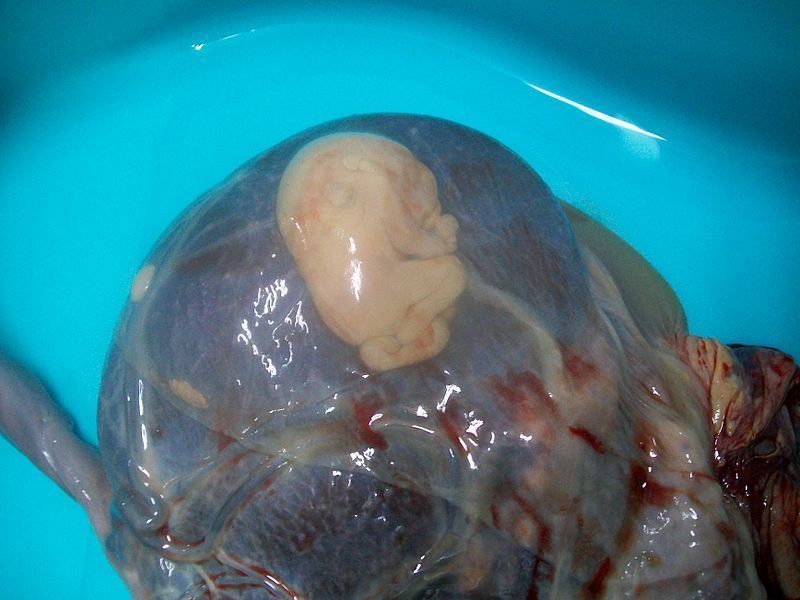 If the fetus is absorbed completely, there are usually no further complications to the pregnancy, other than first trimester vaginal bleeding. However, if the event occurs in the second or third trimester, serious complications may include premature labor, infection due to the death of the fetus, and hemorrhage. Even at the end of the pregnancy, a low-lying fetus papyraceus may block the cervix and require a cesarean to deliver the living twin. The vanished twin can die owing to a poorly implanted placenta, a developmental anomaly that may cause major organs to fail or to be missing completely, or there may be a chromosome abnormality incompatible with life. Frequently the twin is a blighted ovum, one that never developed beyond the very earliest stages of embryogenesis. |
|
#4
●
07-29-2012, 03:49 PM
| ||||||||
 Ph-Italian Vulpino Poster Rank:60 Join Date: Jan 2010 Posts: 25,465
Contributions: 1
Mentioned: 29 Post(s) Quoted: 3539 Post(s)
| ||||||||
|
Re: Vanishing Twin Syndrome
The power of being the Alpha in the womb  |
|
#8
●
07-29-2012, 09:35 PM
| ||||||||
 Yaut'ja Elite Poster Rank:550 Male Join Date: Jul 2009 Posts: 1,844
Contributions: 11
Mentioned: 3 Post(s) Quoted: 107 Post(s)
| ||||||||
|
Re: Vanishing Twin Syndrome
OP, being a father of a little girl, your story broke my heart.  |
|
#9
●
07-29-2012, 09:42 PM
| ||||||||
 ★The Queen★ Poster Rank:68 Female Join Date: Jun 2011 Posts: 23,496
Contributions: 120
Mentioned: 95 Post(s) Quoted: 3083 Post(s)
| ||||||||
|
Re: Vanishing Twin Syndrome
Your results are better than if one of you had lived as a parasitic twin. Very interesting though. |
|
#10
●
07-29-2012, 09:59 PM
| ||||||||
| Wide 'n' sassy Poster Rank:1254 Female Join Date: Mar 2009 Posts: 497 Mentioned: 5 Post(s) Quoted: 69 Post(s)
| ||||||||
|
Re: Vanishing Twin Syndrome
It's weird to think that neither of my parents were going to tell me about any of this stuff and it was only from a throwaway remark that I found out at all.
|