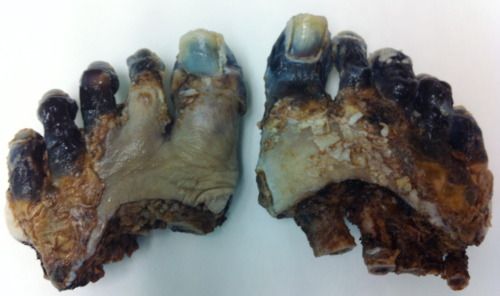
Bilateral transmetatarsal amputations for dry gangrene.
Dry gangrene begins at the distal part of the limb due to ischemia, and often occurs in the toes and feet of elderly patients due to arteriosclerosis. Dry gangrene is mainly due to arterial occlusion. There is limited putrefaction and bacteria fail to survive. Dry gangrene spreads slowly until it reaches the point where the blood supply is adequate to keep tissue viable. The affected part is dry, shrunken and dark reddish-black, resembling mummified flesh. The dark coloration is due to liberation of hemoglobin from hemolyzed red blood cells, which is acted upon by hydrogen sulfide (H2S) produced by the bacteria, resulting in formation of black iron sulfide that remains in the tissues.[6] The line of separation usually brings about complete separation, with eventual falling off of the gangrenous tissue if it is not removed surgically, also called autoamputation.
Dry gangrene is actually a form of coagulative necrosis. If the blood flow is interrupted for a reason other than severe bacterial infection, the result is a case of dry gangrene. People with impaired peripheral blood flow, such as diabetics, are at greater risk of developing dry gangrene.
The early signs of dry gangrene are a dull ache and sensation of coldness in the affected area along with pallor of the flesh. If caught early, the process can sometimes be reversed by vascular surgery. However, if necrosis sets in, the affected tissue must be removed just as with wet gangrene.