
|
#1
●
06-15-2010, 08:23 PM
| ||||||||
 LiViNG DeaD GIrL Poster Rank:2372 Female Join Date: Dec 2008 Posts: 192 Mentioned: 0 Post(s) Quoted: 8 Post(s)
| ||||||||
|
The Story on Maggot Brain, and Other Stuff
We all know and love this guy, but I don't know if all of you know the real story behind his condition.  "However, the actual story is that it was a man in his 70s who was suffering from an unusual form of cancer which had eaten away at the upper portion of his skull and scalp but had not caused him any pain so he had not sought medical help. He was involved in a minor auto accident and the paramedics found him in this condition. There was no explanation as to whether a minor accident had caused the damage and dislodged fragile tissue or if the scalp had already been eaten away. There were indeed many insects and maggots infesting his brain. " So now you know! Guinea Worms: As the worm matures, a painful blister appears on the skin of the carrier. When the person puts the affected part of the body in water, the blister breaks and hundreds of thousands of tiny first stage larvae are released into the water. The adult female worm then comes slowly out of the body of its carrier through the sore made by the broken blister. It usually takes several weeks for the worm to completely exit the body. 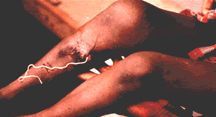 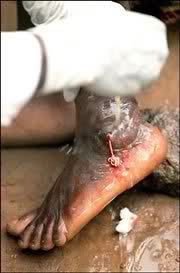 Well, we know where his tongue has been--The picture shows a cancer on the tongue in a 45 year old male who was a non-smoker. The most common cause of oral tumors is Human Papilloma Virus which is found in 70% of oral tumors. This virus most commonly causes tumors on the tonsil and base of tongue. 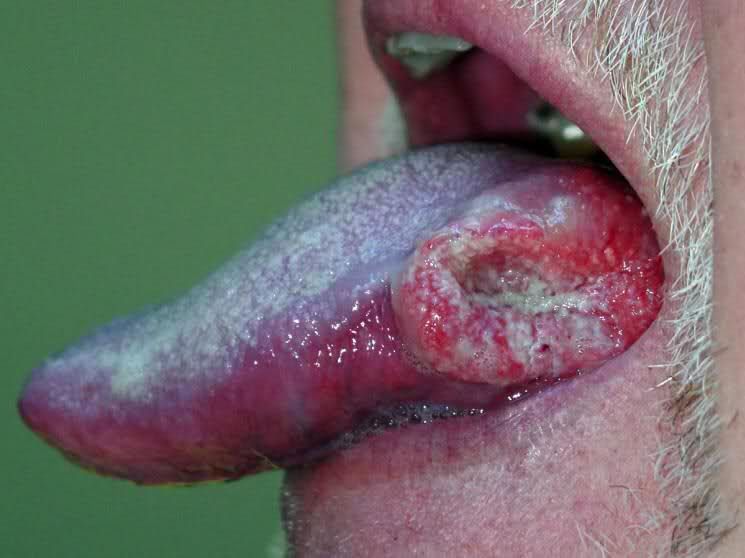 And hers, too--The pictures are from a 14 year old girl with punctuate viral lesions on the hard palate and tongue. She was treated with Famvir (famciclovir) 500 mg three times a day for 7 days. The probable cause of these lesions is herpes simplex. 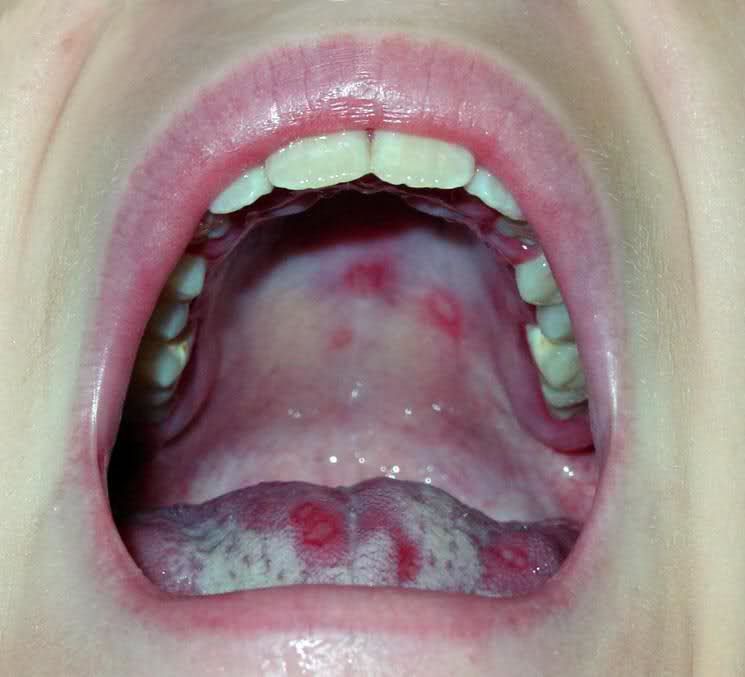  A 44-year-old woman was brought to hospital by police. Over a period of years she had isolated herself and her daughter from society, arousing the concern of neighbours. A scant history of “schizophrenia”, personality disorder and intellectual disability was obtained from distant relatives. An x-ray of the lump revealed a wedding ring totally encased in the soft tissue. 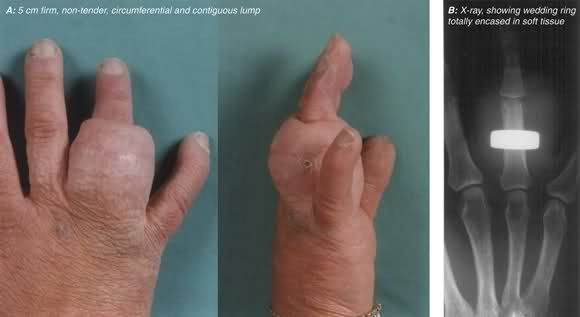 This shows polycystic kidneys, which were successfully removed a year ago. Weighing between 16 to 18 pounds combined, they were the second-largest set of kidneys the University of Pennsylvania has ever seen. The staff retained them for teaching purposes 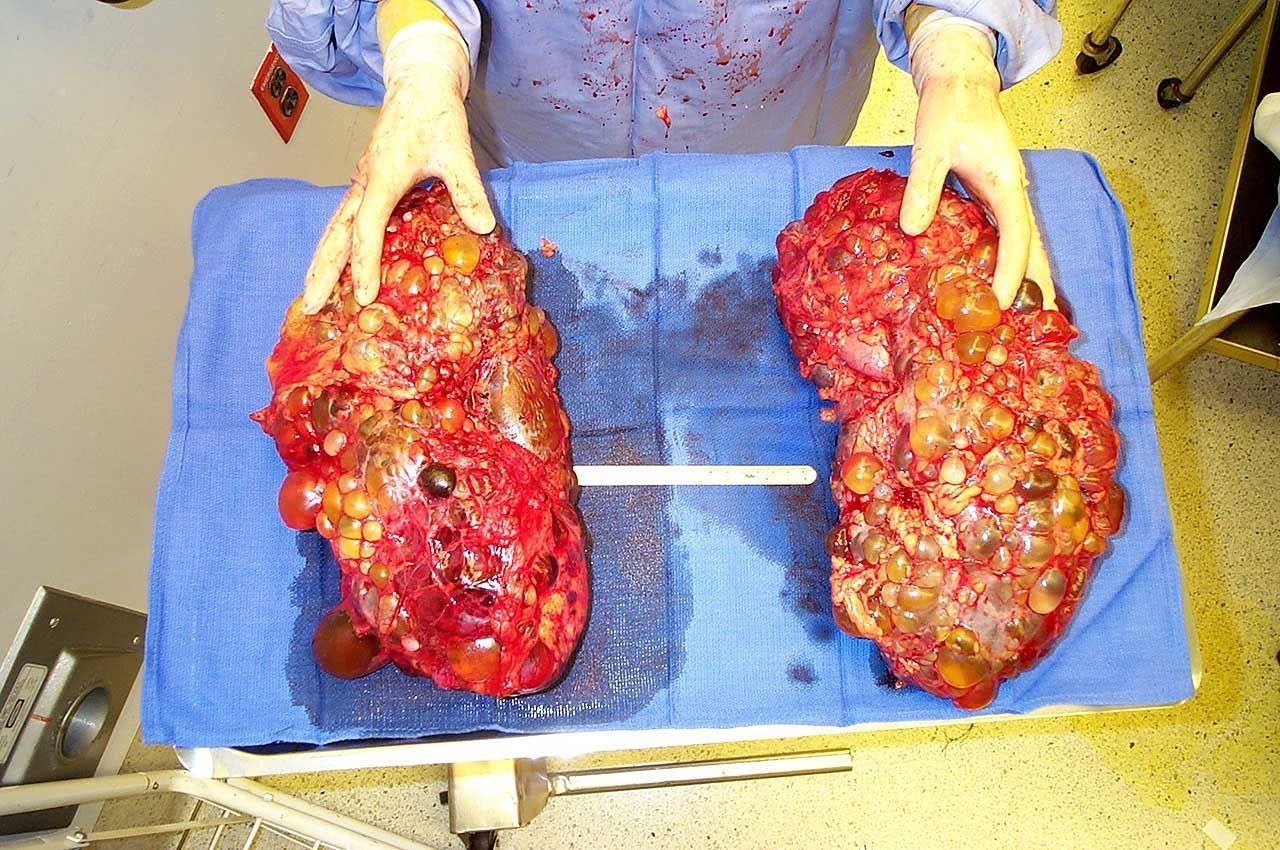 |
|
#6
●
06-16-2010, 01:02 AM
| ||||||||
 My Rank: CAPTAIN Poster Rank:211 HANDSOM DEVIL! Join Date: Dec 2009 Posts: 7,271 Mentioned: 0 Post(s) Quoted: 4 Post(s)
| ||||||||
|
Re: The Story on Maggot Brain, and Other Stuff
The first guy did have a form of cancer !................ .....Yet there was NO magic worm ! RE- post .......Just a new story ! |





 awesome post. those kidneys are freaking huge!!!


