|
#1
●
06-05-2012, 10:36 PM
|
 ★The Queen★ Poster Rank:68 Female Join Date: Jun 2011 Posts: 23,461
Contributions: 145
23,461Posts 28,287Thanked 3,083Quoted 95Mentioned 145Contrib. |
|
Statistics & Burns in Bangledesh, Including Female Genitalia - REDO
Annals of Burns and Fire Disasters - vol. XIV - n. 3 - september 2001 ACID BURNS IN BANGLADESH Bari Md. Shahidul,1 Choudhury Md. Iqbal Mahmud2 Department of Burns and Plastic Surgery, Sir Salimullah Medical College and Midfort Hospital, and City Hospital (Pvt.) Ltd, Dhaka, Bangladesh Dhaka Medical College Hospital and City Hospital (Pvt.) Ltd, Dhaka SUMMARY.The distribution is documented of burn injuries treated during the period December 1996/July 2000 in the burn unit of Dhaka Medical College Hospital and City Hospital (Bangladesh). Acid burns constituted 8.76% of all the burn cases treated. In Bangladesh most such cases were of intentional origin (attempts to disfigure the face, eyes, nose, genital organ). Young girls were common victims. The incidence was greater in rural than in urban areas. Introduction Acid burn injuries represent a special type of burn injury, with a pathophysiology depending on the type of acid, concentration, strength, quality, duration of contact, and penetration power.1,2 Both acid and alkali can cause burn. In Bangladesh common causative agents are sulphuric acid, nitric acid, hydrochloric acid, tannic acid, and formic acid. These are most commonly used in jewellery workshops, sales and service centres of automobile battery manufacturers, dyeing industries, and tanneries. Chemical burns from alkalis are almost nil in Bangladesh. Although accurate statistics regarding the incidence of such cases are not available in Bangladesh, at present Dhaka Medical College Hospital (DMCH) and City Hospital are the only recognized burn hospitals and ultimately most burn cases therefore reach them. The data presented can thus give a rough guide to the incidence of acid burns (8.76%) in Bangladesh. More than 3000 deaths attributable to chemical burns are reported in the United States each year.3 In the burn unit of the University Hospital at Varanasi,4 in India, chemical burns constituted 4.9% of all burns. When acid comes into contact with the body it feels like water. It wets the body and a burning sensation begins that gradually increases in intensity. The patients cry in agony until the chemical is washed away or is neutralized. The affected skin becomes black and leather-like. The chemical also leaves its mark on the healthy skin it trickles over (Figs. 1a,b). PHOTOS BELOW TEXT Fig. 1a - 28-yr-old man, victim of acid burn due to personal enmity. Acid leaves pathway through which it trickles down. Fig. 1b - Victim of acid burn: 32-yr-old male, day 4 post-burn before colonization of bacteria. Usually good-looking girls were the victims. Males were relatively less affected. Common causes were love affairs, enmity over land properties, and personal reasons. Children were also affected - they are the victims of circumstance (Tables I-III). Sex Number Percentage Mean Age (yr) Male 43 27.22% 25.03 Female 115 72.78% 21.62 Total 158 - 22.82 Table I- Distribution of patients by sex Age (yr) Male Female No. % No. % 0-10 3 1.90 8 5.06 11-20 9 5.70 68 43.03 21-30 21 13.29 23 14.56 31-40 5 3.16 8 5.06 41-50 5 3.16 5 3.16 51-60 0 0 1 0.63 61 and above 0 0 2 1.27 Table II- Distribution of patients by age and sex Reason Male Female Total % No. % No. % Love affair and refusal of indecent proposal 2 1.26 68 43.03 70 44.30 Political 1 0.63 0 0 1 0.63 Enmities 30 18.98 18 11.39 48 30.37 Accidental 1 0.63 6 3.8 7 4.48 Industrial 8 5.06 5 3.16 13 8.22 Other 1 0,63 18 11.39 19 12.03 Table III- Reasons for acid burns Acid was commonly thrown over the face, neck, and upper part of the body (Figs. 2, 3, 4a,b,c) through a window at night-time, when the victims were asleep or engaged in study, or over the lower part of the trunk, buttocks, perineal region, and genitalia after refusal of an indecent proposal (Figs. 4d,e,f,g). Sometimes the chemical was thrown from a rapidly moving motor cycle, or the perpetrator threw acid at the victim and then ran away. The home, street, educational institutes, and occupational sites were the places of incidence. In industries, machine operators or factory workers were the usual victims of chemical burn, when a chemical accidentally came into contact with their bodies (Table IVa,b). Fig. 2 - 22-yr-old girl, victim of acid burn due to refusal of love affair. Loss of vision in both eyes Fig. 3 - 23-yr-old girl, victim of acid burn due to refusal of love affair. Patient came late width infected wounds Fig. 4a - Girl of 21 yr, victim of acid burn, due to refusal of incident proposal. Acid burn over chest and breast Fig. 4b - Early excision and split-thickness skin graft over chest with reconstruction of breast Fig. 4c - Follow-up after two weeks (chest and breast) Fig. 4d - Acid burn over back, buttock, and thighs Fig. 4e - Burn of perineal region and genitalia Fig. 4f - Early excision and split-thickness skin graft over perineal and genitalia Fig. 4g - Follow-up after two weeks (perineal region and genitalia) Site Male Female Total No. % No. % No. % Occupational area 7 4.43 31 19.62 44 27.85 Educational institute 12 7.59 19 12.03 31 19.62 Home 13 8.23 35 22.15 42 26.58 On the street 11 6.96 30 19.00 41 25.95 Table IVa- Place of accident Site Male Female Total No. % No. % No. % Rural 26 16.46 64 40.51 90 56.96 Urban 17 10.76 51 32.28 68 43.04 Table IVb- Area of incidence The outstanding features of acid burns are the prolonged duration of tissue destruction that continues until all the acid is either inactivated or neutralized, for instance by irrigation of water. Superficial burns can occur after only 5 sec of contact and full-thickness burns after 30 sec.5 Acids cause coagulation necrosis of the tissue with thrombus formation in the microvasculature of lesion. There is a rapid reduction in the collagen and acid mucopolysaccharide content with loss of one-third of dermal collagen within the first 8 h owing to collagenolysis.6 Acids like tannic acid, formic acid, and picric acid are absorbed quickly and produce systemic effects, which may cause metabolic acidosis, haemolysis, and renal failure.1,2 Material and methods The study was conducted among patients admitted to the burn unit of DMCH and City Hospital during the period December 1996 to July 2000. The total number of burn patients was 1803, of whom 158 had acid burns (Figs. 5a,b). Fig. 5a - Distribution of patients by sex and mean age Fig. 5b - Comparison of acid burns and total number of burns The patients admitted to hospital were managed according to our protocol. All details regarding name, age, sex, date, time and place of incidence, and depth of burn were recorded on a standard form, and the results were analysed. As prescribed by our protocol, we irrigated the wound with copious pouring of water and resuscitated patients with oral or i.v. fluid. We used morphine to relieve pain. The patients were divided in two groups. Group A consisted of patients who presented immediately after their burn and whose wounds were not yet colonized by bacteria (Fig. 1b). Group B consisted of patients whose wounds were grossly infected and in whom the slough remained adherent (Fig. 3) and healthy granulation tissue had not yet formed (Table V). Sex Early Group A Late Group B Average time of delay No. % No. % Male 14 8.86 29 18.35 7.5 days Female 31 19.62 84 53.16 9 days Table V- Admission to hospital In group A cases our intention was to excise the burn eschar with a diathermy knife or scalpel between days 3 and 5 post-burn and to cover the wound with a split-thickness autoskin graft. However, we also used full-thickness skin graft, particularly on the eyelids and lips. In group B cases, desloughing was gradually performed during the course of cleaning and dressing. Once granulation tissue was formed, we covered the wound with a split-thickness skin graft. During the course of follow-up, some patients developed ectropion of the eyelid, distortion of the angle of the mouth, post-burn contractures, hypertrophic scars, and keloids (Table VIa,b). These problems were treated accordingly. Disfigurement face Loss of vision Disfigurement of pinna Distortion of lip Distortion of genitalia and angle of mouth Distortion of nose Death No. % S B % S B % No. % No. % No. % No. % Male 33 20.89 13 1 8.86 5 1 3.8 17 10.76 0 0 12 17.59 0 0 Female 84 53.16 23 4 17.09 21 4 15.82 51 32.28 2 2.17 25 15.82 2 1.26 S = single, B = both Table VIa- Immediate effect of burn Disfigurement of breast Ectropion Hypertrophic scar Keloid Psychological effect No. % No. % No. % No. % No. % Male 0 0 18 11.39 25 15.82 5 3.16 17 10.76 Female 15 9.49 37 23.41 78 49.36 16 10.12 51 32.28 Table VIb- Late effect of burn Results The total number of patients treated was 158, of whom 43 were male (27.22%) and 115 female (72.78%) (Table I). The age range was from 0 to 70 yr (mean age, 22.82 yr (Tables I,II). Common causes of acid burns were love affairs (44.30%) and property and personal disputes (30.37% (Table III). The total percentage of body surface area burn (BSA) ranged between 2 and 60% (mean, 10.84%). Other findings were: loss of vision in one eye, 36 patients (22.78%); loss of vision in both eyes, 5 (3.16%); disfigurement of nose, 37 (23.42%); disfigurement of one pinna, 26 (16.46%); disfigurement of both pinnae, 5 (3.16%) (Table VIa). The total number of patients presenting immediately after burn was 45 (28.48%) (Table V) and the total numbers coming late was 113 (71.52%). Complications developing after the post-burn period were ectropion of the eye in 55 patients (34.81%), hypertrophic scars in 103 (65.19%), keloids in 21 (13.29%), and distortion of the angle of the mouth and lip in 68 (43.04%). In this series two patients died, aged 28 and 32 yr. Respectively, they presented burns in 60 and 30% TBSA and died on days 4 and 14 post-burn, probably because of irreversible shock and septicaemia. Discussion Acid burn injuries represent a special type of lesion in which disability is high and aesthetic sequelae are very important. The strategic management of acid burn injury can be both challenging and complex. The challenge begins at the moment of injury and continues throughout the rehabilitation period. The complex aspects of management are the complications that occur, mostly due to damaged soft tissue, eyes, eyelids, nose, ears, lips, breasts, and genitalia. In our series the facial disfigurement rate was 20.89% in males and 53.16% in females. The victims became socially isolated owing to their facial disfigurements, mentally depressed, and sometimes physiophrenic. The increase in the incidence of acid burns may be due to lengthy judiciary procedures, political shelter of the criminals, and a deterioration in general law and order. Conclusion Acid burns represent a small percentage of total burns but complications and morbidity are high. All such injuries are preventable. BIBLIOGRAPHY Mozingo D.W., Smith A.A., McManus W.F., Pruitt B.A., Mason D.D.: Chemical burns. J. Trauma, 28: 642-7, 1988. Lewis G.K.: Chemical burns. Amer. J. Surg., 98: 928-37, 1959. Bromberg B.E., Song I. C., Walden R.H.: Hydrotherapy of chemical burns. Plast. Reconstr. Surg., 35: 85-95, 1965. Sinha J.K., Sinha S.: “Chemical Burns. Hand Book of Burns Management”, Jaypee Brothers Medical Publishers, 152-9 [place and year of publication not supplied]. Van Rensberg L.C.J.: An experimental study of chemical burns. South African Med. J., 8: 754-9, 1962. Houck J.C., Jacob R.A.: Connective tissue. XI. Chemical pathology of necrotic wounds. Proc. Soc. Exp. Biol. Med., 116: 1041-4, 1964. This paper was received on 11 April 2001. Address correspondence to: Dr Md Shahidul Bari, FCPS, and Dr Md. Iqbal Mahmud Choudhury, MBBS, City Hospital (Pvt.) Ltd, 69/I/1, Panthapath, Dhaka 1205, Bangladesh. Tel.: 880-2-8623205, 8617852; fax: 880-2-9669686; e-mail: cityhospital@aitlbd.net  ·  · 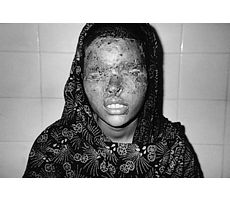 · 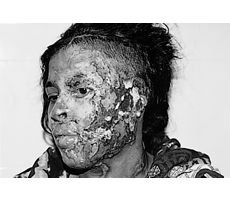 ·  · 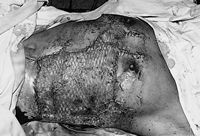 · 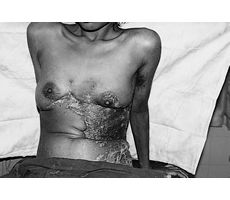 · 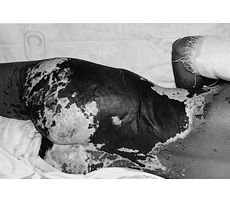 · 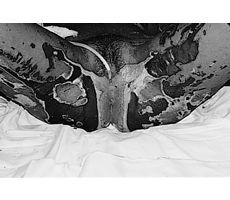 · 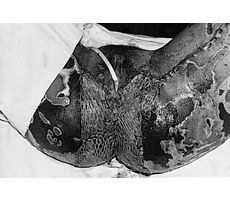 · 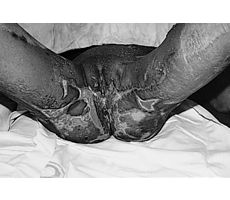 · |
|
#2
●
06-06-2012, 06:31 AM
|
 ★ Legacy Member ★ Poster Rank:113 Join Date: May 2009 Posts: 14,025 14,025Posts 30,704Thanked 3,721Quoted 44Mentioned 0Contrib. |
|
Re: Statistics & Burns in Bangledesh, Including Female Genitalia - REDO
Moo Slums again. Bringing us 700 AD since....700 AD. |
|
#3
●
06-06-2012, 02:38 PM
|
| My Rank: LANCE CORPORAL Poster Rank:2771 Join Date: Jan 2010 Posts: 147 147Posts 352Thanked 5Quoted 0Mentioned 0Contrib. |
|
Re: Statistics & Burns in Bangledesh, Including Female Genitalia - REDO
 There are so many societies still existing that treat women lower than livestock. Imagine that, by refusing an indecent proposal a person can be horrifically disfigured and the low life that caused it can live happilly ever after. I realise that "law and order" rates at the lower end of the scale in such countries, so what's stopping the victims family from seeking out and punishing the vermin responsible? |
|
#4
●
06-06-2012, 08:02 PM
|
| So Fucking Banned Poster Rank:265 Join Date: May 2010 Posts: 5,333 5,333Posts 2,326Thanked 41Quoted 4Mentioned 0Contrib. |
|
Re: Statistics & Burns in Bangledesh, Including Female Genitalia - REDO
WTF!!! If it's not BAD enough to throw it on their faces and chest's, they figure out A way to deform their yoo-hoo's and goodie's!! A person HAS to go to the bathroom and I cannot imagine how taking care of your bodily function's would hurt after an injury like that!!!   |
|
#5
●
06-07-2012, 09:30 PM
|
 Southern Belle Poster Rank:694 goes off half cocked Join Date: Apr 2012 Posts: 1,246 1,246Posts 1,080Thanked 21Quoted 0Mentioned 0Contrib. |
|
Re: Statistics & Burns in Bangledesh, Including Female Genitalia - REDO
Holy shit!
|
|
#6
●
06-08-2012, 12:41 AM
|
| ★The Queen★ Poster Rank:68 Female Join Date: Jun 2011 Posts: 23,461
Contributions: 145
23,461Posts 28,287Thanked 3,083Quoted 95Mentioned 145Contrib. |
|
Re: Statistics & Burns in Bangledesh, Including Female Genitalia - REDO
Just the pictures make me hurt! Sad! Very sad! The men in these countries must all be insecure, along with being cowardly pieces of shit! The only reason one would hurt another human being that badly is because they think no one else would ever want them. The old, "If I can't have you, no one else will!" Instead of killing them, they make they suffer and scar them for life! I have never wanted to hurt or kill an ex-boyfriend. You move on and figure, "It's their loss!" :) |
|
#8
●
06-09-2012, 12:33 PM
|
 My Rank: FIRST SERGEANT Poster Rank:450 yes Join Date: Dec 2009 Posts: 2,549 2,549Posts 1,006Thanked 51Quoted 0Mentioned 0Contrib. |
|
Re: Statistics & Burns in Bangledesh, Including Female Genitalia - REDO
There must be some way to get back at these assholes, or there is no god  :2gunsfiring_v1 : :2gunsfiring_v1 : |