|
#1
●
02-11-2023, 06:25 PM
| ||||||||
 These are the rooms Poster Rank:26 of ruin. Join Date: Sep 2014 Posts: 54,011 Mentioned: 145 Post(s) Quoted: 30403 Post(s)
| ||||||||
|
Pop Eyeballs, Not Collars.
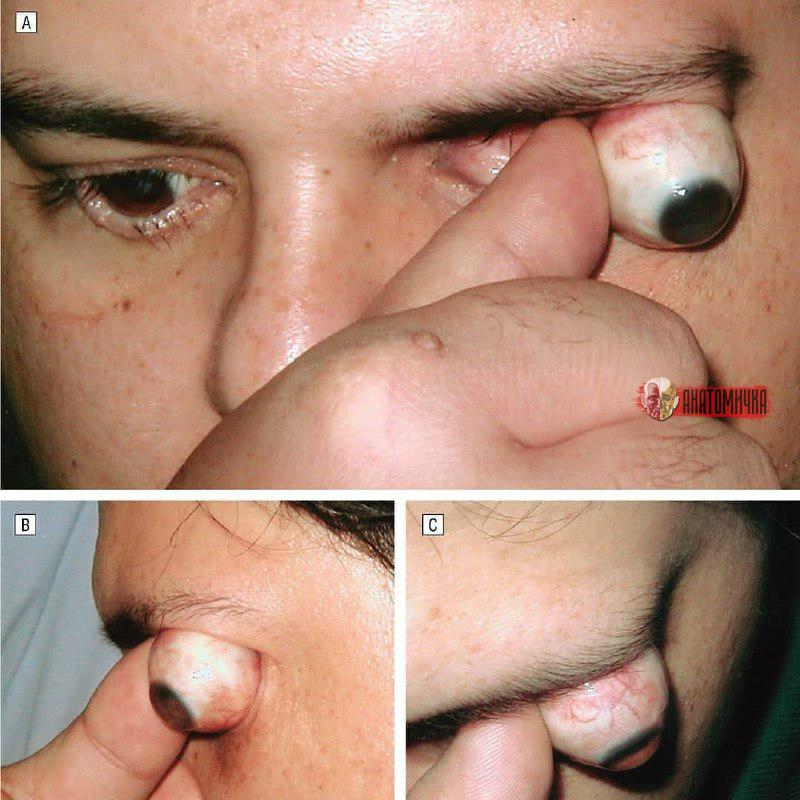
A 35-year-old obese man was examined for loss of vision in his right eye and progressive loss of vision in his left. His parents said that he had a strange habit of "rolling out" ("twisting") his eyes several times a day. When asked to demonstrate this, he easily twisted his upper eyelids and "rolled out" the eyeball with his finger. Then he returned it to its normal position. Unfortunately, after 4 months he became completely blind.
 · |
|
#2
●
02-11-2023, 06:41 PM
| ||||||||
 ★ OG Member ★ Poster Rank:629 Join Date: Nov 2010 Posts: 1,445
Contributions: 42
Mentioned: 10 Post(s) Quoted: 427 Post(s)
| ||||||||
|
Re: Pop Eyeballs, Not Collars.
covering eyes NO NO NO ... these eye posts are freakin me out! |
|
#3
●
02-11-2023, 06:51 PM
| ||||||||
| These are the rooms Poster Rank:26 of ruin. Join Date: Sep 2014 Posts: 54,011 Mentioned: 145 Post(s) Quoted: 30403 Post(s)
| ||||||||
|
Re: Pop Eyeballs, Not Collars.
I'm a terrible person.  |
|
#4
●
02-11-2023, 07:16 PM
| ||||||||
 ♚ Legacy Gold Member ♚ Poster Rank:650 Woman Join Date: Apr 2011 Posts: 1,354 Mentioned: 3 Post(s) Quoted: 142 Post(s)
| ||||||||
|
Re: Pop Eyeballs, Not Collars.
You are in the right place for that!! Please, don't change your ways!! 
__________________ You can not imagine the immensity of the Fuck I do not give. |
|
#6
●
02-12-2023, 12:09 AM
| ||||||||
 My Rank: MASTER GUNNERY SERGEANT Poster Rank:352 Manly Man Join Date: Sep 2017 Posts: 3,601 Mentioned: 0 Post(s) Quoted: 700 Post(s)
| ||||||||
|
Re: Pop Eyeballs, Not Collars.
Did he need a doctor to tell him not to fuck with his eyeballs?
|
|
#9
●
02-12-2023, 03:14 AM
| ||||||||
 ✝Mudderator from Hell✝ Poster Rank:10 e-mail Join Date: Oct 2006 Posts: 96,670
Contributions: 817
Mentioned: 476 Post(s) Quoted: 10344 Post(s)
| ||||||||
|
Re: Pop Eyeballs, Not Collars.
bit more info: He also complained of redness, irritation, and a foreign-body sensation bilaterally. His medical history and his vision had previously been excellent, according to his medical records at the company at which he was employed as a computer engineer. However, during the past 4 years he had had an obsessive-compulsive disorder which was treated with risperidone. On examination, the patient had blepharitis and corneal haze in both eyes. Ophthalmic examination showed no light perception in the right eye and a visual acuity of 20/200 in the left eye. Slitlamp examination showed palpebral conjunctival hyperemia with papillary hypertrophy and tears in the Descemet membrane in both eyes. Funduscopic examination showed bilateral optic atrophy, more marked in the right eye. The optic disc was uniformly white without cupping in both eyes. The remainder of the results of fundus examination and the intraocular pressure were normal. The patient’s poor vision did not permit visual fields to be obtained. Ultrasound scan, Hertel measurements, and thyroid function test results showed no abnormalities. Electro physiologic testing showed substantial reduction of the latent time of the visual evoked responses. Results of further neurologic examination, including magnetic resonance imaging, for demyelinating disease, drug toxic effects, and thyroid eye disease were negative. The patient was instructed to avoid luxating his globes, as he refused surgical treatment of the floppy eyelids. Stabilization of his psychiatric disease allowed the patient to be cooperative. Unfortunately, 4 months later he was totally blind. His parents reported that he had never stopped luxating his globes. We suspect that the blindness of the patient described in this case was due to a unique traumatic optic neuropathy. The easily everted floppy eyelids of this obese man enabled the voluntary luxation of the globes by inserting the finger deeply into the orbit. The patient’s psychiatric disorder aggravated the condition. |
|
#10
●
02-12-2023, 05:05 AM
| ||||||||
 ★ Legacy Member ★ Poster Rank:110 Secret Agent Join Date: Dec 2009 Posts: 14,674 Mentioned: 6 Post(s) Quoted: 3026 Post(s)
| ||||||||
|
Re: Pop Eyeballs, Not Collars.
What a chode… Love your posts there Kimmie.. |