|
#1
●
10-21-2013, 12:58 PM
| ||||||||
 ♚ Legacy Gold Member ♚ Poster Rank:35 Female Join Date: Nov 2008 Posts: 43,394
Contributions: 204
Mentioned: 95 Post(s) Quoted: 2282 Post(s)
| ||||||||
|
Pilonidal Sinus In Ano-genital Region Of 15yo Male
A pilonidal sinus occurs when hairs in the natal cleft penetrate the skin. These subcutaneous displaced hairs cause irritation and inflammation. The area subsequently becomes infected, which may lead to abscess formation. On examination, the area feels as though multiple ‘grape pips’ are present under the skin. A lack of stringent personal hygiene and microtrauma can increase the likelihood of abscess formation and fistulae. Case report A 15-year-old boy presented with an ongoing fistulating pilonidal sinus in his ano-genital region, which had been present for approximately 18 months. The area was producing a continuous, offensive exudate that had caused him to withdraw from all sports and was affecting his school and social life. The area had previously been treated by performing a daily wash-out of the wound during showering and the application of a diluted iodine solution (Betadine) and dry gauze dressings. 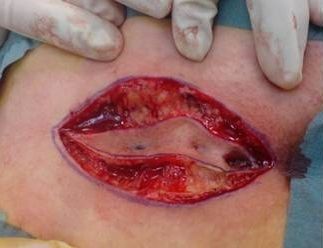 The fistula network after incision and staining with methylen blue 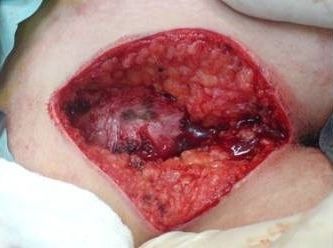 The wound after excision 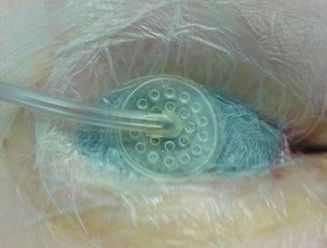 The wound with the V.A.C.® foam dressing in place 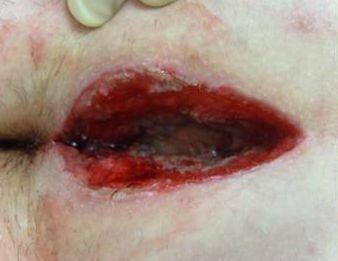 A sudden leakage of exudate from the wound occurred on the third dressing change The slough and debris were removed and a new V.A.C.® foam dressing applied. 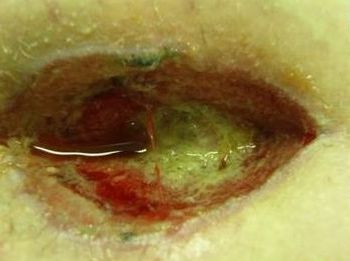 More exudate, slough and debris was detected on the wound surface on the fourth dressing change 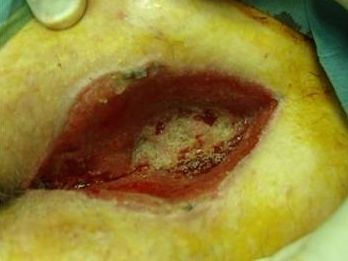 The wound after complete removal of the exudate, slough and debris on the fourth dressing change 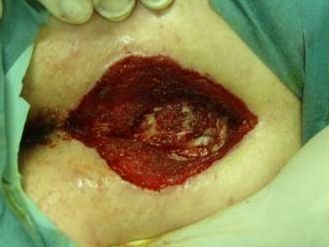 After 12 days the wound was clean and granulation tissue was present 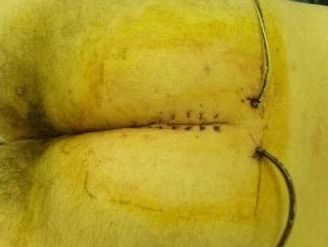 The closed wound after 12 days of V.A.C.® Therapy 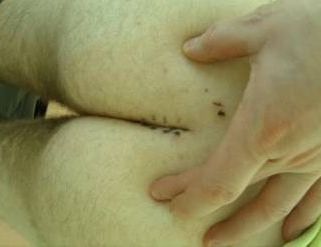 The wound after removal of the stitches. After closure, the wound healed without further problems |
|
#2
●
10-21-2013, 02:59 PM
| ||||||||
| Your Mothers Nightmare... Poster Rank:417 Male Join Date: Oct 2012 Posts: 2,856 Mentioned: 4 Post(s) Quoted: 1036 Post(s)
| ||||||||
|
Re: Pilonidal Sinus In Ano-genital Region Of 15yo Male
Nasty nasty nasty!!! The V.A.C. wound healing system is a great leap forward for these kinds of wounds  to the team who invented it :) to the team who invented it :)
|
|
#3
●
10-21-2013, 04:05 PM
| ||||||||
 ★ Legacy Member ★ Poster Rank:2045 Female Join Date: Apr 2012 Posts: 241 Mentioned: 0 Post(s) Quoted: 10 Post(s)
| ||||||||
|
Re: Pilonidal Sinus In Ano-genital Region Of 15yo Male
My husband had that exact same issue. They did "reroofing" surgery; it a took very long time to heal but it finally cleared up.
|
|
#4
●
10-21-2013, 05:13 PM
| ||||||||
| My Rank: PRIVATE FIRST CLASS Poster Rank:4706 Join Date: Oct 2013 Posts: 60 Mentioned: 0 Post(s) Quoted: 9 Post(s)
| ||||||||
|
Re: Pilonidal Sinus In Ano-genital Region Of 15yo Male
shit I feel sorry for the lad, I hope he is much better now, i can not begin to imagine the pain he endured :(
|
|
#5
●
10-21-2013, 07:17 PM
| ||||||||
 ★ Legacy Member ★ Poster Rank:21 MAN Join Date: Nov 2009 Posts: 61,094 Mentioned: 825 Post(s) Quoted: 37482 Post(s)
| ||||||||
|
Re: Pilonidal Sinus In Ano-genital Region Of 15yo Male
 Never had a problem with the asshole area ( at least behind me Never had a problem with the asshole area ( at least behind me  ) and I hope I never do. ) and I hope I never do.
|
|
#6
●
10-21-2013, 09:42 PM
| ||||||||
| My Rank: PRIVATE Poster Rank:6221 Join Date: Sep 2009 Posts: 36 Mentioned: 0 Post(s) Quoted: 0 Post(s)
| ||||||||
|
Re: Pilonidal Sinus In Ano-genital Region Of 15yo Male
I went through that my freshman year of high school. The most painful thing I've ever experienced. Even compared to childbirth (both vaginally and c-section). It's a shame the internet and youtube weren't around back then; I'd have some wicked pus video's to share.
|
|
#7
●
10-21-2013, 10:34 PM
| ||||||||
| My Rank: PRIVATE Poster Rank:5426 Female Join Date: Apr 2013 Posts: 47 Mentioned: 0 Post(s) Quoted: 16 Post(s)
| ||||||||
|
Re: Pilonidal Sinus In Ano-genital Region Of 15yo Male
I had that surgery about 5 years ago. I didn't have the vac packing but rather they sewed it up right away. I ripped out all the stitches about a week later in my sleep. I woke up with a bed full of blood and my dr said it then had to heal from the inside out. It healed fine and I haven't had a problem since but the pain from the infected cysts was terrible. Plus when they would release all the pus, oh the smell was awful :(
|
|
#9
●
10-22-2013, 09:14 PM
| ||||||||
 ★ Legacy Member ★ Poster Rank:197 All woman Join Date: Jun 2012 Posts: 7,773 Mentioned: 22 Post(s) Quoted: 1420 Post(s)
| ||||||||
|
Re: Pilonidal Sinus In Ano-genital Region Of 15yo Male
Damn, hemorrhoids seem like a walk in the park compared to this shit!
|