
|
#1
●
10-27-2014, 11:25 AM
| ||||||||
| My Rank: PRIVATE Poster Rank:7185 Female Join Date: Apr 2014 Posts: 28 Mentioned: 0 Post(s) Quoted: 7 Post(s)
| ||||||||
|
Phaeohyphomycosis
Phaeohyphomycosis Description: A mycotic infection of humans and lower animals caused by a number of dematiaceous (brown-pigmented) fungi where the tissue morphology of the causative organism is mycelial. This separates it from other clinical types of disease involving brown-pigmented fungi where the tissue morphology of the organism is a grain (mycotic mycetoma) or sclerotic body (chromoblastomycosis). The etiological agents include various dematiaceous hyphomycetes especially species of Exophiala, Phialophora, Wangiella, Bipolaris, Exserohilum, Cladophialophora , Phaeoannellomyces, Aureobasidium, Cladosporium, Curvularia and Alternaria. Ajello (1986) listed 71 species from 39 genera as causative agents of phaeohyphomycosis. Clinical manifestations: Clinical forms of phaeohyphomycosis range from localized superficial infections of the stratum corneum (tinea *****) to subcutaneous cysts (phaeomycotic cyst) to invasion of the brain. Ideally, individual disease states involving an invasive fungal infection by a dematiaceous hyphomycete should be designated by a specific description of the pathology and the causative fungal genus or species (where known); for example "pathology A" caused by "fungus X". 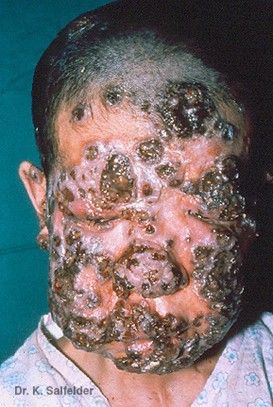 · 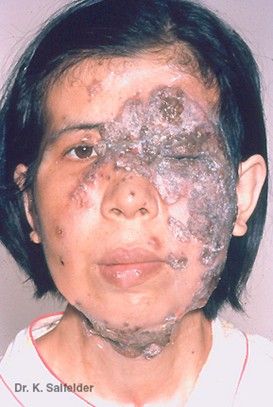 · 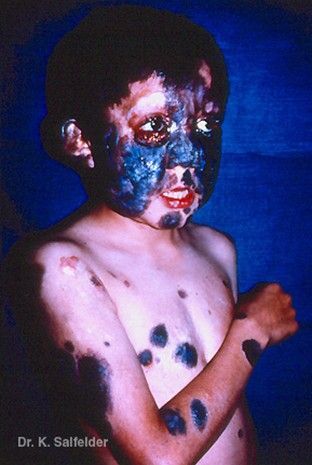 · 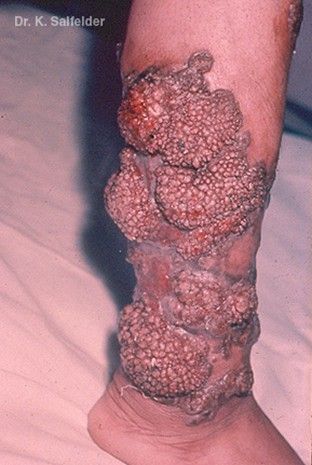 · |
|
#5
●
10-27-2014, 04:38 PM
| ||||||||
 ✝Mudderator from Hell✝ Poster Rank:10 e-mail Join Date: Oct 2006 Posts: 96,429
Contributions: 817
Mentioned: 476 Post(s) Quoted: 10327 Post(s)
| ||||||||
|
Re: Phaeohyphomycosis
there's a fungus among us  |
|
#8
●
10-28-2014, 11:17 PM
| ||||||||
 My Rank: LANCE CORPORAL Poster Rank:1832 Female Join Date: Nov 2013 Posts: 282 Mentioned: 0 Post(s) Quoted: 105 Post(s)
| ||||||||
|
Re: Phaeohyphomycosis
I always learn something new, here. Good post, good description. How awful. I wonder how it affects them, neurologically?
|





 that would be awful...


