|
#1
●
07-28-2021, 03:22 PM
| ||||||||
 ♚ Legacy Gold Member ♚ Poster Rank:911 Join Date: Jul 2020 Posts: 822
Contributions: 10
Mentioned: 13 Post(s) Quoted: 173 Post(s)
| ||||||||
|
Perianal Injury with Rebar
Perianal injuries are uncommon but often occur following trauma, fire, and accidents. These injuries usually lead to a rectal injury. We report an interesting case of a perianal injury by a rebar that did not cause a rectal injury. The present case had a unique set of challenges for physicians and led to experience with wound management. 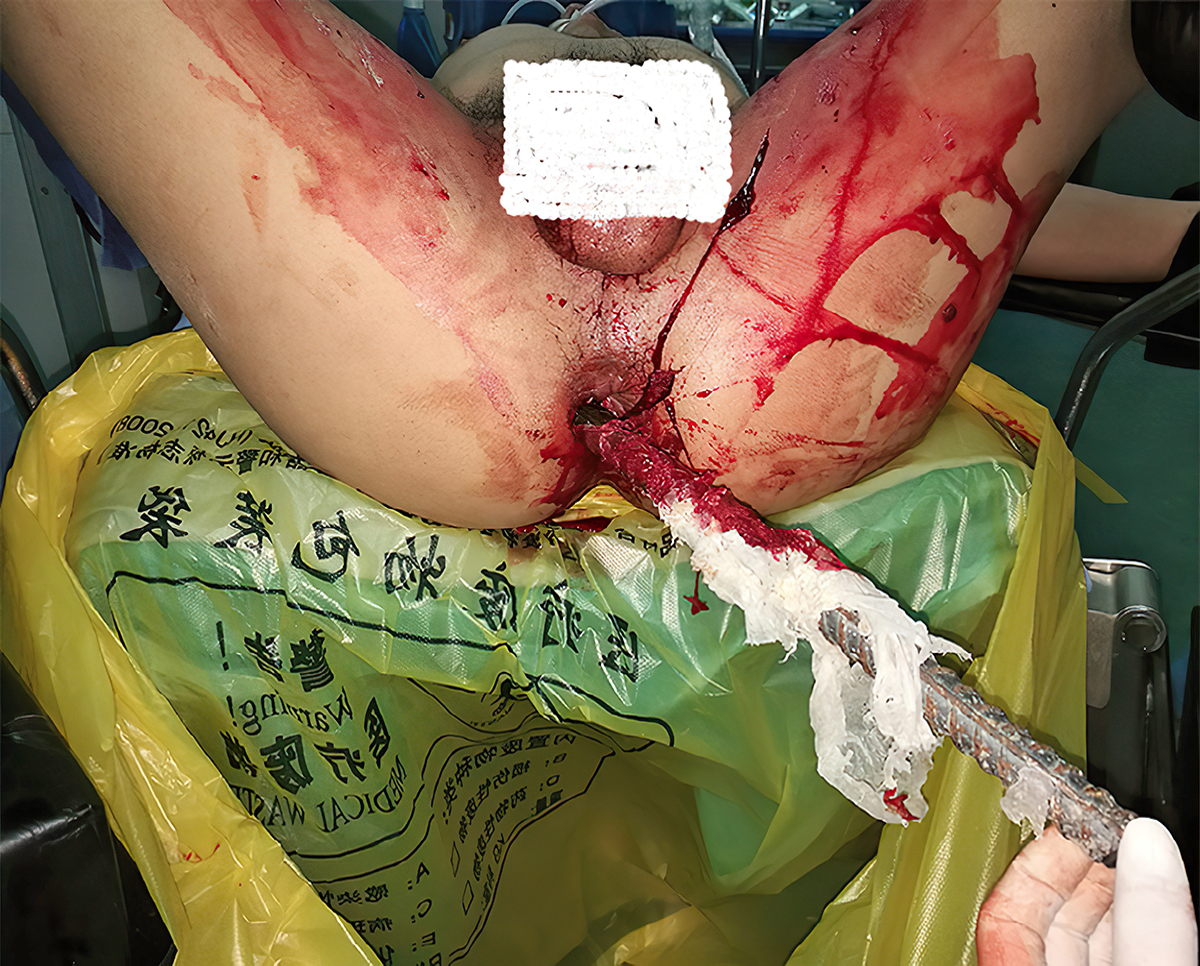 Fig.1 The patient in the lithotomy position with a rebar in situ. 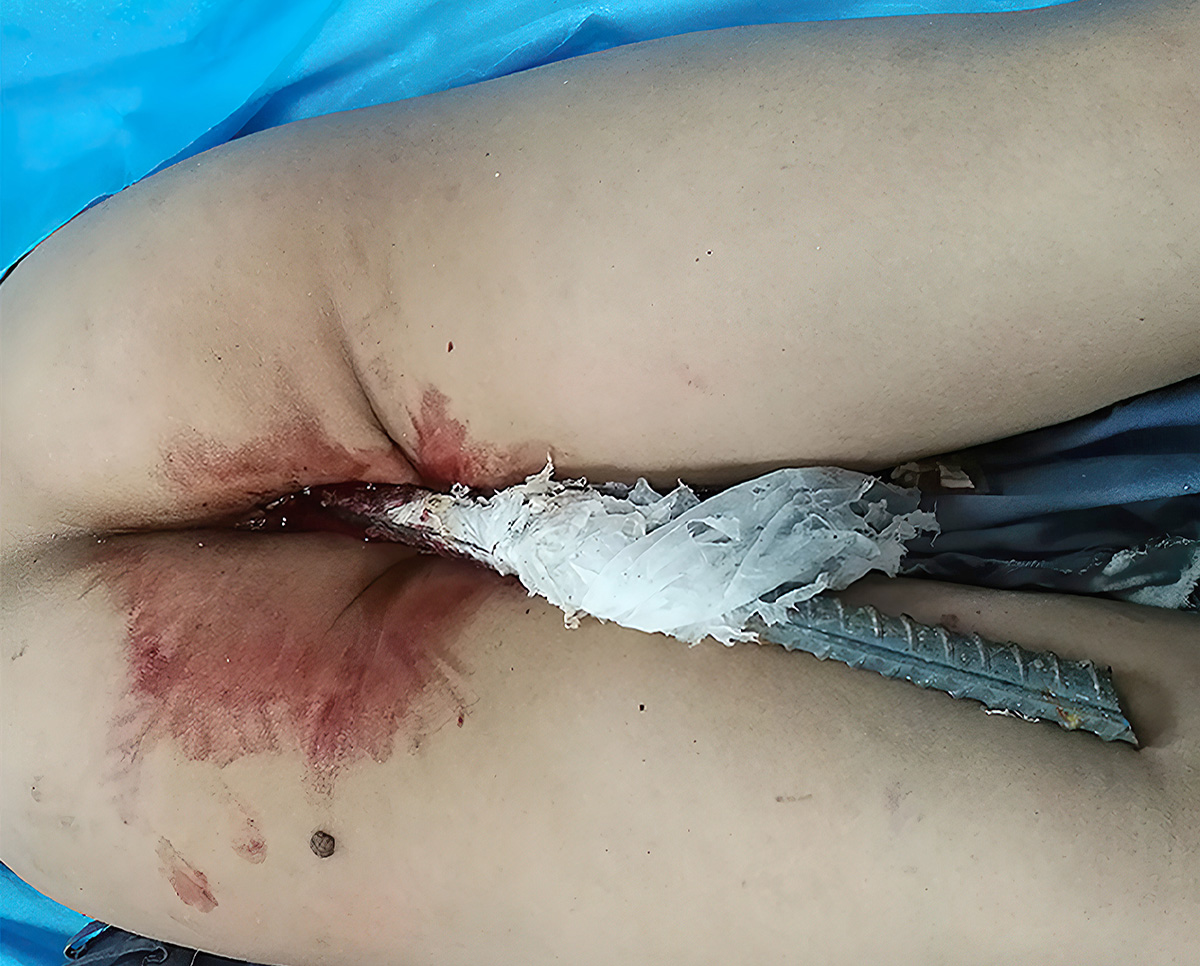 Fig.2 A rebar impaled the perianal tissue. A 33-year-old man presented to the emergency room with a perianal injury that occurred 1 hour earlier. The man fell from the third floor of a work site and was impaled on a rebar. Workmates found the man and cut the rebar at the base. The injured man was immediately transported to our hospital. The man was healthy without any medical diseases. On physical examination, the following parameters were recorded: temperature, 36.8°C; heart rate, 110/min; respiratory rate, 22/min; blood pressure, 115/75 mm Hg; and oxygen saturation, 97%. 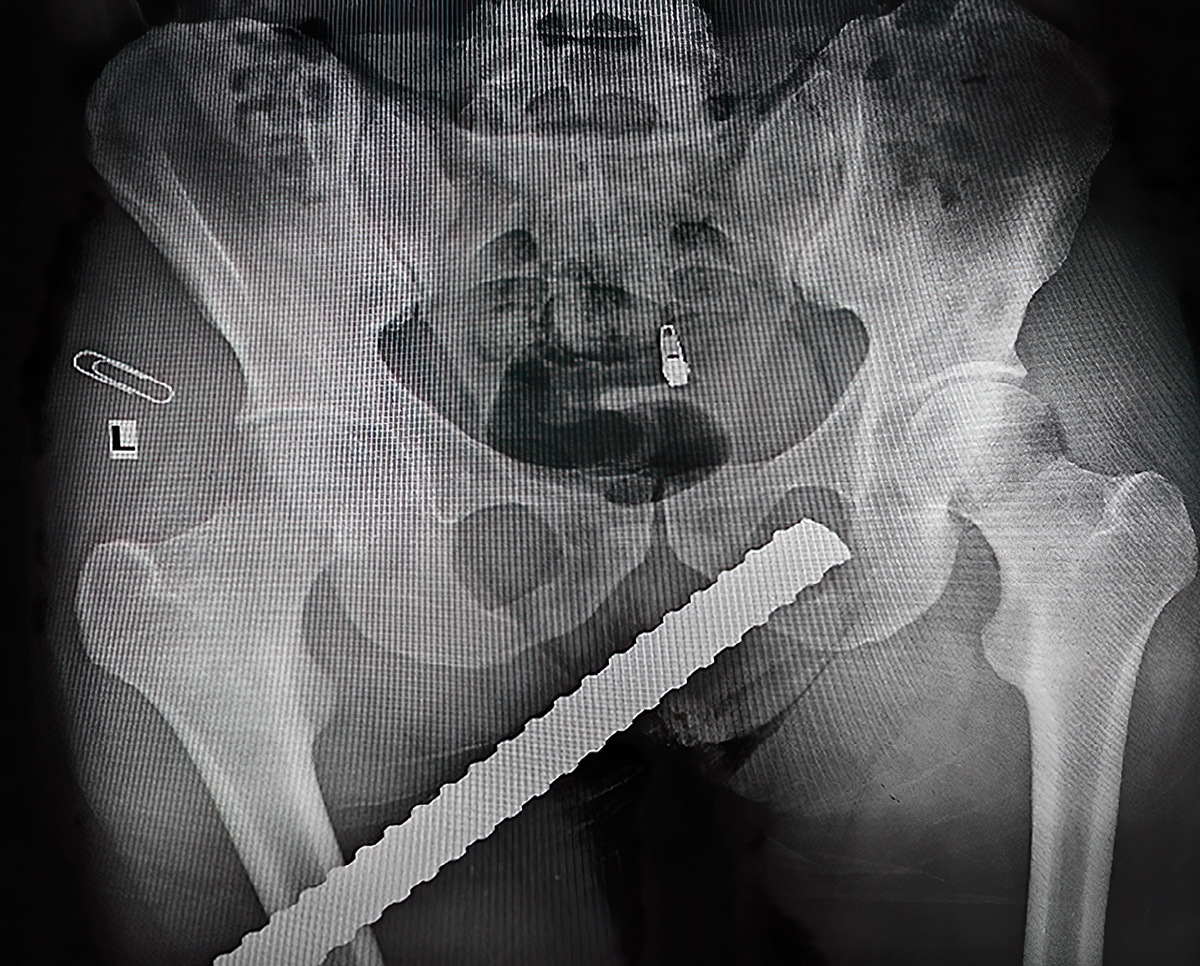 Fig.3 X-rays of the pelvis demonstrating the rebar. 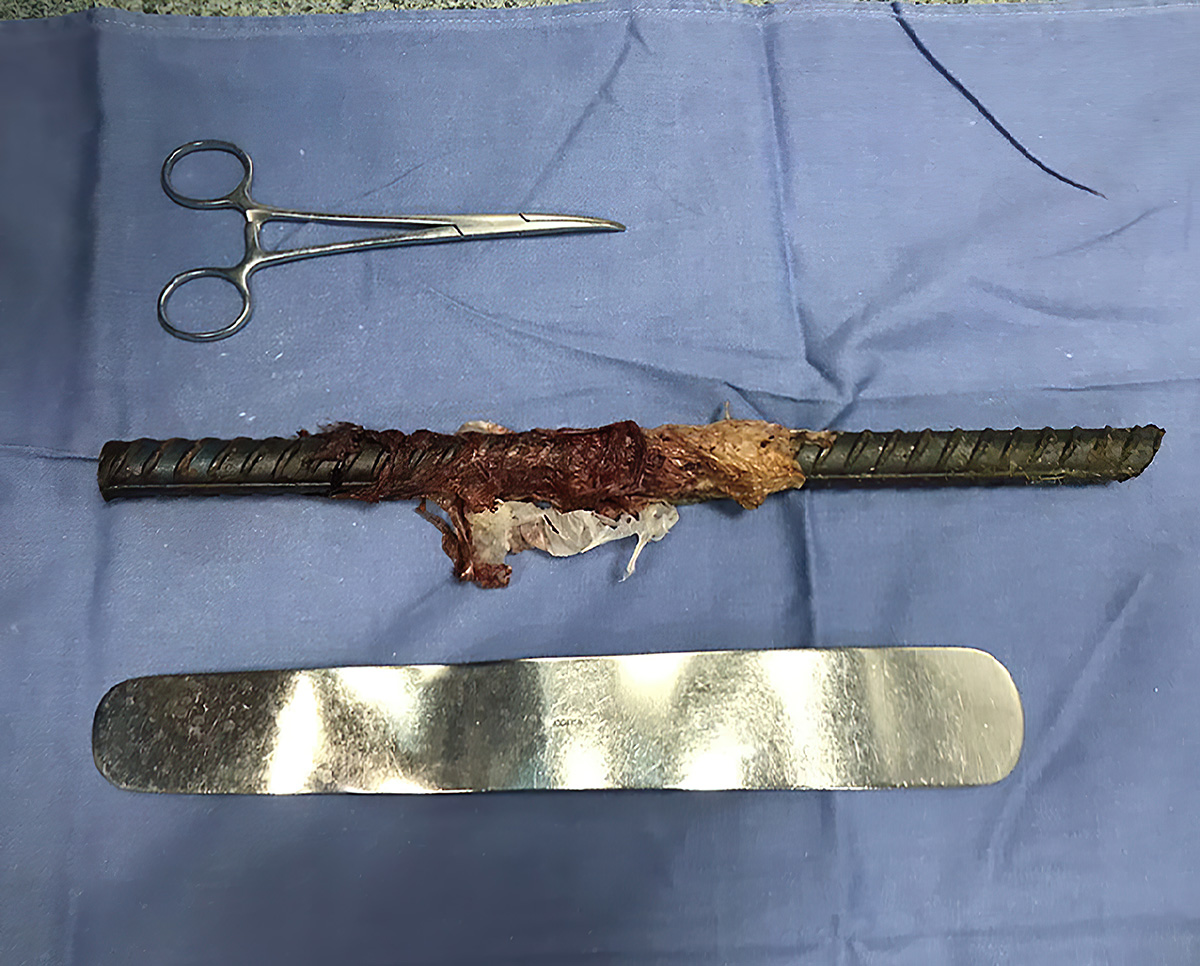 Fig.4 The length of the rebar. The rebar had pierced the perianal tissue on the right aspect of the anus towards the ramus ischiopubicusta. X-rays of the pelvis showed the depth of the rebar, and computed tomography indicated a normal peritoneal cavity. Based on the collective physical examination and imaging findings, emergency surgery was performed. The patient was carefully placed in the lithotomy position without moving the rebar. The severity of the rebar injury and exact position were unknown. The anal tissue was incised around the edge of the musculus sphincter ani externus, and the rebar was removed with extreme care. We then explored the depth of the injury along the path of the rebar. The ramus ischiopubicusta was fractured. The patient received a tetanus vaccine and antibodies and recovered shortly thereafter. Impalement injuries are common in the emergency room; however, rebar impalement injuries, as in the current case, are rare. In the current case, it was a wise decision to cut the rebar at the base. Akhil et al concluded that taking the patient directly to the operating room is better than first trimming the rebar. Other reports also suggest that minimal manipulation of the impaling object is crucial and recommend cutting the impaling object at the ends to facilitate transport of the patient. Case report Zhe Fan, Yingyi Zhang, Juan Liu, Yewei Zhang - International Wound Journal 2019. - This post is for educational purposes only and is nonprofit. Under Section 107 of the US Copyright Act of 1976; Allowance is made for "Fair Use" for purposes such as criticism, comment, news reporting, teaching, scholarship, and research. OP is not a medical expert. No copyright infringement intended. This post does not encourage or glorify violence/harassment. Images might have been upscaled and enhanced. Text might have been shortened and simplified/reorganized for online view. |
|
#2
●
07-28-2021, 04:03 PM
| ||||||||
 ★ Legacy Member ★ Poster Rank:252 So many choices now Join Date: Jul 2015 Posts: 5,548 Mentioned: 15 Post(s) Quoted: 2120 Post(s)
| ||||||||
|
Re: Perianal Injury with Rebar
Are we certain he didn't "fall on it in the shower"? "Anything can be used as a dildo if you're brave enough." -Millard Fillmore- |
|
#3
●
07-29-2021, 03:12 AM
| ||||||||
 ✝Mudderator from Hell✝ Poster Rank:10 e-mail Join Date: Oct 2006 Posts: 96,469
Contributions: 817
Mentioned: 476 Post(s) Quoted: 10328 Post(s)
| ||||||||
|
Re: Perianal Injury with Rebar
so that's how it feels having a big stick up your ass  |
|
#5
●
07-31-2021, 06:51 PM
| ||||||||
 My Rank: LANCE CORPORAL Poster Rank:1974 Join Date: Apr 2010 Posts: 256
Contributions: 2
Mentioned: 0 Post(s) Quoted: 68 Post(s)
| ||||||||
|
Re: Perianal Injury with Rebar
It's not the rebar that did the damage, it was the pesky paperclip. Nasty little fuckers.
|
|
#7
●
08-03-2021, 04:14 PM
| ||||||||
 ★ Legacy Member ★ Poster Rank:778 I'm not A bitch.... I'm THE bitch. Join Date: Jul 2012 Posts: 1,034 Mentioned: 4 Post(s) Quoted: 174 Post(s)
| ||||||||
|
Re: Perianal Injury with Rebar
The first time I heard my 14 year-old tell one of her friends this on the phone, I about laughed my ass off. I have done my job well as a parent……
|