|
#1
●
03-27-2011, 07:13 PM
| ||||||||
 My Rank: GUNNERY SERGEANT Poster Rank:687 female Join Date: Dec 2010 Posts: 1,252 Mentioned: 0 Post(s) Quoted: 18 Post(s)
| ||||||||
|
Patau Syndrome - Trisomy 13 - CYCLOPIA
Patau syndrome, also known as Trisomy 13, was first described in 1960 by Dr. Patau. It is a chromosomal abnormality that results from an extra 13th chromosome and results in “severe intellectual disability and physical abnormalities” and is associated with numerous malformations of the central nervous system, the cardiac and circulatory system, and the urogenital system, in addition to a limited survival rate. The term "trisomy" refers to a genetic condition in which there is an extra 3rd copy of a particular chromosome, rather than the normal 2 copies. Trisomy 13 is the 3rd most common autosomal with Down syndrome being #1 Forms of the Syndrome: Patau syndrome can express itself as complete trisomy, as mentioned above, mosaic, or partial forms. The complete form occurs when all cells of the body have an extra copy (three rather than two) of the 13th chromosome. Partial trisomy 13, a rare condition, occurs when a portion of chromosome 13 arises in triplicate in all cells. This form may result in a variety of phenotypes. Partial trisomy is characterized by an ill-defined pattern including features such as a short upper lip, large nose, severe mental deficiency, and receding mandible. In this case survival is not as affected as the full expression. In those affected with trisomy 13 mosaicism, a portion of cells are trisomic for an entire chromosome 13, while the remainder of cells are normal. According to Smith’s Recognizable Patterns of Human Malformation by Dr. Kenneth Lyons Jones, trisomy 13 mosaicism most often displays a less severe phenotype with a range of variations, including the full pattern of malformation as seen in complete trisomy 13 to a nearly normal phenotype (an individual’s observable traits such as eye or hair color, height, etc.). Characteristics: There are many physical effects that the extra chromosome causes. According to Adams, Clark, Furdon, & Rios, the most striking salient features of these patients are the intrauterine growth restriction, along with facial, heart, and limb anomalies. Other researchers have identified ear anomalies, cleft lip and palate, and various congenital heart defects as the most common abnormalities. Here are some of the most common reported in the literature: Hearing: apparent deafness due to defects of the organ of Corti. Cranium: Microcephaly (small head) holoprosencephaly- the most common cranial anomaly diagnosed (single forebrain development- did not separate into two sides) wide sagittal suture, micrognathia (undersized jaw) small and/or sloping forehead, high forehead, depressed nasal bridge, hypoplastic (underdevelopment of cells/tissue/organ) nose, facial asymmetry, low posterior hairline. hmm can't believe those guys didn't mention the fucking CYCLOPIA risomy 13 Symptoms Cleft lip or palate Clenched hands (with outer fingers on top of the inner fingers) Close-set eyes -- eyes may actually fuse together into one Decreased muscle tone Extra fingers or toes (polydactyly) THE EXTRA DIGIT SEEMS TO ALWAYS BE BENT BACK DEFORMED AS WELL Hernias: umbilical hernia, inguinal hernia Hole, split, or cleft in the iris (coloboma) Low-set ears Mental retardation, severe Scalp defects (missing skin) Seizures Single palmar crease Skeletal (limb) abnormalities Small eyes Small head (microcephaly) Small lower jaw (micrognathia) Undescended testicle (cryptorchidism) WELL I TRIED TO POST THEM with the worst forms together and then the milder cases, but it didn't work. But look at the last 4, that little girl has Tris13, and I was touched by how sweet her big brother is with her and how happy she looks.  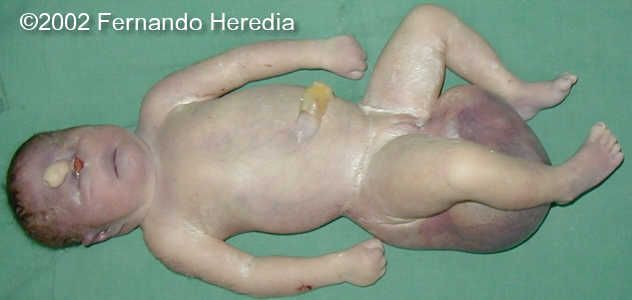 ·  · 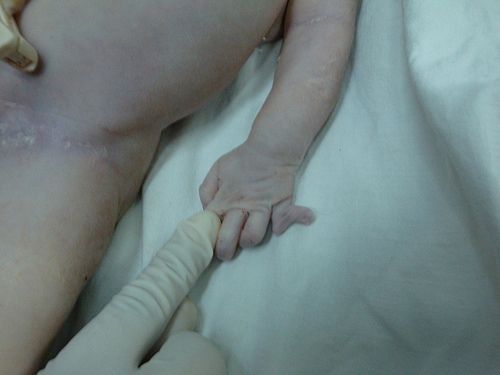 · 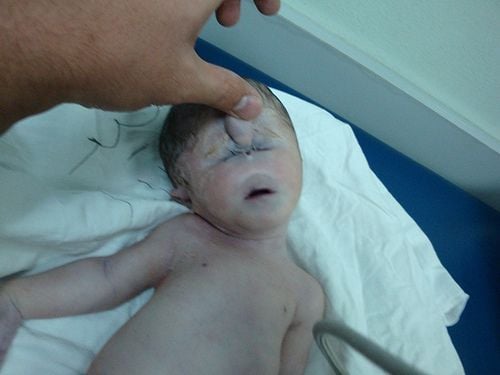 ·  ·  · 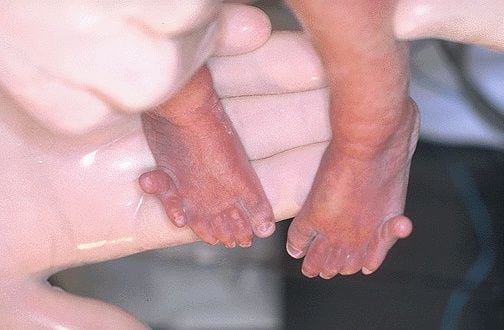 · 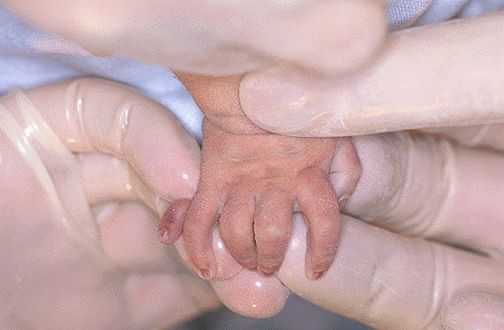 ·  · 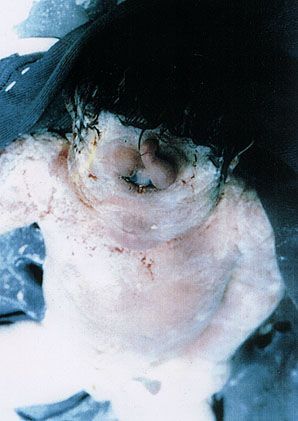 ·  · 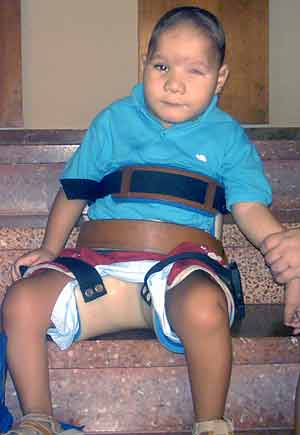 · 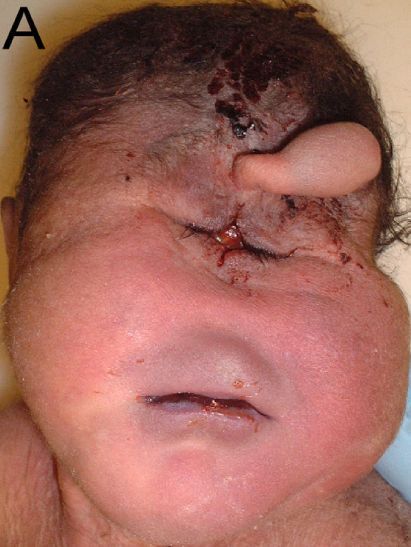 · 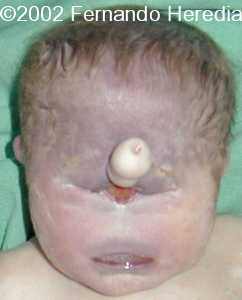 · 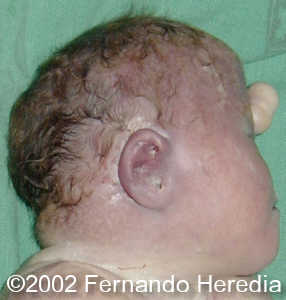 · 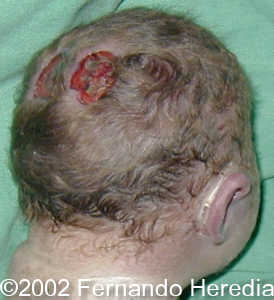 ·  · 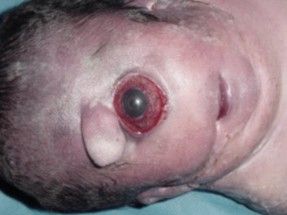 · 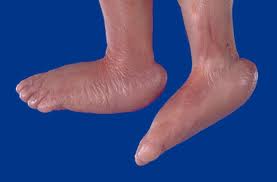 ·  ·  · |
|
#3
●
03-27-2011, 10:38 PM
| ||||||||
 My Rank: PRIVATE Poster Rank:5643 Fem Kat Join Date: Jan 2010 Posts: 43 Mentioned: 0 Post(s) Quoted: 0 Post(s)
| ||||||||
|
Re: Patau Syndrome - Trisomy 13 - CYCLOPIA
the 7th one down looks like a soggy thumb o.O
|
|
#4
●
03-28-2011, 12:36 AM
| ||||||||
 My Rank: LANCE CORPORAL Poster Rank:1971 Female Join Date: Apr 2010 Posts: 254 Mentioned: 0 Post(s) Quoted: 15 Post(s)
| ||||||||
|
Re: Patau Syndrome - Trisomy 13 - CYCLOPIA
or Planktin from Spongebob lol
|