|
#1
●
05-14-2024, 05:22 PM
| ||||||||
 These are the rooms Poster Rank:24 of ruin. Join Date: Sep 2014 Posts: 54,011 Mentioned: 145 Post(s) Quoted: 30403 Post(s)
| ||||||||
|
Orbital Abscess
A 35-year-old woman presented to the maxillofacial surgery department in Poznań due to massive eyelid swelling and severe pain in the left eye. Three days before the patient was admitted to the department, she was injured with a blunt instrument. The physical examination shows massive swelling of the eyelids of the left eye—closing the eyelid gap, exophthalmos of the left eyeball, severe pain on palpation, redness and warming of the surrounding soft tissues, eruptions on the skin of the upper and lower eyelids, body temperature 37.9 °C (Fig. 1). No other irregularities were found. >>Computed tomography of the orbital without contrast and an X-ray of the lungs, laboratory tests, electrocardiogram were ordered. Additional a smear was taken for bacteriological examination. The computed tomography image shows phlegmon of the left cheek and orbital (Fig. 2). In the ophthalmological examination, the right eye remained unchanged. In the left eye, there was an abscess of the eyelids and orbit, swelling of the eyeball and eyelid conjunctiva; transparent cornea; iris unchanged; the pupil is even, round and reacts correctly to light. The image of the fundus of the right eye was normal, the left eye was not available for examination. The patient was administered amoxicillin and clavulanic acid 1.2 g intravenous (IV) three times a day, Metronidazole 500 mg three times daily IV, ketoprofen 0.1 g twice daily, enoxaparin 0.4 ml once daily subcutaneous. Additionally, drops containing dexamethasone and tobramycin every two hours were used for the left eye. Under general endotracheal anaesthesia, an incision and drainage of the left orbital phlegmon were performed from the supraorbital and suborbital incisions, resulting in abundant purulent exudate (Fig. 3). The abscess cavity was rinsed with saline. A flow drain was introduced. In the postoperative period, the level of CRP and WBC was monitored—a decrease in CRP and WBC was observed. >>On the third day after surgery, a control ophthalmological examination confirmed correct vision in the left eye (Fig. 4). The microbiological examination revealed the alarm pathogen Streptococcus pyogenes susceptible to empirical therapy, Staphylococcus aureus, Staphylococcus epidermidis. The patient was discharged from the clinic on day 9 in good general condition. There were no visual disturbances in the left eye. The only permanent consequence was scarring of the facial skin after surgical access (Fig. 5). 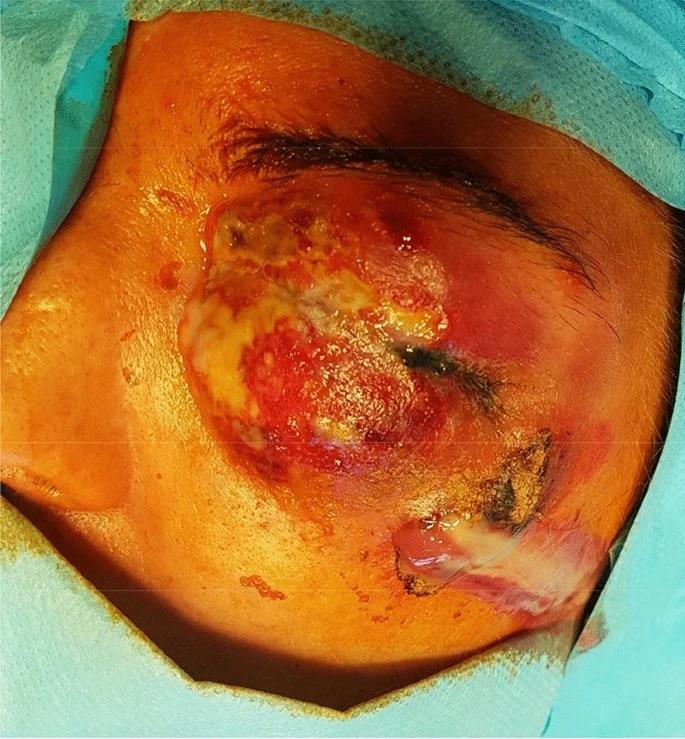 · 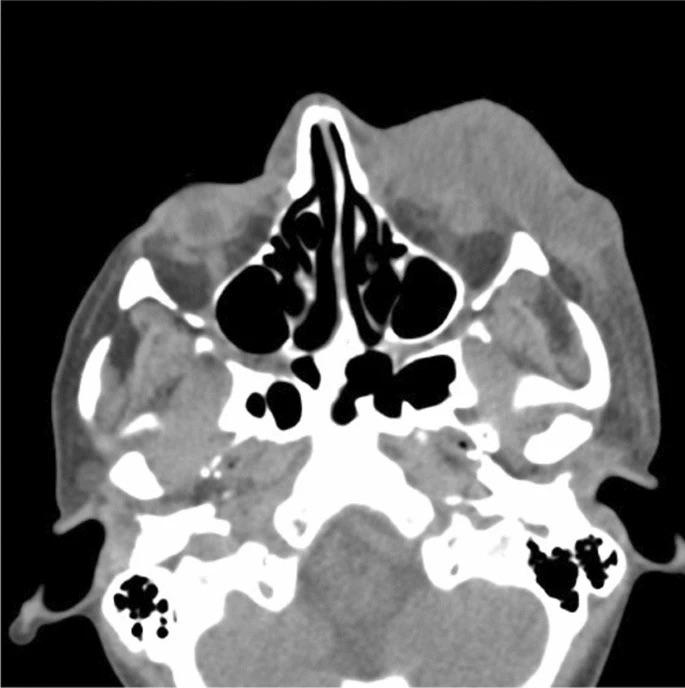 · 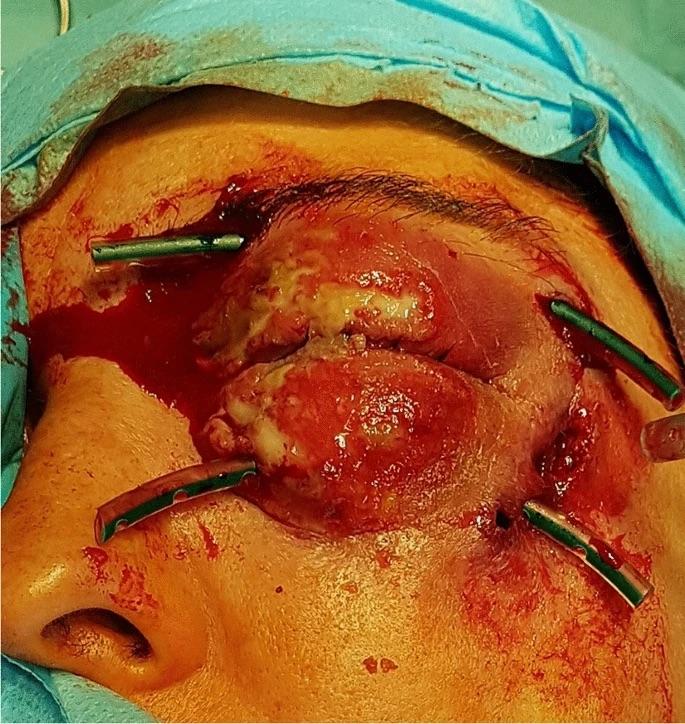 · 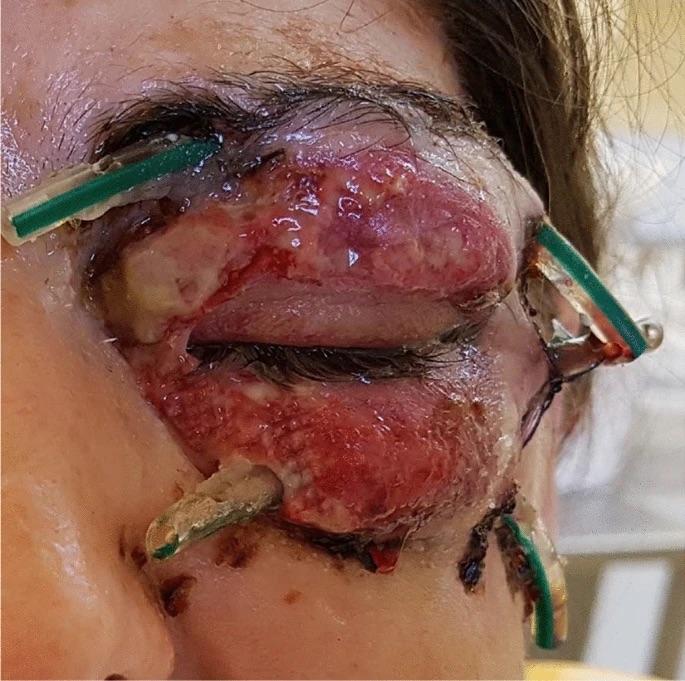 · 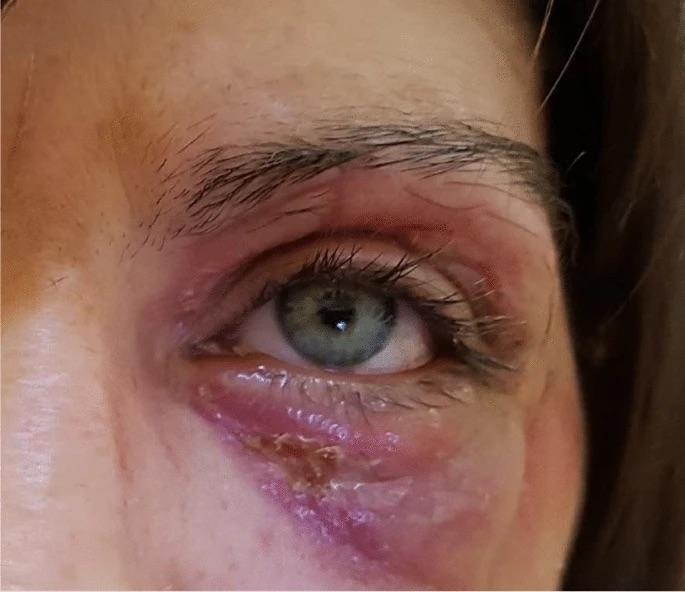 · |
|
#2
●
05-14-2024, 05:36 PM
| ||||||||
 ★ Legacy Member ★ Poster Rank:248 So many choices now Join Date: Jul 2015 Posts: 5,548 Mentioned: 15 Post(s) Quoted: 2120 Post(s)
| ||||||||
|
Re: Orbital Abscess
Either that or she was part chameleon (photo 4).
|