|
One Small Step For A Rat - Treatment May Help Paralysed Humans Walk Again
Groundbreaking treatment that enabled paralysed animals to walk again will be tested on humans within months.
- Using a cocktail of drugs and electrical impulses, researchers can ‘regrow’ nerves linking the spinal cord to the brain
- After two weeks, the animals were able to walk, climb stairs and run
- Team say they are preparing five patients for human trials of the technology
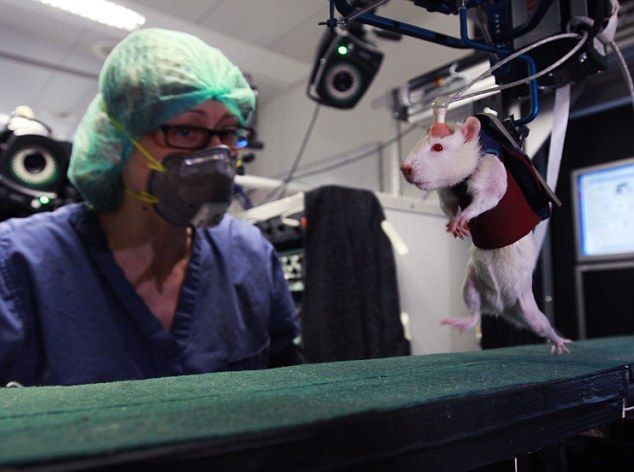
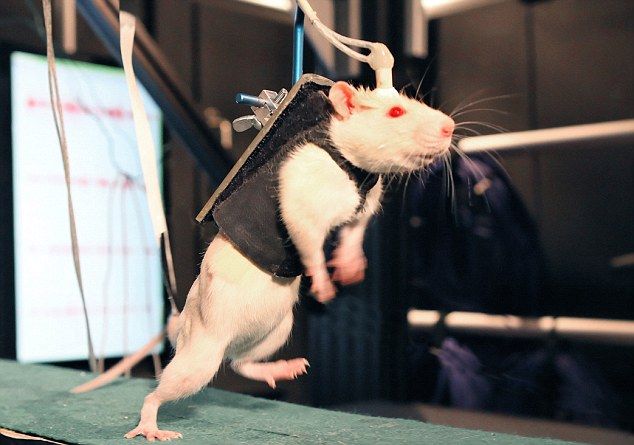
Scientists behind groundbreaking research that enabled enabled rats with severed spines to run again after two weeks have outlined their plans for human trials.
The technology brings fresh hope to sufferers of spinal cord injuries, and the team say they hope the first humans could be implanted with the technology within months.
Using a cocktail of drugs and electrical impulses, researchers hope to begin testing the project to ‘regrow’ nerves linking the spinal cord to the brain in five patients in a Swiss clinic.
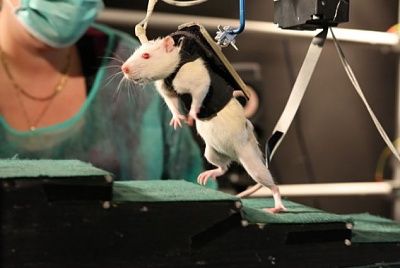
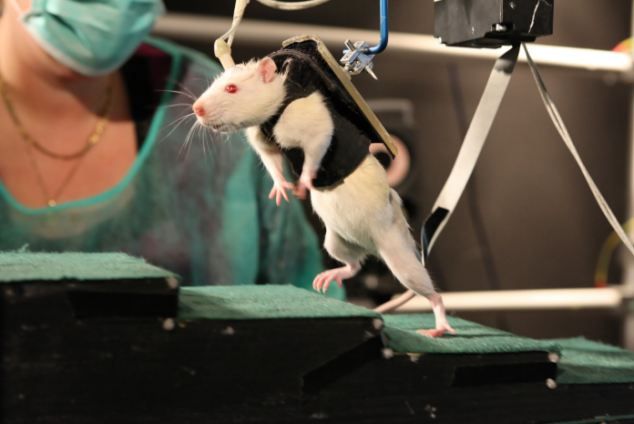
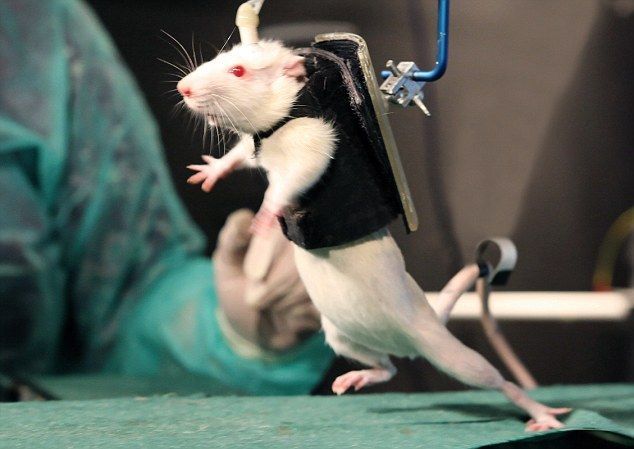
Using a cocktail of drugs and electrical impulses, researchers regrew nerves linking the spinal cord to the brain, allowing rats to walk, run and even climb stairs. The team now say human trials will begin within two years
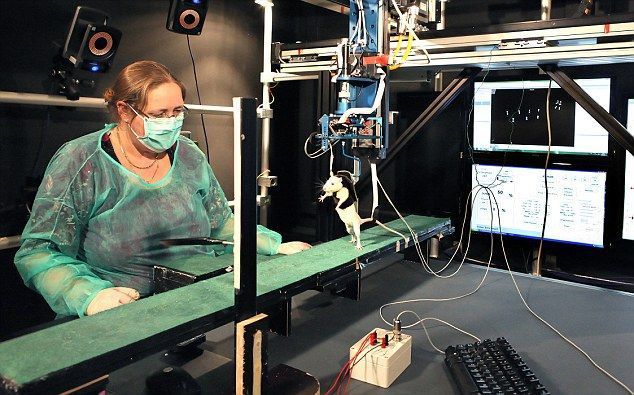
Last June in the journal Science, Grégoire Courtine, of the École Polytechnique Fédérale de Lausanne (EPFL), reported that rats in his lab are not only voluntarily initiating a walking gait, but they were sprinting, climbing up stairs, and avoiding obstacles after a couple of weeks of neurorehabilitation with a combination of a robotic harness and electrical and chemical stimulation.
At the 2013 Annual Meeting of the American Association for the Advancement of Science (AAAS) in Boston, Courtine revealed the next step for the research.
He has since repeated the study in rats with bruised spines, which more closely resembles human trauma patients, and after a few weeks they could walk with no assistance.
He now believes that the technique could help people who have been immobile for up to two years.
Although full human trials are still a few years off, he plans to attempt electrical stimulation on five patients who have limited leg movement in the coming months.

Professor Gregoire Courtine says the first trials in humans will begin within months
‘We know that spinal cord stimulation is safe, we know that training is good, so we want to start the first trial in people who can move their legs but cannot walk independently.
'So we will implant five patients, we have a new technology which allows us to stimulate the spinal cord of humans just like we do in the rats.’
Once they have refined the technique, they hope to fully rehabilitate patients with moderately damaged spines, while others would regain some movement.
‘We already have preliminary data from the rats with these clinically relevant lesions is that a number of them would recover at the end of the training and could walk without any help. It depends on the severity of the damage,’ he said.
‘But if you talk to the patient and you tell them at least you could use it at home to cook, to watch TV and have normal activity, they say their life would be so different.
'So it is less ambitious, but we are talking about improving the quality of life, allowing people to stand and take a few steps at home with a walker.’
There are around 50,000 people with spinal cord injuries in Britain.

The first phase of clinical studies will be conducted at the Lausanne University Hospital (CHUV), which has developed extensive expertise in the electrical-chemical stimulation of the human spinal cord.
The second phase will take place at the newly planned EPFL Valais Wallis academic cluster in Valais, Switzerland, to be inaugurated in 2015.
This health and biotechnology center in Valais will focus on new treatments and rehabilitation for people with physical disabilities.
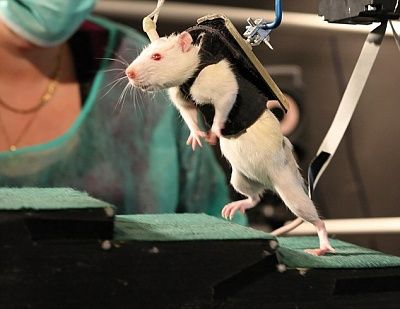
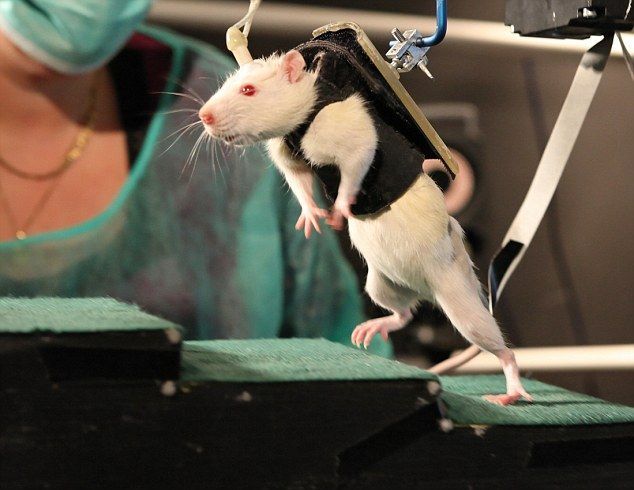
Climbing the steps: Researchers at EPFL have successfully used electrochemical stimulation to restore voluntary movement following a paralysing spinal cord injury
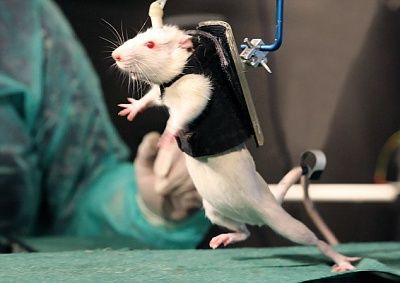
After only a few weeks of stimulation, nerve connections begin to grow again - and this could be of huge significance for the 50,000 sufferers
In the original tests at the University of Zurich, rats had their spine tissue cut but not completely severed.
They were unable to walk as they could no
longer receive signals from the brain.
But when they were suspended in a vest on their hind legs, and the bottom of their spine stimulated using drugs and electrical impulses, the dormant nerves were reactivated.
Signals from the brain were able to ‘bypass’ the injury and restore contact with the lower body.
Professor Courtine said: ‘This is the World Cup of neuro-rehabilitation.
'Our rats have become athletes when just weeks before they were completely paralysed.
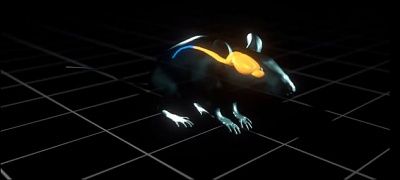
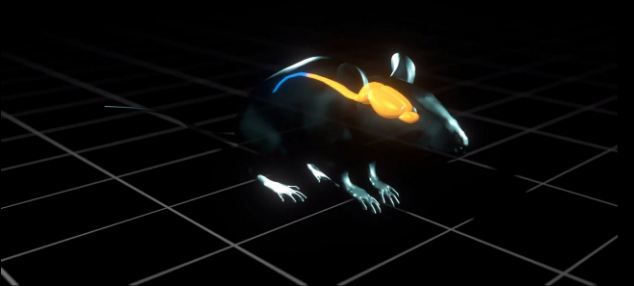
The rat was able to regain the use of its damaged spinal cord (shown in blue) using a combination of drugs and implants
'I am talking about 100 per cent recuperation of voluntary movement.
‘The brain established new connections.
‘The cut fibres regrew and established relay connections in the spinal cord which enabled them to pass information from the brain, past the injury in order to restore a voluntary control over the circuitry below the injury.’
The rats could only walk with the chemical and electrical stimulation and scientists would have to devise a safe way of administering these to humans – for example through a catheter – on a long-term basis.
Experts in the field praised the work, published in the journal Science last June, as a major medical advance which could offer the best hope yet to paralysed patients.
However they urged caution, pointing out that rats’ nervous systems are not the same as those of humans, and that most spinal injuries involve extensive bruising rather than a neat cut.
Professor Gregoire Courtine had previously said the study revealed the body could recover from some injuries previously thought to cause permanent paralysis.

Mighty mouse: Researchers at EPFL used electrochemical stimulation to grow nerve connections

Now that the principle has been demonstrated on rats, it may one day offer humans with spinal cord injuries hope for functional improvement of their condition

After only a few weeks of stimulation, nerve connections begin to grow again - and this could lead to revolutionary medical treatments on humans
Dr Elizabeth Bradbury, of King’s College London, said at the time: ‘This is ground-breaking research and offers great hope for the future of restoring function to spinal-injured patients, however some questions remain before we know how useful this approach may be in humans.’
Dr Mark Bacon, of the organisation Spinal Research, said: ‘It gives enormous hope.
‘In the past it was seen as folly to think we might be able to restore function and I think that’s no longer the case, but it’s about translating these robust effects in animal models to the clinic safely.’
Recent years have seen intense efforts focused on stem cell therapies to help paralysed patients, but these have not yielded any treatments so far.
Last year US researchers helped a 23-year-old paralysed man regain some movement after electrical stimulation, but Dr Bacon said the cocktail of drugs the Swiss team used had offered an additional boost.
Dan Burden of the Spinal Injuries Association said: ‘It’s an exciting development but we would issue a word of caution that the neurology [of rats] is considerably different from our own.
‘We are a long way off anything that would resemble a cure in humans, but this is a first step which might well lead to new treatments which could make the future of people with spinal cord injuries seem brighter.’ Read more: http://www.dailymail.co.uk/sciencete...#ixzz2RVwfo0HN ... |