|
#1
●
01-14-2023, 03:32 AM
| ||||||||
 These are the rooms Poster Rank:26 of ruin. Join Date: Sep 2014 Posts: 54,011 Mentioned: 145 Post(s) Quoted: 30403 Post(s)
| ||||||||
|
Keloid Scarring
The source is a report about two patients; this is Patient 1: In our practice, we have witnessed two extreme cases of worsening and recurrence of keloid scars during pregnancy. The first case is a lady of Caucasian origin who has been under our care over the last 12 years. She had an injection to her left shoulder at the age of nine. A few years later as she was going through puberty the scar went through a growth spurt and transformed into a thick keloid scar. This was managed initially, in another centre before the patient was referred to us, by excision, split skin grafting and radiotherapy. The scar initially responded to treatment and remained settled. Then many years later at the age of 21, the patient became pregnant and the keloid scar went through another growth spurt, but a rather significant one, and reached a considerable size, almost a size of a tennis ball (Figure 1). Apart from the pregnancy, we could not identify any other risk factor to explain this significant growth spurt. We could not ignore the question of whether we can attribute this to the hormonal changes that could have possibly stimulated the scar growth. The patient had also developed some keloid scarring on her anterior chest wall as a result of minor trauma. These scars also grew during the pregnancy, however to a lesser extent compared to her left shoulder scar. These scars were quite flat before the pregnancy and then continued to grow throughout the pregnancy and became raised as shown in Figure 2 below. [patient 2] For the two patients above, active keloid scar management in the form surgical excision and steroid injections were deferred until after delivery. The efficacy of any intervention during the pregnancy was questionable with the presumed ongoing effects. Furthermore, there was a big safety question about repeated steroid injections during pregnancy for such large lesions that would require high doses of intralesional steroid injections. All conservative non-interventional measures like pressure garments and scar massaging were continued during pregnancy. The keloid scars for both patients continued to become symptomatic throughout pregnancy with continuous growth in size. After delivery, patient 1's extensive keloids were managed with multiple excisions, split skin grafting and multiple ongoing steroid injections. The keloid scarring on her left shoulder has healed and settled well following the excision and grafting (Figure 5). The donor site has also healed well (Figure 6) with very minor hypertrophic scarring at one edge. This has significantly settled with steroid injections. She has also been receiving multiple steroid injections to manage the keloids on her anterior chest wall. Over the years the graft remained settled on her right shoulder with no recurrence (Figure 7). 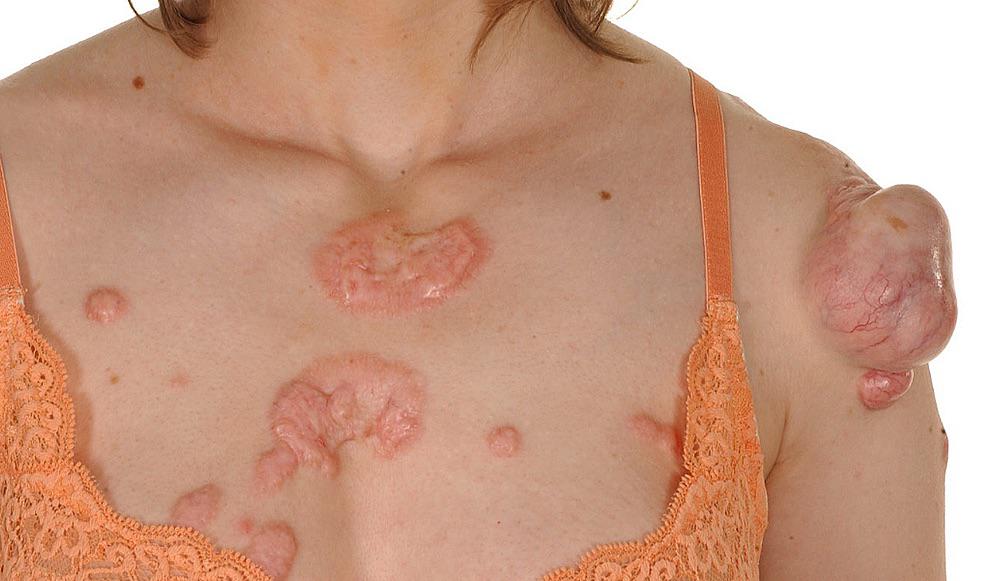 · 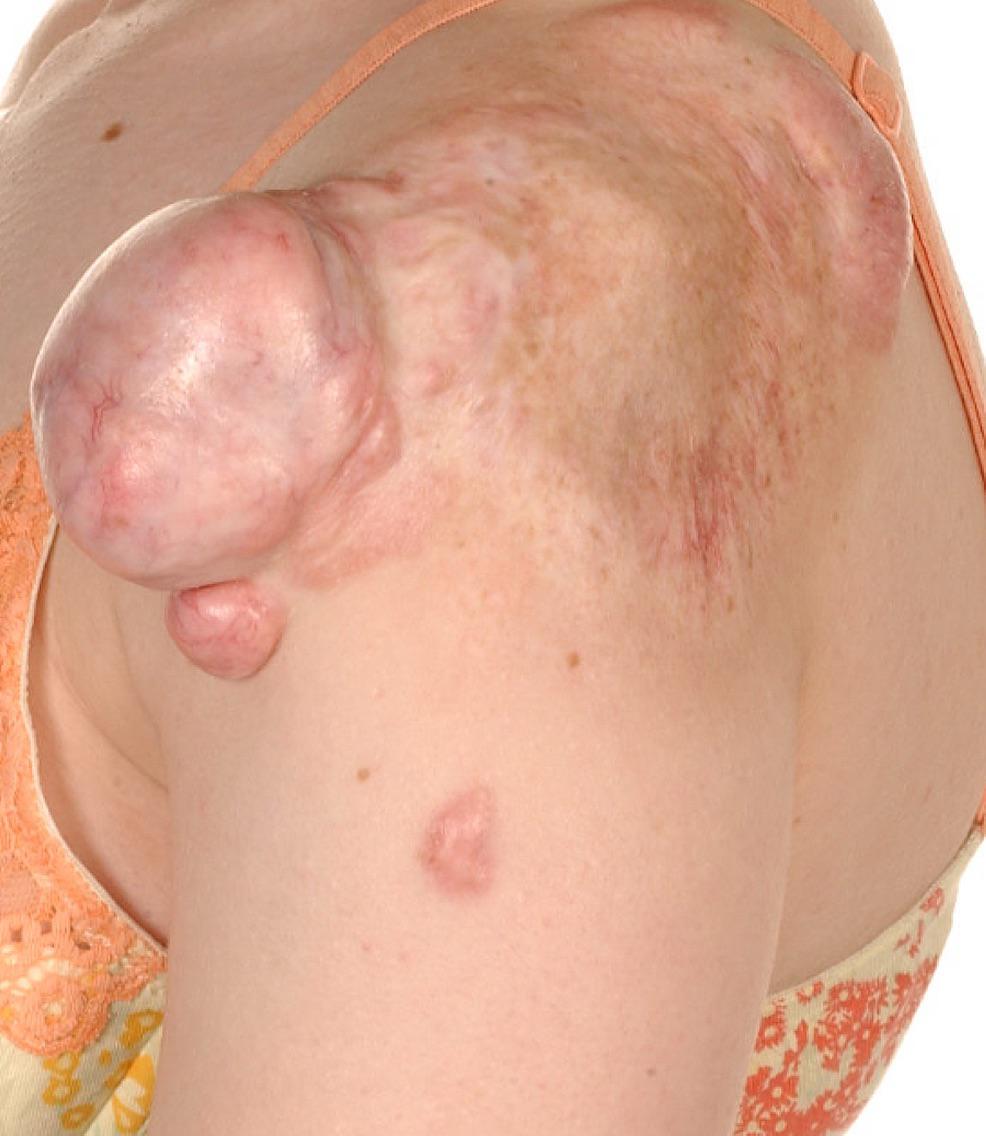 · 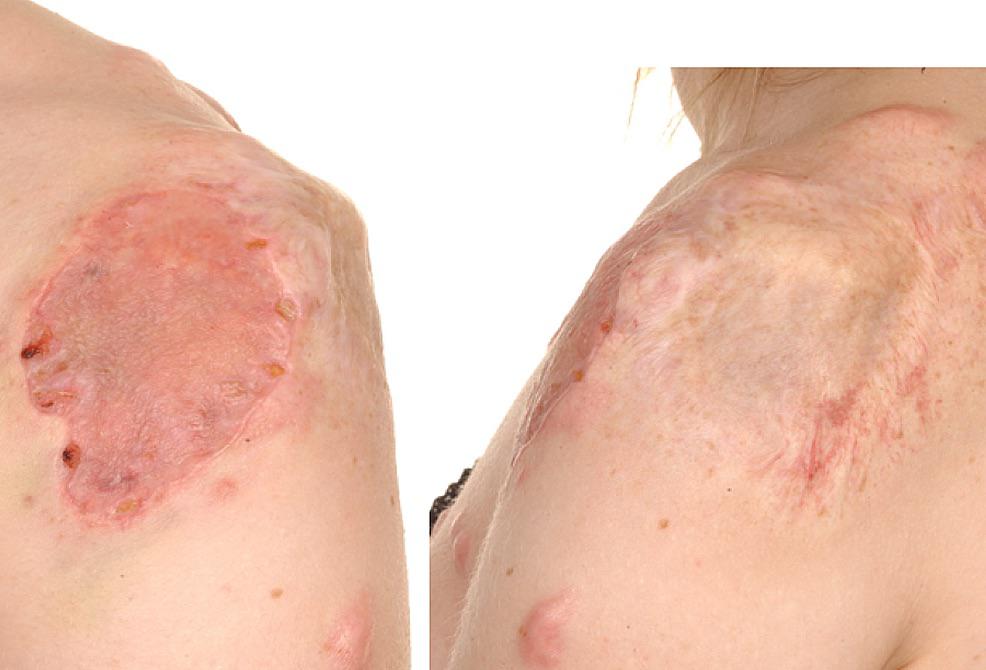 · 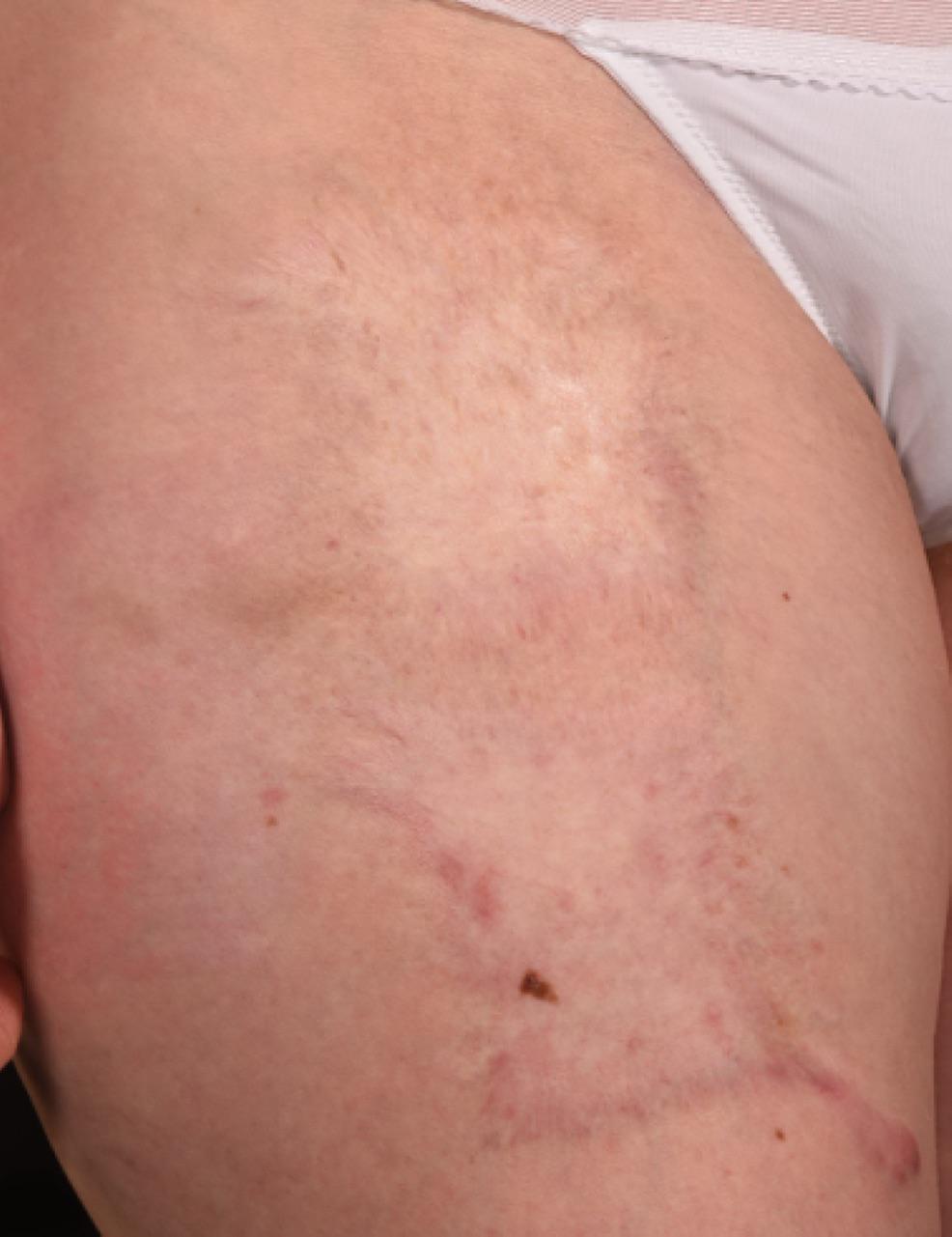 · 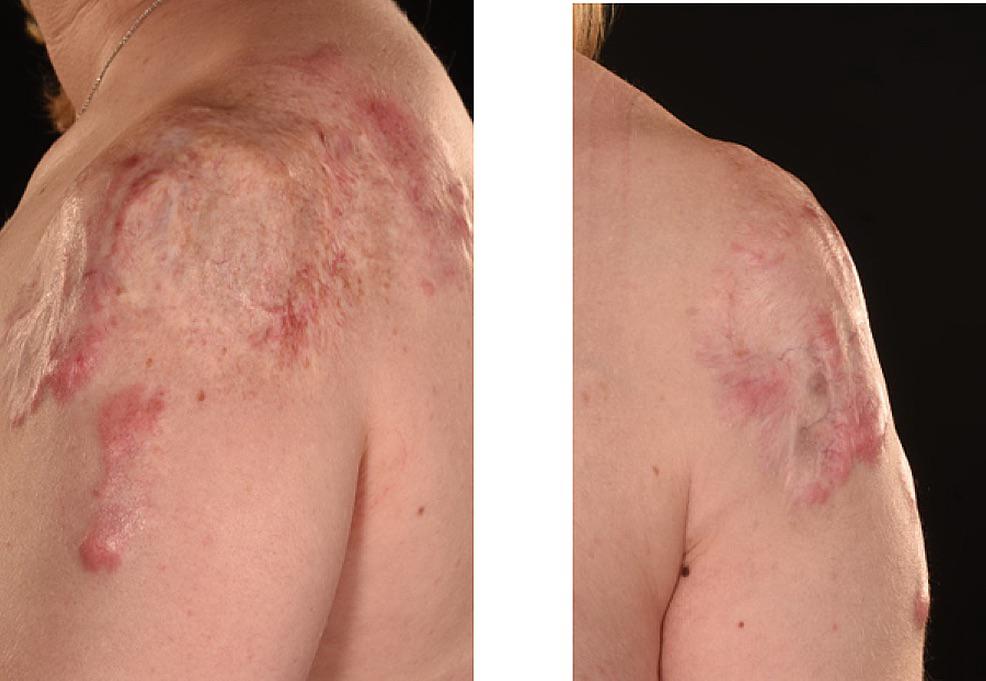 · |
|
#2
●
01-14-2023, 08:46 AM
| ||||||||
 ✝Mudderator from Hell✝ Poster Rank:10 e-mail Join Date: Oct 2006 Posts: 96,641
Contributions: 817
Mentioned: 476 Post(s) Quoted: 10343 Post(s)
| ||||||||
|
Re: Keloid Scarring
that is commonly known since 2017. https://www.ncbi.nlm.nih.gov/pmc/articles/PMC5372622/ horrible scars. |
|
#4
●
01-14-2023, 07:35 PM
| ||||||||
 ♚ Legacy Gold Member ♚ Poster Rank:650 Woman Join Date: Apr 2011 Posts: 1,354 Mentioned: 3 Post(s) Quoted: 142 Post(s)
| ||||||||
|
Re: Keloid Scarring
Sex hormones fuck up more than just this!! I would just die if I had to go through this!! How sad! One day they will be able to remove these little fuckers and make it look like nothing was ever there!! 
__________________ You can not imagine the immensity of the Fuck I do not give. |
|
#7
●
01-14-2023, 11:26 PM
| ||||||||
 ★ Legacy Member ★ Poster Rank:252 So many choices now Join Date: Jul 2015 Posts: 5,548 Mentioned: 15 Post(s) Quoted: 2120 Post(s)
| ||||||||
|
Re: Keloid Scarring
I was wondering if maybe you'd run out of real nasty stuff. Bring it on. Please. The gnarlier the better.
|