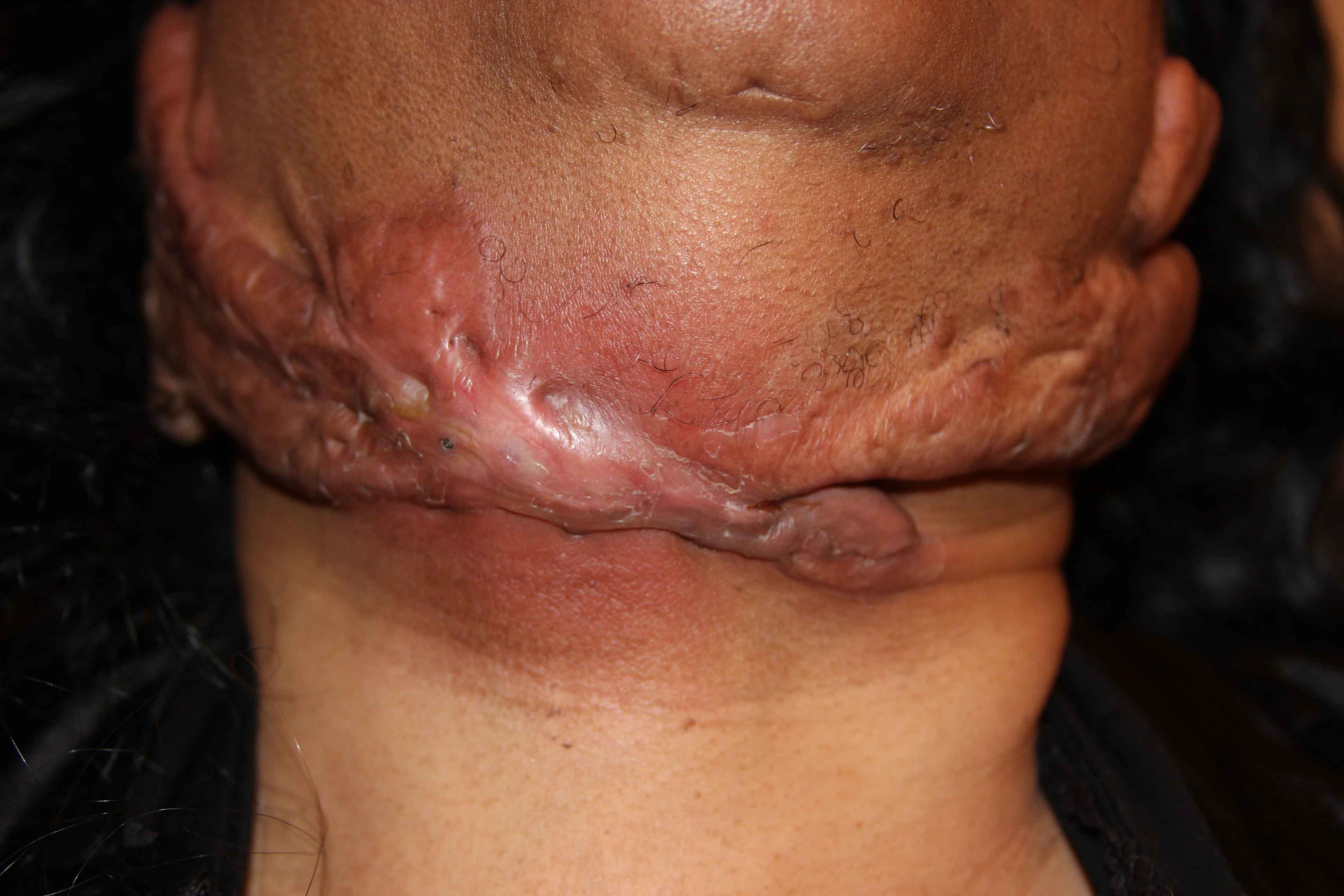
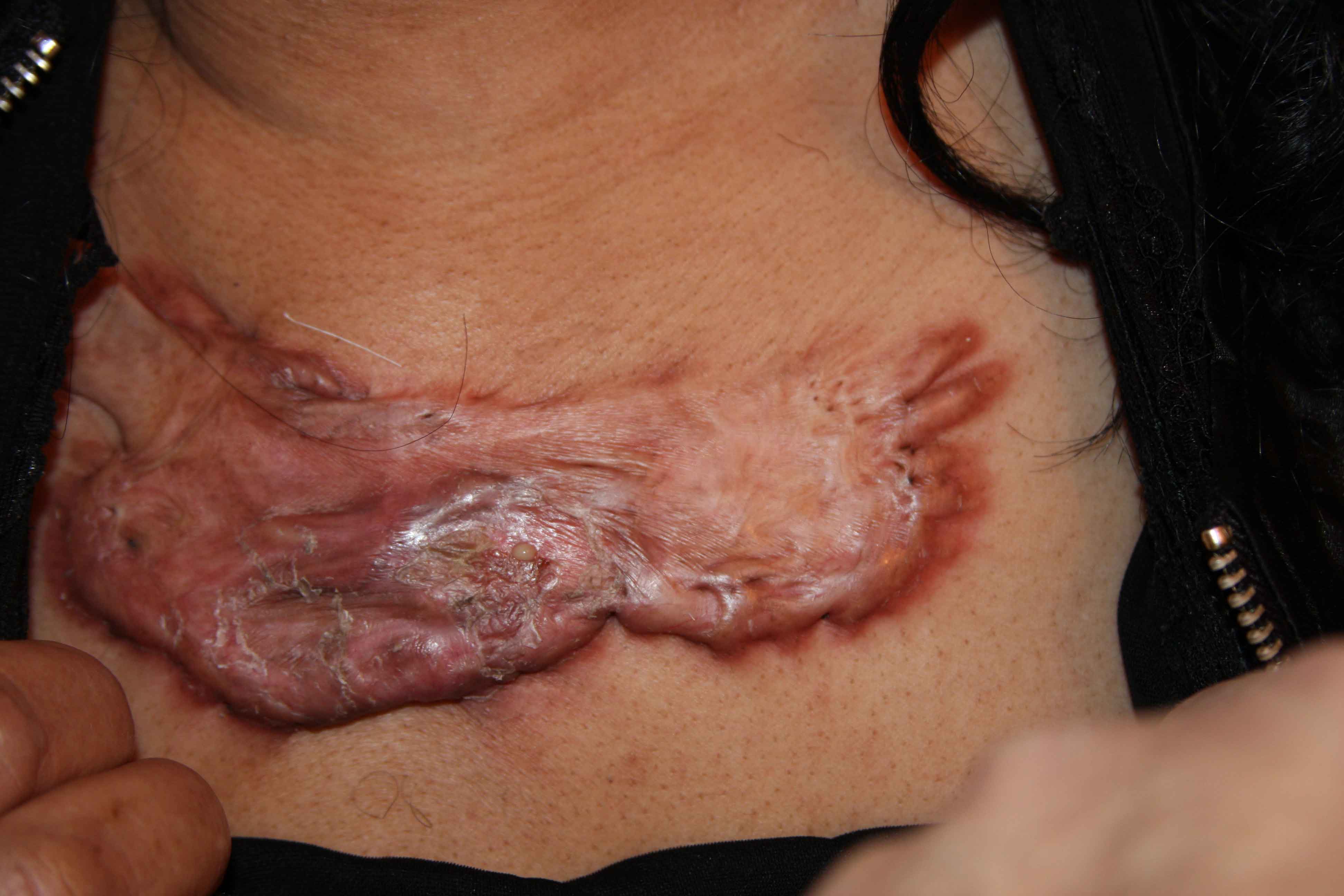
As Keloids grow in size, they can develop secondary complications such as bleeding and infections. A sudden onset appearance of pain in a Keloid is most often due to an infection in the Keloid tissue. An infected Keloid will need to be attended to urgently. Such infections cause pain, discomfort as well as risk of causing a systemic and rarely blood stream infections.
An infected Keloid is tender, painful and warmer than the surrounding normal skin. A course of oral antibiotics can usually resolve simple superficial infections. Infection in larger keloids can often lead to deep abscess formation which requires more intense treatments, at times in a hospital setting and with intravenous antibiotics. Deep abscesses need to be properly studied with CT Scan imaging and treated with drainage and intravenous antibiotics.
Once a Keloid becomes infected, it always runs the risk of re-infection. Quite often, in patients who have multiple Keloids, it is a particular Keloid that gets infected at all times. The images below depict examples of infected keloid that often have purulent drainage.