|
#1
●
03-02-2011, 07:42 AM
| ||||||||
 ✖ The Antique Christ ✖ Poster Rank:105 Gonzo Punk Join Date: Jan 2009 Posts: 15,488
Contributions: 58
Mentioned: 23 Post(s) Quoted: 2046 Post(s)
| ||||||||
|
Isolated Spinal Cord Injury Following Suicidal Stab Wound
Isolated Spinal Cord Injury Following Suicidal Stab Wound In The Anterior Neck: An Unusual Case A 33-year old male (from Inida) was admitted to our emergency center with a history of suicidal stab injury with a blunt kitchen knife on the right side of lower anterior neck one hour ago. The patient was fully conscious and narrated the history himself. He was a known schizophrenic on treatment and he attempted suicide following some altercation with the family members. Being left handed, he stabbed the right side of front of his neck. The knife got embedded in the neck and then he hit upon the butt end of the knife with his fist 5-6 times until he got the feeling of the knife entering some bone. Following this, he fell upon the ground and could not stand up. There was no complaint of dyspnoea, dysphagia, hoarseness of voice or massive bleed. The patient complained of weakness in both lower limbs. On examination, he was fully conscious with normal pulse, blood pressure and respiration. The knife was embedded on the right side of trachea in the lower neck (Fig. 1). The trachea could not be moved separate from the knife. There was mild surgical emphysema in the neck with no significant bleed. On neurological examination, motor power in both the upper limbs was normal and in the lower limbs, it was 2/5 on right side and 1/5 on left side. There was significant sensory loss below T1 level. Anal tone was normal. X-ray chest showed radio-opaque shadow in the neck with normal lung fields (Fig. 2). Urgent CT scan revealed normal great vessels and trachea deviated to the left side. The knife was reaching up to the spinal column through body of C7 vertebra injuring the adjoining spinal cord (Fig.3). After resuscitation, the neck exploration through transverse cervical incision was done. The knife was going in the right tracheo-esophageal groove sparing great vessels, trachea, esophagus, thyroid, recurrent laryngeal nerve and vagus nerve (Fig. 4). The tip of the knife was found embedded in the body of C7 vertebra and was gently disimpacted. There was no significant bleed after removal of knife. Post-operative period remained largely uneventful, except that the patient complained of persistent weakness in both lower limbs. Magnetic resonance imaging (MRI) revealed fracture of C7 vertebral body with partial transaction of spinal cord at C7/C8 level with cord swelling extending from C6 to D1 level (Fig. 5). The patient was managed conservatively and was discharged without any significant improvement in his neurological status. Nine months later, the patient is left with severe paresis of both lower limbs more on the left side. 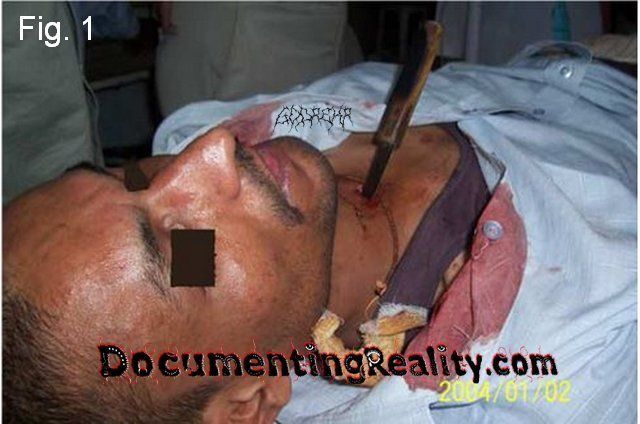 · 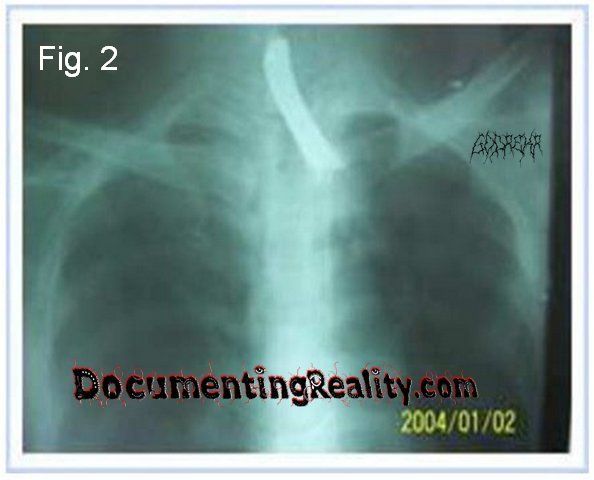 · 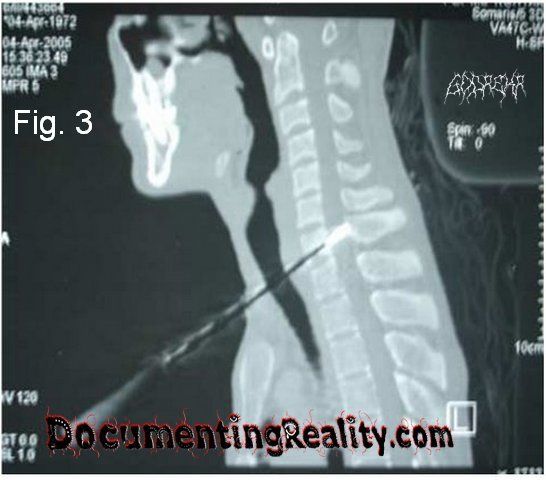 · 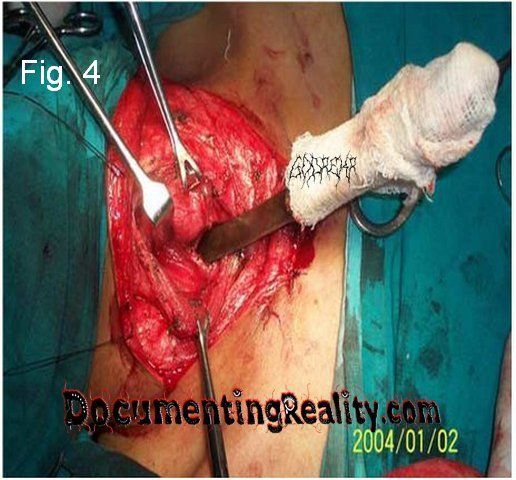 · 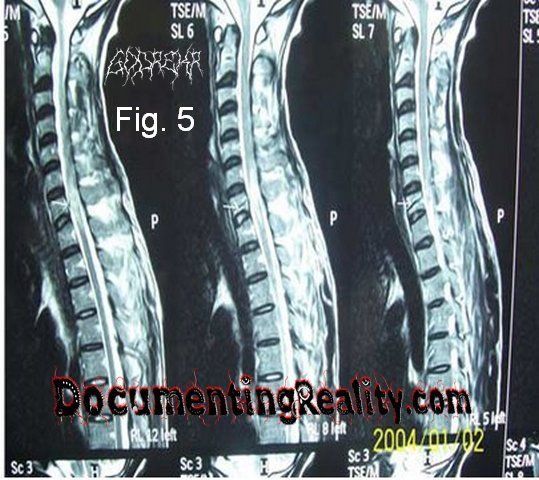 · |
|
#5
●
03-02-2011, 04:33 PM
| ||||||||
 My Rank: LANCE CORPORAL Poster Rank:1984 Female Join Date: Apr 2010 Posts: 254 Mentioned: 0 Post(s) Quoted: 15 Post(s)
| ||||||||
|
Re: Isolated Spinal Cord Injury Following Suicidal Stab Wound
thanks for the information... I like it when theres a story to the pic  |
|
#7
●
03-03-2011, 12:14 AM
| ||||||||
 My Rank: CORPORAL Poster Rank:1638 Join Date: Jun 2009 Posts: 338 Mentioned: 0 Post(s) Quoted: 2 Post(s)
| ||||||||
|
Re: Isolated Spinal Cord Injury Following Suicidal Stab Wound
pointless suicide attempt! why do it if life sucks, Its what you make of life that makes you. i guess it was just a waste of space to you. is that it?  |