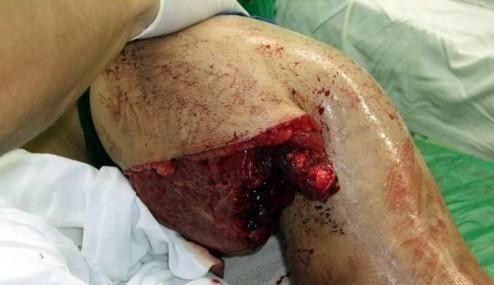
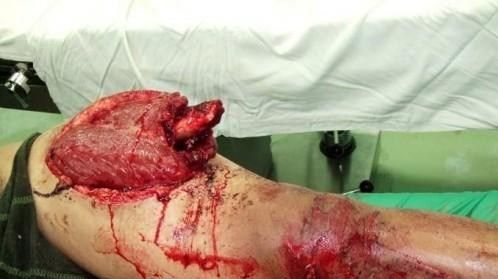
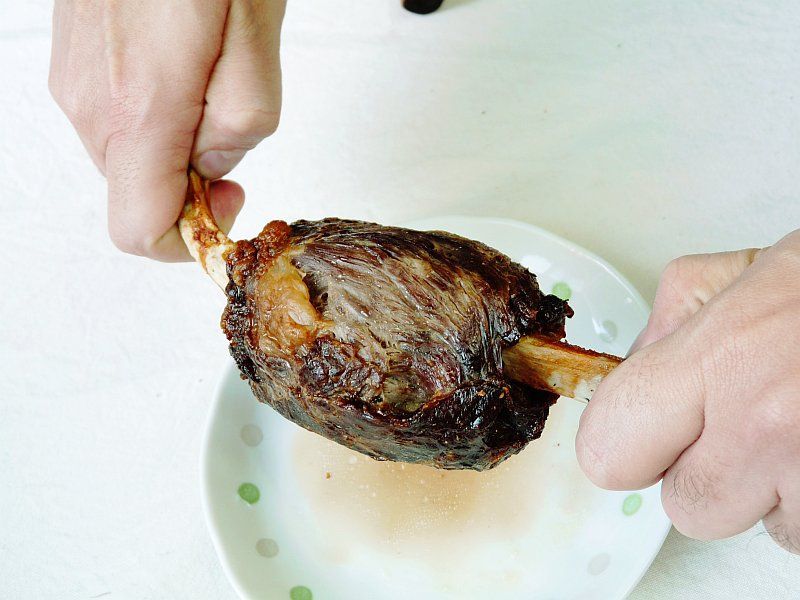
The femur is the strongest bone in the body. When a patient presents with an open femur fracture there has been a significant mechanism of injury. These patients are in extreme pain and present a very high risk of hypovolemic (low blood volume) shock from hemorrhage. There is also a major blood vessel located in the thigh, the femoral artery.
In the field, the treatment of an open femur fracture depends on a few factors. The first priority is bleeding control either by means of a bandage or a tourniquet. Immobilization is the next step and depending on the situation a traction splint may be indicated (this is controversial), which could result in the bone end returning back into the wound. The ongoing assessment and patient stability will dictate the rest of the treatment all the way to the nearest level 1 trauma center (hopefully).