|
#1
●
07-11-2014, 08:37 PM
|
 ✖ The Antique Christ ✖ Poster Rank:106 Gonzo Punk Join Date: Jan 2009 Posts: 15,478
Contributions: 62
15,478Posts 39,146Thanked 2,046Quoted 23Mentioned 62Contrib. |
|
Gas Gangrene on 93-year-old Womans Leg
A 93-year-old woman presented to the Accident and Emergency Department with sudden onset of erythema, swelling, and tenderness of her right lower leg. Within a few hours, she developed above-knee spreading cellulitis, discoloration, bullae formation, and skin necrosis, with a small amount of crepitus on palpation. The patient was toxic out of proportion to the temperature increase, with signs of tachycardia and hypotension. She underwent extensive debridement and above-knee amputation but died from multiorgan failure as a result of toxic shock the same day. 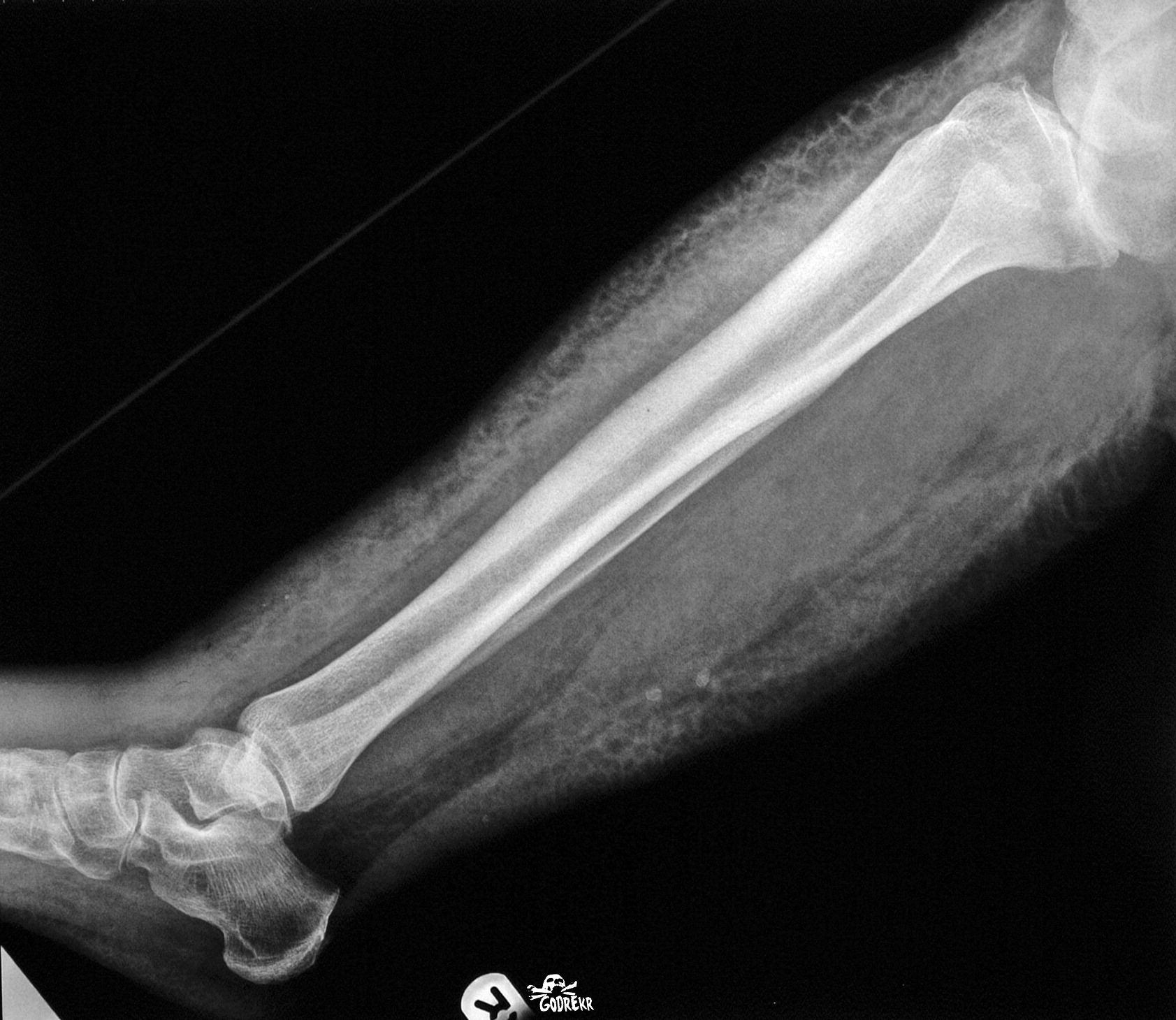 Radiologic image of leg. Note the appearance of gas in the soft tissues. 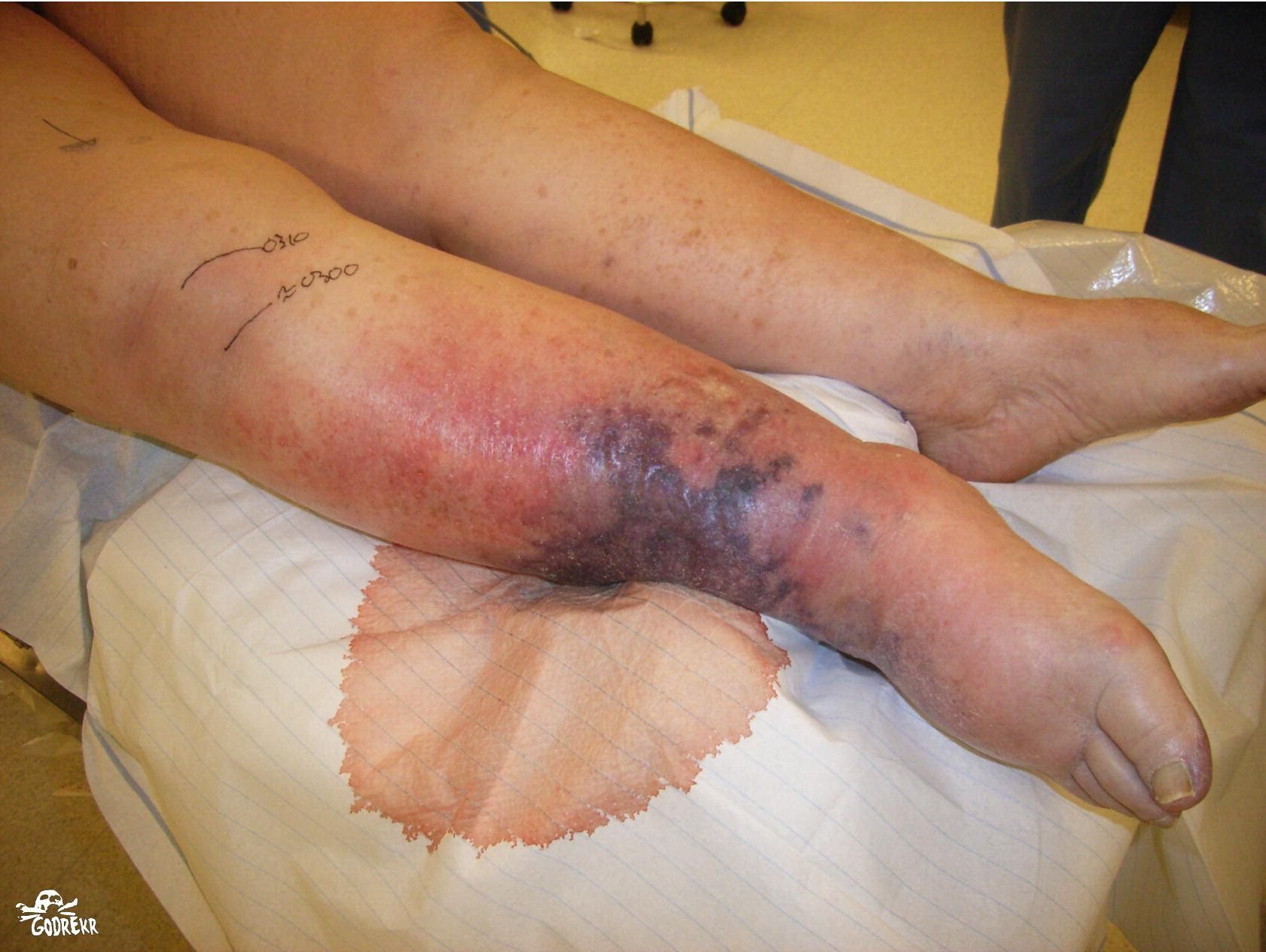 Clinical picture of patient. Diagnosis Gas gangrene. Radiographs of the leg confirmed the diagnosis of gas gangrene, with air in the soft tissues, extending above the knee. Gas gangrene is a rare but rapidly progressive, life-threatening infection of the subcutaneous tissue, necrosis of fat, and fascia, often with sparing of the underlying muscles. It was first described by Hippocrates in the fifth century bc. It can occur idiopathically and is frequently a polymicrobial infection that sometimes develops in the absence of streptococci. Mortality ranges from 33% to 73% and is correlated to patient medical history, comorbid conditions, and delayed diagnosis. Early recognition, aggressive resuscitation, and prompt surgical debridement of all involved layers of tissue are required to combat this highly lethal condition. |
|
#3
●
07-11-2014, 10:02 PM
|
| ✖ The Antique Christ ✖ Poster Rank:106 Gonzo Punk Join Date: Jan 2009 Posts: 15,478
Contributions: 62
15,478Posts 39,146Thanked 2,046Quoted 23Mentioned 62Contrib. |
|
Re: Gas Gangrene on 93-year-old Womans Leg
^^What? You no doctor?  |
|
#4
●
07-11-2014, 10:07 PM
|
 ★ Legacy Member ★ Poster Rank:53 Join Date: Mar 2013 Posts: 28,044
Contributions: 33
28,044Posts 47,276Thanked 11,875Quoted 175Mentioned 33Contrib. |
|
Re: Gas Gangrene on 93-year-old Womans Leg
 It was "sudden onset" but she died so quickly. There had too have been signs prior to the erythema, swelling, and tenderness of her right lower leg. It was "sudden onset" but she died so quickly. There had too have been signs prior to the erythema, swelling, and tenderness of her right lower leg.   |
|
#5
●
07-11-2014, 10:27 PM
|
 ★ Legacy Member ★ Poster Rank:197 All woman Join Date: Jun 2012 Posts: 7,761 7,761Posts 11,231Thanked 1,420Quoted 22Mentioned 0Contrib. |
|
Re: Gas Gangrene on 93-year-old Womans Leg
Ummm....unless it involves a 3-way with the 5th Doctor and the 10th (Who, that is....) nope, me no Doc! (Jaysus Christ they are father and son-in-law, I am one sick bitch....  ) )
|
|
#6
●
07-12-2014, 12:07 AM
|
| ★ Legacy Member ★ Poster Rank:197 All woman Join Date: Jun 2012 Posts: 7,761 7,761Posts 11,231Thanked 1,420Quoted 22Mentioned 0Contrib. |
|
Re: Gas Gangrene on 93-year-old Womans Leg
I'm guessing her age was definitely against her with regards to any chance she would have had to fight this. I could be wrong, people who seem the outwardly weakest can be the inwardly strongest, hard to say how probable the eventual outcome was without knowing the medical history.
|
|
#8
●
07-12-2014, 12:39 AM
|
| ★ Legacy Member ★ Poster Rank:197 All woman Join Date: Jun 2012 Posts: 7,761 7,761Posts 11,231Thanked 1,420Quoted 22Mentioned 0Contrib. |
|
Re: Gas Gangrene on 93-year-old Womans Leg
You mean losing control of our own bodies as we age?
|
|
#9
●
07-13-2014, 01:36 AM
|
 ★ Legacy Member ★ Poster Rank:188 female Join Date: Oct 2013 Posts: 8,111 8,111Posts 9,567Thanked 1,185Quoted 19Mentioned 0Contrib. |
|
Re: Gas Gangrene on 93-year-old Womans Leg
^ No, flesh-eating stuff, bizarre afflictions, hard to treat/ diagnose things. I'm already losing control as I age, lol!  |
|
#10
●
07-13-2014, 03:16 AM
|
| ★ Legacy Member ★ Poster Rank:197 All woman Join Date: Jun 2012 Posts: 7,761 7,761Posts 11,231Thanked 1,420Quoted 22Mentioned 0Contrib. |
|
Re: Gas Gangrene on 93-year-old Womans Leg
And a lot of this stuff is hard to treat because too many diseases are becoming antibiotic resistant.
|