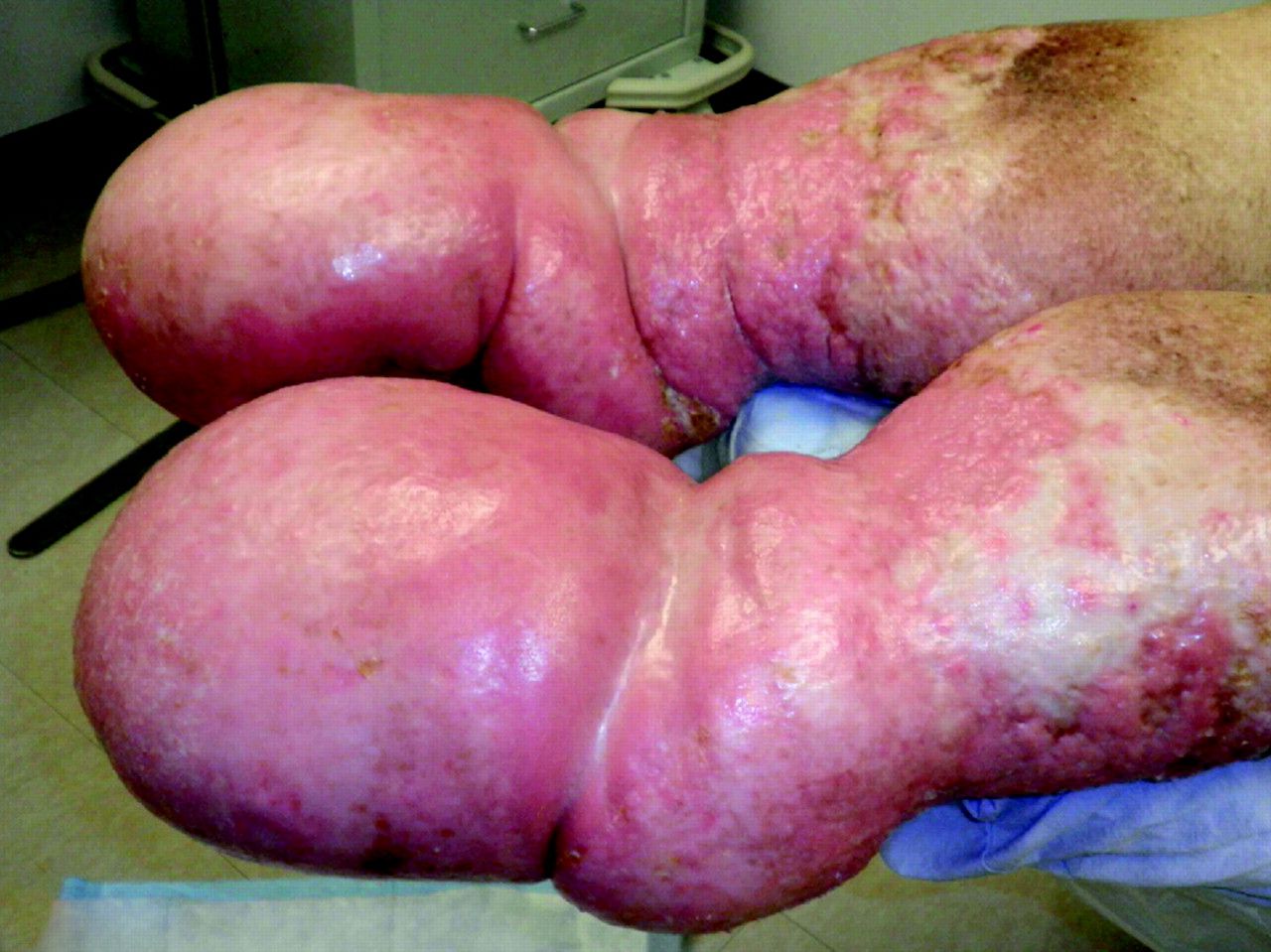
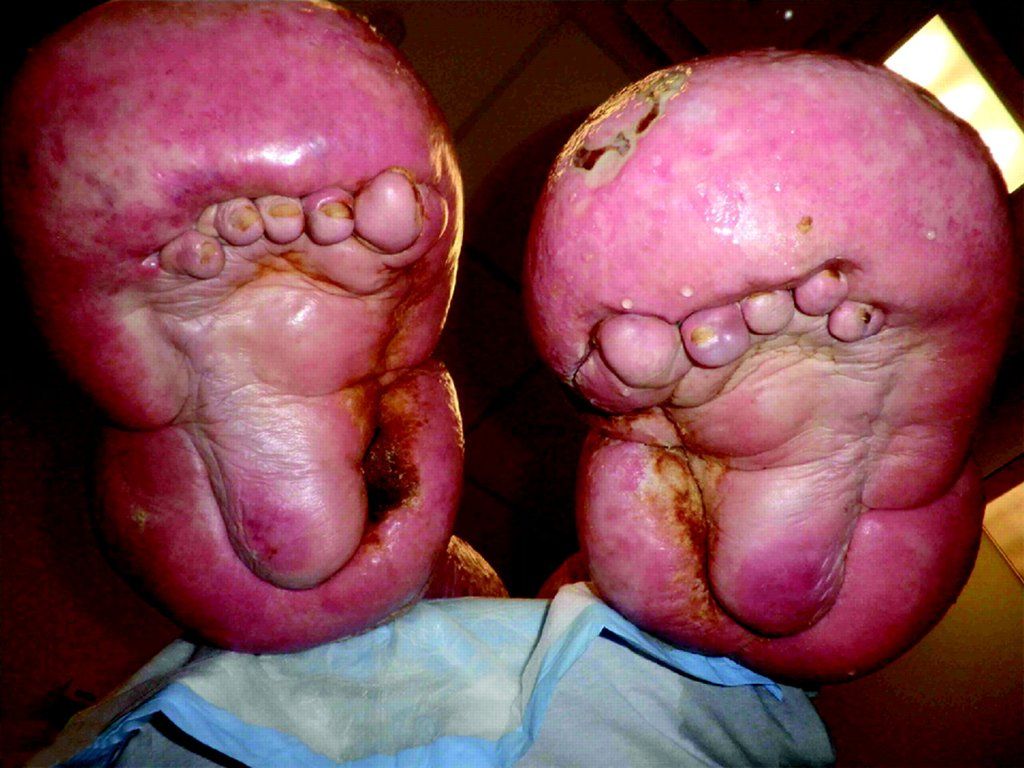
Lymphedema is an accumulation of protein and fluid in the subcutaneous tissue that results from impaired transport of protein-rich lymphatic fluid from the interstitium. Lymphedema is classified as primary or secondary. Primary lymphedema results from inherited defect of the lymphatic system, and is further classified as congenital lymphedema, lymphedema praecox (onset during puberty), or lymphedema tarda (onset after 35 years of age). The most common cause of secondary lymphedema in developed nations is resection of regional lymph nodes for cancer. Filariasis accounts for the primary cause of secondary lymphedema in the rest of the world.
The onset of edema in lymphedema can be sudden or insidious. Edema involves the dorsum of the foot and toes. This results in square toes. Inability to pick up the skin of the base of the toes is called a positive stemmer sign.1 Edema in the dorsum of the foot is frequently described as a buffalo hump.2 The edema then extends proximally. There are 4 stages of lymphedema3: stage 0, subclinical lymphedema; stage 1, early accumulation of fluid that is high in protein content, swelling may subside with limb elevation, and pitting of the skin may occur; stage 2, pitting may not occur as tissue fibrosis develops, and limb elevation alone does not reduce swelling; and stage 3, a severe increase in limb swelling along with skin changes, including fibrosis, induration, warty overgrowths, and excess adipose tissue proliferation. The skin does not pit (elephantiasis).
Nonoperative management includes edema reduction with compression garments, intermittent compression machines, and manual lymphatic drainage. Diuretics are of little use in the treatment of lymphedema. Surgical techniques offer only symptomatic relief, and do not provide a cure. The most common procedures include lymphovenous anastomosis, excisional procedures, and serial liposuctions.