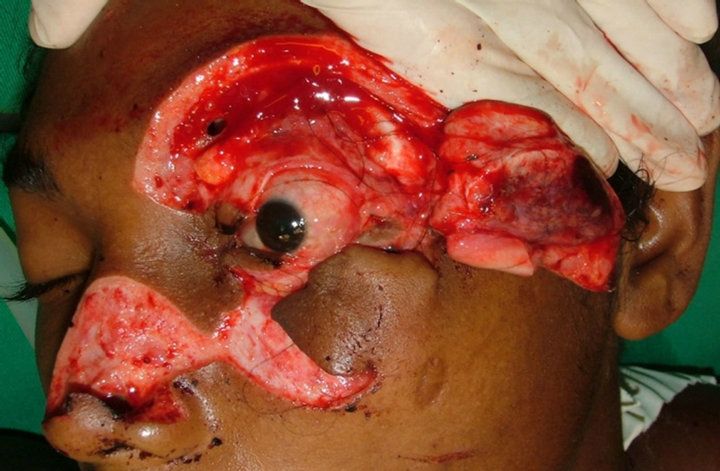
The inability to close eyelids quickly can result in corneal dryness, ulceration and blindness.
The avulsion of the eyelid is a rare injury, but devastating and difficult to rebuild. Moreover, lacerations of the eyelids may indicate a serious eye injury.
Acuity and visual field, color vision and eye movement should be examined in all patients with lacerations of the eyelid.
Position, length and depth of the wound must be evaluated. Lesions located medially to the eyelid can damage the lacrimal drainage system and require special attention.
The laceration can be repaired by gradually pulling the fragments of the eyelids to cover the cornea and, if necessary, traction suture should be used.
Thus, the objective is to avoid any epithelial damage, ulceration or loss of sight. The application of topical chloramphenicol and/or artificial tears can be prescribed and the whole area covered with a wet sterile gauze pad.
The eyelid is a vascular tissue; even when lacerated or necrosed, the tissue regenerates itself, so no tissue should be removed.
Aesthetic and functional results can be achieved in the primary repair, but secondary reconstructions may be necessary