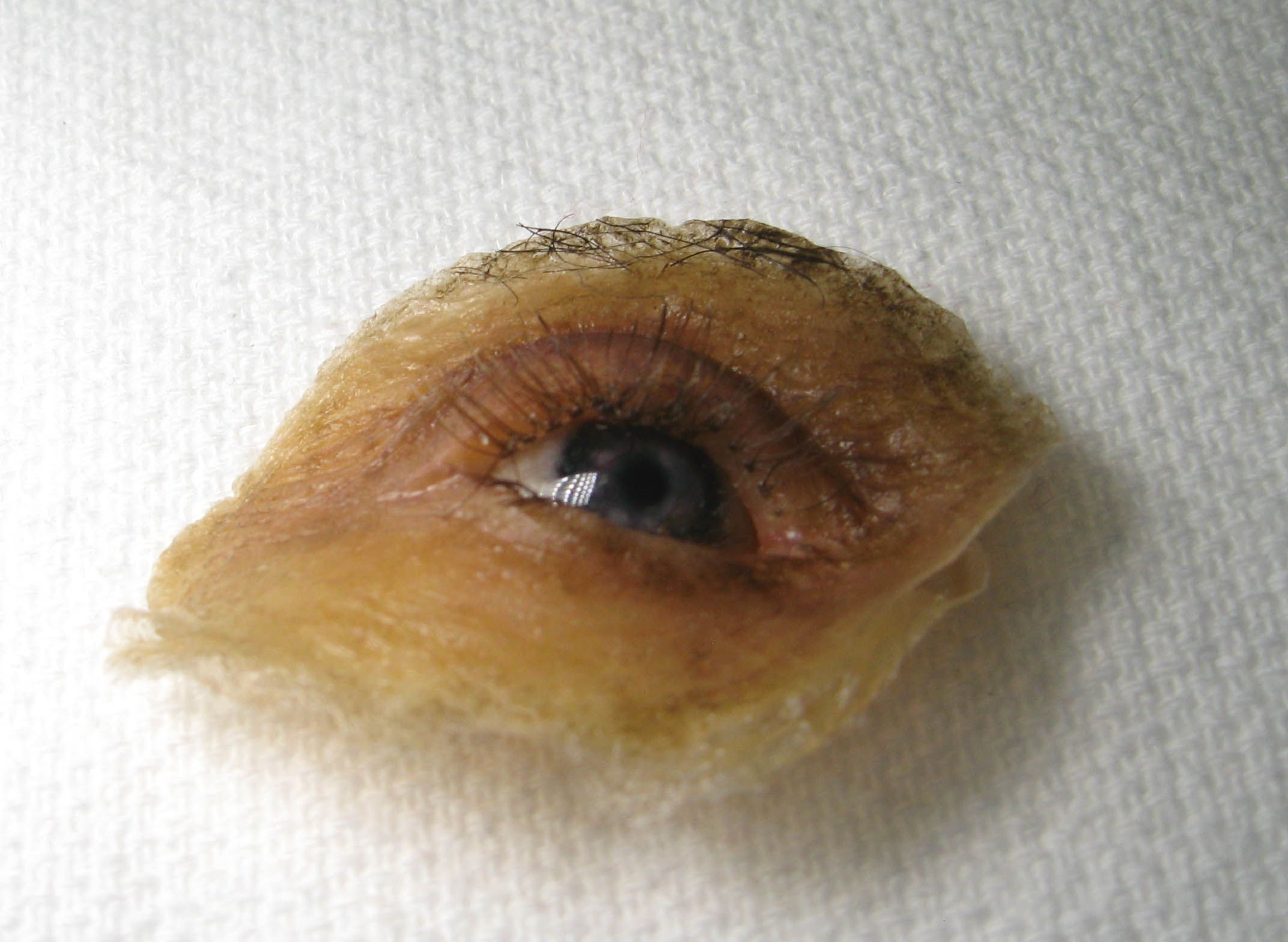
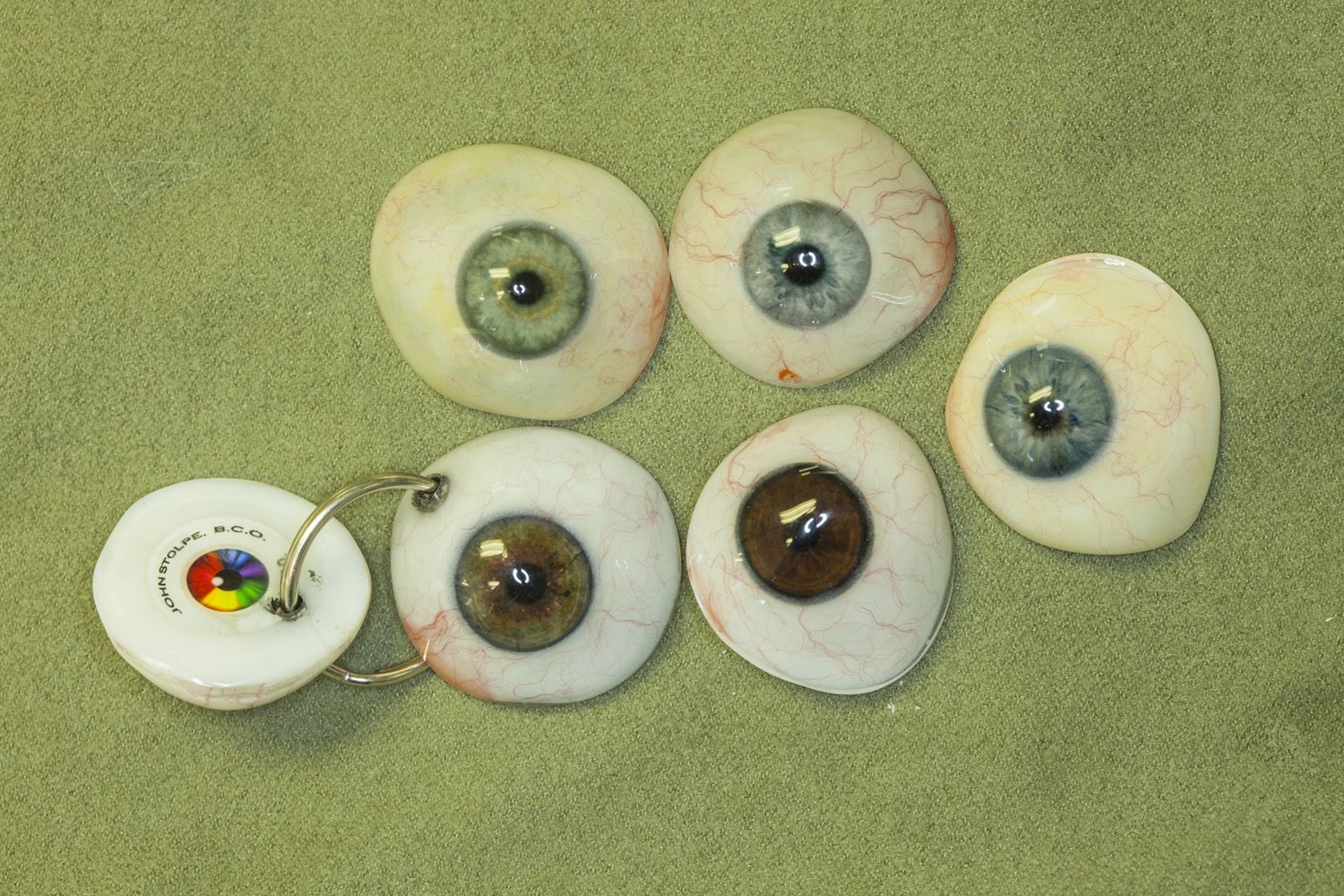
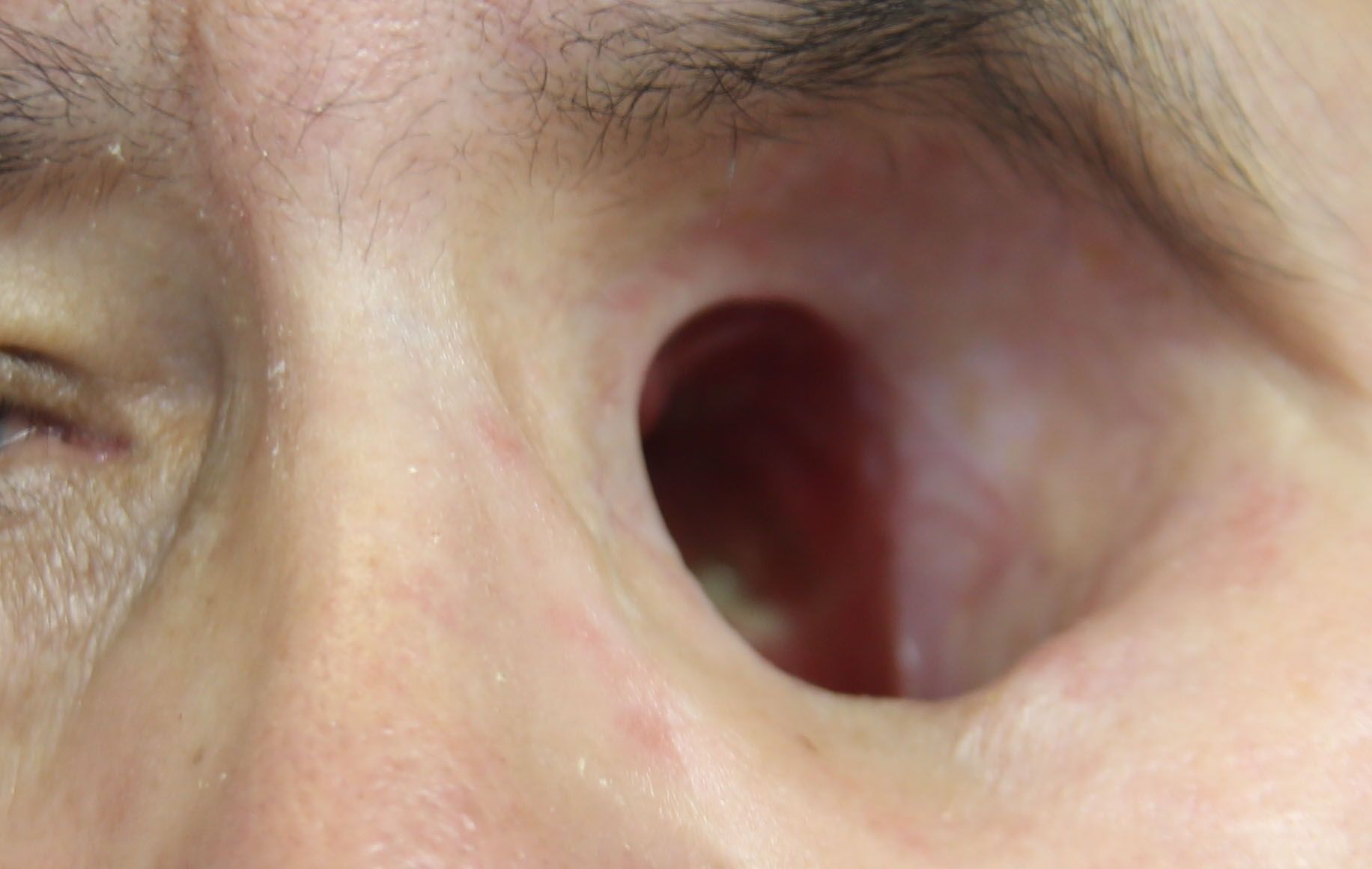
Often, people think of an eye prosthetic as a “glass eye,” a spherical eyeball that sits in the ocular socket. In reality, an eye prosthetic refers to something that is often very different.
For patients who have lost an entire eye due to severe trauma or disease, an eye prosthetic may indeed be a round piece that sits in the socket. But many individuals who use eye prosthetics fit them over an existing eye that is either unseeing or unsightly (doesn’t look great), much like a hard contact lens, and known as a scleral shell (below).
In addition, a modern eye prosthetic is usually made of acrylic rather than glass. This is for 3 reasons: acrylic does not shatter, acrylic can be impression (custom) fit to a patient’s anatomy, and acrylic eyes can be fitted with digital irises.
Artificial eyes date back to ancient times, when Ancient Egyptian pharaohs would have their eyes surgically removed and replace them with gold eyes so people would think they were gods. More recently, going back to the 1600′s, eye prosthetics were made of glass. With the invention of modern plastics came the new acrylic eye, which has several advantages over traditional methods.
The latest advancement in eye prosthetic is the incorporation of digital artificial eye graphics and printing methods to convey a level of aesthetic detail unachievable by human hands. This technology is dramatically forward with the manufacture of digital irises. In the future, the creation of eye prosthetics will focus more on shape and movement than paint and colour.
See also http://www.documentingreality.com/fo...tic-eye-79306/