|
#1
●
02-01-2010, 05:51 PM
| ||||||||
 So Fucking Banned Poster Rank:462 Join Date: Sep 2009 Posts: 2,409 Mentioned: 0 Post(s) Quoted: 0 Post(s)
| ||||||||
|
The Elephant Man
At the age of 12 years, Merrick polish sold on street corners, where he was exposed to the elements and insults, intimidation and general persecution of his fellow kids. Later he became a ward of the state, forced to live and work in a sweatshop social problems making Oliver Twist seem trivial in comparison. Merrick face and body were covered with growths massive lumps, hard tumors in bone, it looked like a bust Play-Doh, which had been dug and crushed by a child. A casual attempt to cut a portion of excess earnings failed, and the deformity of Merrick grew up. Wherever he went, crowds gathered around to gape at its deformations without pay for as much as a dime. Putting two and two, Merrick decided to follow the most obvious choice of career was before him - Freak SideShow. If it would be a spectacle, he could at least enjoy the process. Despite popular myths about Elephant Man, Merrick wrote a short autobiography that his time as a monster Sideshow was not particularly gruesome or offensive. Real life is harmful. In the SideShow, Merrick said he was treated only with the greatest kindness. " Several misconceptions about the life of John Merrick stem from the popular 1980 film The Elephant Man (directed by David Lynch), who portrays Merrick as a lost soul who was abused at the Sideshow and deprived of his dignity, he was then forced back laboriously pushing a certain point, I am not an animal! I am a human being! " The film poses waste to the dignity of Merrick much more complete than what happened in real life. Merrick seems to be unable to communicate (in life, he had difficulty speaking because of tumors on his jaw, but he could write very serviceably). The owner of the circus, the real Merrick considered a good friend, is painted like a drunken bully. The film has even had his name wrong, calling John Merrick (repeat error columnist earlier). Merrick time with Sideshow went well, according to his own account, but ended on a sour note when he was saving the money was stolen by a promoter Crooked Belgium. Penniless and in declining health, Merrick returned to England. Merrick has apparently precipitated a crowd scene. When police responded to the call of public disorder, they found a map to Dr. Frederick Treves and Merrick deposited at the London Hospital. Treves was a doctor who had visited the Sideshow few years earlier to study the affliction The Elephant Man's. An eminent specialist in anatomy, Trier was later knighted for his glorious efforts in the execution of a routine appendectomy on King Edward VII. Treves initially diagnosed Merrick elephantiasis, a disease in which the lymphatic system Goes Nuts and large, hard tumors grow around the legs and genitalia. Deformity Merrick continued to grow unchecked. In addition to the enormous and bone tumors on the head - which eventually reached a girth of three feet - a constellation of tumors sprouted all over his body, some hard, some soft, some just right. His left arm was normal to all appearances, but the rest of his body gradually distorted into fantastic shapes, even more uncomfortable to hold to what they were seeing. Despite care Treves, Merrick's health has declined because of his illness, and he slipped into a quite understandable depression. Treves collected donations and solicited volunteers to provide care for Merrick when the hospital refused to foot its bills. After the newspapers had their way, Merrick grew a little fame, his hospital room pupate into a sideshow classy. The members of the royal family and nobility of others to come and pay tribute to all inbred aristocrats do instead of onlookers as the villains. Merrick wanted nothing more to emerge in the new world, and in 1889 he took six weeks of vacation in the countryside, far from the prying eyes of the public. Although his life was filled with shouts, his death came quietly. Merrick died in his bed at the age of 27. By his life, Merrick had stayed in a vertical position because of his deformity, but on the night of April 11, 1890, he lay on his back in bed, apparently suffocated by the weight of his chest. Even in death, Merrick continued to be the center of a maelstrom of controversy, largely centered on his diagnosis. Fault diagnosis of elephantiasis Treves lasted until 1970, when doctors have revised their opinion and suggested that Merrick suffered from neurofibromatosis, a genetic disease associated with scoliosis and cancer that produces a similar disfigurement . The verdict of neurofibromatosis has lasted almost 20 years older, but the photographic record of the deformity of Merrick and his skeleton, which had been preserved for science, did not really indicators of the disease. In 1996 a new theory proposes that Merrick suffered from Proteus Syndrome. DNA tests conducted on The Elephant Man's remains in 2003 confirmed this diagnosis, but there are still some questions as to whether he also had neurofibromatosis. Further tests are planned, and we are sure that you are all on the edge of your seats for the results, in the hope that the conflict of Proteus syndrome and neurofibromatosis camps can finally store all feelings of bitterness and blood once and for all. In death, Merrick Unable to get the peace he deserved. In addition to film in 1980, he has been a serious play by Bernard Pomerance and a not-so-serious parody of a music scene in a movie (Elephant ", The Role star won by the character Jeff Goldblum in The Tall Guy). Then there was the whole Michael Jackson thing. In 1987, "reports emerged" that Jackson had tried to buy the bones of the elephant man. This incident has since been cited in almost all new stories written about Jackson's bizarre behavior, which, as you can imagine, makes for a rather large number of citations. 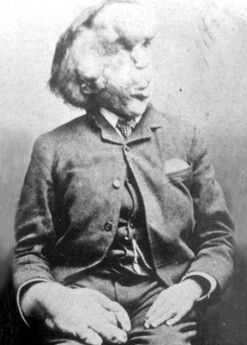 · 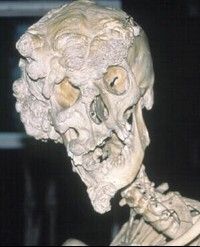 · 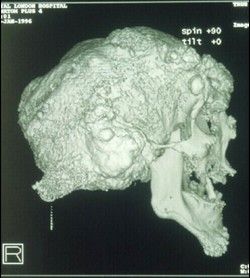 · 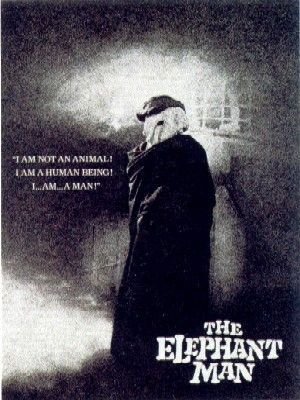 · 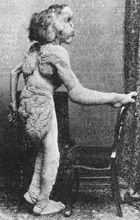 · 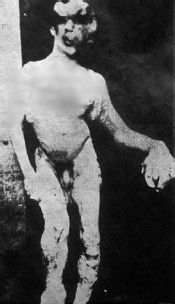 · 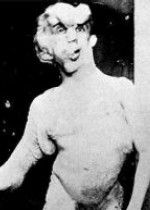 · |